- of continuous residence under the standard rule, including 5 on a work or family status
- 10 years
- fee for applications received since 1 October 2026, about $1,250, paid on approval
- ¥200,000
- permanent residents in Japan at the end of June 2026, out of 4.28 million foreign residents
- 961,342
On this page
Japan permanent residency is open to any foreign resident, whatever the nationality, after 10 years of continuous residence, of which at least 5 on a work or family-based status. Spouses of Japanese nationals and Highly Skilled Professionals get there in 1 to 3 years. The rules changed twice in 2026: the fee went from ¥10,000 to ¥200,000 (about $1,250) on 1 October, and a revised guideline tightens income, language and residence checks in two stages, on 1 April 2026 and 1 April 2027. Everything below was checked against the Immigration Services Agency (ISA) pages on 14 November 2026.
Who can apply for permanent residency in Japan, and after how many years
The status is called eijusha (permanent resident). You never apply for it from abroad: there is no permanent resident visa issued by an embassy. You first live in Japan on another status, such as a Japan work visa, a spouse status or a student status, and you ask to switch once you have been in the country long enough.
How long depends on your profile. The table below follows the ISA guideline as revised on 1 October 2026. The date that matters is the day your application is received, because some rules only apply to applications filed from 1 April 2027.
| Your situation | Applications until 31 March 2027 | Applications from 1 April 2027 |
|---|---|---|
| Standard rule (work status, long-term stay) | 10 years of continuous residence, including 5 on a work or family-based status | Same |
| Spouse of a Japanese national or permanent resident | 3 years of marriage and 1 year in Japan | 5 years of marriage and 3 years in Japan |
| Child of a Japanese national or permanent resident | 1 year in Japan | 3 years in Japan |
| Long-Term Resident (teijusha) | 5 years | 5 years |
| Recognised refugee | 5 years after recognition | 5 years after recognition |
| Highly Skilled Professional, 70 points | 3 years | 3 years |
| Highly Skilled Professional, 80 points, and J-Skip holders | 1 year | 1 year |
Three details of the standard rule catch people out. Years as a student count toward the 10 years but not toward the 5 working years. Time on Technical Intern Training or Specified Skilled Worker (i) status does not count toward the 5 years either. And the six-month digital nomad visa cannot be renewed, so it never builds the continuous residence you need.
A dated example: you arrived as a student in April 2017 and moved to an Engineer status in April 2019. You reach 10 years of residence in April 2027, with 8 years of work behind you. You can file then, but under the full October 2026 guideline, Japanese language check included.
Nationality plays no role. A US, British, Canadian, Australian, Indian or EU citizen follows the same table, and there is no residency by investment or by property purchase. If you are still choosing your first status, our overview of Japan visas shows which ones lead to permanent residency.
Japan permanent residency points: the 1-year and 3-year fast track
The fast track uses the Highly Skilled Professional (HSP) points grid, which scores your degree, years of experience, annual salary, age and bonus items such as Japanese ability. With 70 points held for 3 years, or 80 points held for 1 year, you can apply without waiting 10 years.
You do not need to hold the HSP status itself. The guideline accepts any applicant who can show that they scored the points at the reference date, 3 years or 1 year before filing, and still score them on the day they apply. An engineer on a standard work status can therefore use the grid, with payslips and tax certificates as proof of the salary claimed.
A worked example on the ISA grid for technical work: a 32-year-old (10 points) with a master's degree (20), 7 years of experience (15), a salary of ¥8 million a year, about $50,000 (30), and the JLPT N2 (10) scores 85 points. If the same person earned ¥6 million (20 points) the total would be 75, which means the 3-year route.
Holders of the Special Highly Skilled Professional status, known as J-Skip, also qualify after 1 year. J-Skip has no points count but a high income floor: ¥20 million a year (about $125,000) for research and technical work, ¥40 million (about $250,000) for management. HSP and J-Skip applicants are also exempt from the Japanese language requirement that starts in April 2027.
A separate route exists for people with a recognised contribution to Japan in diplomacy, the economy, culture or research, who can apply after 5 years. The ISA examples give the measure of it: a government decoration, an international prize, or years on the board of a major listed company. The standalone guideline on contribution is abolished on 31 March 2027, and the criterion moves into the main text.
Japan permanent residency requirements in 2026 and 2027
Residence time only opens the door. The law sets three tests: good conduct, the ability to support yourself, and a stay that serves the interests of Japan. The guideline turns them into the checks below. Spouses and children of Japanese nationals or permanent residents are exempt from the first two tests in law, but in practice their taxes and insurance payments are examined just as closely.
Income: above the Japanese average for your household size
Since 1 April 2026, the guideline says your household income must stay, year after year, above the average for Japanese households of the same size. Dependants living abroad count in the household size. The income of a spouse who holds a Dependent status is not counted. This test already applies to every application filed since that date, including files that were pending on 1 October 2026.
No amount is published. The ¥3 million a year (about $18,750) that most guides quote, plus an extra margin per dependant, was a working benchmark among immigration lawyers, never an official line. Under the new wording it is probably too low for a family. To see where your pay sits, compare it with the figures in our guide to average salaries in Japan and with a family's monthly budget in our breakdown of the cost of living in Japan.
From 1 April 2027, the guideline adds a retirement check: your estimated public pension should be at least what 30 years of employee pension contributions would give at that income level. A shortfall can be offset by financial assets, and a couple is assessed together.
Taxes, pension and health insurance paid on time
This is where most refusals start. Immigration checks resident tax, national taxes, public pension and public health insurance, and it looks at the payment dates, not only the balance. A bill paid late and then settled still counts against you. The guideline explicitly lists past late payments and past seizures as negative factors.
Employees whose tax and insurance are withheld from salary are rarely caught. The risk sits with freelancers, people between jobs and anyone who paid National Health Insurance or the National Pension by bank slip. Our pages on Japan tax for foreign residents and public health insurance in Japan explain what is due and when.
Good conduct and immigration notifications
A prison sentence or a fine weighs heavily, and the guideline treats fines, even old ones, as negative in principle. Repeated traffic violations count too. Immigration also checks that you filed your notifications on time, such as a change of employer or of address within 14 days.
The longest period of stay on your current status
You must hold the maximum period of stay your status allows, which is 5 years for most statuses. A 3-year period is accepted as the maximum for applications filed until 31 March 2027. A transition rule also covers people who hold a 3-year period on that date: their first application after 1 April 2027 is still accepted, provided the decision comes before those 3 years run out. A 1-year period does not meet the condition.
Time spent outside Japan
From 1 April 2027, a single absence of 6 months or more, or a total of 2 years and 6 months abroad over the last 10 years, is judged negatively unless you have a legitimate reason. Long postings abroad for a Japanese employer or family care are the kind of reasons to document. Before that date long absences were already questioned case by case, so keep a list of your trips with dates.
Japanese language and life in Japan, from April 2027
For applications from 1 April 2027, the guideline asks for Japanese at about B1 level on the national Framework of Reference for Japanese Language Education, an intermediate level. The ISA had not named the accepted tests or certificates when we checked on 14 November 2026. Exemptions cover Highly Skilled Professionals and their families, and people who completed 6 years of primary and secondary schooling in Japan.
The same version adds two checks: a basic understanding of Japanese rules of daily life, based on the official guidebook on living and working in Japan, and school enrolment for children of compulsory school age.
A guarantor
Every applicant needs a guarantor who is a Japanese national or a permanent resident living in Japan. A spouse, an employer or a colleague is the usual choice. The guarantor signs a letter and adds proof of identity. It is a moral undertaking to help you respect the law, not a financial guarantee: the guarantor does not answer for your debts.
Documents for a Japan permanent residency application, by profile
The base file is the same for everyone: the application form, a 4 x 3 cm photo, the residence certificate (juminhyo) for the whole household, proof of occupation, resident tax certificates, proof of payment of five national taxes, pension and health insurance records, the guarantor's letter, and a signed acknowledgement form. Proof of savings or property is listed as supporting evidence.
What changes with your profile is how many years of records you hand over. These are the figures in the ISA summary tables.
| Profile | Resident tax certificates | Pension and health insurance records |
|---|---|---|
| Work status (Engineer, Business Manager and others) | 5 years | 2 years |
| Highly Skilled Professional, 70 points | 3 years | 2 years |
| Highly Skilled Professional, 80 points | 1 year | 1 year |
| Spouse of a Japanese national or permanent resident | 3 years | 2 years |
| Child of a Japanese national or permanent resident | 1 year | 1 year |
| Long-Term Resident, Dependent | 5 years | 2 years |
Points applicants add their points calculation sheet at the filing date and at the reference date, with the evidence for each line. Spouses add proof of the marriage, such as the Japanese partner's family register. Workers and spouses are also asked for a letter of reasons explaining why they want to settle. It can be written in another language if you attach a Japanese translation.
The ISA summary tables predate the October 2026 revision on some lines, and the detailed checklists differ by category. Download the current list for your status from the ISA website in the week you file, not months before.
How to get permanent residency in Japan, step by step
Step 1: check your date and which version of the rules applies
Count your years of continuous residence, your years on a work or family status, and the length of your current period of stay. Then decide whether you file before or after 1 April 2027. Spouses with 3 to 5 years of marriage and anyone without intermediate Japanese have a real interest in filing before that date.
Step 2: collect tax, pension and insurance records
Resident tax certificates come from your city or ward office, national tax payment certificates from the tax office, and pension records from the Japan Pension Service or its Nenkin Net portal. Order them last, since most are expected to be recent, and check every payment date before you submit.
Step 3: ask your guarantor and write the letter of reasons
Give your guarantor the ISA form and explain what it does and does not commit them to. Write your letter of reasons around facts: your work, your family, your taxes, and why you plan to stay.
Step 4: file in person at your regional immigration bureau
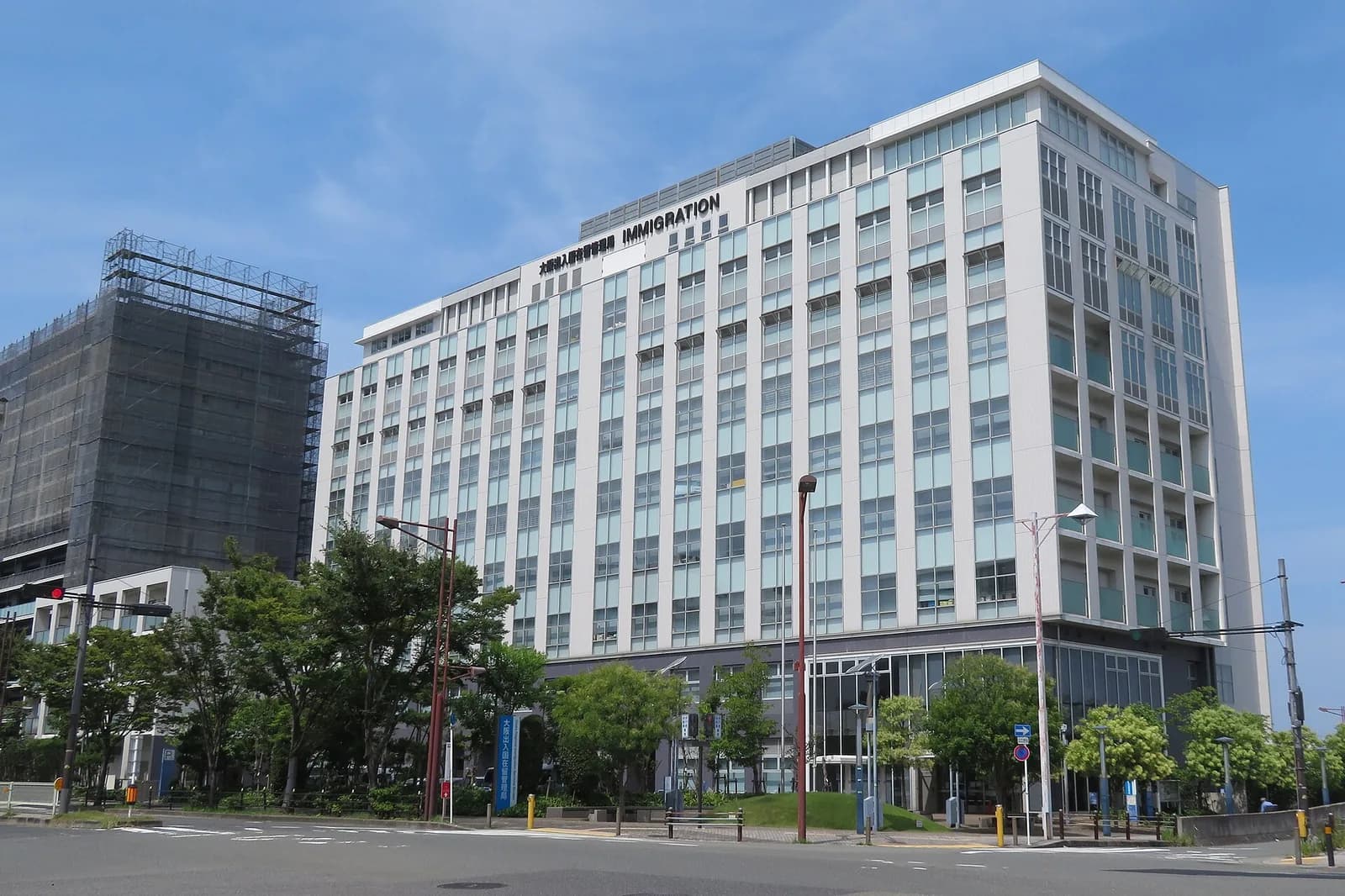
Permanent residency is not available through the online residence application system. You file at the regional immigration bureau that covers your address, on weekdays from 9:00 to 12:00 and 13:00 to 16:00. An immigration lawyer or a certified administrative scrivener can file for you.
Step 5: keep your current status alive while you wait
A pending permanent residency application does not extend your current status. If your period of stay ends before the decision, you must file a separate extension and pay its fee. Keep paying everything on time too, since immigration can ask for updated documents at any point.
Step 6: pay the fee and collect your new residence card
If the answer is yes, you receive a notice, buy revenue stamps for the fee and exchange your residence card at the bureau. The new card shows the status Permanent Resident with no period of stay.
Japan permanent residency cost: the ¥200,000 fee since October 2026
The fee is ¥200,000 per applicant (about $1,250) for every application received on or after 1 October 2026. It was ¥10,000 (about $63) before. The date of receipt decides: a file received by 30 September 2026 stays at the old price even if the permit is granted later.
You pay only if you are approved, in revenue stamps, at the counter. A refusal costs nothing in government fees. A family of three that applies together pays ¥600,000 (about $3,750), since the fee is charged per person.
A reduced fee of ¥20,000 (about $125) exists, with two conditions that must both be met: financial hardship comparable to qualifying for public assistance, and a humanitarian ground from the ISA list.
| Procedure | Fee since 1 October 2026 | In dollars |
|---|---|---|
| Permanent residency, on approval | ¥200,000 | $1,250 |
| Permanent residency, reduced fee | ¥20,000 | $125 |
| Extension or change of status, 1 year granted, online | ¥27,000 | $169 |
| Extension or change of status, 5 years granted, online | ¥65,000 | $406 |
| Re-entry permit, single | ¥3,500 online, ¥4,000 on paper | $22 to $25 |
| Re-entry permit, multiple | ¥6,500 online, ¥7,000 on paper | $41 to $44 |
The extension fees are those of the ISA online schedule. At the counter, the Japanese press and immigration firms report ¥33,000 for a 1-year period and ¥75,000 (about $469) for 5 years. This matters for the maths: every renewal you avoid by becoming a permanent resident now saves tens of thousands of yen, which is the one argument in favour of the new price.
Budget separately for certificates, translations and, if you use one, an immigration lawyer. Fees for a permanent residency file vary widely between firms, so ask for a written quote that says what happens if the application is refused.
Japan permanent residency processing time and approval rate
The official standard processing time is 4 to 6 months. Treat it as a floor. The ISA's monthly table of average processing days has a Permanent Resident line, and it reads 289 days for permits granted in June 2026 and 309 days in August, or about ten months. It is a national average of approved files, counted from receipt to the day the permit is notified, and it leaves out refusals.
Immigration firms report waits of around a year or more at the busiest bureaus, Tokyo first, and shorter ones in smaller regions. Plan for a year, and make sure your current status and your passport cover that period.
On results, the ISA does not publish an approval rate on its permanent residency pages. The annual immigration statistics give an order of magnitude: in 2021, 36,691 permits out of 64,149 decided cases, about 57%. Monthly figures compiled by immigration firms for early 2026 range from 47% to 54%. Close to one application in two is refused, which is high for a procedure where the conditions are known in advance.
What permanent residency changes in Japan, and what it does not
At the end of June 2026, 961,342 people held the status, out of 4,281,026 foreign residents, according to the ISA. Here is what they gained.
- No more renewals. Your stay has no end date and no longer depends on an employer, a spouse or a school.
- Any job, or none. You can change field, go freelance, start a company or stop working without asking immigration. Work statuses tie you to one category of activity.
- A status that survives life events. A divorce, a redundancy or the death of a spouse does not put your residence at risk.
- Easier credit. Many Japanese banks reserve standard home loans for permanent residents, and the government-backed Flat 35 loan requires permanent or special permanent residency from foreign borrowers. See our guide to buying a house in Japan for what lenders ask.
- A simpler path for your family. Your spouse and children can move to the Spouse or Child of Permanent Resident status, which allows any work.
The status has limits that surprise new holders. You remain a foreign national: no vote, no Japanese passport, and you can still be deported for serious offences. Your family does not become permanent resident automatically, and each member files a separate application.
Two administrative duties stay. Your residence card is valid for 7 years (until the 16th birthday for children) and must be renewed, with applications accepted from 2 months before expiry. And you still need a re-entry permit to keep the status when you travel.
Permanent residency refusals in Japan, and revocation from April 2027
Why applications are refused
The refusal notice gives little detail, but you can ask the bureau for the reasons in person. The same causes come back.
- Late payments. One National Pension or health insurance instalment paid after its due date during the review period is enough.
- Income below the average for the household, or a sharp drop in one of the years examined.
- A period of stay that is too short, typically a 1-year status.
- Long absences that break continuous residence.
- Fines and traffic violations, including old ones.
- Missed notifications, such as a change of employer declared late.
- Points that cannot be proven at the reference date, for fast-track applicants.
A refusal does not affect your current status, and nothing stops you from applying again. Fix the cause first: a late payment only stops counting once it falls outside the years reviewed.
Revocation of permanent residency from 1 April 2027
The 2024 revision of the Immigration Control Act takes effect on 1 April 2027 and adds three grounds for revoking permanent residency.
- Breaching immigration duties without a legitimate reason, such as carrying and renewing your residence card. The ISA indicates that one isolated oversight would not lead to revocation.
- Deliberately not paying taxes or social insurance. The target is a clear refusal to pay: long arrears combined with a move that was never declared, ignoring reminders and seizures, or hiding assets.
- A prison sentence, suspended sentences included, for listed offences such as certain property crimes, violence and dangerous driving causing death or injury.
Illness, a disaster, job loss, an agreed instalment plan, or an employer who withheld contributions from your salary without passing them on are given as cases that are not deliberate non-payment. There is no amount threshold.
Revocation is not automatic. The Minister of Justice can grant another status instead, in most cases Long-Term Resident, unless the person is judged unfit to stay. Unpaid taxes that date from before April 2027 can still be taken into account if they come to light afterwards. The ISA text on how revocation will be applied was a draft when we read it, so details may still move before April.
Japan permanent residency vs citizenship: the difference in brief
Permanent residency keeps you a foreign national with an unlimited right to stay. Naturalisation makes you Japanese, and it is handled by the Ministry of Justice's Legal Affairs Bureaus, not by immigration.
| Point | Permanent residency | Naturalisation |
|---|---|---|
| Your nationality | You keep it | You are expected to give it up, as Japan does not allow dual nationality in principle |
| Residence required | 10 years, or 1 to 5 on the routes above | 5 years in the Nationality Act, 10 years in principle since 1 April 2026 |
| Vote and passport | No | Yes |
| Where you apply | Regional immigration bureau | Legal Affairs Bureau for your address |
| Can be lost | Yes, by absence or revocation | No residence card, no re-entry permit |
One caveat on the 5 years. Since 1 April 2026 the Ministry of Justice also expects 10 years or more of residence as proof of integration, along with everyday Japanese, without changing the law. Its naturalisation page now states both conditions. For most readers the deciding factor is elsewhere: whether you are ready to give up your current passport. US, UK, Canadian and Australian law all allow dual nationality, but Japan asks new citizens to renounce the other one.