
- maximum stay, with no extension
- 6 months
- minimum annual income, about $62,500
- 10 million yen
- eligible countries and regions on the official list
- 50
On this page
The Japan digital nomad visa lets you live in Japan for up to 6 months while working remotely for an employer or clients abroad. You need a passport from one of 50 listed countries and regions, an annual income of at least 10 million yen (about $62,500) and private medical insurance. It cannot be extended, and it comes without a residence card. All facts on this page were checked against Japanese government sources on 14 November 2026.
What the Japan digital nomad visa is, and who it is for
Japan has issued this visa since 31 March 2024. Its official name is long: the Ministry of Foreign Affairs calls it "Specified visa: Designated activities (Digital Nomad, Spouse or Child of Digital Nomad)". In immigration terms it is a Designated Activities status of residence, the same family of statuses used for working holidays and start-up founders.
Two kinds of remote work are allowed under it, as worded by the Immigration Services Agency (ISA):
- working from Japan for a foreign organisation under an employment contract with a company established abroad,
- providing paid services or selling goods to people located outside Japan, which covers freelancers, sole proprietors and managers of foreign companies.
One thing is ruled out in plain words: you cannot work for a Japanese company or individual, either as an employee or as a contractor. The ISA adds that this holds even if you meet a client after arriving. Work that can only be done by being physically in Japan is excluded too.
The visa remains rare. According to Ministry of Foreign Affairs tables compiled by the Japan Digital Nomad Association, Japan issued 257 digital nomad visas in 2024 (from 31 March) and 646 in 2025. The income bar explains most of that.
Japan digital nomad visa requirements at a glance
| Requirement | Rule on 14 November 2026 |
|---|---|
| Nationality | One of 50 countries and regions that have both a visa waiver and a tax treaty with Japan |
| Work | Remote work for a foreign employer or for clients outside Japan |
| Income | At least 10 million yen a year at the time of application (about $62,500) |
| Insurance | Private policy covering death, injury and illness in Japan, with at least 10 million yen for medical treatment |
| Length of stay | 6 months, no extension |
| Applying again | Possible after 6 months outside Japan |
| Family | Spouse and children can come on their own Designated Activities visa |
| Residence card | Not issued |
On the waiting period, two ISA documents are worded differently. The main page says an applicant "must wait for six months to reapply", and the summary sheet says the stay "must not exceed 6 months within a year". For a standard plan, six months in and six months out, both readings give the same result. If your dates are unusual, ask the consulate before you book.
During the six months you can leave and come back. The ISA confirms that holders can use a re-entry permission in the same way as longer-term residents and keep their status if they return before it expires. No formality is needed to move between cities either.
Japan digital nomad visa countries list: the 50 eligible nationalities
Eligibility rests on your passport. The ISA requires a country or region that is covered by Japan's short-stay visa exemption and has a tax convention with Japan. Its official chart lists 50 of them. Many guides still say 49 or 51, so we counted the chart line by line.
| Region | Eligible for the digital nomad visa |
|---|---|
| North America | United States, Canada, Mexico |
| United Kingdom and Ireland | United Kingdom, Ireland |
| Oceania | Australia, New Zealand |
| European Union | Austria, Belgium, Bulgaria, Croatia, Czech Republic, Denmark, Estonia, Finland, France, Germany, Greece, Hungary, Italy, Latvia, Lithuania, Luxembourg, Netherlands, Poland, Portugal, Romania, Slovakia, Slovenia, Spain, Sweden |
| Rest of Europe | Iceland, Norway, Serbia, Switzerland, Turkey |
| Asia | Brunei, Hong Kong, Indonesia, Malaysia, Republic of Korea, Singapore, Taiwan, Thailand |
| Middle East | Israel, Qatar, United Arab Emirates |
| South America | Brazil, Chile, Peru |
Two EU members are missing: Cyprus and Malta. Their citizens can visit Japan without a visa but are not on the digital nomad chart. The same goes for Argentina, Andorra, Liechtenstein, Monaco and San Marino. India, China and the Philippines are not eligible either, since their citizens need a visa for short stays.
The list for a spouse or child is wider: 73 countries and regions. Family members only need a passport covered by the visa exemption, without the tax treaty condition. That adds 23 places, among them Argentina, Cyprus, Malta, Costa Rica, Uruguay and Mauritius. The chart can be updated, so open the current PDF on the ISA page before you apply.
Japan digital nomad visa income requirement: 10 million yen
The ISA rule is one sentence: the applicant's annual income "must be at least 10 million yen at the time of application". At the rate we use across this site, about 160 yen to the dollar on 14 November 2026, that is roughly $62,500 a year. Consulates assess the figure in yen, so a weaker or stronger yen moves the bar in your currency. Convert your own income at the rate of the day you apply.
The details that decide borderline cases sit in the ISA's Q&A, and few guides quote them:
- The threshold is individual. It applies to the applicant, not to the couple. A spouse or child has no income condition.
- Freelancers are judged on the contract amount, not on profit. A sole proprietor with a 10.5 million yen service contract qualifies even if expenses bring the profit lower.
- Several stable contracts can be combined. Three ongoing clients paying 4 million yen each add up to 12 million.
- Expected income can count. In principle the ISA looks at your most recent annual income, but it also accepts a raise in the current year or a new job paid 10 million yen a year.
Accepted proof, according to the Ministry of Foreign Affairs: a tax payment certificate, an income certificate, an employment contract, or a contract with a business partner that states the contract period and amount. The ISA does not say whether the figure is gross or net. Applicants who have written about their file report using gross income.
Ten million yen a year is about 833,000 yen a month, far above what daily life costs. Our breakdown of the cost of living in Japan shows what rent, food and transport come to.
Japan digital nomad visa insurance: what the policy must cover
Digital nomads cannot join Japan's public health insurance, so the visa requires a private policy. The ISA wording: the applicant must hold "a private medical travel insurance which covers death, injury, illness during their stay", and the compensation for medical treatment of injury and illness "must be 10 million yen or more".
Check four points on a policy before you pay for it:
- Medical limit of at least 10 million yen, about $62,500. A policy priced in dollars, pounds or euros needs a limit comfortably above that after conversion.
- Both injury and illness treated in Japan. An accident-only policy fails.
- Death. The ISA Q&A says the policy must include transportation of the body or a payment in the event of death, and that no minimum amount is set for this item.
- Dates that match your stay. The ISA asks for a policy whose period corresponds to your planned stay in Japan.
As proof you submit a copy of the insurance certificate and the policy terms. The ISA also publishes a reference form, "Explanation of Coverage under Private Medical Insurance", which summarises the cover on one page. Insurance attached to a credit card is accepted if you can document that it reaches the required cover, which few cards do for a six-month trip. Japan publishes no list of approved insurers. The consulate reads your documents and decides.
One practical snag reported by applicants: some insurers want travel dates, or even a booked flight, before they issue a policy. A policy you can start on a chosen date and cancel if the visa is refused avoids buying a ticket too early.
Among nomad policies, SafetyWing's Nomad Insurance Essential is priced in dollars with a limit of $250,000 per insurance period, which is about 40 million yen. It covers treatment of unexpected illness and injury and the transport of remains. It does not cover pre-existing conditions, cancer treatment or maternity care, and it stops at age 69. SafetyWing does not claim that the plan meets Japan's rule and says it cannot guarantee acceptance by every authority, so send the certificate and policy wording to your consulate before you rely on it.
For what a hospital visit costs without cover, and how the public system works for residents, see our guide to health insurance in Japan.
Japan digital nomad visa application: documents and where to apply
You apply from abroad, at the Japanese embassy or consulate covering your place of residence. The usual long-stay route, a Certificate of Eligibility requested by a sponsor in Japan, does not fit this visa. The ISA Q&A states that there is no one in Japan to act as your agent for the certificate, and tells applicants outside Japan to go directly to the embassy or consulate. If you do hold a certificate, the income, insurance and activity documents can be left out.
Documents for the main applicant
- Visa application form with a photo.
- Passport.
- Planned activities and period of stay. The Ministry of Foreign Affairs provides the form as a Word file on its digital nomad page.
- Proof of annual income of 10 million yen or more: tax or income certificate, employment contract, or client contract with its period and amount.
- Proof of insurance against death, injury and illness during the stay: certificate and policy summary.
The ISA also asks for a document showing your current work status, such as an employment contract or a certificate of employment. Individual consulates add their own checklist, so read the page of the one you will use.
Steps, in the order that saves time
- Check your passport against the ISA chart of 50 countries and regions.
- Gather income proof first. A tax certificate can take weeks to obtain in some countries.
- Choose the insurance and get the certificate and policy wording for your planned dates.
- Fill in the application form and the activity form, with the cities you plan to stay in and your dates.
- Book the consulate. The Embassy of Japan in the UK, for example, takes applications in person by appointment and does not accept files from people who are only visiting the UK.
- Collect the visa and pay the fee, then enter Japan. Check the validity printed on the visa and travel before it runs out.
Japan digital nomad visa cost and processing time in 2026
Japan raised its consular fees on 1 July 2026. For applications accepted since that date, the Ministry of Foreign Affairs gives a fee of approximately 15,000 yen for a single-entry visa (about $94) and approximately 30,000 yen for a multiple-entry visa (about $188). Guides that still quote 3,000 yen are out of date. The fee is paid in local currency, it can be waived or different for some nationalities, and nothing is charged if the visa is refused. Your consulate's fee table gives the exact amount for your passport.
On timing, consulates quote their standard visa delay: 5 working days once a complete file is accepted at the embassy in London, and 5 business days at the consulate in New York, which does not offer expedited processing. Digital nomad files can take longer because they are less common. One developer who applied in Berlin in August 2024 received the visa about six weeks later and advises allowing three months. Start the paperwork at least three months before your planned arrival.
Digital nomad visa for a spouse and children
A spouse and children can accompany you on a matching status, "Spouse or Child of Digital Nomad". Each family member files an application with:
- the visa application form and passport,
- the planned activities and period of stay,
- proof of the relationship, such as a marriage or birth certificate,
- a copy of the digital nomad's passport,
- insurance meeting the same rule: death, injury and illness, with 10 million yen for treatment.
Family cover under your own policy is accepted if you provide documents showing who is insured and for what. There is no separate income condition, and the nationality list is the wider one of 73 countries and regions. The family status covers daily life as a dependant, not work. A partner who also works remotely and earns 10 million yen is better served by applying as a digital nomad in their own right.
What the Japan digital nomad visa does not give you
This is where the visa differs most from a work visa. The ISA states it without nuance: "Residence card will not be issued." Residence cards go to mid- to long-term residents, and digital nomads are not in that category under the law. Much of daily administration in Japan is built on that card.
| You do not get | What it means in practice | What people do instead |
|---|---|---|
| Residence card | Your passport and its landing stamp are your only ID | Carry the passport at all times, as the law requires of visitors |
| Public health insurance | Hospitals bill you the full cost | The private policy required for the visa |
| Japanese bank account | Banks normally ask for a residence card | Foreign cards, a multi-currency account, cash from ATMs |
| Standard phone contract | Postpaid plans ask for resident ID and a local payment method | eSIM or prepaid data SIM |
| Standard apartment lease | Two-year leases expect a residence card, a guarantor and a local account | Furnished monthly apartments, share houses, serviced apartments |
| Renewal or change of path | Six months, then you leave | Plan the next status from abroad |
The first two lines come from the ISA. The bank, phone and lease lines reflect how Japanese companies handle customers without a residence card, as reported by visa holders and relocation firms, and they are practice rather than law. In the same way, without a residence card you should not expect resident registration at city hall or a My Number, although the ISA pages do not spell this out.
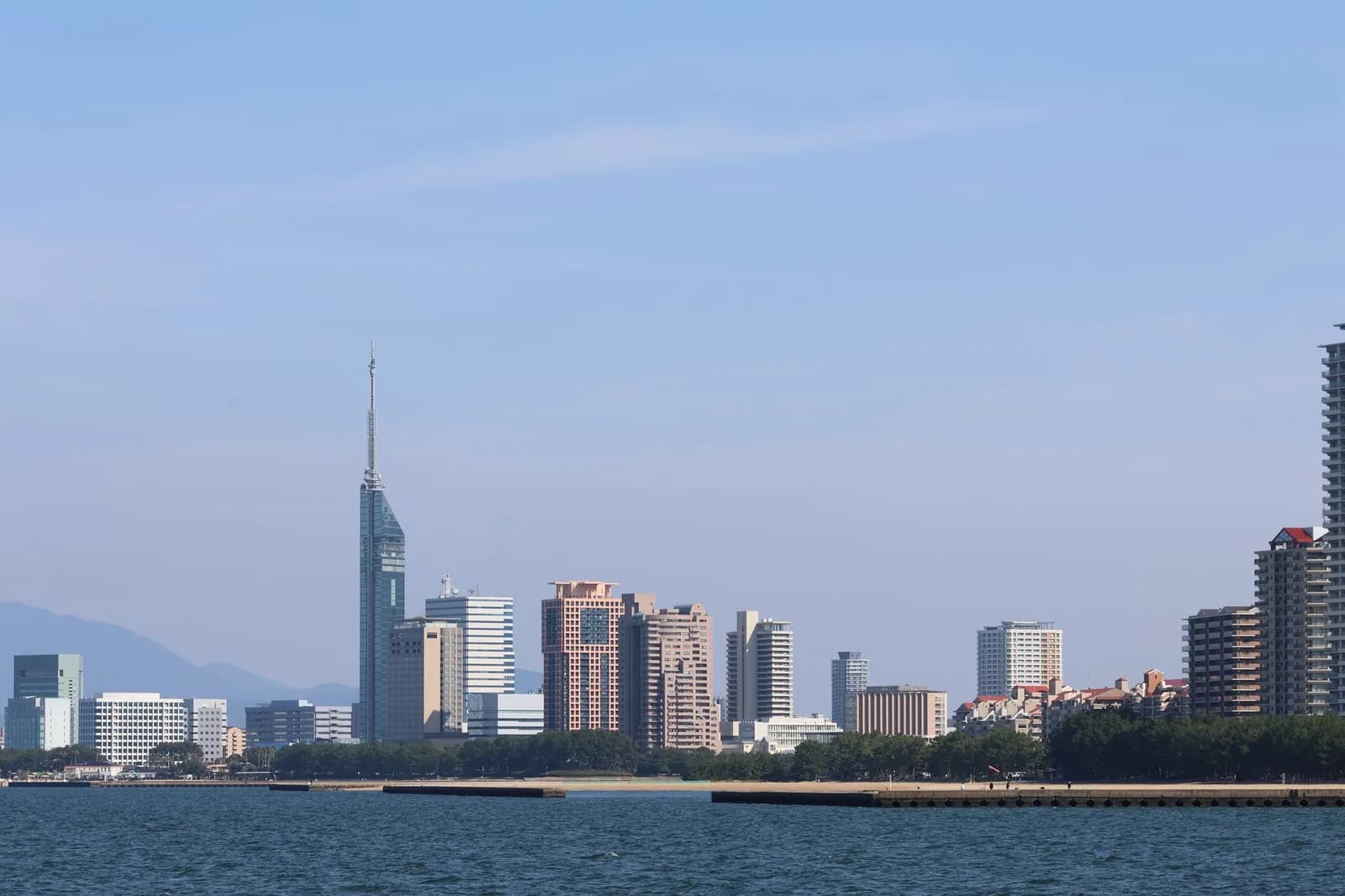
Housing is the item to budget for. Furnished monthly apartments cost more than an ordinary lease for the same size, and the gap is explained in our guide to renting in Japan. For mobile data without a contract, compare the options on our Japan eSIM page. On equipment, the ISA Q&A notes that a laptop or phone without Japan's technical conformity mark can be used for 90 days if it carries a Wi-Fi or Bluetooth logo. Beyond 90 days the mark is required, so look for it in the regulatory screen of your device settings.
Japan digital nomad visa tax: the 183-day rule
The ISA answers the tax question directly. Pay earned by a digital nomad for work done in Japan is exempt from Japanese tax if it meets the tax convention with your country, which "in most cases" means staying in Japan for 183 days or less in the tax year or in any 12-month period, depending on the treaty. The exemption is lost if you pass 183 days or if a Japanese resident employer pays the salary.
Three points follow from that:
- Count your days. Six calendar months can come to 184 days, for example from 1 July to 31 December. Leaving a few days early keeps you under the line.
- Earlier trips can count. Where the treaty uses a rolling 12-month period, a 90-day tourist stay earlier in the year is added to your six months.
- Your home country still taxes you. The visa changes nothing in your tax residence at home. US citizens, for example, continue to file with the IRS.
The National Tax Agency treats anyone without a domicile in Japan, or with less than one year of continuous residence, as a non-resident taxed only on Japan-source income. That is the general frame, and the treaty then decides. For a large income or a split year, pay for an hour with a tax adviser who knows your treaty. Our page on Japan tax for foreigners covers the rules for people who stay.
How to stay in Japan longer than the digital nomad visa allows
Six months with no renewal makes this a visa for one long stay. If you want more, these are the routes that exist on 14 November 2026.
| Route | Stay | Main condition | Remote work for abroad |
|---|---|---|---|
| Visa-free visit | 90 days for most exempt passports | Passport on the exemption list | Not what the status is for |
| Visa-free visit, 6-month nationalities | Up to 6 months with an extension requested in Japan | UK, Ireland, Germany, Austria, Switzerland, Liechtenstein, Mexico | Not what the status is for |
| Working holiday | Set by each country's agreement | Age 18 to 30, 33 partner countries, not the US | Work allowed as a side activity of the holiday |
| Work visa | Renewable | A job with a Japanese employer | You work for the sponsor |
| Startup visa | Up to 2 years to prepare a business | Business plan approved by a certified city or body | The aim is a company in Japan |
| Business Manager | Renewable | 30 million yen of capital and a full-time employee since 16 October 2025 | You run your Japanese company |
| J-Find | Up to 2 years | Graduate of a top-100 university within the last 5 years | Job hunting and business preparation |
British, Irish, German, Austrian and Swiss readers should note the second line. You can already spend up to six months in Japan without a visa, so the digital nomad visa buys you one thing: a status under which remote work is expressly allowed. For everyone else, the 90-day waiver is described in our guide to the Japan tourist visa.
If you are under 31 and hold a passport from a partner country, the working holiday visa has no income threshold and allows local work on the side. To settle, the realistic paths are a job offer and a Japan work visa, or your own company. Only those statuses start the clock towards permanent residency, which the digital nomad visa never does. The Business Manager route became much harder on 16 October 2025, when the capital requirement rose from 5 million to 30 million yen.