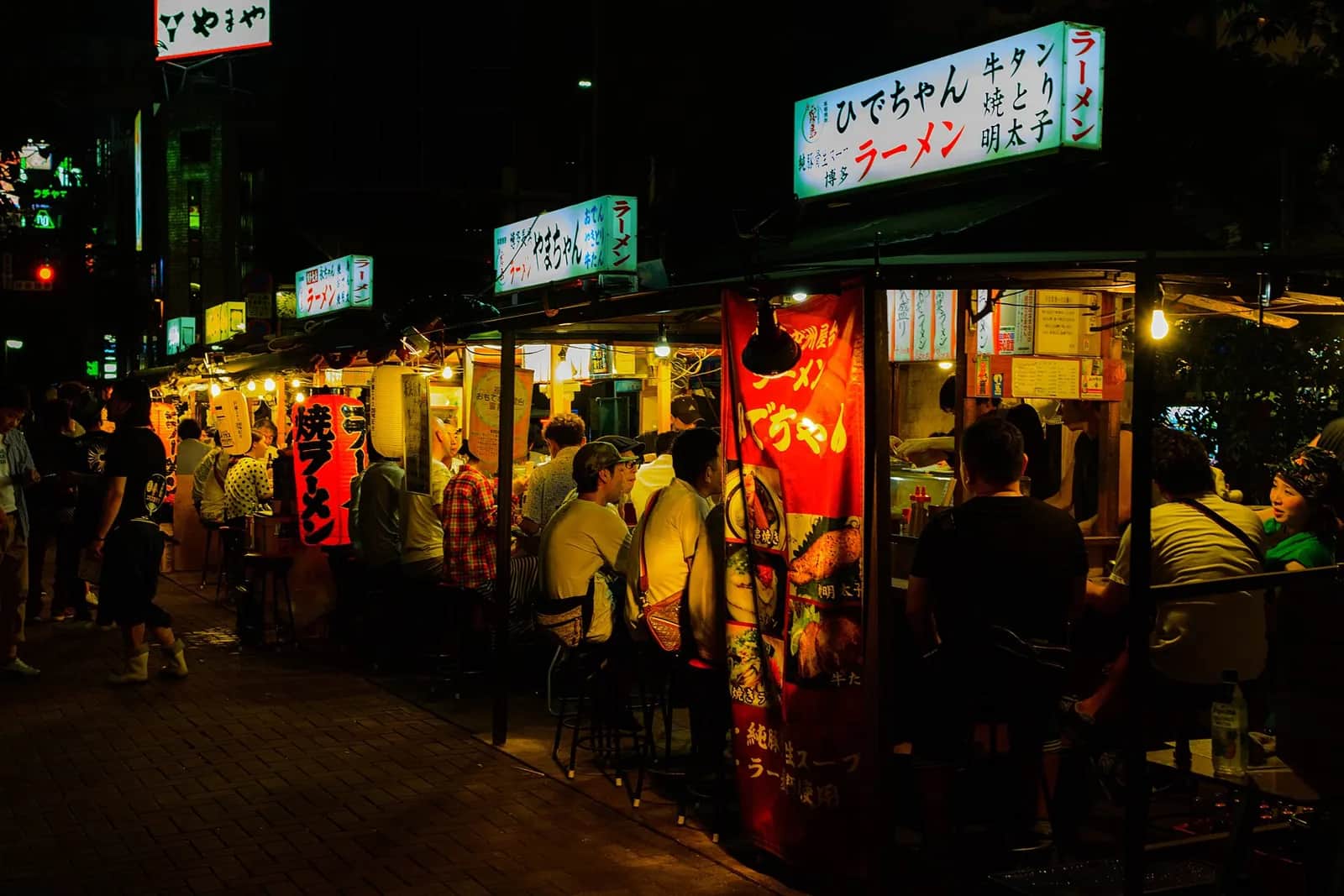
- yatai food stalls open at night in Nakasu, Tenjin and Nagahama, the largest street-stall scene in Japan
- About 100
- by subway from Fukuoka Airport's domestic terminal to Hakata Station, 11 minutes to Tenjin
- 5 min
- for the city at an easy pace, plus one day per trip to Dazaifu, Yanagawa, Itoshima, Nagasaki or Beppu
- 3 days
On this page
The best things to do in Fukuoka fit in a few compact districts: Hakata for temples, shrines and Canal City, Nakasu and Tenjin for the yatai food stalls at night, Ohori Park and the castle ruins for a walk, and Momochi for Fukuoka Tower and the beach. Then come the day trips, Dazaifu, Yanagawa, Itoshima, Nagasaki and Beppu, which make Fukuoka the best base in Kyushu. Below are 26 of them by district, with prices and hours checked on 14 November 2026, followed by the food to try, the festivals, how many days to stay and a budget.
The 10 best things to do in Fukuoka for a first trip
| What | Where | Adult price |
|---|---|---|
| Dinner at the yatai food stalls | Nakasu, Tenjin | About ¥2,000 to ¥3,000 with a drink |
| Hakata tonkotsu ramen | All over the city | About ¥800 to ¥1,200 a bowl |
| Dazaifu Tenmangu shrine and its approach street | Dazaifu, 30 to 40 min by train | Free |
| Ohori Park and the Japanese garden | Chuo | Park free, garden about ¥250 |
| Fukuoka Castle ruins and the view from the keep base | Maizuru Park | Free |
| Fukuoka Tower at sunset | Momochi | ¥1,000 ($6) |
| Kushida Shrine, Tochoji and Shofuku-ji | Hakata | Free |
| Canal City Hakata and the Ramen Stadium | Hakata | Free entry |
| Flower fields of Nokonoshima island | 10 min by ferry | Park about ¥1,200 to ¥1,500 |
| Punt along the canals of Yanagawa | Yanagawa, about 50 min by train | From ¥1,800 |
Tours and activities in Fukuoka
Six well-rated bookings, from an evening at the yatai to coach days that reach Beppu, Itoshima or Takachiho without a car.
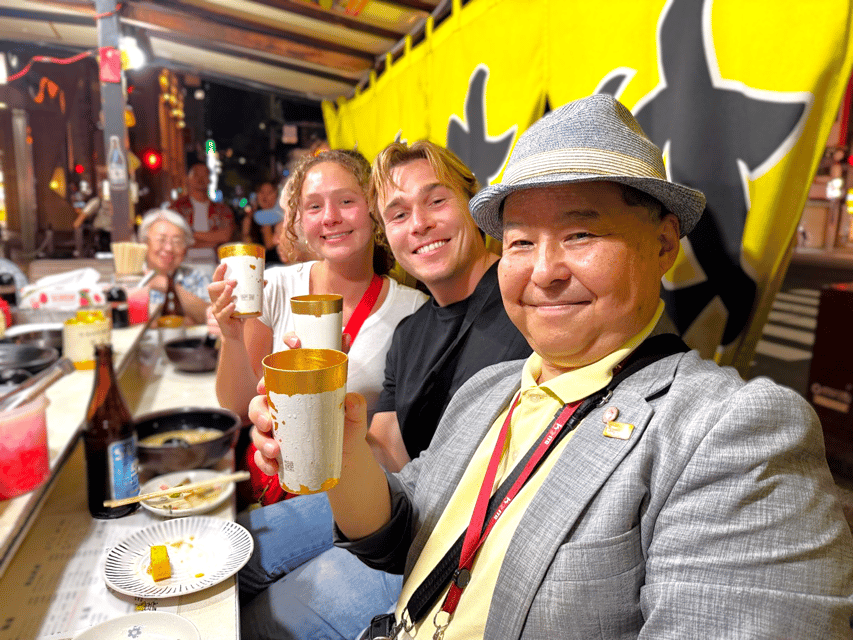
Fukuoka: Nakasu Private Yatai Food Stall Guided Tour
A private evening with a local guide among the yatai of Nakasu, with tastings at the stalls along the Naka River.
4.6(89 reviews)
- 2 to 3 hours
- Free cancellation
From $92per person
See prices & availability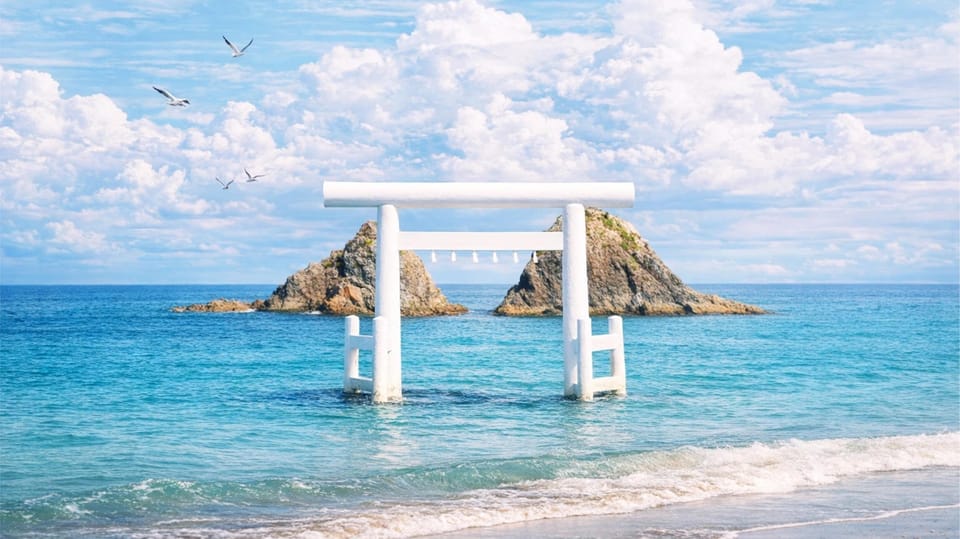
Fukuoka: Itoshima, Shiraito Falls, Dazaifu & Yanagawa Town
One day from Fukuoka: the Itoshima coast, Shiraito Falls, the Dazaifu Tenmangu shrine and the canals of Yanagawa.
4.6(43 reviews)
- 9 hours
- Free cancellation
From $45per person
See prices & availability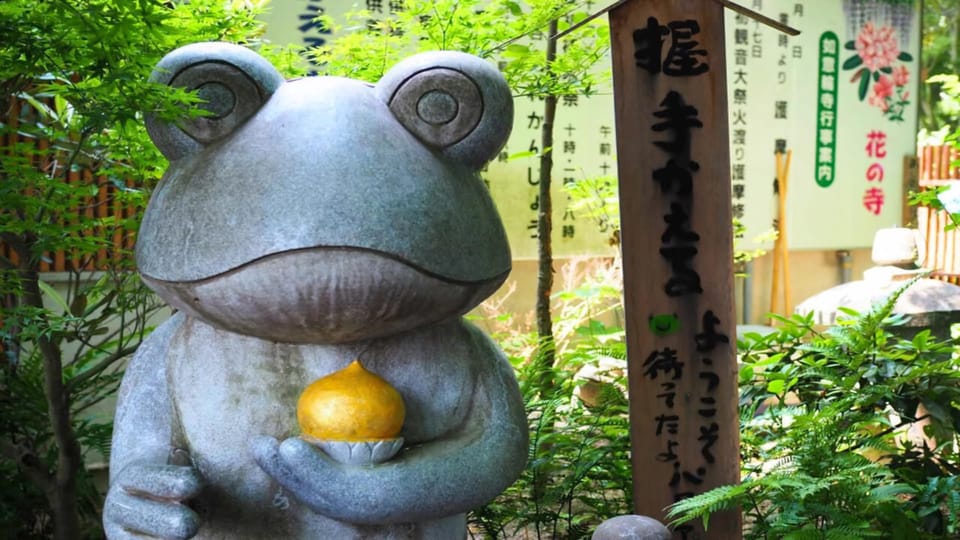
Fukuoka: Beppu Hells Hot Spring, Frog Temple & Yufuin Day Trip
A day trip to the steaming Hells of Beppu, a temple full of frog figures and the lakeside streets of Yufuin.
4.4(110 reviews)
- 10 hours
- Free cancellation
From $56per person
See prices & availability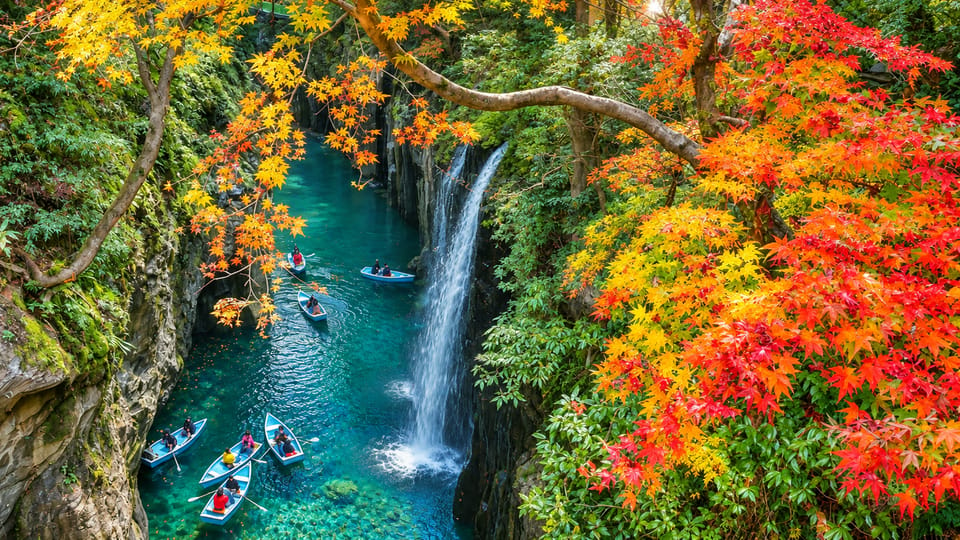
Fukuoka: Takachiho Gorge & Amaterasu Railway with Optional Boat
A long day by coach to Takachiho Gorge in Miyazaki and the Amaterasu Railway, with an optional rowing boat.
4.8(810 reviews)
- 10.5 hours
- Free cancellation
From $47per person
See prices & availability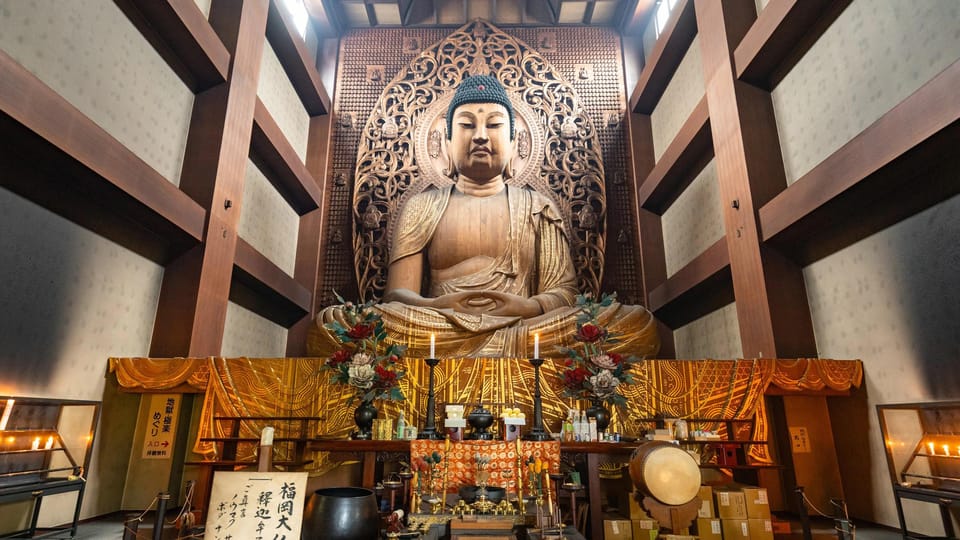
Fukuoka Essentials: History, Culture, & Charms
A guided tour of Fukuoka's main sights and the history behind them, 3 to 6 hours long, a good start to a first visit.
4.9(49 reviews)
- 3 to 6 hours
- Free cancellation
From $72per person
See prices & availability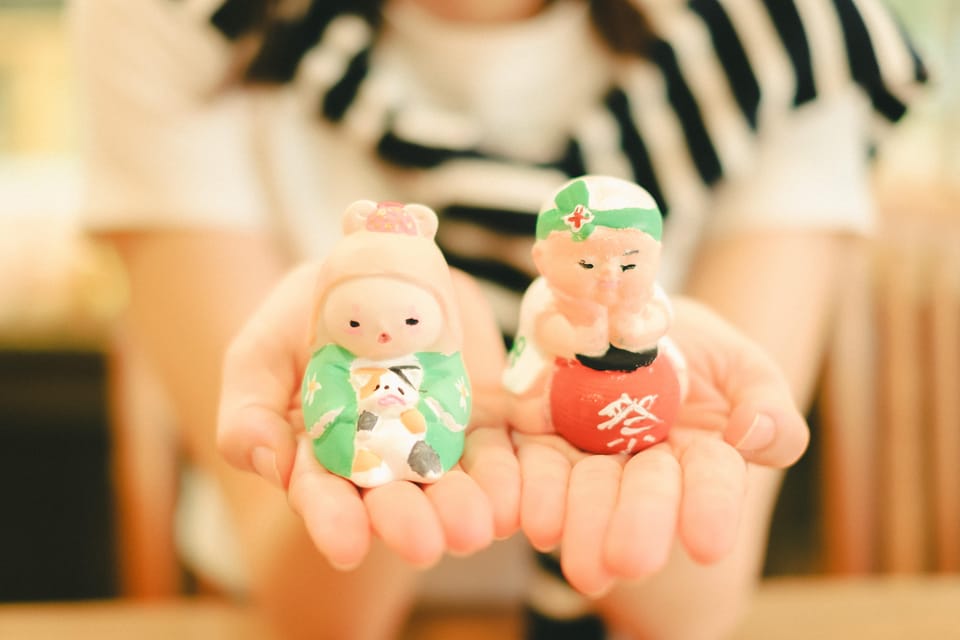
Fukuoka: Hakata Doll Painting Experience
A 90-minute workshop in Hakata where you paint your own Hakata doll, the clay figures the city has made for centuries.
4.8(49 reviews)
- 1.5 hours
- Free cancellation
From $27per person
See prices & availability
See more activities in Fukuoka
Nakasu and the Fukuoka yatai: where to go and the rules in 2026
Yatai are open-air food stalls that are set up every evening on the pavement and taken down again before morning. Fukuoka has about 100 of them, more than any other city in Japan, down from around 450 in the 1960s. Each one seats about eight to ten people around a counter, under a tarp, with the cook in the middle. They serve ramen, yakitori, oden, gyoza and, at some, French or Italian small plates. The city licenses each pitch and fills vacant ones through public calls.
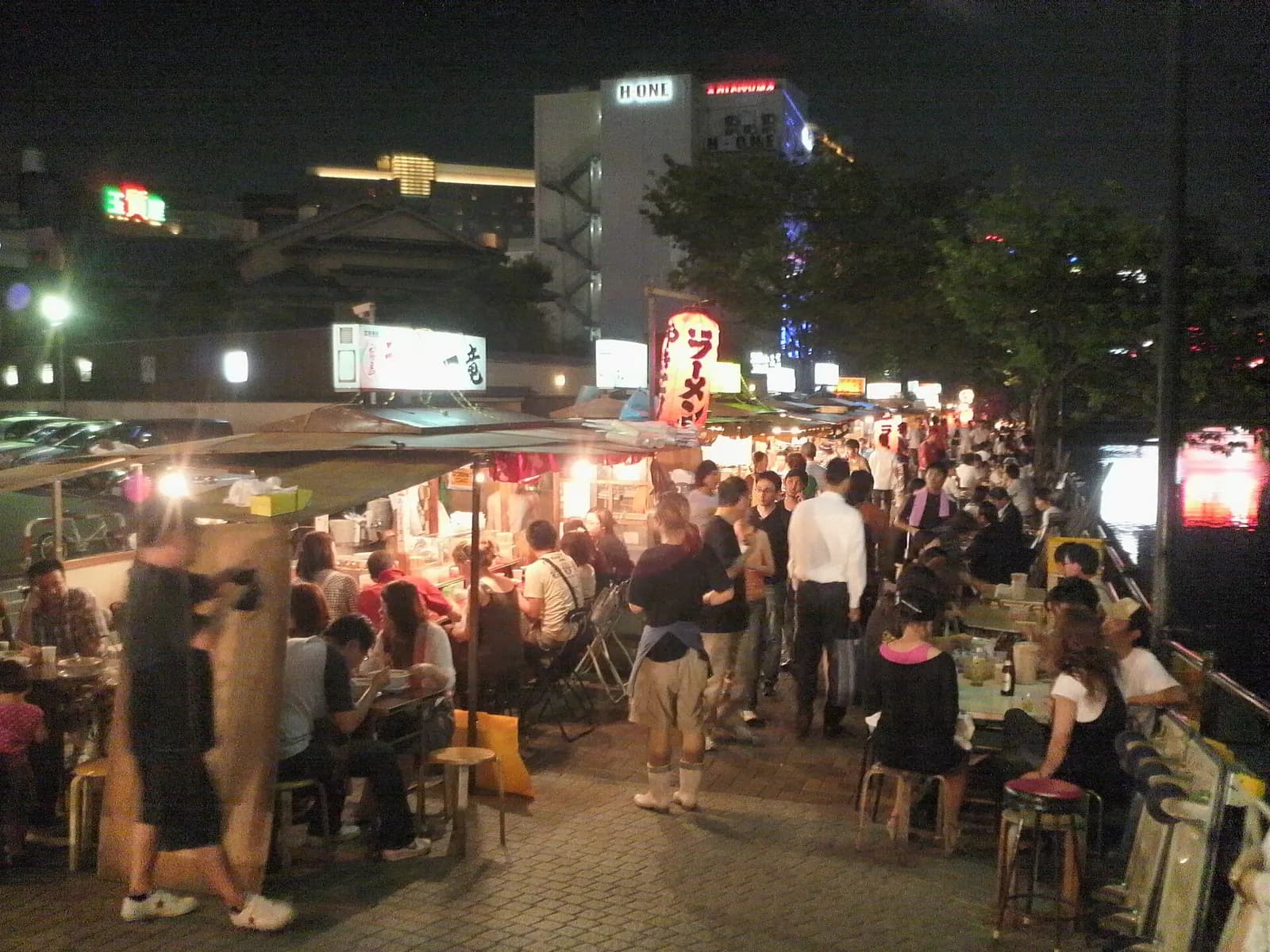 1mmry0241, CC BY-SA 3.0, Wikimedia Commons
Nakasu-Kawabata Station, 5 minutes on foot
Nakasu yatai along the Naka River
The classic picture of Fukuoka: a row of stalls on the riverbank south of Haruyoshi Bridge, with the neon of Nakasu reflected in the water. This is the most touristy group, so expect queues after 19:00 at weekends and slightly higher prices. Come at opening time, around 18:00, or late in the evening.
- Opens
- About 18:00, closed in bad weather
- Station
- Nakasu-Kawabata
2.
Tenjin Station and Tenjin-Minami
Tenjin yatai on Showa-dori and Watanabe-dori
Tenjin has the largest number of stalls, scattered along the main avenues between the office towers. They are more local than Nakasu, with more salarymen than tourists, and several serve French, Italian or Spanish small plates as well as ramen and yakitori. Walk the block between Tenjin and Tenjin-Minami stations and pick the one with free seats.
- Opens
- About 18:00
- Station
- Tenjin or Tenjin-Minami
3.
Akasaka Station, 10 minutes on foot
Nagahama yatai, near the fish market
Nagahama is where the thin-noodle, tonkotsu ramen of the fish-market workers was born. The stalls stood empty for years before the city reopened the area, and new stalls opened there in June 2023. Come here for a late bowl of ramen rather than a long evening.
- Best for
- Late-night ramen
- Station
- Akasaka
 View on Google Maps
Things to do in Hakata: temples, Kushida Shrine and Canal City
Hakata is the old merchant town on the east bank of the Naka River, around the main station. Its temples sit in a small area near Gion Station, so they make an easy morning on foot before lunch at Canal City.
1.
Hakata, 5 minutes from Gion Station
Kushida Shrine
The shrine of Hakata's townspeople and the starting point of the Yamakasa festival in July. Inside the grounds stands a decorated festival float more than 10 metres high, on display most of the year, so you can see it even if you miss the festival. Entry to the grounds is free, and the old Hakata Machiya Folk Museum is across the street.
- Entry
- Free
- Station
- Gion or Nakasu-Kawabata
2.
Hakata, 1 minute from Gion Station
Tochoji Temple and the Fukuoka Daibutsu
A Shingon temple founded by the monk Kukai, with a five-storey vermilion pagoda and, upstairs in the main hall, the Fukuoka Daibutsu, a seated wooden Buddha about 10 metres high, one of the largest in Japan. Behind the statue, a dark corridor represents a walk through hell and paradise. No photos inside the hall.
- Grounds
- Free
- Station
- Gion
3.
Hakata, 5 minutes from Gion Station
Shofuku-ji and the Hakata Old Town temples
Founded in 1195 by the monk Eisai, Shofuku-ji is considered the first Zen temple in Japan. Most buildings are closed to visitors, but the moss, pines and stone paths of the grounds are free and quiet. A signposted walk, the Hakata Old Town route, links it to Jotenji, where noodles and manju are said to have arrived from China, and a dozen other temples in about an hour.
- Entry
- Grounds free
- Walk
- About 1 hour
4.
Between Hakata Station and Nakasu
Canal City Hakata and the Ramen Stadium
A curved, colourful shopping complex built around an artificial canal, with water and music shows at the fountain through the day, a cinema and a theatre. The Ramen Stadium on the 5th floor gathers ramen shops from all over Japan, handy for comparing a Hakata tonkotsu with a Sapporo miso on a rainy day. It is about 10 minutes on foot from Hakata Station or Nakasu-Kawabata.
- Entry
- Free
- From Hakata Station
- About 10 min on foot
5.
JR Hakata City, top floor
Hakata Station rooftop garden
The roof of the station building is a free open-air terrace with views over the city and the planes landing at the airport, plus a small shrine and a children's mini train. The restaurant floors below are a good fallback for dinner near the Shinkansen.
- Entry
- Free
Things to do in Tenjin and Daimyo
Tenjin, on the west bank, is the commercial centre: department stores, the Nishitetsu station for Dazaifu and Yanagawa, and the largest group of yatai. Daimyo and Akasaka, just west, are the cafe and boutique streets.
1.
Under Watanabe-dori, Tenjin
Tenjin Underground City
A long underground shopping street with cast-iron ceilings and stone floors in a 19th-century European style, linking Tenjin subway station to the Nishitetsu train and bus stations. It is the easiest way to cross Tenjin when it rains, and the department stores of Tenjin open straight onto it.
- Entry
- Free
- Station
- Tenjin or Tenjin-Minami
2.
West of Tenjin, 5 to 10 minutes on foot
Daimyo and Akasaka
Small streets of independent clothing shops, coffee roasters, bakeries and bars, the area where Fukuoka's young crowd spends its weekends. It has no single sight, which is the point: wander from Tenjin towards Akasaka and Maizuru Park, and stop for coffee on the way.
- Best time
- Afternoon and evening
Ohori Park and Fukuoka Castle ruins
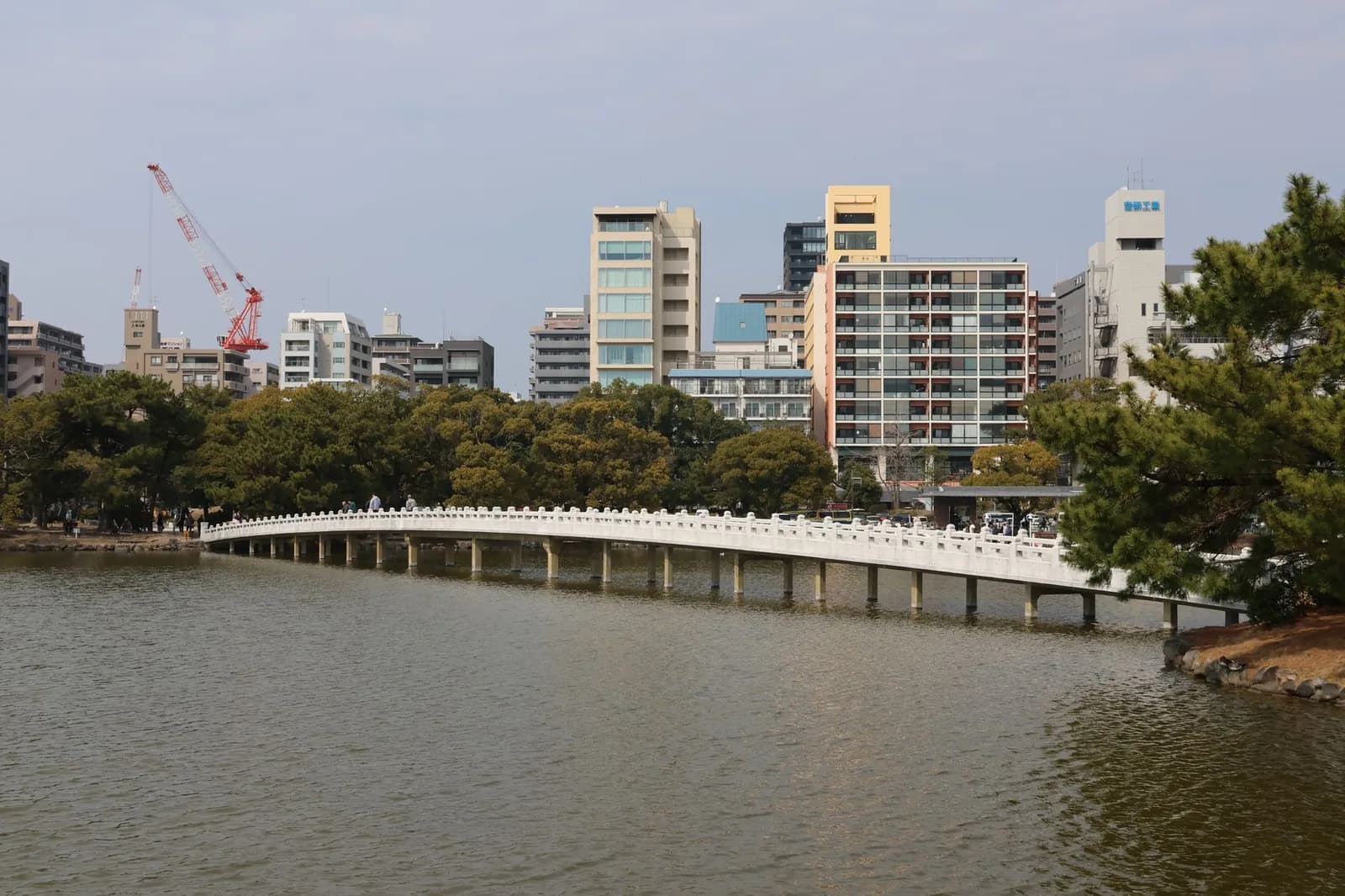 1Pexels
Ohorikoen Station, Kuko line
Ohori Park
A large pond, once part of the moat of Fukuoka Castle, crossed by bridges that hop from islet to islet. The path around it is about 2 km, popular with runners, and there are swan boats for hire. The park itself is free and open at all hours. The Fukuoka Art Museum stands at its southern end.
- Entry
- Free
- Walk around the pond
- About 2 km
2.
South side of the pond
Ohori Park Japanese Garden
A walled garden with a pond, a dry stone garden and a tea house, at its best in autumn colours. Entry is about ¥250 for adults ($2), and it is closed on Mondays and over the New Year. Bring cash for the ticket.
- Entry
- About ¥250
- Hours
- 9:00 to 17:00 or 18:00, closed Mondays
3.
Next to Ohori Park, Akasaka or Ohorikoen Station
Fukuoka Castle ruins in Maizuru Park
The castle keep is gone, but the massive stone walls, a few gates and turrets remain. Climb to the base of the keep, the tenshudai, for a free view over the city and Hakata Bay. In late March the grounds are one of the city's main cherry blossom spots, with evening illuminations.
- Entry
- Free
- Best time
- Late March for cherry blossom
Momochi: Fukuoka Tower, the beach and the PayPay Dome
Momochi is a seafront district built on reclaimed land in the 1980s and 1990s. It is about 20 minutes on foot from Nishijin Station, or a short bus ride from Tenjin or Hakata.
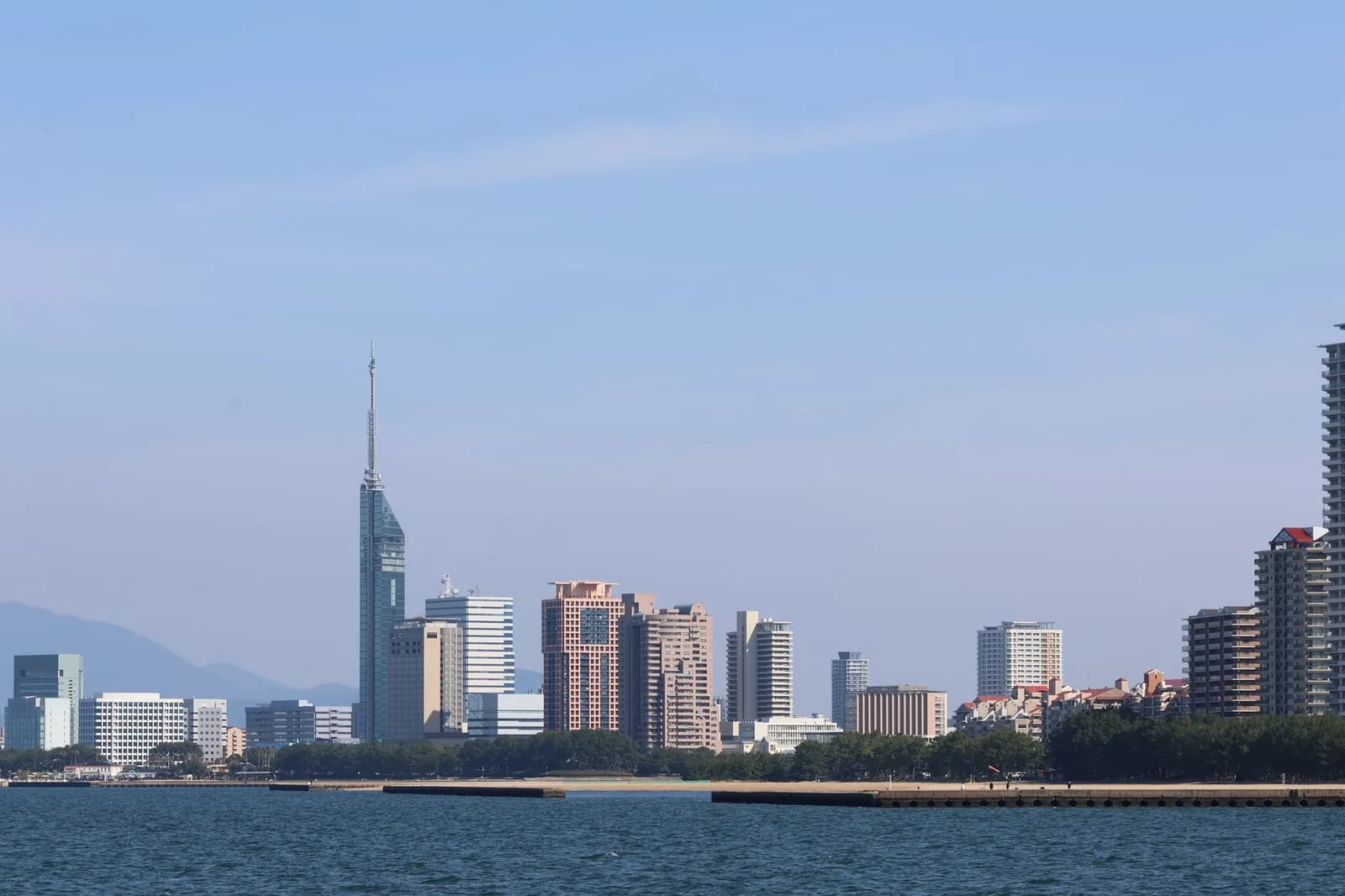 1Photo arnaud audoin, Pexels
Momochi, Nishijin Station then 20 minutes on foot or a bus
Fukuoka Tower
At 234 metres, the mirror-clad tower on the seafront is the tallest seaside tower in Japan. The observation deck looks over Hakata Bay, Momochi Beach and the city. Tickets cost ¥1,000 for adults ($6), ¥500 for school children and ¥200 from age 4, and it opens 9:30 to 22:00, last entry 21:30. Go at sunset, when the city lights come on behind the bay.
- Adults
- ¥1,000 ($6)
- Hours
- 9:30 to 22:00
- Closed
- 28 and 29 June 2027
2.
At the foot of Fukuoka Tower
Momochi Seaside Park and Marizon
A man-made sandy beach right in the city, with Marizon, a small wedding chapel and restaurant complex on a pier. Swimming is allowed in summer. The rest of the year it is a place for a walk at sunset after the tower.
- Entry
- Free
3.
Momochi, 5 minutes from Fukuoka Tower
Fukuoka City Museum and the gold seal
The museum shows the history of Fukuoka as Japan's gateway to China and Korea. Its star is a tiny gold seal sent by a Chinese emperor in 57 AD, a National Treasure found on Shikanoshima island in 1784. The permanent collection is cheap and rarely crowded.
- Closed
- Mondays
4.
Between Fukuoka Tower and Tojinmachi Station
Fukuoka PayPay Dome and a Hawks game
The home of the SoftBank Hawks, one of Japan's top baseball teams. A game is a great night out, with chants, cheer squads and beer sellers running up the stands. The season runs from late March to early October, and tickets sell out for weekend games, so book a few weeks ahead.
- Season
- Late March to October
- Station
- Tojinmachi
Nokonoshima Island: ferry, flower fields and prices
Nokonoshima is a small island in Hakata Bay, about 10 minutes by ferry from Meinohama port, which you reach by bus from Tenjin or Hakata, or by subway to Meinohama Station and a short bus or taxi ride. The ferry costs about ¥230 for adults each way. A bus runs from the pier to Nokonoshima Island Park at the northern tip, a hillside of flower fields over the sea: rapeseed and cherry blossom in spring, sunflowers in summer, cosmos in autumn and narcissus in winter.
The park opens daily from 9:00 to 17:00, later on Sundays and holidays outside winter. We found two adult prices in our checks, ¥1,200 and ¥1,500, so plan on the higher one. Allow half a day, and pick a clear day for the view across the bay to the city.
What to eat in Fukuoka: Hakata ramen, mentaiko and motsunabe
Hakata tonkotsu ramen
Hakata ramen is a milky pork-bone broth with very thin, straight noodles. You choose how firm you want them, from barikata (very firm) to yawa (soft), and when the bowl is empty you order kaedama, a second portion of noodles dropped into the remaining broth. Ichiran, the solo-booth chain now found all over Japan, was founded in Fukuoka, and its flagship stands in Nakasu. Locals also queue at Shin-Shin in Tenjin, Hakata Ikkousha and the stalls of Nagahama, where the style took its fish-market variation.
Mentaiko
Spicy pollock roe, brought from Korea and adapted in Hakata after the war, is the city's favourite souvenir. You will find it raw with rice, grilled, in pasta, in omelettes and in the mentaiko French bread sold at Hakata Station. Fukuya, the shop that first sold it in Hakata, and the department-store food halls have the widest choice, in gift boxes that keep for a few days in a cool bag.
Motsunabe and other Fukuoka dishes
Motsunabe is a hotpot of beef or pork offal cooked with cabbage, garlic chives and garlic, in a soy or miso broth, finished with champon noodles. It is a winter dish, served for a minimum of two people. Try also gomasaba (raw mackerel in sesame sauce), mizutaki (chicken hotpot) and hitokuchi gyoza, the bite-size dumplings of Nakasu. A meal of motsunabe or mizutaki costs about ¥2,500 to ¥4,000 per person.
Day trips from Fukuoka: Dazaifu, Yanagawa, Itoshima, Nagasaki and Beppu
Fukuoka is the hub of Kyushu, and most of the island's highlights are within a day. Times are from Hakata or Tenjin.
| Day trip | How to get there | Time one way | JR pass |
|---|---|---|---|
| Dazaifu | Nishitetsu train from Tenjin, change at Futsukaichi | About 30 to 40 min | No |
| Yanagawa | Nishitetsu train from Tenjin | About 50 min | No |
| Itoshima | Subway and JR to Chikuzen-Maebaru, then bus or car | About 40 min plus the bus | JR section only |
| Nanzo-in | JR Sasaguri line | About 25 min | Yes |
| Kitakyushu and Mojiko | Shinkansen to Kokura, then local train | About 35 min | Yes |
| Nagasaki | Relay Kamome, then Nishi-Kyushu Shinkansen | About 1 h 20 to 1 h 50 | Yes |
| Beppu | Limited express Sonic | About 2 h | Yes |
| Yufuin | Yufuin no Mori or Yufu limited express | About 2 h 15 | Yes |
Dazaifu Tenmangu: the shrine and the restoration in 2026
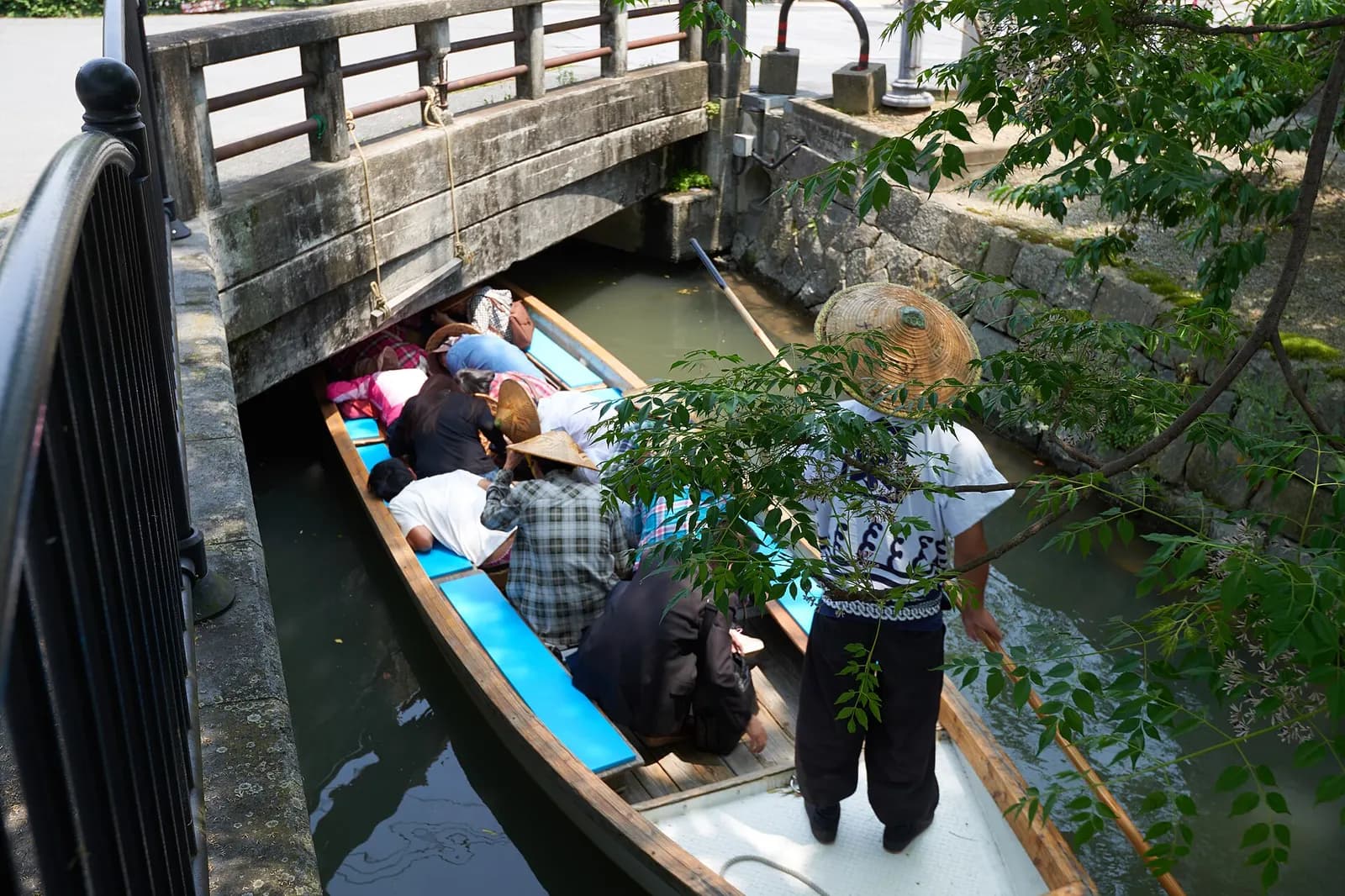
Dazaifu Tenmangu is dedicated to Sugawara no Michizane, the god of learning, and students come here before their exams. The grounds are free, about 6,000 plum trees flower from late January to March, and the approach street sells umegae-mochi, grilled rice cakes filled with red bean paste. The main hall has been under its first major restoration in about 124 years since spring 2023, hidden behind a temporary hall by the architect Sou Fujimoto with a forest planted on its roof. On 19 September 2026 the shrine announced that worship in front of the main hall had resumed, after about three and a half years. Check the shrine's website before you go to see what is still covered.
From Nishitetsu Fukuoka (Tenjin) Station, the train takes about 30 to 40 minutes with a change at Futsukaichi and costs under ¥500. Direct buses also leave from the Hakata Bus Terminal in about 40 minutes. The shrine opens at 6:00 or 6:30 and closes between 18:30 and 19:30 depending on the season. Combine it with the Kyushu National Museum, linked to the shrine by an escalator tunnel.
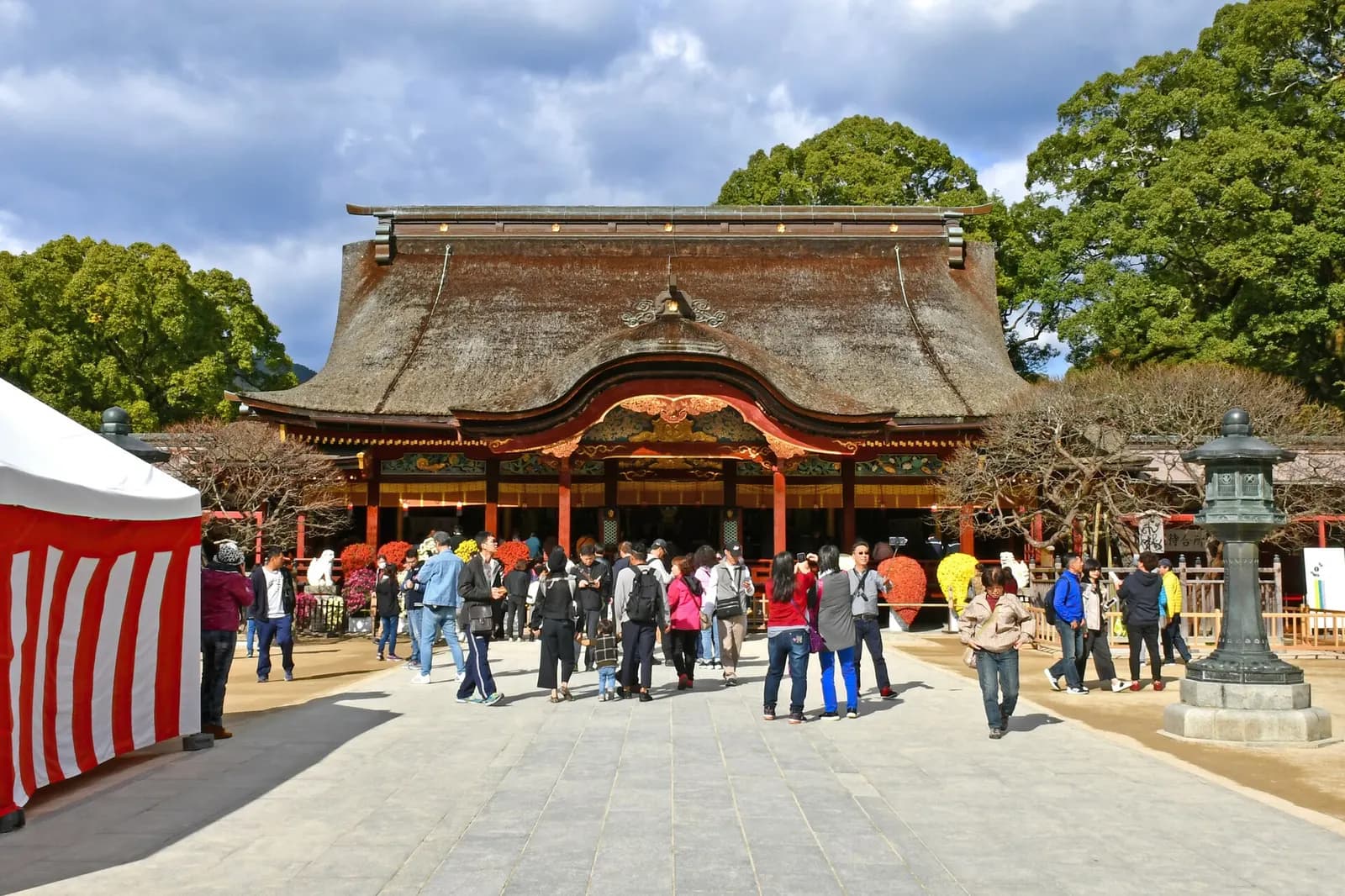
Yanagawa canal boat ride
Yanagawa is a castle town crossed by canals, where boatmen pole flat-bottomed boats under willows and low bridges. The ride, called kawakudari, lasts about 1 hour over 4 km and costs from ¥1,800, depending on the company. In winter the boats carry a kotatsu, a heated table under a blanket. The canals are drained for cleaning for about ten days in February, when the route is shorter. Finish with unagi no seiromushi, steamed eel on rice, the local speciality. Nishitetsu sells a combined ticket for Dazaifu and Yanagawa, which lets you do both in one day.
Itoshima: beaches, cafes and the Futamigaura wedded rocks
The Itoshima peninsula west of the city has surf beaches, seaside cafes and the Futamigaura wedded rocks, two rocks tied by a sacred rope with a white torii gate standing in the sea in front of them, best at sunset. Buses are infrequent, so a car or a tour makes it much easier. Our guide to renting a car in Japan covers the international driving permit you need.
Nanzo-in and its reclining Buddha
In the hills of Sasaguri, 25 minutes by JR from Hakata, Nanzo-in temple has a bronze reclining Buddha of about 41 metres, one of the largest bronze statues in the world. It is an easy half day, often combined with Dazaifu.
Kitakyushu: Kokura Castle and Mojiko Retro
The Shinkansen reaches Kokura in about 15 minutes for ¥2,160 in an unreserved seat. Kokura has a rebuilt castle and the Tanga market. A local train then runs to Mojiko, a port of Meiji-era brick buildings on the Kanmon Strait. A short bus ride away, a pedestrian tunnel under the strait leads to Shimonoseki in Honshu.
Nagasaki
Change from the Relay Kamome to the Nishi-Kyushu Shinkansen at Takeo-Onsen, on the same platform. Nagasaki needs a full day for the Peace Park and Atomic Bomb Museum, Glover Garden, Dejima and the night view from Mount Inasa. Our Shinkansen guide explains why this short line is not yet linked to the rest of the network.
Beppu and Yufuin
Beppu, on the east coast, is Japan's hot spring capital: the coloured "hells" (jigoku), sand baths and public onsen. Yufuin, inland, is a quieter spa town of craft shops and ryokan below Mount Yufu. The Yufuin no Mori sightseeing train from Hakata is full almost every day, so reserve as soon as seats open. Both towns deserve a night if you can, rather than a rushed day trip.
Fukuoka festivals: Hakata Gion Yamakasa and Hakata Dontaku
Hakata Gion Yamakasa runs from 1 to 15 July every year. Teams of men in loincloths race one-tonne floats through the streets of Hakata, and the final race, the Oiyama, starts from Kushida Shrine at 4:59 on the morning of 15 July. Decorated floats stand around the city during the first two weeks. Stake out a place along the route the night before, as the streets fill early.
Hakata Dontaku, on 3 and 4 May during Golden Week, is a parade festival with dancers, floats and shamoji rice paddles clapped as instruments. It is held on those two days every year, so 2027 should follow suit, but the organisers had not published the 2027 programme when we checked, and the parade timetable usually comes out in April. Book hotels early for both festivals.
How many days in Fukuoka, and how to plan them
Two days cover the city, three let you add Dazaifu and an easy pace, and four or five turn Fukuoka into a base for Kyushu. Here is a plan for three days.
| Day | Morning | Afternoon and evening |
|---|---|---|
| Day 1 | Kushida Shrine, Tochoji, Shofuku-ji | Canal City, then dinner at the Nakasu yatai |
| Day 2 | Ohori Park and Fukuoka Castle ruins | Momochi and Fukuoka Tower at sunset, yatai in Tenjin |
| Day 3 | Dazaifu Tenmangu | Yanagawa canal ride and eel, back to Tenjin |
| Day 4 | Nokonoshima or Itoshima | Daimyo cafes, ramen in Nagahama |
Getting to Fukuoka: airport, Shinkansen, JR Kyushu Rail Pass and the ferry to Korea
Fukuoka Airport, 5 minutes from Hakata
Fukuoka Airport is the closest major airport to a city centre in Japan. The Kuko subway line leaves from the domestic terminal and reaches Hakata in 5 minutes and Tenjin in 11 minutes, for about ¥260. International flights land at a separate terminal, linked to the domestic one by a shuttle bus in about 10 minutes. A one-day subway pass costs ¥640. Most long-haul travellers arrive via Seoul, Taipei or Hong Kong, as our guide to flights to Japan explains.
Shinkansen and the JR Kyushu Rail Pass
Hakata is the terminus of the Sanyo Shinkansen from Osaka and Hiroshima and the start of the Kyushu Shinkansen to Kumamoto and Kagoshima. Nozomi trains run through from Tokyo in about 5 hours and from Shin-Osaka in about 2 hours 30, which makes a stop at Miyajima near Hiroshima easy on the way. For Kyushu itself, the JR Kyushu passes cost less than the national pass:
| Pass | Days | Adult price | Covers |
|---|---|---|---|
| All Kyushu Area Pass | 3, 5 or 7 | ¥22,000, ¥24,000 or ¥26,000 ($138, $150 or $163) | Fukuoka to Kagoshima, Nagasaki and Beppu |
| Northern Kyushu Area Pass | 3 or 5 | ¥15,000 or ¥17,000 ($94 or $106) | Fukuoka, Nagasaki, Kumamoto, Beppu |
The Northern pass pays off with two long return trips, for example Nagasaki and Beppu. It does not cover the Nishitetsu trains to Dazaifu and Yanagawa, nor the subway. Our Japan Rail Pass guide compares it with the nationwide pass.
Ferry and flights from Fukuoka to Korea
Busan is closer to Fukuoka than Tokyo is. Camellia Line sails from the Hakata Port International Terminal in about 6 hours by day, and overnight in the other direction, with check-in about an hour before departure. The faster Queen Beetle jetfoil no longer runs under JR Kyushu, which sold it to a Korean company in April 2025, so check the current operator before you plan around it. Flights to Busan take about an hour in the air and to Seoul about 1 hour 30, with low-cost airlines on both routes.
Fukuoka budget per day for tourists in 2026
Our estimates per person and per day, two people sharing a room, at 160 yen to the dollar. They exclude flights, shopping and day trips by train.
| Per person, per day | Budget | Mid-range | Comfort |
|---|---|---|---|
| Where you sleep | Hostel, capsule: ¥4,500 | 3-star hotel: ¥9,000 | 4 to 5-star hotel: ¥22,000 |
| Food | ¥3,000 | ¥5,500 | ¥12,000 |
| Subway and buses | ¥640 day pass | ¥1,000 | ¥3,000 with taxis |
| Sights and tickets | ¥500 | ¥2,000 | ¥4,000 |
| Total | about ¥8,600 ($54) | about ¥17,500 ($109) | about ¥41,000 ($256) |
Fukuoka is cheaper than Tokyo or Osaka, mostly because so many of its sights are free: the shrines and temples, Ohori Park, the castle ruins and the beach. For where to sleep, Hakata suits a trip with day trips by JR, and Tenjin and Nakasu put you closest to the yatai and the Nishitetsu trains.
Living in Fukuoka: start-up visa and cost of living
Fukuoka is a popular choice for foreigners who settle in Japan: lower rents, a compact centre, beaches and an airport 5 minutes away. Our cost of living in Japan guide puts a single person's budget in Fukuoka city at about ¥218,490 a month ($1,366), including ¥67,115 of rent for a small flat, against about ¥266,000 in Tokyo's 23 wards.
The city also runs its own start-up visa. A foreign founder whose business plan is approved by the city can enter on a one-year "Designated Activities" status, extendable to two years at most, while preparing the conditions of the Business Manager visa, including capital equivalent to ¥30 million. The application is in Japanese, the city fee is ¥300 per certificate, and founders must meet the city's start-up centre at least once a month. Remote workers employed abroad have another route, explained in our guide to the Japan digital nomad visa.