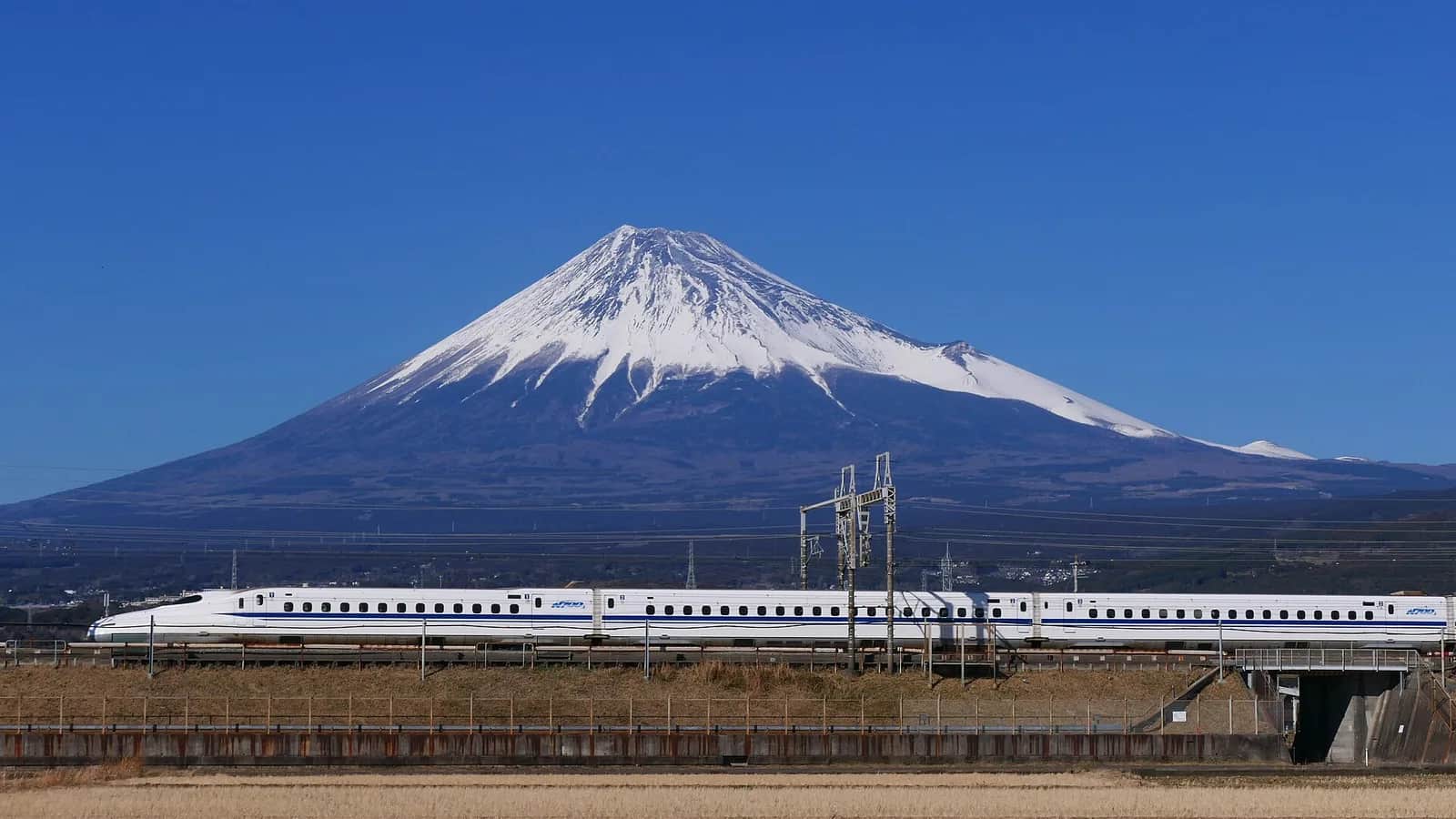
- Tokyo to Kyoto in a reserved seat on a Nozomi in regular season, about $89 one way
- ¥14,170
- typical Nozomi journey time from Tokyo Station to Kyoto Station, with no change of train
- 2 h 15
- top speed in service, reached by Hayabusa trains on the Tohoku Shinkansen north of Tokyo
- 320 km/h
On this page
The Shinkansen is Japan's high-speed rail network, known abroad as the bullet train. It links Tokyo to Kyoto in about 2 hours 15 minutes for ¥14,170 ($89) and reaches almost every large city from Hakodate in the north to Kagoshima in the south. This guide covers the lines, the train types, 2026 fares in yen and dollars, how to buy a ticket and the rules on seats and luggage. Dollar amounts use the mid-November 2026 rate of about 160 yen to the dollar.
What is the Shinkansen?
Shinkansen (新幹線, pronounced shin-kahn-sen) means "new trunk line". The word names the dedicated high-speed tracks as much as the trains that run on them. The first line opened between Tokyo and Osaka on 1 October 1964, days before the Tokyo Olympics, and the network has grown to eight full lines and two branch lines run by five companies of the Japan Railways (JR) group.
Three things set it apart from high-speed rail elsewhere. The tracks are separate from ordinary trains, so delays are counted in seconds on a normal day. Trains are frequent, with up to 13 Nozomi an hour leaving Tokyo at the busiest times since the March 2026 timetable. And fares are fixed: a seat costs the same whether you buy it a month ahead or five minutes before departure, apart from a few advance discounts sold online.
Shinkansen tickets, rail passes and bullet train day trips to book online
Most travellers buy their tickets from Japan Railways, as explained further down, but a few tickets, passes and day trips built around the train can be booked ahead in English.
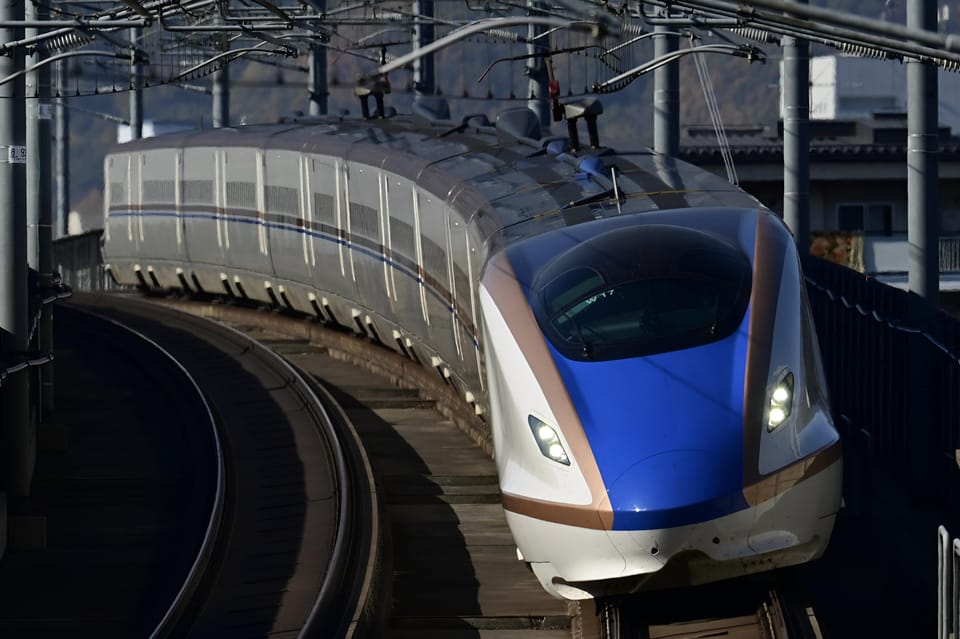
One-Way Bullet Train Ticket - Sanyo Shinkansen
A one-way ticket for the Sanyo Shinkansen, the line that runs west from Osaka towards Hiroshima and Fukuoka, bought before you travel.
4.6(42 reviews)
From $16per person
See prices & availability
Japan: 7, 14 or 21-Day Japan Rail Pass
The nationwide pass for 7, 14 or 21 days. It covers most Shinkansen, with a paid supplement for Nozomi and Mizuho trains.
4.8(658 reviews)
- 7 to 21 days
From $368per person
See prices & availability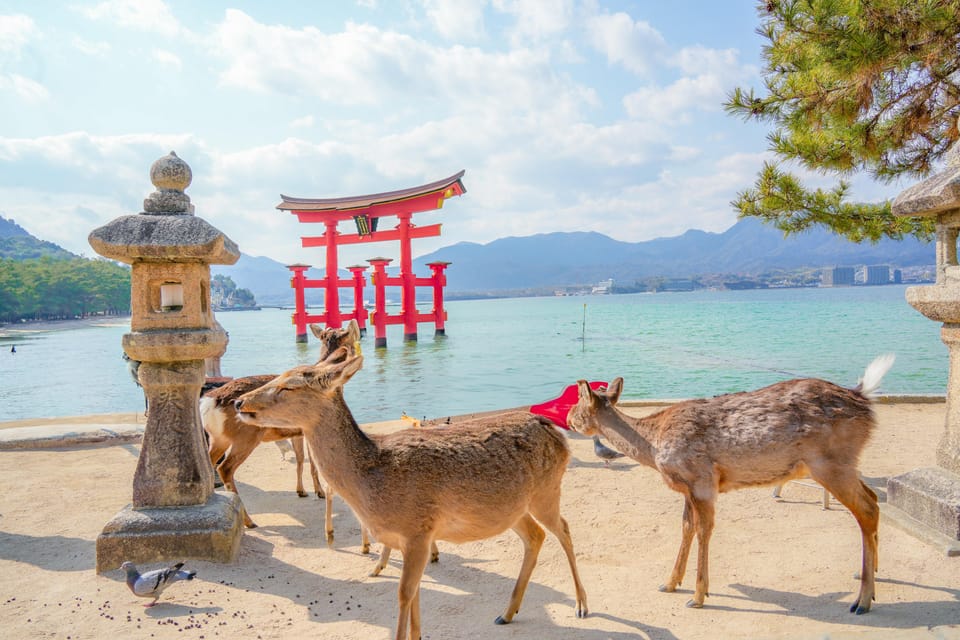
From Kyoto: Hiroshima & Miyajima Day Trip by bullet train
A long day out from Kyoto to Hiroshima and the island of Miyajima, with the journey made by bullet train.
4.7(109 reviews)
- 8 to 12 hours
- Free cancellation
From $95per person
See prices & availability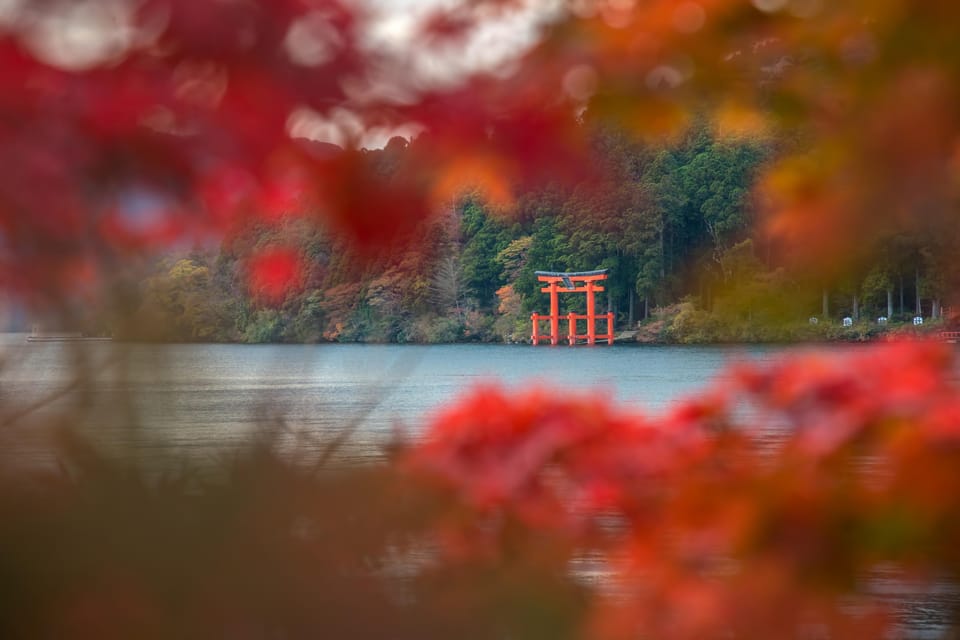
Tokyo: Mt Fuji & Hakone 6-Spot Tour w/ Bullet Train
A day tour from Tokyo around Mount Fuji and Hakone that includes a ride on the bullet train.
4.3(761 reviews)
- 10 hours
- Free cancellation
From $109per person
See prices & availability
Shinkansen prices and journey times on the main routes in 2026
Fares below are for one adult, one way, in a reserved seat of an ordinary car in regular season, on the fastest train of the route. They include the changes of 14 March 2026, when JR East raised its fares by 7.1% on average, its first general increase since the railways were privatised in 1987. A return costs twice the one-way price.
| Route | Fastest train | Journey time | Reserved seat | In dollars |
|---|---|---|---|---|
| Tokyo to Kyoto | Nozomi | about 2 h 15 | ¥14,170 | $89 |
| Tokyo to Osaka (Shin-Osaka) | Nozomi | about 2 h 30 | ¥14,720 | $92 |
| Tokyo to Hiroshima | Nozomi | 3 h 45 to 4 h | ¥19,760 | $124 |
| Tokyo to Kanazawa | Kagayaki | about 2 h 30 | ¥14,600 | $91 |
| Tokyo to Sendai | Hayabusa | about 1 h 30 | ¥11,630 | $73 |
| Osaka (Shin-Osaka) to Hiroshima | Mizuho or Nozomi | about 1 h 25 | ¥10,950 | $68 |
| Tokyo to Hakodate (Shin-Hakodate-Hokuto) | Hayabusa | about 4 h | about ¥24,000 | $150 |
The four exact figures come from the fare tables in force since 14 March 2026. The three marked "about" are indicative, so check the exact fare for your date when you book. A non-reserved seat costs ¥530 to ¥850 less, for example ¥13,320 from Tokyo to Kyoto and ¥13,870 to Shin-Osaka. Reserved seats also move with the calendar: around ¥200 less in the off-peak season, and ¥200 to ¥400 more on peak days.
Every Shinkansen ticket is made of two parts, a base fare for the distance and a limited express supplement for using the high-speed line. Bought at a station, they are sometimes printed as two separate tickets, and both go into the gate together. If these prices look steep for a long trip, compare them with the cost of a pass in our guide to the Japan Rail Pass.
Shinkansen lines and map: from Hokkaido to Kyushu
The network is easiest to read as two trunks that meet at Tokyo Station. One runs west and south along the Pacific coast to Nagoya, Kyoto, Osaka, Hiroshima, Fukuoka and Kagoshima. The other fans out north of Tokyo towards Sendai, Aomori and Hokkaido, with branches to Niigata on the Sea of Japan and to Kanazawa. Trains do not run through Tokyo from one trunk to the other, so a trip from Kyoto to Sendai means changing there.
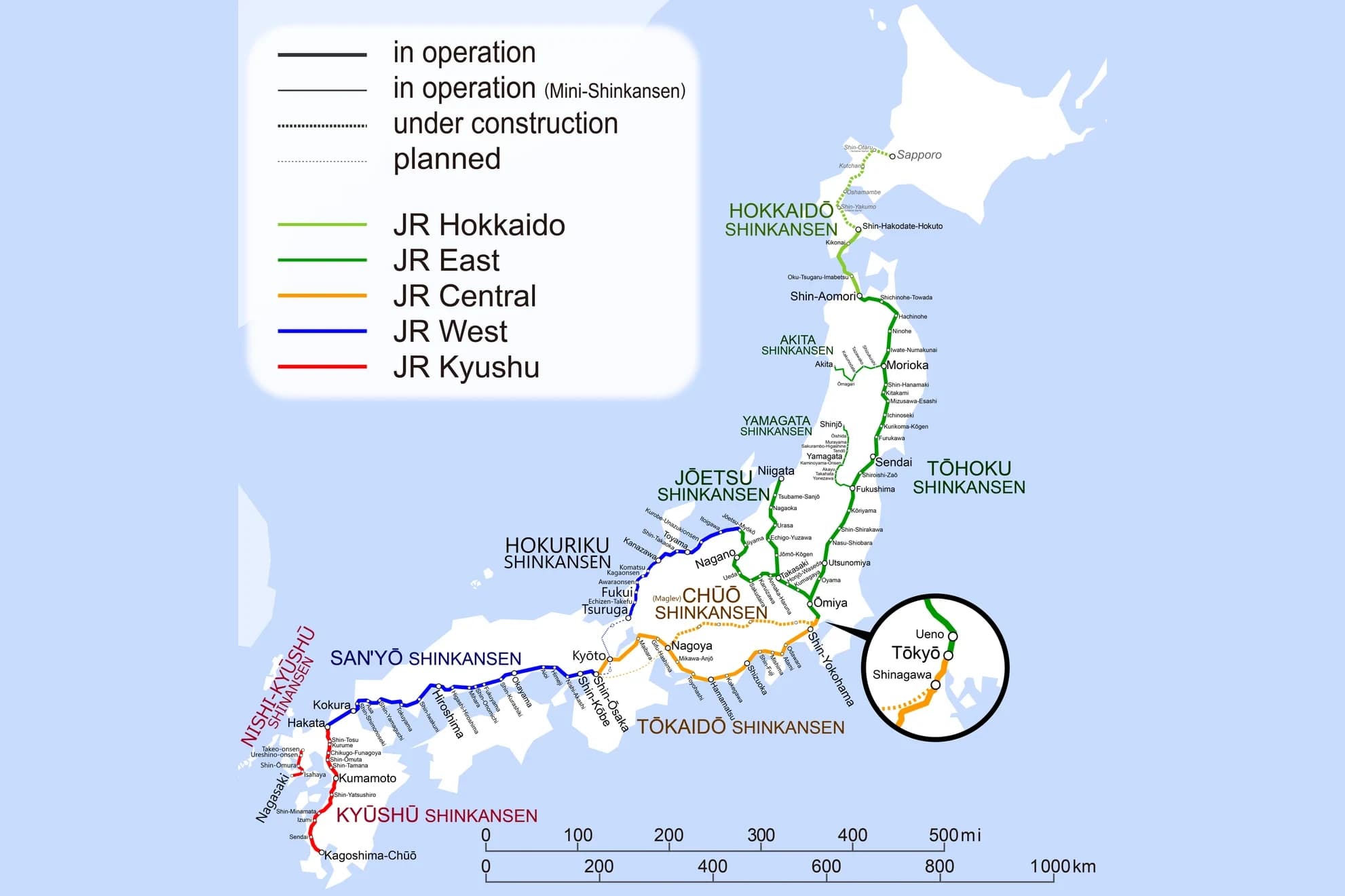
| Line | Route | Top speed | Main trains |
|---|---|---|---|
| Tokaido | Tokyo to Shin-Osaka via Nagoya and Kyoto | 285 km/h | Nozomi, Hikari, Kodama |
| Sanyo | Shin-Osaka to Hakata (Fukuoka) via Himeji and Hiroshima | 300 km/h | Nozomi, Mizuho, Sakura, Hikari, Kodama |
| Kyushu | Hakata to Kagoshima-Chuo via Kumamoto | 260 km/h | Mizuho, Sakura, Tsubame |
| Nishi-Kyushu | Takeo-Onsen to Nagasaki | 260 km/h | Kamome |
| Tohoku | Tokyo to Shin-Aomori via Sendai and Morioka | 320 km/h | Hayabusa, Yamabiko, Nasuno |
| Hokkaido | Shin-Aomori to Shin-Hakodate-Hokuto | 260 km/h | Hayabusa |
| Joetsu | Tokyo to Niigata | 275 km/h | Toki, Tanigawa |
| Hokuriku | Tokyo to Tsuruga via Nagano and Kanazawa | 260 km/h | Kagayaki, Hakutaka, Asama, Tsurugi |
| Akita and Yamagata | Branches off the Tohoku line to Akita and Shinjo | 130 km/h on the branch | Komachi, Tsubasa |
Tokaido, Sanyo and Kyushu: the line most visitors ride
The Tokaido Shinkansen, run by JR Central, is the original 1964 line and the busiest. It carries the classic first-trip route between Tokyo, Kyoto and Osaka. At Shin-Osaka the track continues as the Sanyo Shinkansen, and many Nozomi run straight through from Tokyo to Hiroshima and Hakata, the main station of Fukuoka, without a change. The Sanyo line serves Himeji Castle, a 20-minute walk from Himeji Station, and Hiroshima, the gateway to Miyajima island. From Hakata the Kyushu Shinkansen runs on to Kumamoto and Kagoshima-Chuo.
The Nishi-Kyushu Shinkansen, opened in 2022, is an isolated 66 km stretch between Takeo-Onsen and Nagasaki. It is not yet joined to the rest of the network, so passengers from Hakata ride a limited express to Takeo-Onsen and step across the platform to the Kamome.
Tohoku, Hokkaido, Joetsu and Hokuriku: north and west of Tokyo
JR East runs the lines that leave Tokyo to the north. The Tohoku Shinkansen is the fastest in the country, at 320 km/h between Utsunomiya and Morioka. Beyond Shin-Aomori the Hokkaido Shinkansen dives through the 54 km Seikan Tunnel and stops, for now, at Shin-Hakodate-Hokuto. The extension to Sapporo has been pushed back to the end of fiscal 2038 at the earliest, so reaching Sapporo still means a limited express of nearly four hours from Hakodate, or a flight. Our Hokkaido guide compares the two.
The Hokuriku Shinkansen crosses the mountains to Nagano, Toyama and Kanazawa, and since 16 March 2024 it continues to Fukui and Tsuruga. Kyoto and Osaka are not on it yet: you change at Tsuruga to a Thunderbird limited express. The Joetsu Shinkansen is the short line to Niigata and to the ski resorts of Echigo-Yuzawa. The Akita and Yamagata lines are "mini-Shinkansen", where trains leave the high-speed track and continue on converted ordinary lines at 130 km/h.
Shinkansen train types: Nozomi, Hikari, Kodama, Hayabusa and the rest
The names printed on tickets and departure boards are service names, not models of train. On each line they tell you how many stations the train skips. The same white N700S set can run as a Nozomi in the morning and a Kodama in the afternoon.
| Service | Lines | Stopping pattern | Japan Rail Pass |
|---|---|---|---|
| Nozomi | Tokaido, Sanyo | Fastest, major cities only | Supplement required |
| Hikari | Tokaido, Sanyo | Semi-fast, a few more stops | Covered |
| Kodama | Tokaido, Sanyo | Every station | Covered |
| Mizuho | Sanyo, Kyushu | Fastest between Shin-Osaka and Kagoshima-Chuo | Supplement required |
| Sakura | Sanyo, Kyushu | Semi-fast | Covered |
| Hayabusa | Tohoku, Hokkaido | Fastest, all seats reserved | Covered |
| Yamabiko, Nasuno | Tohoku | Semi-fast and all-stations | Covered |
| Komachi, Tsubasa | Akita, Yamagata | Through trains from Tokyo to Akita and Yamagata | Covered |
| Kagayaki | Hokuriku | Fastest to Kanazawa, all seats reserved | Covered |
| Hakutaka, Asama, Tsurugi | Hokuriku | More stops, shorter runs | Covered |
| Toki, Tanigawa | Joetsu | Tokyo to Niigata and Echigo-Yuzawa | Covered |
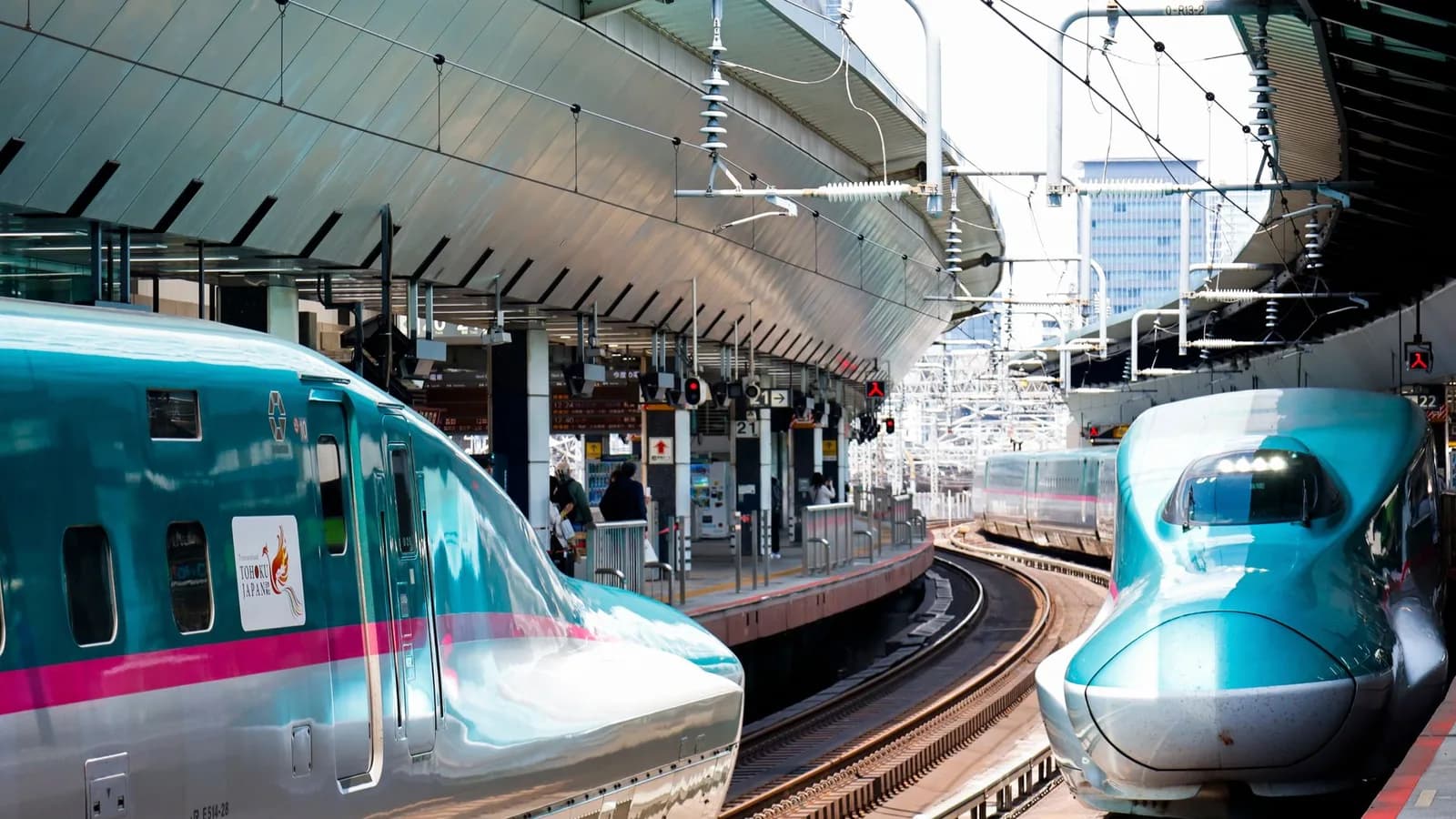
Between Tokyo and Osaka the difference is modest: a Nozomi stops at Shinagawa, Shin-Yokohama, Nagoya and Kyoto, and a Hikari adds a handful of stations and about 25 minutes. A Kodama takes close to four hours and is only worth it for small stations such as Odawara, Atami or Mishima. North of Tokyo, Hayabusa and Kagayaki trains have no non-reserved cars, so you need a seat reservation to board.
Tokyo to Kyoto by Shinkansen: time, price, station and the Mount Fuji seat
Tokyo to Kyoto is a direct ride of about 2 hours 15 minutes on a Nozomi, with no change. The distance is roughly 510 km of track, and the train stops only at Shinagawa, Shin-Yokohama and Nagoya on the way. Flying takes longer once you add the airport transfers, and Kyoto has no airport of its own.
| Train | Journey time | Reserved seat | Non-reserved seat |
|---|---|---|---|
| Nozomi | about 2 h 15 | ¥14,170 ($89) | ¥13,320 ($83) |
| Hikari | about 2 h 40 | ¥13,850 ($87) | ¥13,320 ($83) |
| Kodama | close to 4 h | ¥13,850 ($87) | ¥13,320 ($83) |
A Green Car seat costs about ¥19,000 ($119). The practical details matter more than the choice of train:
- Departure station: Tokyo Station, platforms 14 to 19, on the Yaesu side. Every train also stops at Shinagawa seven minutes later, which is easier to reach from Shibuya, Haneda Airport and the south of the city.
- Frequency: a Nozomi leaves every few minutes through the day, with up to 12 an hour between Tokyo and Shin-Osaka at peak times. There are usually two Hikari an hour.
- First and last trains: the first Nozomi leaves Tokyo at 6:00 and the last one that reaches Kyoto leaves at about 21:20. There are no overnight Shinkansen.
- Arrival: the Shinkansen platforms are on the south (Hachijo) side of Kyoto Station, a few minutes on foot from the subway and the bus terminal on the north side.
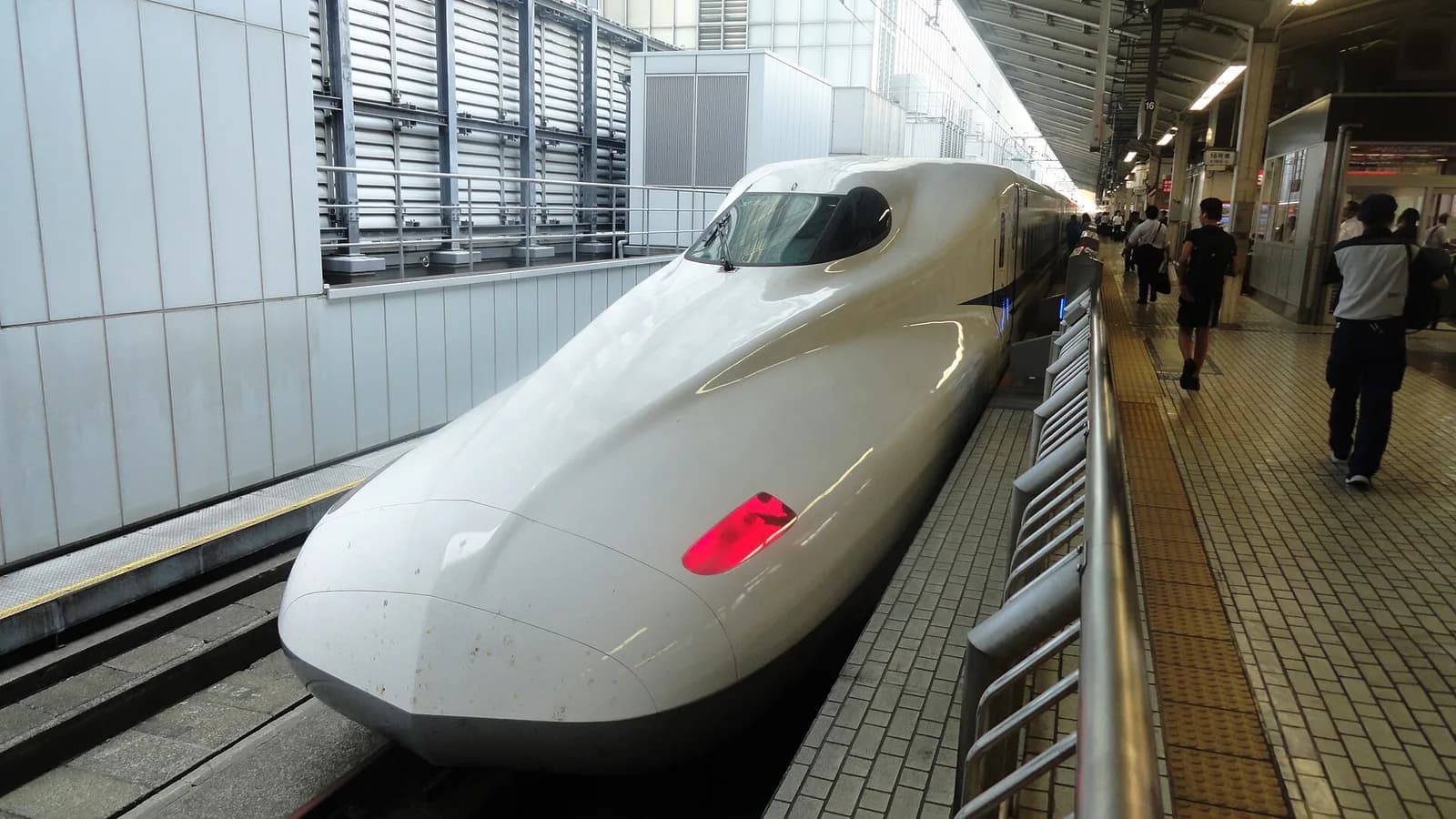
Travelling on to Osaka? Stay on the same train for 15 more minutes to Shin-Osaka, or use a cheaper JR rapid train from Kyoto Station, which takes about 30 minutes to Osaka Station for ¥580. For how the ride fits into a first trip, see our Japan itinerary.
How to buy Shinkansen tickets: counter, machine, smartEX and Eki-net
Reservations open one month before departure at 10:00 Japan time. Outside the three holiday peaks you rarely need that long: on an ordinary weekday, buying at the station 20 minutes before the train is normal. There are four ways to do it.
Ticket office (Midori no Madoguchi)
Every Shinkansen station has a staffed JR ticket office, marked with a green sign of a seated passenger. Tell the clerk the date, the destination, the number of people and whether you want a reserved seat, or show it written down. Foreign credit cards are accepted. Queues can run to 30 minutes at Tokyo, Kyoto and Shin-Osaka at busy times, which is the main reason to use a machine.
Ticket machines
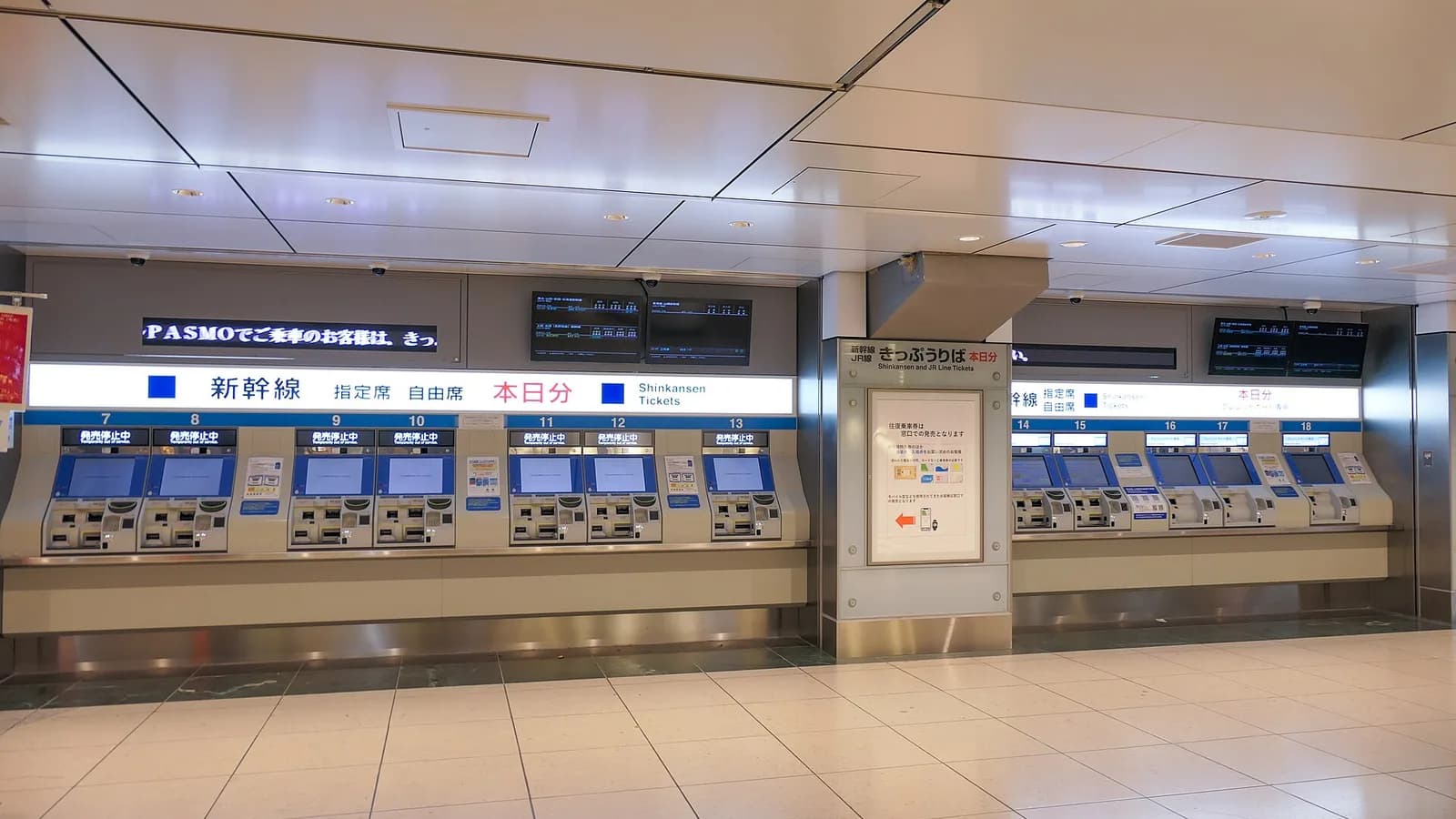
The reserved-seat machines beside the Shinkansen gates have an English button on the first screen. You choose the route, the train and the seat from a seat map, then pay by card or cash. The machine prints the base fare ticket and the supplement, sometimes combined on one ticket. Feed them into the gate together and collect them on the other side.
Online: smartEX for Tokyo to Kyushu, Eki-net for the north
Two official websites, both in English, cover the network. smartEX (and its app) sells the Tokaido, Sanyo and Kyushu lines, so everything between Tokyo and Kagoshima. It accepts foreign cards, lets you change a booking for free until departure and releases some seats up to a year ahead. Eki-net, run by JR East and called JR-EAST Train Reservation in its English version, sells the Tohoku, Hokkaido, Joetsu, Hokuriku, Akita and Yamagata lines. Tickets booked there are usually collected from a machine at a JR East station before boarding. Third-party resellers work too, but most add a booking fee of 10% to 20%.
Boarding with a QR code or an IC card
A smartEX booking does not need a paper ticket. You can scan a QR code from the app at the gates marked QR, or link a transport IC card such as Suica, Pasmo or Icoca to the booking and tap in with it. The fare is charged to your credit card, not to the balance of the IC card. On the JR East lines, a Suica can also be tapped at the Shinkansen gate for a non-reserved seat on shorter hops, with the fare taken from the card balance. Our guide to the Suica card and other IC cards explains how to get one.
Shinkansen seats: reserved, non-reserved, Green Car and Gran Class
An ordinary car has rows of three seats and two seats (A-B-C and D-E) with generous legroom, a fold-down table and, on recent trains, a power socket at every seat. All seats turn to face the direction of travel.
- Reserved seat (shitei-seki): a numbered seat on a given train, for ¥530 to ¥850 more than a non-reserved ticket in regular season. Miss the train and you can still ride a later one the same day in a non-reserved car.
- Non-reserved seat (jiyu-seki): valid on any train of the day, in the non-reserved cars only, first come first served. On a Nozomi these are cars 1 and 2 only since 15 March 2025, when car 3 became reserved. Hikari and Kodama trains have more.
- Green Car: first class, with wider seats in rows of two and two, a footrest and a quieter car. Tokyo to Shin-Osaka costs ¥19,590 ($122) against ¥14,720 in an ordinary reserved seat.
- Gran Class: 18 leather seats in rows of two and one, on the Tohoku, Hokkaido, Joetsu and Hokuriku lines only. It does not exist between Tokyo, Kyoto and Osaka.
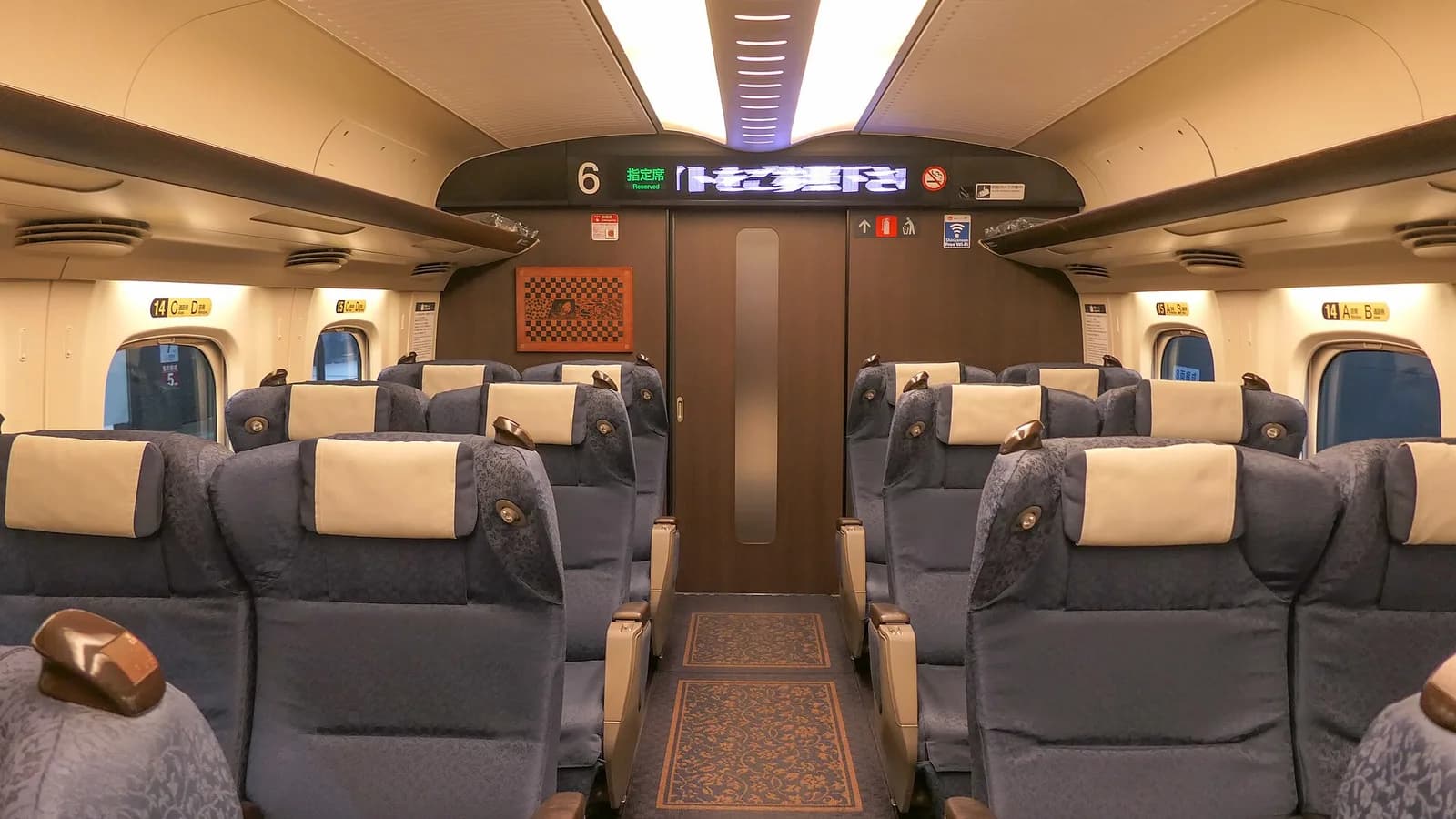
The Tokaido line has its own top tier since 1 October 2026: a small number of Nozomi now carry private compartments for one or two people, sold through smartEX. The semi-private seats announced with them are not expected before spring 2027.
Shinkansen luggage rules: the 160 cm limit and the oversized baggage seat
Each passenger can bring two bags of up to 30 kg and 250 cm each, measured as length plus width plus height, small personal items not counted. What changes with size is where the bag goes.
| Total dimensions | Typical bag | Rule |
|---|---|---|
| Up to 160 cm | Cabin bag, medium suitcase | No reservation, overhead rack or at your feet |
| 161 to 250 cm | Large checked suitcase | Reserved seat with oversized baggage area required, no extra charge |
| Over 250 cm | Not allowed on board |
The reservation rule applies on the Tokaido, Sanyo, Kyushu and Nishi-Kyushu lines, so on any trip between Tokyo, Kyoto, Osaka, Hiroshima and Fukuoka. It does not apply on the lines north of Tokyo. The oversized baggage seats are the last row of each car, with the space behind them. Choose "seat with oversized baggage area" at the machine, the counter or on smartEX. The price is the same as any reserved seat.
Since 1 July 2025, the lockable baggage compartments near the doors of 16-car Tokaido and Sanyo trains can be used without a reservation on a trial basis. They take a bag of up to about 80 by 60 by 50 cm and lock with an IC card. Many travellers skip the question altogether and send the big suitcase ahead by luggage delivery (takkyubin) from the hotel, for roughly ¥2,000 to ¥3,500 a bag and next-day arrival on most routes.
On board the Shinkansen: ekiben, etiquette and what there is to eat
An ekiben is a boxed meal sold at stations and made to be eaten on the train, often built around a local speciality: beef tongue in Sendai, trout sushi in Toyama, conger eel in Hiroshima. Most cost between ¥1,000 and ¥2,000 ($6 to $13). At Tokyo Station, the Ekibenya Matsuri shop inside the ticket gates stocks around 200 kinds from all over the country.
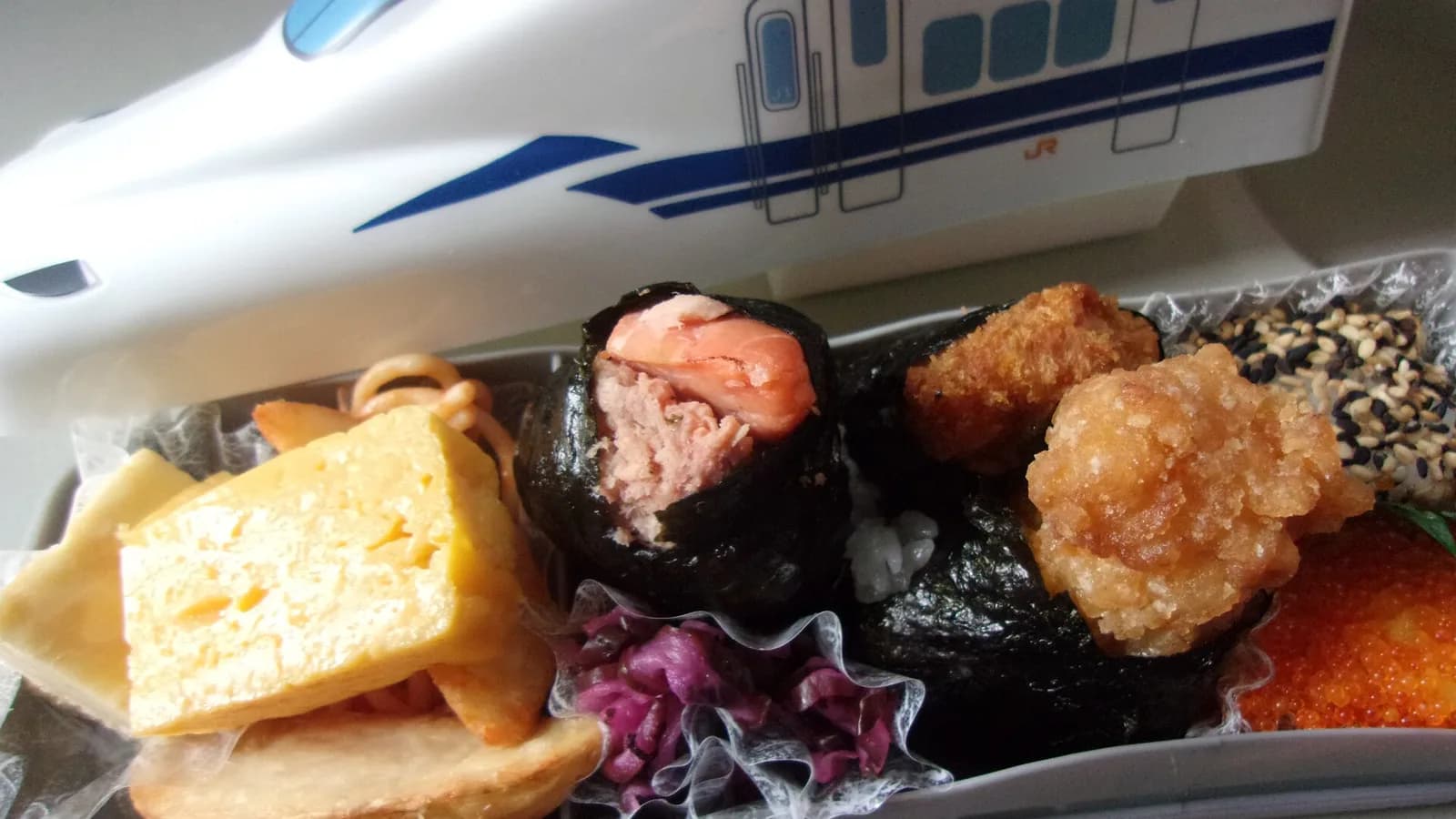
Buy food and drinks before you board. The trolley service on Tokaido Shinkansen trains ended on 31 October 2023, and only Green Car passengers can order from their seat on Nozomi and Hikari services. Platforms have kiosks and vending machines for drinks and snacks.
The etiquette is simple and people follow it closely:
- Queue at the car number painted on the platform and let passengers off first.
- Set your phone to silent and take calls in the deck area between cars, not at your seat.
- Keep conversation low, especially in the early morning and late evening.
- Ask the person behind you before reclining fully, and put the seat upright when you leave.
- Take your rubbish to the bins by the doors. Cleaning crews at Tokyo Station turn a train around in about seven minutes.
- Smoking is banned on every Shinkansen. The last smoking rooms on the Tokaido, Sanyo and Kyushu lines closed in March 2024.
Most trains have free Wi-Fi, toilets in every other car and a multi-purpose room that can be requested for nursing or for a passenger who feels unwell.
Shinkansen at peak times: Golden Week, Obon and New Year
Three periods fill the trains: Golden Week from late April to early May, Obon in mid-August and the New Year holidays from late December to early January. On those dates, every seat on Nozomi trains is reserved. The non-reserved cars disappear on the Tokaido and Sanyo lines, and a non-reserved ticket only lets you stand in the deck area of a Nozomi. Over the last New Year period the rule ran from 26 December 2025 to 4 January 2026. JR Central publishes the exact dates for each holiday a few months ahead.
What to do if your trip falls in one of these windows:
- Book as soon as sales open, one month before at 10:00 Japan time, or earlier on smartEX for the seats released up to a year ahead.
- Hikari, Kodama, Sakura and Mizuho trains keep their non-reserved cars. Queue early at the platform, because they fill at the first station.
- The crush runs out of Tokyo at the start of each holiday and back towards Tokyo at the end. Travelling against the flow, or in the middle days, is far easier.
- Seats with an oversized baggage area sell out first. Send large suitcases ahead.
Cherry blossom season in late March and early April, and the autumn leaves in November, are busy without being all-reserved. Our guide to the best time to visit Japan has the full calendar of crowds and holidays.
Is the Japan Rail Pass valid on the Shinkansen?
Yes, on every line, with one catch. The pass covers Hikari, Kodama, Sakura, Hayabusa, Kagayaki and all the other services, but not Nozomi and Mizuho trains unless you buy a separate Nozomi Mizuho ticket for each ride: ¥4,960 ($31) between Tokyo and Kyoto or Shin-Osaka, ¥6,500 ($41) between Tokyo and Hiroshima. Since the price rise of October 2023, a single Tokyo to Kyoto return no longer pays for a seven-day pass, and the sums only work on longer loops. The prices, the regional passes and worked examples are in our Japan Rail Pass guide, and the wider planning in our Japan travel guide.