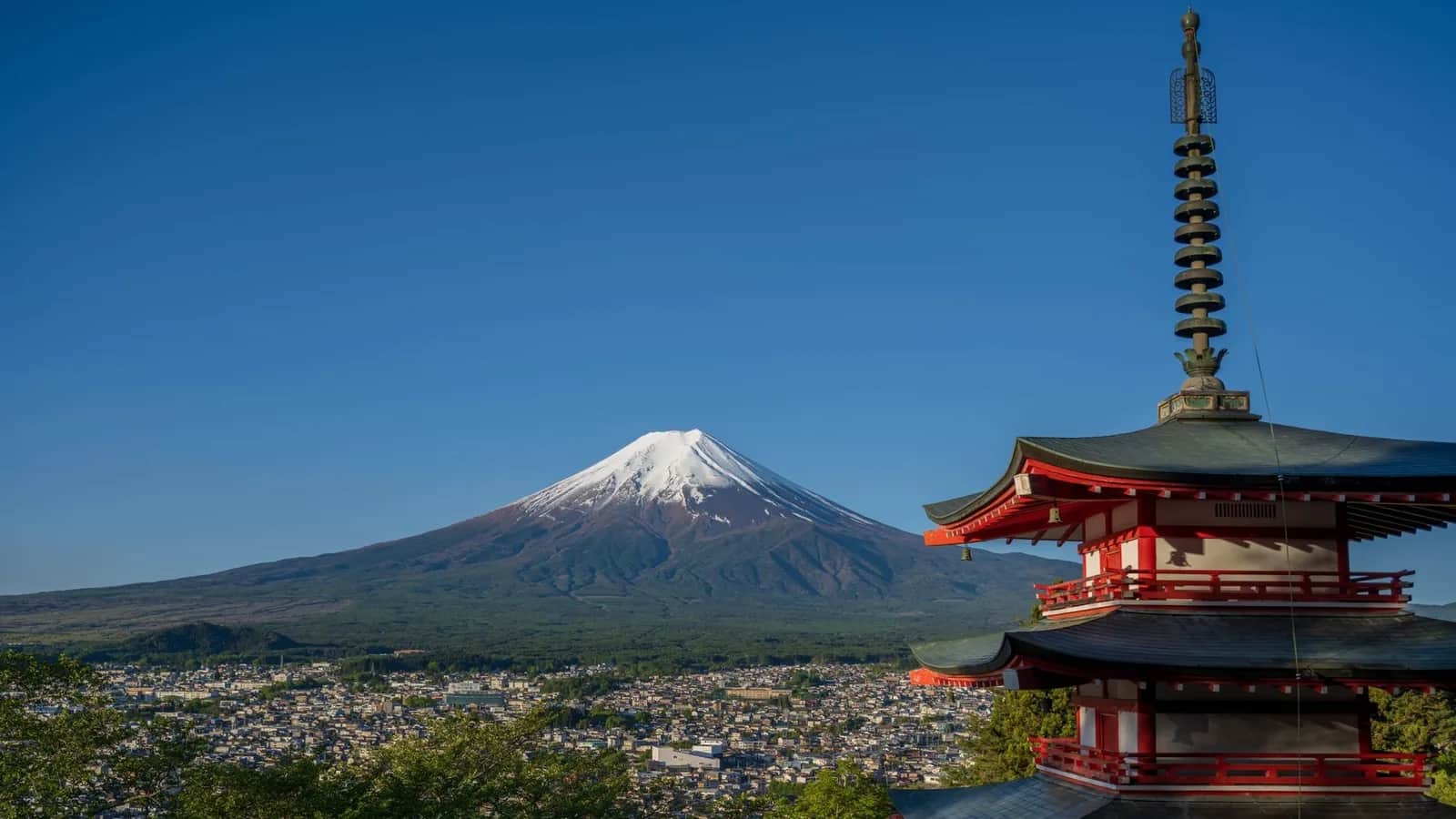
- Tokyo 4, Hakone or Kawaguchiko 1, Kyoto 3 with a day in Nara, Osaka 1, then a flight home from Kansai Airport on day 10
- 9 nights
- trains and airport transfers for the whole route on single tickets, about $169 per adult (fares read on 14 November 2026)
- ¥27,080
- day of each month at 10:00 Japan time, when Ghibli Museum tickets for the following month go on sale
- The 10th
On this page
The Japan itinerary that works best for a first trip runs in one line from east to west: Tokyo for 4 nights, Hakone or Kawaguchiko for 1 night with Mount Fuji in view, Kyoto for 3 nights with a day in Nara, Osaka for 1 night, then a flight home from Kansai Airport on day 10. Trains and airport transfers for the whole route cost about ¥27,080 per adult ($169) on single tickets, with no rail pass. Prices below were read on 14 November 2026 and converted at 160 yen to the dollar.
Japan 10 day itinerary at a glance: route, travel times and transport costs
| Day | Where you sleep | Main journey | Time | Fare per adult |
|---|---|---|---|---|
| 1 | Tokyo | Narita Airport to Tokyo Station, Narita Express | about 1 h | ¥3,140 ($20) |
| 2 to 4 | Tokyo | Subway and JR lines inside Tokyo | 10 to 35 min a ride | about ¥1,000 a day ($6) |
| 5 | Hakone | Shinjuku to Hakone-Yumoto, Romancecar with a Hakone Freepass | about 80 min | ¥8,300 ($52) |
| 6 | Kyoto | Odawara to Kyoto, Hikari Shinkansen | about 2 h | about ¥12,100 ($76) |
| 7 | Kyoto | City buses and subway | 15 to 40 min a ride | about ¥1,000 a day ($6) |
| 8 | Kyoto | Kyoto to Nara and back, JR Miyakoji Rapid | about 45 min each way | ¥1,440 ($9) |
| 9 | Osaka | Kyoto to Osaka, JR Special Rapid | about 30 min | ¥580 ($4) |
| 10 | Flight home | Namba to Kansai Airport, Nankai Rapi:t | 34 to 39 min | ¥1,520 ($10) |
The six intercity and airport legs add up to ¥27,080. With about ¥1,000 a day of subway and bus rides in the cities, which is our estimate for three or four rides, the full transport budget is close to ¥35,000, or $219. The Shinkansen fares are the same ones used in our Shinkansen guide, where you will also find how to buy the tickets.
Tours and activities to book for a Japan itinerary
One bookable activity for each stop on the route, from Tokyo to Hiroshima.

Tokyo: teamLab Planets TOKYO Digital Art Museum Entry Ticket
Timed entry to teamLab Planets in Toyosu, the barefoot digital art museum of day 4. Slots sell out, so book before you fly.
4.6(15,239 reviews)
From $23per person
See prices & availability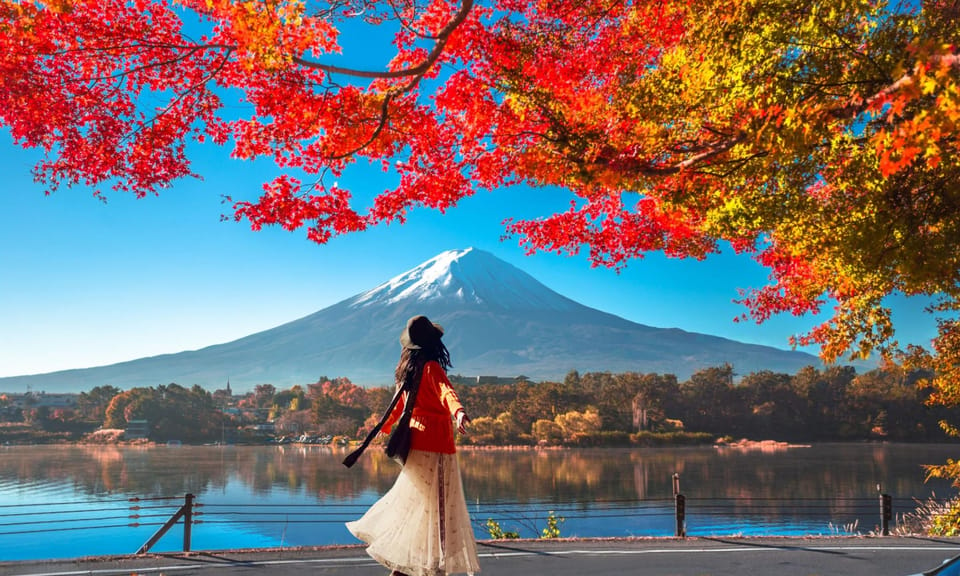
From Tokyo: Mt Fuji, Lake Kawaguchi, Oshino Hakkai & Arakurayama Day Trip
A full day by coach from Tokyo to Lake Kawaguchi, Oshino Hakkai and Arakurayama, for Fuji views without the overnight stay.
4.8(6,866 reviews)
- 10 hours to 1 day
- Free cancellation
- Pickup included
From $49per person
See prices & availability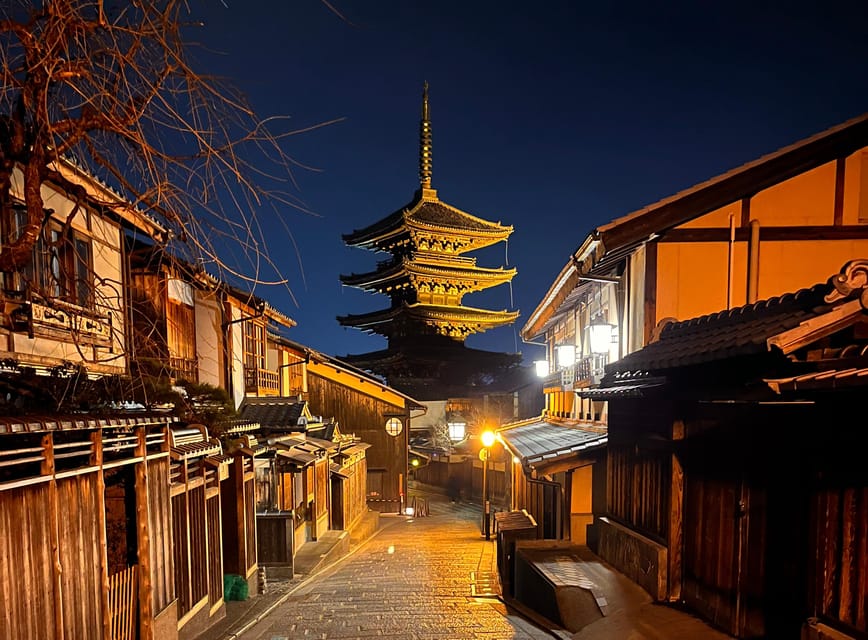
Kyoto: Gion Magical Night Walking Tour & Geisha Culture
A 100-minute evening walk through Gion with a guide who explains the geisha districts. It fits any of the three Kyoto nights.
4.9(5,424 reviews)
- 100 minutes
- Free cancellation
From $25per person
See prices & availability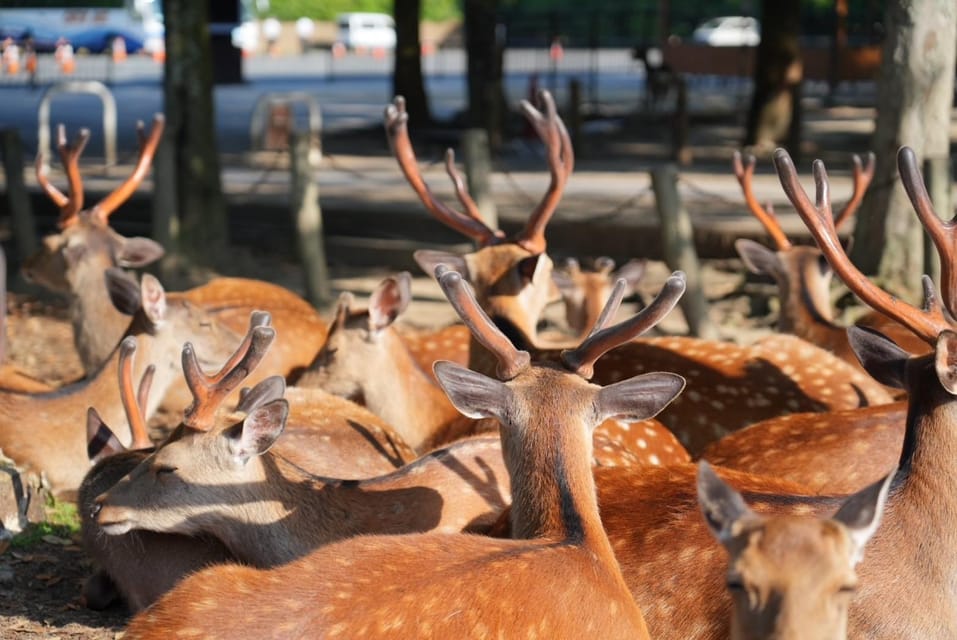
Nara Early Morning Tour (Kyoto or Osaka Departure Available)
A guided early morning in Nara, with departures offered from Kyoto or Osaka, before the midday crowds reach the deer park.
4.9(679 reviews)
- 3.5 to 4.5 hours
- Free cancellation
From $56per person
See prices & availability
Hungry Osaka Street Food Tour Shinsekai: 15 Tastings 4 Drinks
Three hours of street food in Shinsekai with 15 tastings and 4 drinks, a ready-made dinner for the one night in Osaka.
5.0(2,207 reviews)
- 3 hours
- Free cancellation
From $81per person
See prices & availability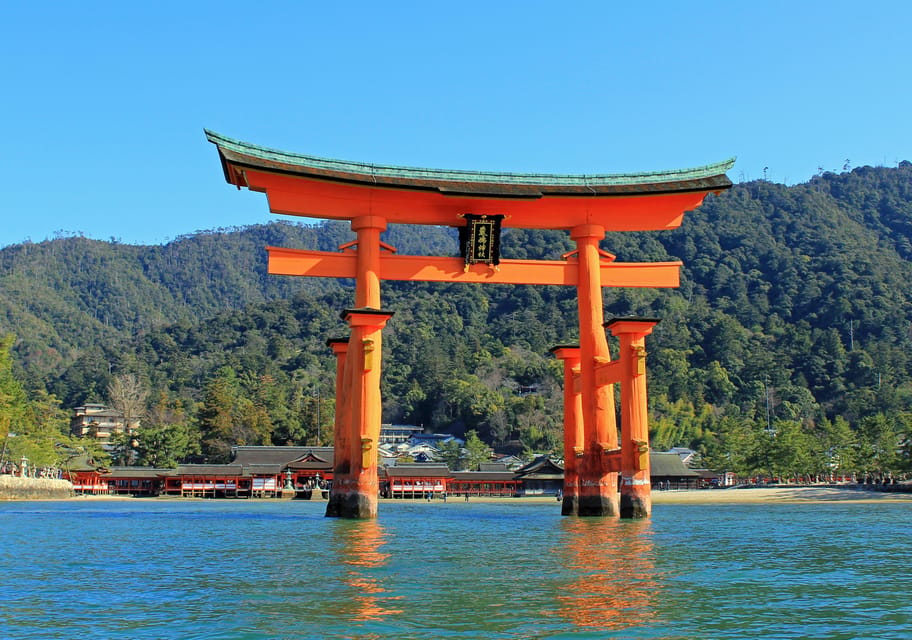
Hiroshima: Hiroshima and Miyajima UNESCO Sites 1-Day Tour
An 8-hour guided day around Hiroshima and Miyajima. It starts in Hiroshima, so take an early Shinkansen from Osaka.
4.9(4,311 reviews)
- 8 hours
- Free cancellation
From $119per person
See prices & availability
See more activities in Hiroshima
10 days in Japan, day by day: Tokyo, Mount Fuji, Kyoto, Nara and Osaka
The order matters more than the exact sights. Tokyo comes first because it absorbs the jet lag, the night near Mount Fuji breaks the journey west, and Osaka comes last because Kansai Airport is 35 minutes from its centre. Each day below gives the journey, its duration and its fare for one adult.
Day 1: land in Tokyo and get into the city
From Narita Airport, the Narita Express reaches Tokyo Station in about an hour for ¥3,140 ($20) and continues to Shibuya and Shinjuku (¥3,330 to Shinjuku). The Keisei Skyliner is faster to the north-east of the city: 41 minutes to Ueno for ¥2,580 ($16). The JR Sobu rapid train costs ¥1,410 ($9) and takes about 90 minutes. Haneda Airport is much closer: the monorail or the Keikyu line puts you in central Tokyo in under 30 minutes for about ¥500 ($3).
Buy or load an IC card as soon as you land, since it pays every subway, bus and local train of the trip. Our page on the Suica card covers the versions sold to visitors. Keep the first evening for the streets around your hotel. Shinjuku, Shibuya and the Tokyo Station area are the three bases that keep later journeys short, and the guide to where to stay in Tokyo compares them.
Days 2 to 4: Tokyo, one side of the city per day
Tokyo is too wide to cross several times a day, so group the sights by area. Day 2, the east: Senso-ji temple in Asakusa early in the morning (free, the grounds never close), the Tokyo Skytree across the river (Tembo Deck from ¥1,800, $11, and ¥500 more at the counter), then Ueno Park or Akihabara in the afternoon.
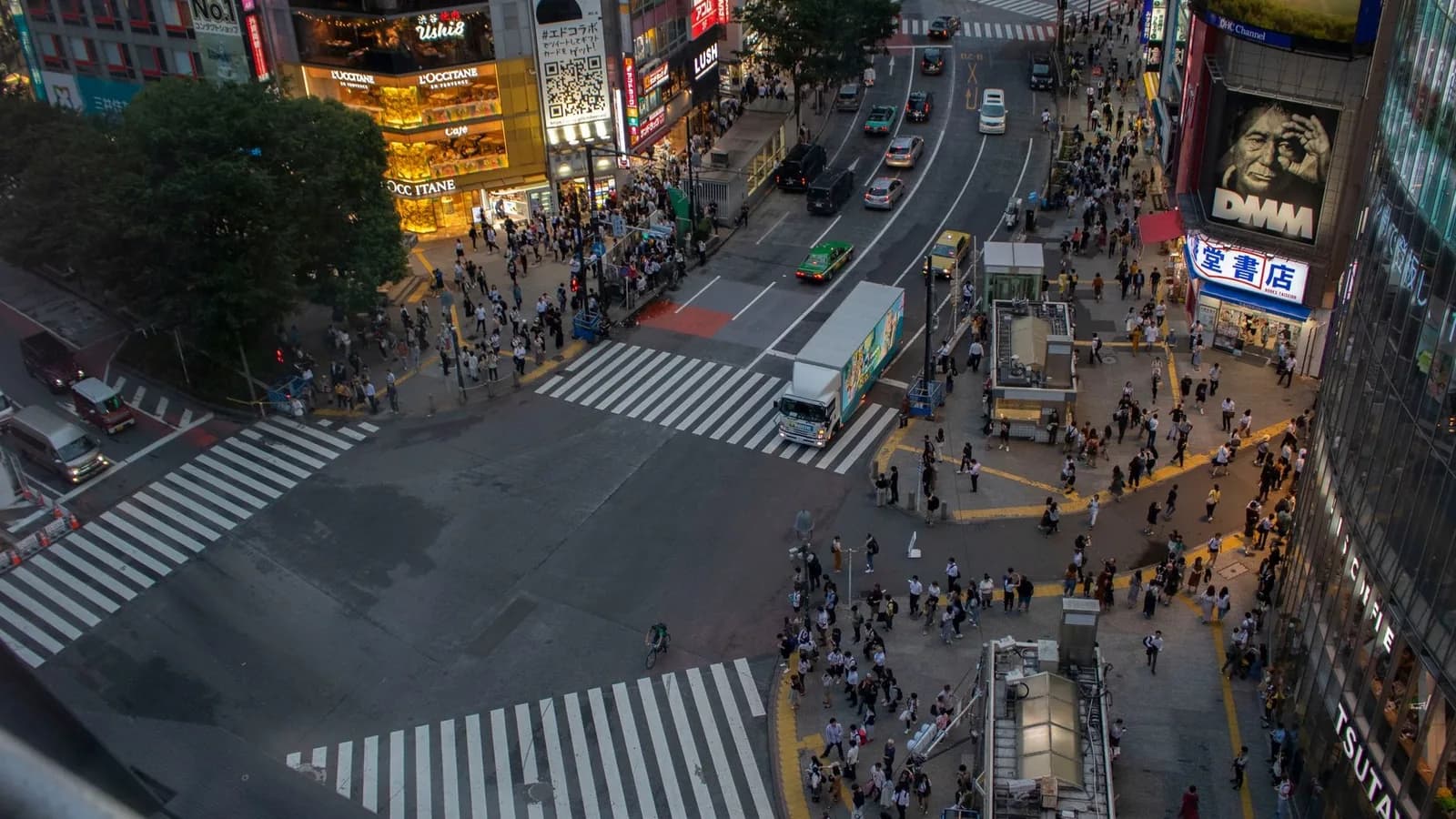
Day 3, the west: Meiji Jingu shrine and Harajuku in the morning, Shibuya and its crossing in the afternoon, and Shibuya Sky at the end of the day. The rooftop costs ¥2,700 online before 15:00 and ¥3,400 from 15:00 ($17 and $21), and the sunset slots are the first to sell out.
Day 4, the bay or the suburbs: teamLab Planets in Toyosu (¥3,800, $24, timed entry) pairs well with the Toyosu fish market and the outer market of Tsukiji for lunch. The alternative is the Ghibli Museum in Mitaka (¥1,000, $6), 20 minutes west of Shinjuku by JR. Both need a ticket bought well before the trip, as explained in the booking section. Our guide to things to do in Tokyo goes through each district in detail.
Day 5: Hakone or Kawaguchiko, one night facing Mount Fuji
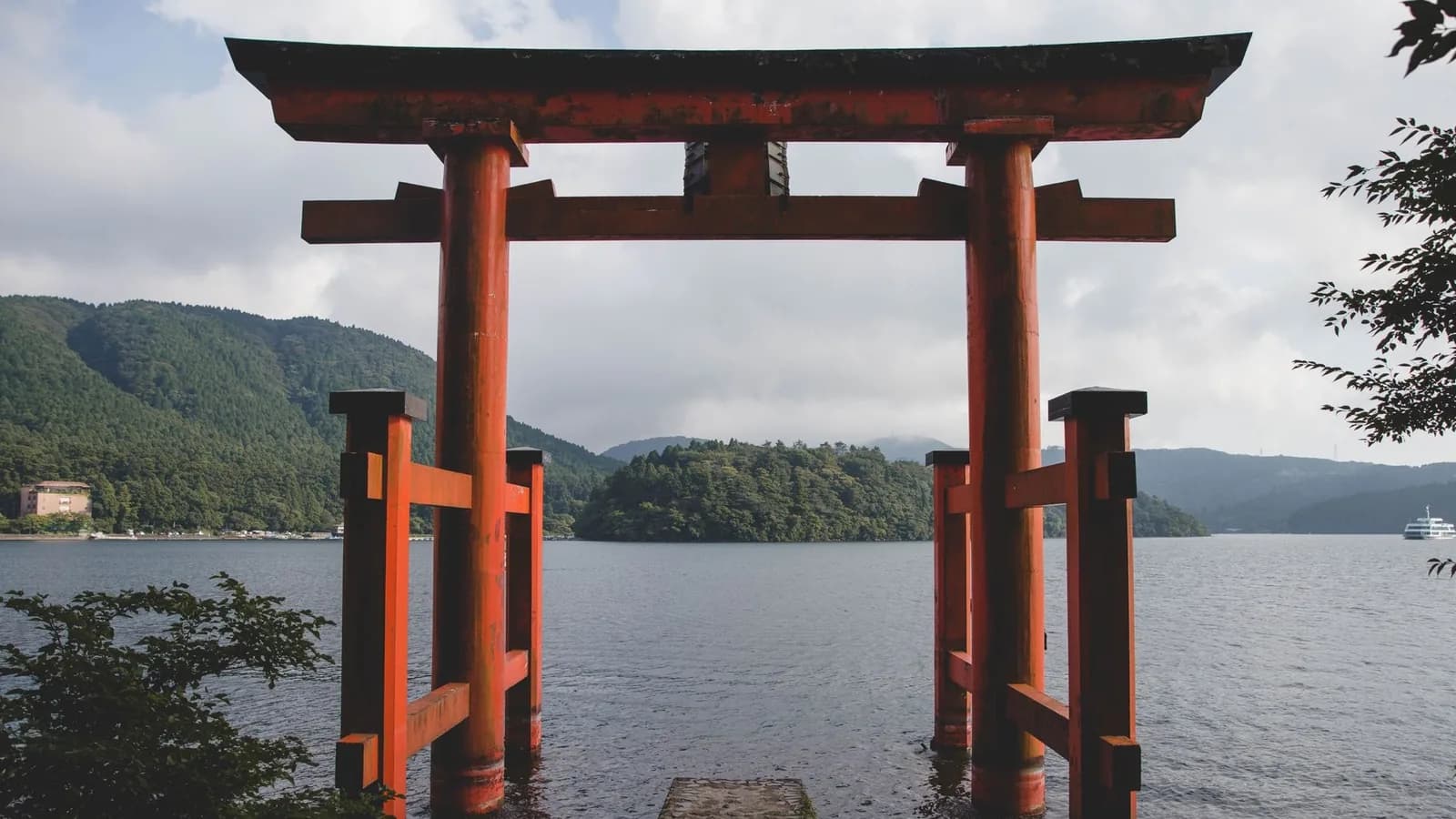
Both places show you Mount Fuji on a clear day, and the choice depends on what you want from the night. Hakone is a hot-spring valley with a loop of mountain train, cable car, ropeway and boat on Lake Ashi. It is the place for a ryokan with dinner and an onsen bath, and it sits on the way to Kyoto. Kawaguchiko is a lake at the foot of the mountain, with the closest and widest view, including the Chureito Pagoda at Arakurayama. It costs less but adds a detour the next morning.
| Base | From Tokyo | Fare | On to Kyoto on day 6 |
|---|---|---|---|
| Hakone | Odakyu Romancecar from Shinjuku to Hakone-Yumoto, about 80 min | Hakone Freepass ¥7,100 plus Romancecar ¥1,200, so ¥8,300 ($52) | Train to Odawara, covered by the Freepass, then Shinkansen |
| Kawaguchiko | Highway bus from Shinjuku, about 1 h 45 min | ¥2,200 at the counter, ¥2,000 online ($14) | Bus to Mishima Station, then Shinkansen |
| Kawaguchiko | Fuji Excursion direct train from Shinjuku, about 2 h, all seats reserved | about ¥4,200 ($26) | Bus to Mishima Station, then Shinkansen |
The Hakone Freepass is valid for 2 days (two calendar days, not 48 hours) and covers the Odakyu train from Shinjuku, the Hakone Tozan railway, the cable car, the ropeway over the Owakudani crater, the boats on Lake Ashi and the local buses. It rose from ¥6,100 to ¥7,100 on 1 October 2025, so older guides underprice it. Mount Fuji hides behind cloud on many days, mostly in summer: go to the lake or the ropeway early in the morning, when the air is clearest. See our pages on Mount Fuji and Hakone and on ryokan and onsen for the stay itself.
Day 6: Odawara to Kyoto by Shinkansen
From Hakone-Yumoto, a 15-minute local train brings you to Odawara, where the Tokaido Shinkansen stops. The fare to Kyoto is about ¥12,100 with a reserved seat ($76) and the ride takes about 2 hours on a direct Hikari. One detail catches people out: Nozomi trains do not stop at Odawara. Take a Hikari that calls there, about one every hour or two, or a Kodama with a change at Nagoya. From Kawaguchiko, allow around 4 hours with the bus to Mishima. If you skip the Fuji night altogether, Tokyo to Kyoto is ¥14,170 ($89) and about 2 h 15 min on a Nozomi.
You reach Kyoto around lunchtime. Leave the bags at the hotel and spend the afternoon on foot in the centre: Nishiki Market, the Pontocho alley, then Gion at dusk, when the lanterns come on along Hanamikoji. For the district to book, see where to stay in Kyoto.
Day 7: Kyoto, Higashiyama in the morning and the Golden Pavilion after lunch
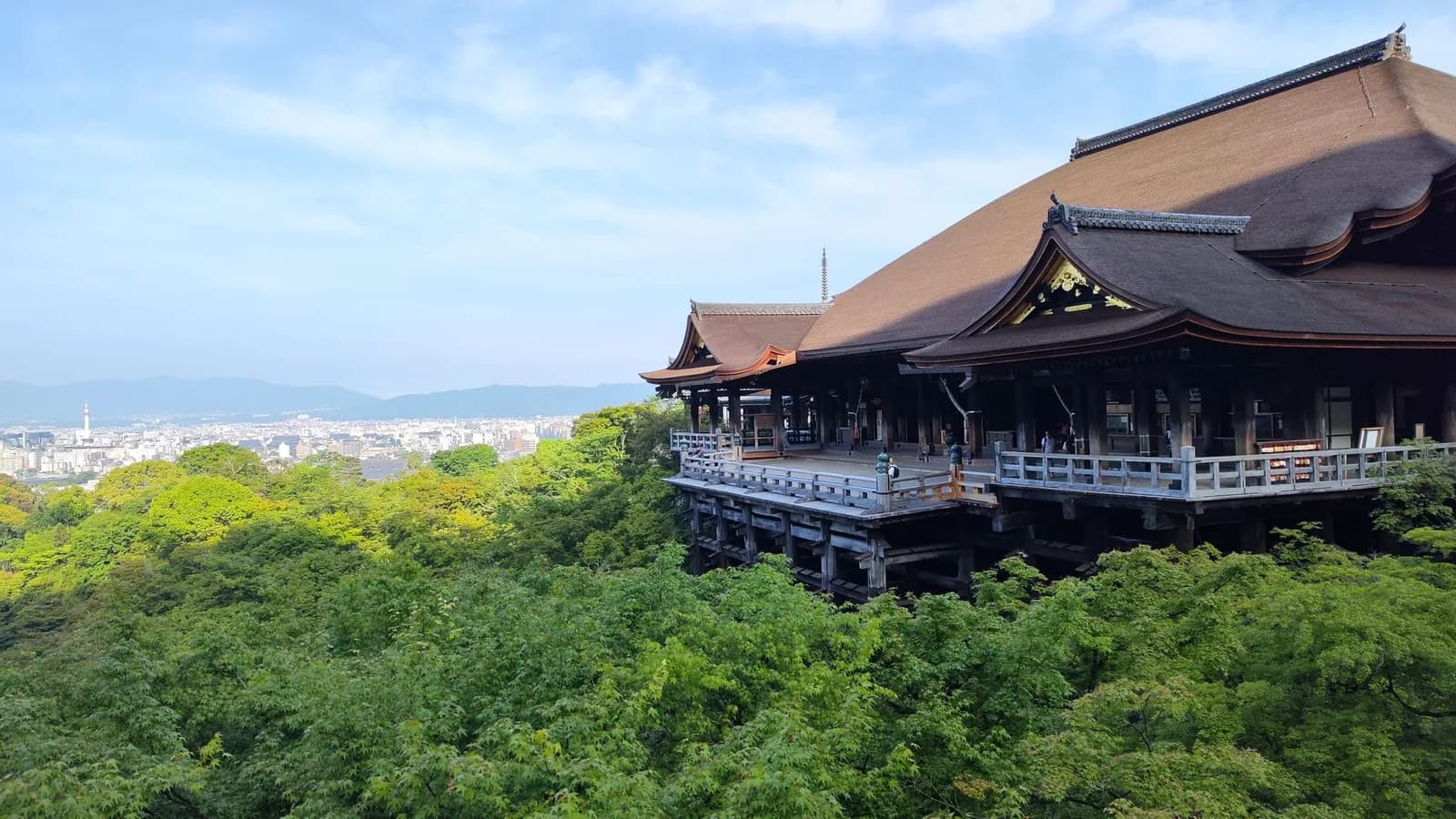
Kyoto rewards early starts more than any other stop. Kiyomizu-dera opens at 6:00 (¥500, $3) and is almost empty for the first two hours. Walk down from it through Sannenzaka and Ninenzaka to the Yasaka Pagoda and Yasaka Shrine before the tour groups arrive around 10:00. After lunch, cross the city to Kinkaku-ji, the Golden Pavilion (¥500, open 9:00 to 17:00), or go west to the bamboo grove of Arashiyama if gardens interest you more than gilding. Doing both in one afternoon means an hour and a half on buses. Our guide to things to do in Kyoto ranks the temples worth the entry fee.
Day 8: Nara in the morning, Fushimi Inari on the way back
Nara is 45 minutes from Kyoto on the JR Miyakoji Rapid, ¥720 each way ($5), with a train every 30 minutes. The Kintetsu line costs ¥760 on an ordinary express and about ¥1,280 on a limited express that takes 35 minutes, and it arrives closer to the park. From either station you walk to the deer park and to Todai-ji, whose Great Buddha Hall opens at 7:30 from April to October and at 8:00 in winter (¥800, $5).
Half a day is enough for Todai-ji, the park and Kasuga Taisha. Coming back on the JR Nara line, change to a local train and get off at Inari Station, right in front of Fushimi Inari Taisha. The shrine is free and never closes, and its tunnels of red torii gates are at their quietest late in the afternoon. The full climb takes two to three hours, and the page on Fushimi Inari explains where you can turn back. Kyoto Station is two stops away.
Day 9: Osaka, the castle by day and Dotonbori by night
The JR Special Rapid links Kyoto to Osaka Station in about 30 minutes for ¥580 ($4). The Shinkansen saves 15 minutes and costs more than twice as much, so it is not worth it on this leg. Drop the bags, visit Osaka Castle (main tower ¥1,200, $8, 9:00 to 18:00), then give the evening to food: takoyaki and okonomiyaki along the Dotonbori canal, kushikatsu skewers in Shinsekai. One night is short, and the guide to things to do in Osaka helps you pick. Sleep near Namba if your flight leaves early, since the airport train starts there.
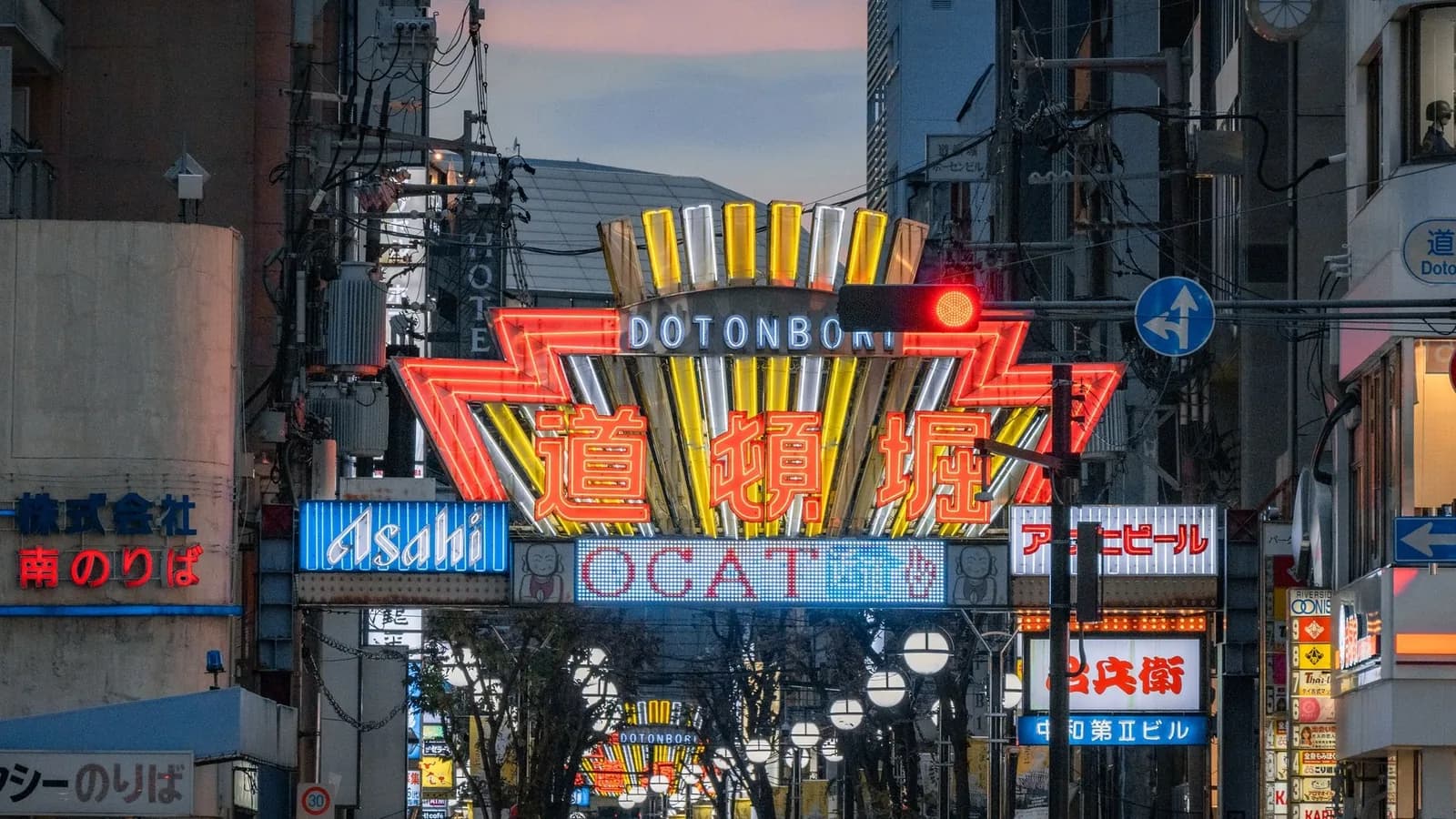
Day 10: Kansai Airport and the flight home
From Namba, the Nankai Rapi:t reaches Kansai Airport in 34 to 39 minutes for ¥1,520 ($10) with an e-ticket. From Osaka Station or from Kyoto, the JR Haruka goes direct, about 75 minutes from Kyoto. JR West sells foreign visitors a discounted Haruka One-way Ticket, raised for tickets bought from 1 November 2026: ¥2,700 ($17) between Kyoto and the airport, ¥1,900 ($12) from Osaka or Shin-Osaka.
The Hiroshima and Miyajima option
Hiroshima does not fit into 10 days without removing something. The cleanest way is to turn day 9 into a day trip from Osaka: Shin-Osaka to Hiroshima takes about 1 h 25 min on a Nozomi and costs about ¥10,950 each way ($68) in a reserved seat in regular season. From Hiroshima Station, a JR train (about 27 minutes, ¥420) and the JR ferry (10 minutes, ¥180 plus a ¥100 visitor tax) take you to Miyajima and its floating torii. The Peace Memorial Museum costs ¥200 ($1). Count 12 hours door to door and about ¥22,000 ($138) in transport.
For that day, the Kansai-Hiroshima Area Pass at ¥17,000 ($106) for 5 days is cheaper than the two Shinkansen tickets alone. It is sold to foreign visitors on a tourist stay, and it also covers the JR trains to Nara and Osaka and the Miyajima ferry. You then see Osaka in a single evening. If that feels like too much, keep Hiroshima for a 14-day trip, where it gets a night of its own.
What to book in advance for a Japan itinerary, and when sales open
Most of Japan needs no reservation: temples, shrines, markets and ordinary restaurants take you as you come. A short list of places sells timed tickets only, and two of them sell out weeks ahead.
| What | Adult price | When to book |
|---|---|---|
| Ghibli Museum, Mitaka | ¥1,000 ($6) | On the 10th of each month at 10:00 Japan time, for the whole following month. No tickets at the door |
| teamLab Planets, Toyosu | ¥3,800 ($24), varies with the date | As soon as your Tokyo dates are fixed, weekends and school holidays first. The official ticket site shows which dates are on sale |
| teamLab Borderless, Azabudai Hills | ¥3,400 ($21), varies with the date | Around the 1st of the month, two months before the visit |
| Shibuya Sky | ¥2,700 before 15:00, ¥3,400 after ($17 and $21) | As soon as your date opens, several weeks ahead for the sunset slots |
| Tokyo Skytree, Tembo Deck | from ¥1,800 ($11) | A few days ahead is enough. Online tickets are ¥500 cheaper than at the counter |
| Shinkansen seats | included in the reserved fare | One month before at 10:00 Japan time. Needed only for holiday peaks or a suitcase over 160 cm |
| Fuji Excursion train, Romancecar | about ¥4,200 and ¥1,200 on top of the fare | All seats are reserved. Book a few days ahead, more at weekends |
The Ghibli date is the one to put in your calendar. For a visit in April, tickets go on sale on 10 March at 10:00 in Japan, which is the evening of 9 March in North America and the early hours of 10 March in the UK. They are sold online through Lawson Ticket, for a fixed date and entry time, and popular days go within the hour. teamLab tickets bought on the official site can be moved up to three times, until two hours before the slot, which makes them safe to buy early. The page on teamLab Planets compares the two museums.
Restaurants follow another logic. Ramen counters, izakaya, conveyor-belt sushi and department store food halls take no bookings, and you will eat very well without a single reservation. Book only the meals you would be sorry to miss: a sushi counter, a kaiseki dinner in Kyoto, a famous tempura bar. The booking platforms open their calendars at different times, so the simplest route is to ask your hotel to reserve as soon as your room is confirmed. A ryokan night includes dinner, so it is a reservation in itself.
Japan itinerary in 7 days: what to cut from the 10-day route
With one week, keep the two cities that differ most and drop the nights in between: Tokyo for 3 nights, Kyoto for 3 nights, and a flight home from Kansai Airport on day 7. Three things go.
- The night near Mount Fuji. You still see the mountain from the Shinkansen, about 45 minutes after leaving Tokyo, from the right-hand side of the train (seat E in ordinary cars). A day tour from Tokyo is the other way to keep it, at the price of one of the three Tokyo days.
- The night in Osaka. Go for an evening from Kyoto instead: 30 minutes and ¥580 each way, with trains until around midnight.
- One day in Tokyo. Merge days 3 and 4, and choose between teamLab and the Ghibli Museum.
Nara stays, as a half day from Kyoto. Hiroshima does not fit at all. Transport comes to about ¥20,850 ($130): Narita Express ¥3,140, Tokyo to Kyoto on a Nozomi ¥14,170, Nara return ¥1,440, then Kyoto to Osaka and the Rapi:t to the airport ¥2,100. If your flight home leaves from Tokyo, add ¥14,720 for the return Shinkansen and you lose most of the last day.
Japan itinerary in 14 days: adding Kanazawa, Takayama and Hiroshima
Two weeks let you leave the Tokaido line for the Sea of Japan coast and the Alps, then push west to Hiroshima. The route becomes a wide arc, still without doubling back.
| Days | Stop | Getting there | Why it is worth the nights |
|---|---|---|---|
| 1 to 4 | Tokyo, 4 nights | Airport train | Same programme as above, with Hakone or Kawaguchiko as a day trip |
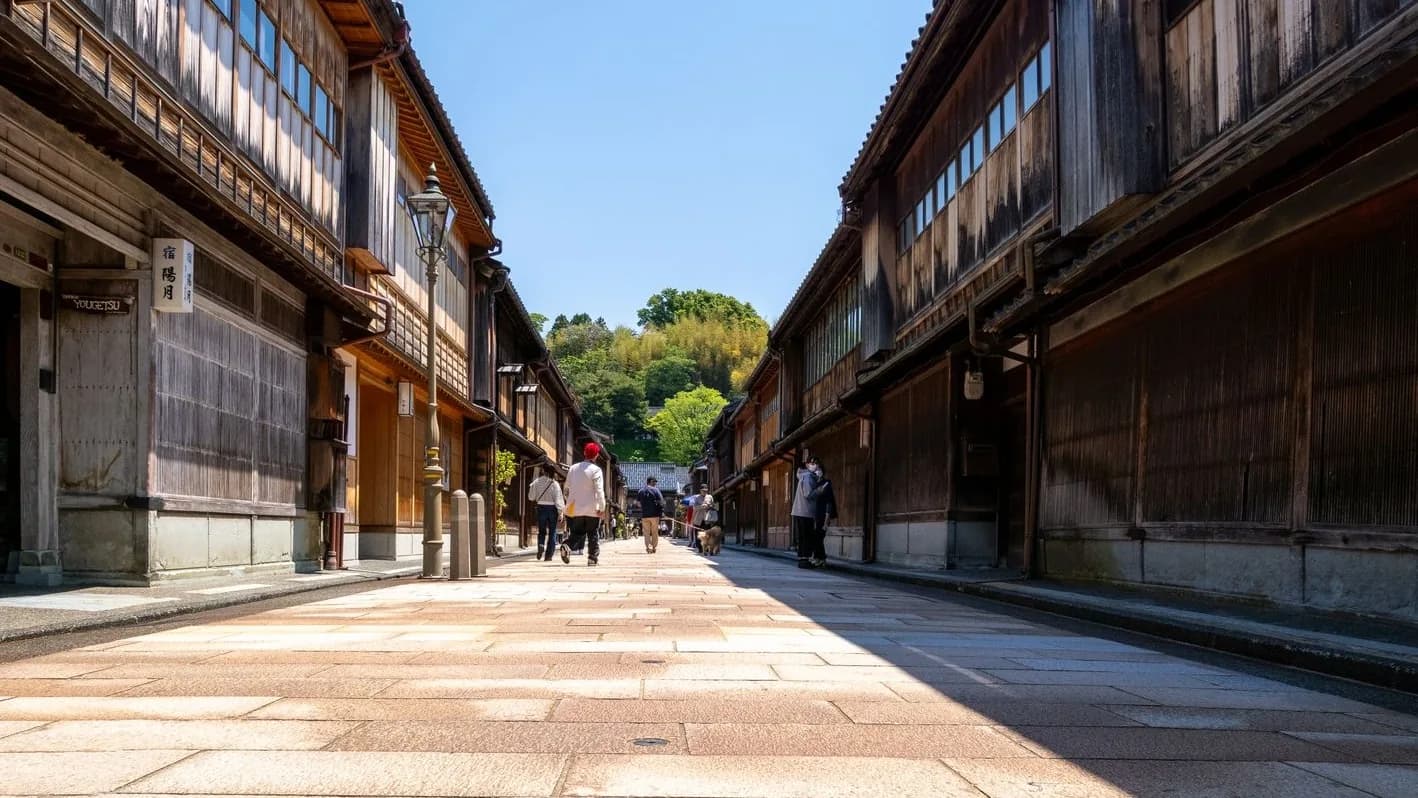
| 5 and 6 | Kanazawa, 2 nights | Kagayaki Shinkansen from Tokyo, about 2 h 30 min, about ¥14,600 ($91) | Kenrokuen garden, the Higashi Chaya teahouse district, Omicho market |
| 7 | Takayama, 1 night | Highway bus through the mountains, with a stop at Shirakawa-go if you book two segments | Thatched farmhouses of Shirakawa-go, the old merchant streets of Takayama |
| 8 to 10 | Kyoto, 3 nights | Hida limited express to Nagoya, then Shinkansen | Same three days, Nara included |
| 11 and 12 | Hiroshima, 2 nights | Nozomi from Kyoto, about 1 h 40 min, about ¥11,940 ($75) | Peace Memorial Park and Museum, then a full day or a night on Miyajima |
| 13 | Osaka, 1 night | Nozomi from Hiroshima to Shin-Osaka, about 1 h 25 min, about ¥10,950 ($68) | A last evening in Dotonbori, 35 minutes from the airport |
| 14 | Flight home | Rapi:t to Kansai Airport |
The bus between Kanazawa, Shirakawa-go and Takayama has reserved seats only and fills up in autumn and in the snow season, so book it when you book the hotels. If mountains matter less to you than castles, swap Takayama for a stop at Himeji Castle, which lies on the Shinkansen line between Osaka and Hiroshima. Three weeks or more open Kyushu, Hokkaido or Okinawa, and each is a trip of its own.
How the season changes a Japan itinerary
The route holds all year, but the weeks you pick change the crowds, the prices and one or two stops. Our guide to the best time to visit Japan has the month-by-month detail.
- Late March to early April, cherry blossom. Tokyo and Kyoto bloom within a few days of each other, and the dates shift every year. Book hotels three to six months ahead and keep the order Tokyo then Kyoto, since Kyoto usually peaks a little later. The cherry blossom page follows the forecast.
- 29 April to 5 May, Golden Week. The whole country travels. Shinkansen seats and hotels sell out, and prices climb. Avoid moving between cities on these days, or reserve every train a month ahead.
- June to mid-July, rainy season, then a hot and humid summer. Mount Fuji is often hidden, so Hakone with its museums and baths is a safer choice than Kawaguchiko. Plan temples for the early morning and indoor visits after lunch. Typhoons can stop trains for a day in August and September, so keep the last night near your departure airport, as this route does.
- Mid-November to early December, autumn leaves. This is the second peak in Kyoto. Kiyomizu-dera opens in the evening for its illuminations, from 21 to 30 November in 2026 (17:30 to 21:30, ¥500).
- December to February, winter. It is the cheapest and clearest season, and the best for seeing Mount Fuji. Days are short, so start early. Many museums and some restaurants close from about 29 December to 3 January, and Osaka Castle shuts from 28 December to 1 January.
Japan trip cost for 10 days: budget per person at three levels
These totals are our estimates for one person on the 10-day route, flights excluded, with two people sharing a room. Transport and entry fees come from the prices on this page. Hotel and food figures are typical 2026 levels and move with the season: Kyoto hotels surveyed by the city tourism association averaged between ¥17,272 and ¥19,333 a room per night in 2026, which is the mid-range line below.
| Per person, 10 days | Budget | Mid-range | Comfort |
|---|---|---|---|
| Where you sleep | Hostels, capsules, simple business hotels | 3-star hotels, one ryokan night | 4 and 5-star hotels, ryokan with kaiseki dinner |
| 9 nights | ¥54,000 ($338) | ¥108,000 ($675) | ¥270,000 ($1,688) |
| Food, 10 days | ¥35,000 ($219) | ¥70,000 ($438) | ¥150,000 ($938) |
| Trains, buses, airport transfers | ¥35,000 ($219) | ¥35,000 ($219) | ¥50,000 ($313) |
| Sights and activities | ¥11,000 ($69) | ¥25,000 ($156) | ¥40,000 ($250) |
| Total | about ¥135,000 ($845) | about ¥238,000 ($1,490) | about ¥510,000 ($3,190) |
The ¥11,000 of the budget column pays for teamLab Planets, Shibuya Sky, the Ghibli Museum, Kiyomizu-dera, Kinkaku-ji, Todai-ji and Osaka Castle. The comfort column adds Green Car seats, taxis and luggage forwarding between hotels. Two taxes sit on top. Kyoto charges an accommodation tax per person and per night, reformed on 1 March 2026: ¥200 for a room share under ¥6,000, ¥400 from ¥6,000 to ¥19,999, ¥1,000 from ¥20,000 to ¥49,999, and up to ¥10,000 for the most expensive rooms. A couple in a ¥24,000 room pays ¥400 each, so ¥2,400 ($15) for three nights. The departure tax rose from ¥1,000 to ¥3,000 ($19) on 1 July 2026 and is added to the price of your air ticket.
Mobile data is a small line that saves time every day, for maps and train times above all. An eSIM set up before the flight works from the moment you land, and our Japan eSIM comparison lists the plans.
Do you need a Japan Rail Pass for this itinerary?
No, on any version of this route. The 7-day Japan Rail Pass costs ¥50,000 on the official website ($313) and ¥53,000 through an overseas agency. On the 10-day route, the trains the pass would cover (Narita Express, Odawara to Kyoto, Nara and back, Kyoto to Osaka) are worth about ¥17,260 ($108). The pass does not pay for the Odakyu trains and the Freepass in Hakone, the Nankai train to the airport or the subways, and it excludes the Nozomi. It is also valid for 7 consecutive days, when these journeys are spread over nine.
Adding the Hiroshima day trip brings the JR total to about ¥39,000, still ¥11,000 below the pass. Even the classic round trip that ends back in Tokyo does not reach it: Tokyo to Kyoto (¥14,170), Kyoto to Osaka (¥580) and Shin-Osaka to Tokyo (¥14,720) come to ¥29,470 ($184), about ¥20,000 under the pass.
The 14-day version is the only one where the question is open, and only if you return to Tokyo. Tokyo to Kanazawa, Kanazawa to Kyoto, Kyoto to Hiroshima and Hiroshima to Tokyo total about ¥54,020 ($338). A 7-day pass at ¥50,000 then wins by a few thousand yen, provided the four legs fall within 7 consecutive days and you accept the slower Hikari and Sakura trains. The 14-day pass at ¥80,000 loses in every case. Flying home from Osaka removes the ¥19,760 ride back to Tokyo, and single tickets win again. The full calculation, with the Nozomi supplement and the regional passes, is in our Japan Rail Pass guide.
Where to fly in and out: Tokyo in, Osaka out
Book the flights as an open jaw: arrival in Tokyo (Narita or Haneda), departure from Osaka Kansai. On airline and comparison websites this is the multi-city search, not two one-way tickets. The fare is often close to a plain return to Tokyo, and you save what the trip back would cost: ¥14,720 ($92) and about three hours from Shin-Osaka to Tokyo, plus the airport train, plus in practice a tenth night in Tokyo.
Kansai Airport has fewer long-haul routes than the two Tokyo airports. From much of North America and Europe, the flight home will include a connection, often in Tokyo itself, in Seoul, Taipei or a Gulf hub. If the open-jaw fare is much higher on your dates, two fallbacks work. Reverse the route (into Osaka, out of Tokyo), since fares are not always symmetrical. Or book a return to Tokyo and add a domestic flight or a Shinkansen on day 10, keeping at least four hours between your arrival in Tokyo and an international departure. Between the two Tokyo airports, Haneda saves about an hour on the way into the city. Our page on flights to Japan covers airlines, routes and the cheapest months.
Japan itinerary mistakes first-time visitors make
- Too many hotels. Five cities in 10 days means half a day lost at each change. This route has four bases and three moves, and two of those moves take under 90 minutes.
- Buying a Japan Rail Pass by reflex. It costs ¥50,000 and this route uses ¥17,260 of JR trains. Add up your own legs before paying.
- Looking for Ghibli or teamLab tickets on arrival. The Ghibli Museum sells nothing at the door, and its month sells out from the 10th of the month before.
- Planning on a Nozomi from Odawara. The fastest trains skip the station. Look for a Hikari that stops there and reserve it, since there are few a day.
- Returning to Tokyo to fly home. A return ticket adds ¥14,720 and most of a day. Search multi-city fares first.
- Seeing Kyoto between 10:00 and 16:00 only. The famous temples are crowded in those hours. Kiyomizu-dera at 6:00 and Fushimi Inari late in the day are different places.
- Dragging large suitcases onto trains. A bag over 160 cm in total dimensions needs a reserved oversized baggage seat on the Shinkansen, and Kyoto buses have no room for it. Hotels forward luggage to your next stop, usually by the following day, so travel with a day bag on the Hakone night.
- Forgetting the small taxes. The Kyoto accommodation tax, the ¥100 Miyajima visitor tax and the ¥3,000 departure tax are not in most online budgets.
- Counting on a clear Mount Fuji. Plan the Fuji night for what it offers without the view (baths, the ropeway, a ryokan dinner) and treat the mountain as a bonus.