- to move into a typical ¥100,000-a-month 1K in Tokyo, about $3,028 or 4.8 months of rent
- ¥484,500
- average 1K/1DK rent across Tokyo's 23 wards (SUUMO, October 2026)
- ¥75,000 to ¥121,000
- of foreign residents who looked for housing were refused for being foreign (Ministry of Justice survey, 2017)
- 39.3%
On this page
Renting in Japan as a foreigner is possible with any mid to long-term status of residence, but it costs more to get in than most newcomers expect. On top of a rent of ¥75,000 to ¥121,000 a month for a 1K in Tokyo (about $469 to $756), a standard lease asks for three to six months of rent upfront, a guarantor company and a file that some landlords still refuse on sight. This guide gives the rents of 2026 by city and by Tokyo ward, a move-in bill worked out line by line, and the routes that get foreigners approved.
Average rent in Japan by city in 2026
The most recent national picture comes from the real estate portal At Home, which publishes the average advertised rent in the main cities. Its figures for June 2026 (published on 27 July 2026) include the monthly building fee and cover concrete apartment buildings. For a unit of up to 30 m², the size a single person rents, Tokyo's 23 wards averaged ¥114,242 a month (about $714), more than two and a half times the Sapporo figure.
| City | Up to 30 m² (single) | 30 to 50 m² (couple) |
|---|---|---|
| Tokyo (23 wards) | ¥114,242 ($714) | ¥183,568 ($1,147) |
| Kanagawa (Yokohama, Kawasaki) | ¥81,593 ($510) | ¥111,558 ($697) |
| Osaka City | ¥72,796 ($455) | ¥115,030 ($719) |
| Fukuoka City | ¥66,149 ($413) | ¥94,309 ($589) |
| Nagoya City | ¥65,004 ($406) | ¥84,390 ($527) |
| Kyoto City | ¥60,664 ($379) | ¥92,197 ($576) |
| Sapporo City | ¥43,973 ($275) | ¥64,258 ($402) |
At Home notes that single-person rents in the 23 wards have set a new record for 25 months in a row, the highest level since its series began in January 2015, and that every size category was up on the previous year in Tokyo, Osaka, Nagoya, Kyoto and Fukuoka. Listings you see this winter will not be cheaper than these averages.
Rent in Osaka, Yokohama, Kyoto, Nagoya, Fukuoka and Sapporo by ward
For a finer view, the portal SUUMO publishes an average rent per ward and per layout, last updated on 10 October 2026. Its numbers are lower than At Home's because they are calculated differently and from SUUMO's own listings, older buildings included, so read each table on its own and do not mix the two. The wards below are the central ones where most foreigners look first.
| City | Ward | 1R (studio) | 1K / 1DK | 1LDK / 2K / 2DK |
|---|---|---|---|---|
| Osaka | Chuo | ¥62,000 ($388) | ¥69,000 ($431) | ¥119,000 ($744) |
| Osaka | Kita | ¥58,000 ($363) | ¥66,000 ($413) | ¥114,000 ($713) |
| Osaka | Naniwa | ¥55,000 ($344) | ¥63,000 ($394) | ¥100,000 ($625) |
| Yokohama | Naka | ¥70,000 ($438) | ¥79,000 ($494) | ¥127,000 ($794) |
| Yokohama | Kohoku | ¥62,000 ($388) | ¥76,000 ($475) | ¥110,000 ($688) |
| Kyoto | Shimogyo | ¥50,000 ($313) | ¥61,000 ($381) | ¥102,000 ($638) |
| Kyoto | Nakagyo | ¥48,000 ($300) | ¥58,000 ($363) | ¥100,000 ($625) |
| Kyoto | Sakyo | ¥45,000 ($281) | ¥51,000 ($319) | ¥75,000 ($469) |
| Nagoya | Naka | ¥59,000 ($369) | ¥61,000 ($381) | ¥92,000 ($575) |
| Nagoya | Chikusa | ¥53,000 ($331) | ¥57,000 ($356) | ¥82,000 ($513) |
| Fukuoka | Hakata | ¥55,000 ($344) | ¥56,000 ($350) | ¥76,000 ($475) |
| Fukuoka | Chuo | ¥54,000 ($338) | ¥55,000 ($344) | ¥79,000 ($494) |
| Sapporo | Chuo | ¥38,000 ($238) | ¥43,000 ($269) | ¥58,000 ($363) |
| Sapporo | Kita | ¥36,000 ($225) | ¥40,000 ($250) | ¥56,000 ($350) |
The gap is the main lever on a relocation budget: a 1K in central Sapporo or Fukuoka averages ¥43,000 to ¥56,000, against ¥90,000 in a mid-table Tokyo ward. These are averages of advertised rents, not quotes, and a new building five minutes from a station will sit well above them. For food, transport, insurance and the rest of a monthly budget, see our breakdown of the cost of living in Japan.
Apartment in Tokyo: average rent by ward in 2026
Tokyo is not one market. Between the most expensive and the cheapest of the 23 wards, the average rent of a studio doubles: ¥120,000 (about $750) in Minato against ¥60,000 ($375) in Edogawa. The table lists all 23 wards from the highest to the lowest 1K/1DK average, using SUUMO's figures updated on 10 October 2026. SUUMO groups the 1LDK with the 2K and 2DK, so the last column covers small one and two-bedroom layouts together.
| Ward | 1R (studio) | 1K / 1DK | 1LDK / 2K / 2DK |
|---|---|---|---|
| Minato | ¥120,000 ($750) | ¥121,000 ($756) | ¥237,000 ($1,481) |
| Chiyoda | ¥114,000 ($713) | ¥121,000 ($756) | ¥198,000 ($1,238) |
| Chuo | ¥111,000 ($694) | ¥114,000 ($713) | ¥194,000 ($1,213) |
| Shibuya | ¥104,000 ($650) | ¥110,000 ($688) | ¥200,000 ($1,250) |
| Shinjuku | ¥86,000 ($538) | ¥107,000 ($669) | ¥174,000 ($1,088) |
| Taito | ¥87,000 ($544) | ¥105,000 ($656) | ¥158,000 ($988) |
| Meguro | ¥89,000 ($556) | ¥103,000 ($644) | ¥174,000 ($1,088) |
| Koto | ¥88,000 ($550) | ¥100,000 ($625) | ¥143,000 ($894) |
| Shinagawa | ¥85,000 ($531) | ¥97,000 ($606) | ¥165,000 ($1,031) |
| Bunkyo | ¥83,000 ($519) | ¥95,000 ($594) | ¥168,000 ($1,050) |
| Sumida | ¥85,000 ($531) | ¥95,000 ($594) | ¥150,000 ($938) |
| Setagaya | ¥74,000 ($463) | ¥90,000 ($563) | ¥147,000 ($919) |
| Toshima | ¥75,000 ($469) | ¥90,000 ($563) | ¥145,000 ($906) |
| Nakano | ¥73,000 ($456) | ¥90,000 ($563) | ¥140,000 ($875) |
| Kita | ¥72,000 ($450) | ¥87,000 ($544) | ¥129,000 ($806) |
| Arakawa | ¥77,000 ($481) | ¥87,000 ($544) | ¥129,000 ($806) |
| Ota | ¥72,000 ($450) | ¥85,000 ($531) | ¥127,000 ($794) |
| Suginami | ¥70,000 ($438) | ¥85,000 ($531) | ¥134,000 ($838) |
| Itabashi | ¥69,000 ($431) | ¥81,000 ($506) | ¥115,000 ($719) |
| Nerima | ¥65,000 ($406) | ¥79,000 ($494) | ¥115,000 ($719) |
| Katsushika | ¥61,000 ($381) | ¥77,000 ($481) | ¥90,000 ($563) |
| Adachi | ¥67,000 ($419) | ¥76,000 ($475) | ¥95,000 ($594) |
| Edogawa | ¥60,000 ($375) | ¥75,000 ($469) | ¥97,000 ($606) |
Cheap apartments in Tokyo: the wards under ¥80,000
Four wards average less than ¥80,000 a month for a 1K/1DK: Edogawa (¥75,000), Adachi (¥76,000), Katsushika (¥77,000) and Nerima (¥79,000). The first three sit on the eastern edge of the city, Nerima in the north-west, and all four mean a longer train ride to the central business districts. Itabashi, Suginami and Ota follow at ¥81,000 to ¥85,000. At the other end, eleven wards average ¥95,000 or more, from Bunkyo and Sumida up to Minato and Chiyoda at ¥121,000.
Within a ward, three things move the price more than the address itself: the walk to the station, the age of the building and the floor. A unit 15 minutes on foot from the station in a building from the 1990s is priced well below a recent one next to the ticket gates on the same line, a pattern you can check by sorting any portal by building age.
One-bedroom and two-bedroom apartments in Tokyo
What English speakers call a one-bedroom is a 1LDK in Japan, and a two-bedroom is a 2LDK. For the 1LDK/2K/2DK group, SUUMO's ward averages run from ¥90,000 (about $563) in Katsushika to ¥237,000 ($1,481) in Minato, with popular residential wards such as Setagaya, Nakano and Suginami between ¥134,000 and ¥147,000. At Home's June 2026 average for 30 to 50 m² across the 23 wards, building fees included, is ¥183,568 ($1,147). Couples on one salary often cross the river to Kawasaki or Yokohama, where the same survey gives ¥111,558 ($697).
Upfront costs of renting in Japan: shikikin, reikin and agency fees
The rent is the easy part. A standard lease in Japan is paid for with a stack of one-off fees that have no real equivalent in the US, the UK or Australia, and that add up to three to six months of rent before you get the keys. Only the deposit comes back.
| Fee | Usual amount | Refundable? |
|---|---|---|
| Shikikin (security deposit) | 0 to 1 month of rent, sometimes 2 for pet-friendly or high-end units | Partly, after deductions when you leave |
| Reikin (key money, a gift to the landlord) | 0 to 1 month, sometimes 2 | No |
| Agency fee (chukai tesuryo) | Up to 1 month of rent plus 10% consumption tax, the legal maximum | No |
| Guarantor company (hosho gaisha) | 50% to 100% of one month of rent, then ¥10,000 to ¥20,000 a year | No |
| Fire and liability insurance | ¥15,000 to ¥20,000 for 2 years ($94 to $125) | No |
| Lock change | ¥15,000 to ¥30,000 ($94 to $188) | No |
| First month of rent and building fee | 1 month, usually pro-rated from your move-in day | No |
| Cleaning fee | A fixed amount written into the contract, often taken when you leave | No |
Two of these lines deserve a word. Reikin is a payment to the landlord that you never see again, and it is negotiable or absent on a growing share of listings. The agency fee is capped by the ministry's rules at one month of rent plus tax for the landlord and tenant combined. In practice the tenant is asked to agree to pay the whole month, but agencies advertising half a month or no fee exist, and the amount is always shown on the listing.
Worked example: moving into a ¥100,000-a-month 1K in Tokyo
Take a 1K at ¥95,000 of rent plus ¥5,000 of building fee, close to the average of wards such as Bunkyo, Sumida or Shinagawa, with one month of deposit, one month of key money, a full agency fee and a guarantor company charging 50% of the monthly total. The fire insurance and lock change are taken at the middle of their usual range. This is an illustration built from the ranges above, not a quote.
| Line | Amount |
|---|---|
| Shikikin, 1 month | ¥95,000 ($594) |
| Reikin, 1 month | ¥95,000 ($594) |
| Agency fee, 1 month plus 10% tax | ¥104,500 ($653) |
| Guarantor company, 50% of rent and fee | ¥50,000 ($313) |
| Fire insurance, 2 years | ¥17,500 ($109) |
| Lock change | ¥22,500 ($141) |
| First month, rent and building fee | ¥100,000 ($625) |
| Total to pay before moving in | ¥484,500 ($3,028) |
That is 4.8 months of rent, of which only the ¥95,000 deposit can come back. The same flat advertised with no deposit, no key money and a half-month agency fee would cost about ¥232,000 ($1,450) to enter. Agencies ask for the full amount by bank transfer before handing over the keys, so newcomers without a Japanese account yet should plan how to move the money, which we cover in our guide to sending money to Japan.
Can foreigners rent in Japan? Refusals in numbers and what landlords check
Yes, and the law does not distinguish between nationalities. What a landlord and the guarantor company look at is your status of residence, how long it runs, your income and whether they can reach you in Japanese. Americans, Britons, Canadians, Australians and EU citizens go through exactly the same screening. The practical condition is a residence card: without one, which is the case on a 90-day visa-free stay, an ordinary lease is out of reach.
Refusals are real and documented by the government itself. In the Ministry of Justice survey of foreign residents carried out at the end of 2016 and published in March 2017, 2,044 respondents had looked for housing in the previous five years. Among them, 39.3% had been refused because they were foreign, 41.2% had been refused for lack of a Japanese guarantor and 26.8% had given up after seeing a listing marked as not open to foreigners.
The trend since then is better but not solved. In the Immigration Services Agency's 2020 survey, 20.5% of respondents cited a refusal linked to nationality and 19.7% the impossibility of finding a guarantor, while half reported no particular problem. In its 2024 survey of 7,621 residents, looking for housing was still the most cited situation of discrimination, at 17.4%, ahead of the workplace (14.2%) and job hunting (12.4%).
How to avoid a refusal when renting as a foreigner
- Use an agency that works with foreign tenants. It only shows you units whose owner has already agreed to non-Japanese tenants, which spares you the phone calls that end at the first question. Several English-language portals and agencies in Tokyo, Osaka and Fukuoka work this way, some with guarantor screening built in.
- Apply with a guarantor company used to foreign files. The landlord's fear is unpaid rent and a tenant who cannot be contacted. A guarantor with multilingual support answers both.
- Show how long you are staying. A residence card valid for three or five years and a permanent employment contract weigh more than salary alone. A card expiring in four months is a frequent reason for a no.
- Name a reachable emergency contact in Japan, such as an employer, a school or a Japanese-speaking friend.
- Ask your employer about a corporate lease. When the company signs the contract, the tenant screening largely disappears. It is common for transferees and for staff hired from abroad on a Japan work visa.
- Go public. UR Housing, described below, applies the same written income criteria to every applicant.
Guarantor companies in Japan: what they cost and who needs one
A Japanese lease has always required someone to answer for the rent. That used to be a relative with a stable income in Japan, the famous Japanese guarantor that 41.2% of foreigners could not produce in the 2017 survey. Today most landlords require a guarantor company (hosho gaisha) instead, for Japanese tenants too. You pay it, it pays the landlord if you default, and then it recovers the debt from you. It is a cost, not an insurance in your favour.
The usual price is 50% to 100% of one month of rent at signing, an administration fee of ¥5,000 to ¥10,000 at some companies, and an annual renewal of ¥10,000 to ¥20,000 ($63 to $125). Global Trust Networks (GTN), the company most used for foreign tenants, lists an initial fee of 30% to 100% of the monthly rent depending on the property, with a minimum of ¥20,000, then ¥10,000 a year, and supports tenants in English, Chinese, Korean, Vietnamese and Nepali. Take these as indicative rates: the fee that applies to you is the one in the estimate for the unit.
Three points are easy to miss. You rarely choose the guarantor company, the landlord or the managing agent does. The guarantor company does not replace the emergency contact, who is still asked for by name. And if a landlord does accept a personal guarantor, the contract must state a maximum amount that person is liable for, a protection added to the Civil Code on 1 April 2020.
Documents and steps to rent an apartment in Japan
There is no official list for private rentals, each agency has its own, but the file below covers what is asked almost everywhere. Prepare it before the first viewing, because good units in March and April go within days.
- Residence card (zairyu card), both sides, and your passport
- Proof of income: employment contract or offer letter with the salary, recent payslips, or the previous year's tax withholding slip. Students show an admission letter and proof of funds or scholarship
- A Japanese phone number on which the guarantor company can call you
- An emergency contact, with name, address, phone number and relationship
- A Japanese bank account or credit card for the monthly debit, which some landlords accept a few weeks after move-in
- For UR and some landlords, a certificate of residence (juminhyo) from your ward office
The rule of thumb used in screening is that rent should not exceed about a third of gross monthly income. A ¥95,000 flat therefore calls for roughly ¥285,000 a month, a figure to compare with the pay levels in our page on average salaries in Japan.
- Land with temporary housing. Book a monthly apartment or share house for four to eight weeks. You need an address to register at the ward office and receive your residence card details.
- Search and visit. Portals such as SUUMO, At Home and LIFULL HOME'S show the whole market in Japanese, and foreigner-focused agencies show the part that accepts you. Viewings are free and can be done the same day.
- Apply. You fill in an application form (moshikomi) for one unit. It is not binding and nothing should be paid at this stage beyond what the agency states in writing.
- Screening. The guarantor company and the landlord review the file, usually within a week, and may call you and your emergency contact.
- Explanation of important matters and signature. A licensed agent goes through the key terms, then you sign the lease.
- Pay the initial costs by bank transfer, on the invoice sent after approval.
- Collect the keys on the contract start date, open the gas, electricity and water accounts, and report your new address to the ward office within 14 days.
If you are still planning the move itself, the order of the administrative steps around housing is laid out in our guide on how to move to Japan.
UR Housing: renting in Japan with no guarantor and no key money
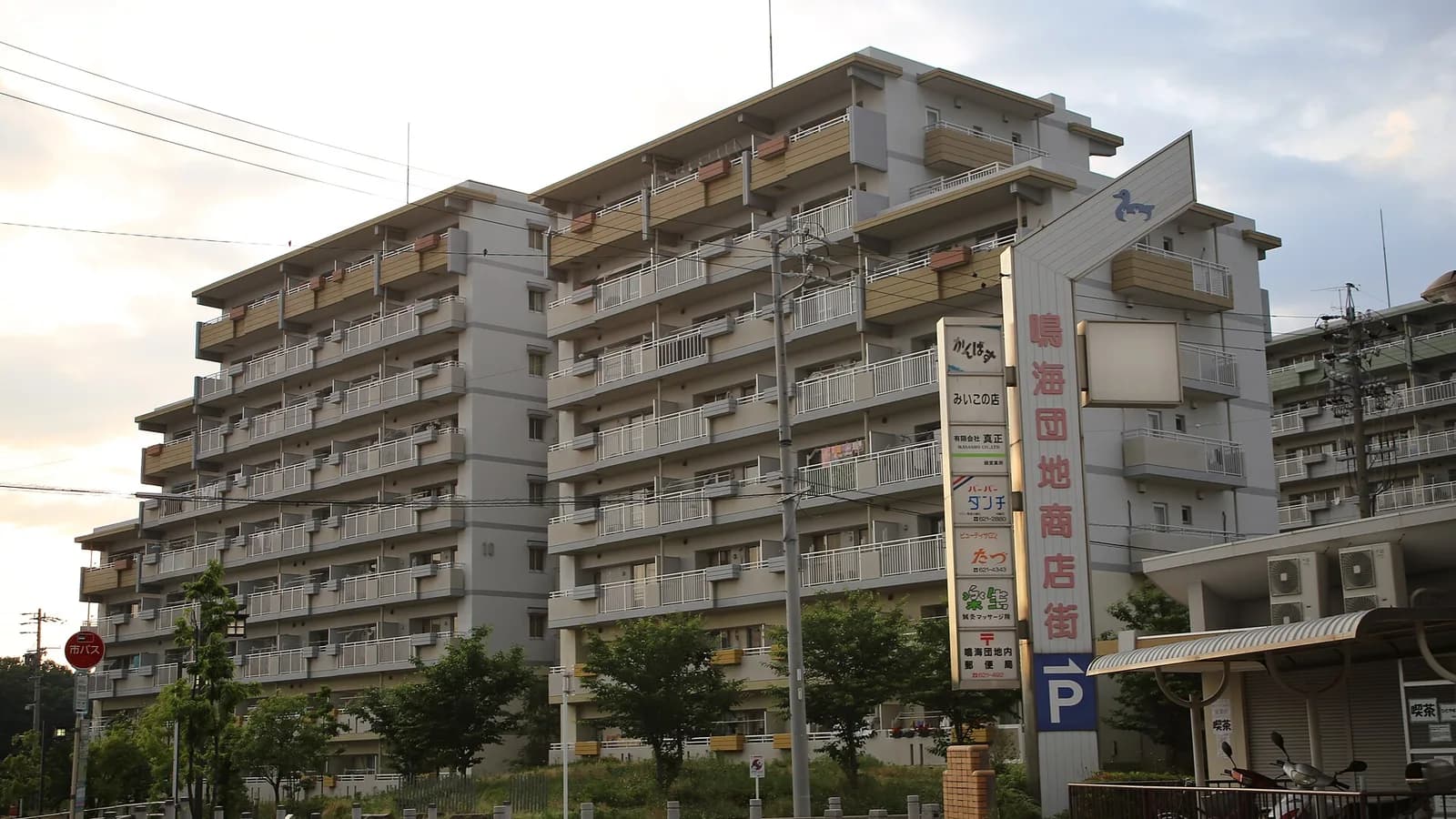
UR (Urban Renaissance Agency) is a public body that rents out several hundred thousand apartments across Japan, many in large estates called danchi. Its offer is built on four absences: no key money, no agency fee, no renewal fee and no guarantor. The only sums due at the start are a deposit of two months of rent and the pro-rated rent and common service fee for the month you move in.
Applied to our example flat at ¥95,000 plus ¥5,000, the entry bill at UR would be ¥190,000 of deposit plus at most ¥100,000 for the first month, so ¥290,000 (about $1,813) against ¥484,500 on the private market, and most of it is a refundable deposit.
UR eligibility for foreigners and the income rule
Foreign nationals qualify if they are permanent residents, special permanent residents or mid to long-term residents, which covers work, student, spouse and other statuses with a residence card, and if they can understand the terms of the lease. Screening is on income, according to the thresholds on UR's official requirements page (checked in November 2026), based on your average monthly income:
| Monthly rent | Single applicant | Household |
|---|---|---|
| Low rents | 4 times the rent, for rents under ¥62,500 | 4 times the rent, for rents under ¥82,500 |
| Up to ¥200,000 | ¥250,000 a month ($1,563), from ¥62,500 of rent | ¥330,000 a month ($2,063), from ¥82,500 of rent |
| ¥200,000 and above | ¥400,000 a month ($2,500) | ¥400,000 a month ($2,500) |
A single person applying for a ¥60,000 flat needs ¥240,000 a month. For a ¥95,000 flat the requirement is flat at ¥250,000, which makes UR easier to pass than the one-third rule on mid-range rents. If your income is short or you have just arrived, two alternatives exist: showing savings of 100 times the monthly rent (¥6,000,000, about $37,500, for a ¥60,000 flat), or paying the rent in advance for one year or more under a separate contract. Applicants employed for less than a year use UR's own income form with a copy of their employee ID.
The trade-offs are location and age. Many UR estates date from the 1960s to 1980s, sit a bus ride from the station and have been renovated to varying degrees, although UR also runs recent towers in central Tokyo and Osaka at market rents. Availability is listed on the UR website, units are allocated first come first served, and the contract is signed at a UR sales centre, mostly in Japanese.
Types of rental housing in Japan: apato, mansion, share house, monthly apartment
Apato and mansion
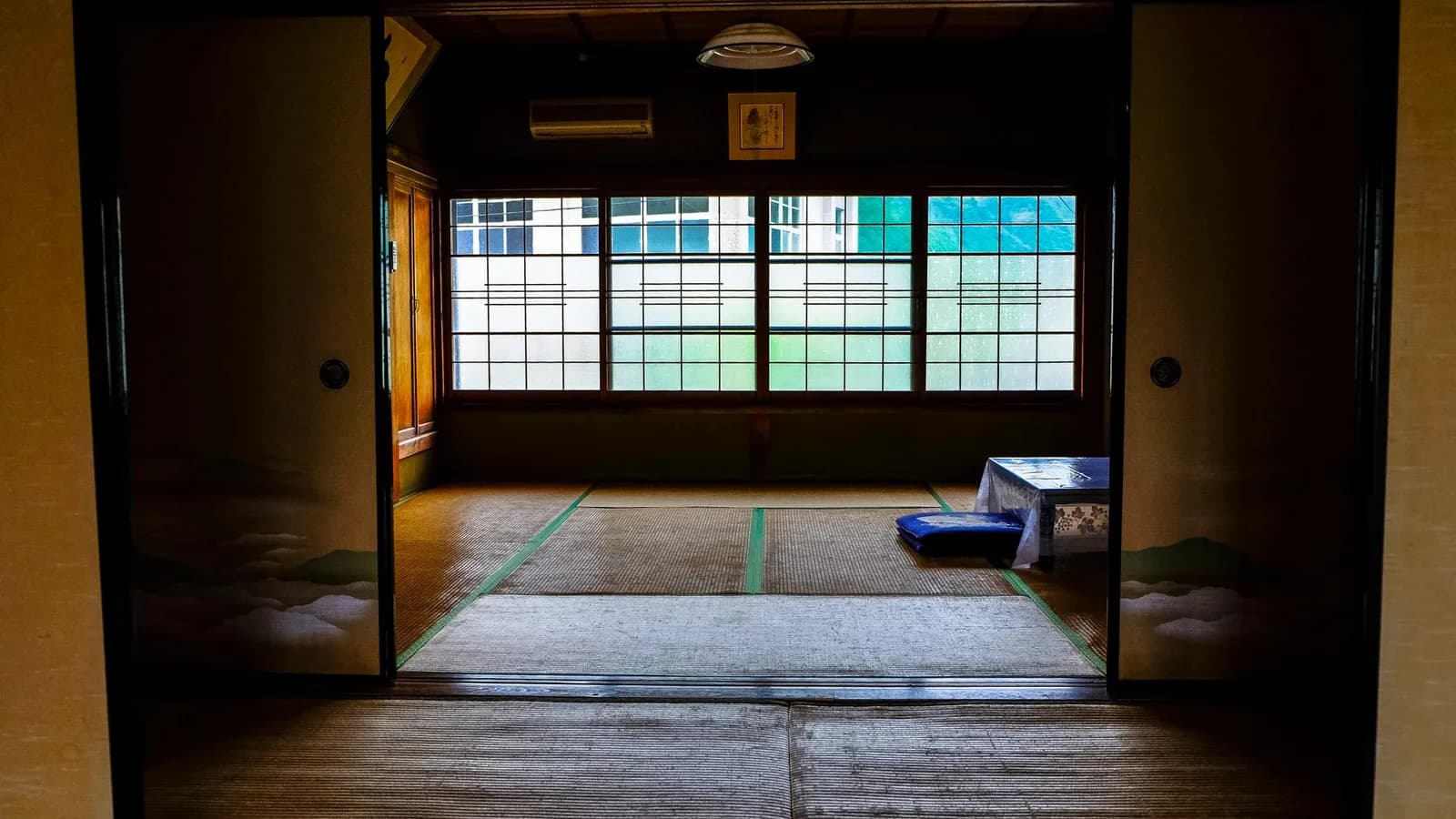
Listings split buildings into two families. An apato is a low-rise building of two or three floors with a wooden or light steel frame. It is cheaper, but sound travels through walls and floors and insulation is thin. A mansion has nothing to do with the English word: it is an ordinary apartment in a reinforced concrete building, usually three floors or more, quieter, better insulated and often with an auto-lock entrance. For the same size and station, expect a mansion to cost noticeably more, and expect a building fee on top of the rent.
Share houses: a private room for ¥44,000 to ¥76,000 in Tokyo
A share house gives you a furnished private room and shared kitchen, bathrooms and lounge, run by an operating company. According to a ward-by-ward comparison published by E-Housing in October 2026, the average private room in Tokyo's 23 wards costs from ¥44,272 a month in Adachi to ¥76,399 in Bunkyo ($277 to $477), plus a common fee of ¥12,000 to ¥20,000 that covers utilities and internet. Moving in costs two to three months of rent instead of four or five, there is generally no guarantor, and the minimum stay is often one month. It is the usual first address for people arriving on a working holiday visa.
Monthly furnished apartments
Monthly apartments (often advertised as monthly mansions) are furnished studios rented from 30 days, with no deposit, no key money, no agency fee and no guarantor. The price includes furniture, utilities and internet, and you pay a one-off cleaning fee of about ¥20,000 to ¥40,000 for a studio. In Tokyo's 23 wards a furnished 1K runs at roughly ¥140,000 to ¥180,000 a month ($875 to $1,125), according to E-Housing's September 2026 guide, and far more in Minato or Shibuya.
Compared with an unfurnished 1K, that is a premium of ¥35,000 to ¥75,000 a month. Over a stay of a few months it usually still works out cheaper than a standard lease, because you skip the key money, the agency fee, the guarantor fee and the cost of furnishing an empty flat. That makes it the natural format for remote workers on the six-month digital nomad visa, and for the first weeks of any move.
How to read a Japanese apartment listing: 1K, 1LDK, jo and minutes on foot
Every listing in Japan follows the same code, defined by the real estate industry's advertising rules. Once you can read it, you can filter thousands of units without speaking Japanese.
| Term on the listing | What it means |
|---|---|
| 1R | One room with the kitchen inside it, the true studio |
| 1K | One room plus a small kitchen separated by a door |
| 1DK | One room plus a dining kitchen of at least 4.5 jo |
| 1LDK | One bedroom plus a living, dining and kitchen area of at least 8 jo. 2LDK, 3LDK: two or three bedrooms |
| Jo (畳) | Room size counted in tatami mats. One jo is at least 1.62 m², so a 6-jo room is about 10 m² |
| Washitsu / yoshitsu | Room with tatami flooring / room with wooden or vinyl flooring |
| Toho 8 fun (徒歩8分) | 8 minutes on foot from the station, calculated at 80 metres per minute, so about 640 metres |
| Chikunen (築年) | Age of the building. Buildings approved after June 1981 follow the current earthquake resistance standard |
| Kanrihi / kyoekihi | Monthly building fee, shown next to the rent and due every month |
| Shikikin / reikin | Deposit and key money, expressed in months of rent |
Three reading habits save disappointment. Add the building fee to the rent before comparing two listings, since one at ¥88,000 plus ¥10,000 is dearer than one at ¥95,000 plus nothing. Treat the walking time as a minimum: the 80-metre rule ignores slopes, traffic lights and the distance from the ticket gate to the platform. And check the floor area in square metres, which includes the kitchen, bathroom and entrance. A typical 1K is around 20 to 25 m².
Listings also tell you what is missing. Ordinary rentals come unfurnished, usually without ceiling lights, curtains, fridge, washing machine or stove, and sometimes without an air conditioner. Budget for these in your first month, or look at second-hand shops and sayonara sales when other foreigners leave.
Signing a lease in Japan: ordinary lease or fixed-term lease
Before the signature, the agency must give you the explanation of important matters (juyo jiko setsumei). A licensed real estate transaction agent presents a written document covering the property, the fees, the contract type and the conditions of termination, in person or by video call. It is delivered in Japanese. If your Japanese is not up to legal vocabulary, ask the agency for an English summary in advance or bring someone, because your seal or signature on that document says you understood it.
The second thing to check is the type of contract, because the two kinds protect you very differently.
| Ordinary lease (futsu shakuya) | Fixed-term lease (teiki shakuya) | |
|---|---|---|
| Length | Usually 2 years | Any length set in the contract |
| At the end | Renews. The landlord needs a justified reason to refuse | Ends. You stay only if the landlord offers a new contract |
| Formalities | Standard contract | A separate written notice that the lease will not renew, handed over before signing |
| Leaving early | According to the notice clause | According to the contract. The law allows one month of notice for unavoidable reasons such as a job transfer, for homes under 200 m² |
Most apartments are let on ordinary leases, which give tenants strong security of tenure: as long as you pay, it is very hard to make you leave. Fixed-term leases are common for furnished units, houses let by owners posted abroad and some foreigner-oriented buildings. For a fixed term of a year or more, the landlord must notify you of the end between one year and six months beforehand. If you want to stay several years, ask before applying whether the contract is a teiki shakuya.
Utilities and monthly charges on top of rent in Japan
The amount debited each month is the rent plus the building fee (kanrihi or kyoekihi), typically a few thousand yen for a small apartment and more in a tower with staff. It pays for cleaning and lighting of the shared areas, not for anything inside your unit.
Electricity, gas and water are separate contracts in your name, opened by phone or online when you move in. Gas requires an appointment for a technician to turn it on while you are present. For a rough scale, the household spending survey of the Ministry of Internal Affairs puts the 2025 average for a single-person household at about ¥13,000 a month (around $81) for electricity, gas and water together, with higher bills in Hokkaido and Tohoku because of heating. Ask whether the building uses city gas or propane: propane is supplied by a private company chosen by the owner and is markedly more expensive.
Home internet is another contract, unless the listing says the building includes it free, which is increasingly common and worth filtering for. Installation of a new fibre line can take several weeks in the spring moving season. Add the yearly guarantor fee, and in some neighbourhoods a small residents' association fee, and you have the full recurring cost of the home.
Renewal fees, notice and getting your deposit back
Renewal fee (koshinryo) every two years
When an ordinary two-year lease renews, many contracts charge a renewal fee of about one month of rent, plus a new fire insurance premium and sometimes a small administrative fee to the agency. It is non-refundable. The practice is concentrated in Tokyo and the surrounding Kanto prefectures and is rare in Osaka, and the Supreme Court ruled on 15 July 2011 that such a clause is valid when the amount is clearly stated and not excessive. Since it is in the listing, treat it as rent: one month every two years adds about 4% to what you really pay. UR charges none.
Notice period and early termination
To leave, you send written notice to the managing company, usually one month ahead, sometimes two, as set in the contract, and rent runs until the end of the notice period even if you hand back the keys earlier. Some contracts, mostly those with no deposit or a free-rent month, add a penalty of one month of rent if you leave within the first year. Check both clauses during the explanation of important matters, especially if your assignment could be cut short.
Deposit return: what the landlord can and cannot deduct
Disputes over deposits are the classic rental problem in Japan. By the housing ministry's own count, restoration and deposit issues make up 30% to 40% of the 30,000 to 40,000 rental complaints that consumer centres receive each year. The rules have been clear since the revised Civil Code came into force on 1 April 2020, backed by the ministry's guidelines on restoration to original condition:
- Normal wear and ageing are the landlord's cost. Sun-faded wallpaper, furniture marks on the floor, pin holes from posters and general ageing cannot be taken from the deposit.
- You pay for damage caused by fault or negligence: burns, mould left to spread, pet damage, deep scratches from moving furniture, heavy tobacco staining.
- Depreciation applies. Wallpaper and vinyl flooring are written down over 6 years to a residual value of ¥1. If you damage wallpaper after living there six years, the material has almost no value left to charge you, though labour can still be billed. Tatami covers and paper screens are treated as consumables and are not depreciated.
- Special clauses are binding if they are specific. A cleaning fee or air conditioner cleaning charge with an amount written in the contract is generally valid, which is why it should be read before signing and not at move-out.
At the move-out inspection, compare the agent's findings with your day-one photos, do not sign a cost estimate on the spot if you disagree, and ask for an itemised statement. The balance of the deposit is wired to your account afterwards, usually within a month or so. If you close your Japanese account before then, give an account that can still receive the transfer.
After a few renewals, some long-term residents start comparing rent with ownership. Japan places no nationality restriction on purchases, as explained in our guide to buying a house in Japan, and the countryside has its own market of vacant homes, covered in our page on akiya.