- a mid-range ryokan per person per night with dinner and breakfast in 2026, about $94 to $250
- ¥15,000 to ¥40,000
- standard hot-spring bathing tax per person per day, added to the bill in onsen towns
- ¥150
- of hotels and ryokan in a 2015 Japan Tourism Agency survey refused bathers with tattoos
- 56%
On this page
A ryokan is a traditional Japanese inn: you sleep on futons laid on tatami, wear the inn's yukata, soak in its onsen hot-spring baths and eat a long kaiseki dinner and a Japanese breakfast that are included in the price. In 2026 most travellers pay ¥15,000 to ¥40,000 per person per night (about $94 to $250), and one night is enough to get the full experience. Below, four real ryokan with their own baths, then what a stay costs, how it runs hour by hour and how to use an onsen without stress.
Ryokan with onsen worth booking: Hakone, Kinosaki and Kusatsu
One inn per hot-spring town, from the easiest trip out of Tokyo to two of the classic onsen towns.
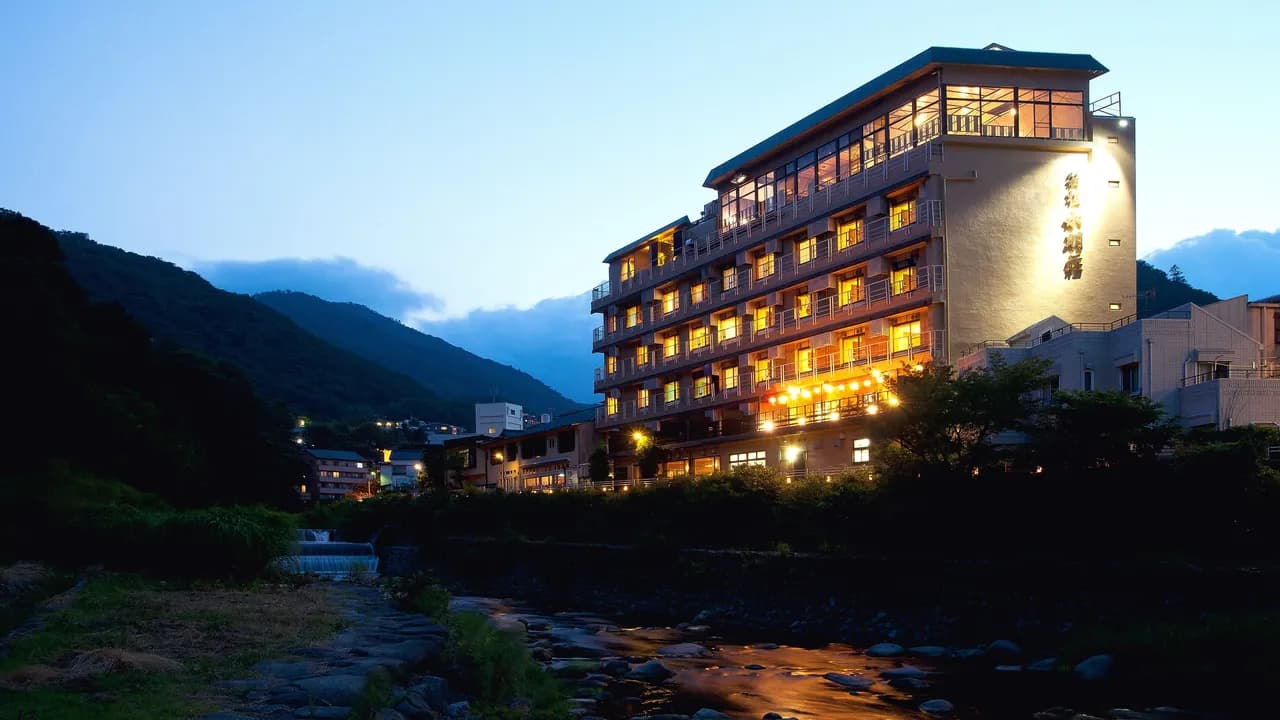 Photo: Expedia Group9.0
Hakone Yumoto, Kanagawa★★★½
Hakone Suimeisou
Rated 9.0/10 from 375 Hotels.com reviews
The easiest first ryokan from Tokyo, two minutes on foot from Hakone-Yumoto Station, with rooms facing the Hayakawa river.
- Two private open-air baths to book
- Rooftop open-air bath
- About 1 hour by train from Tokyo
See prices for my dates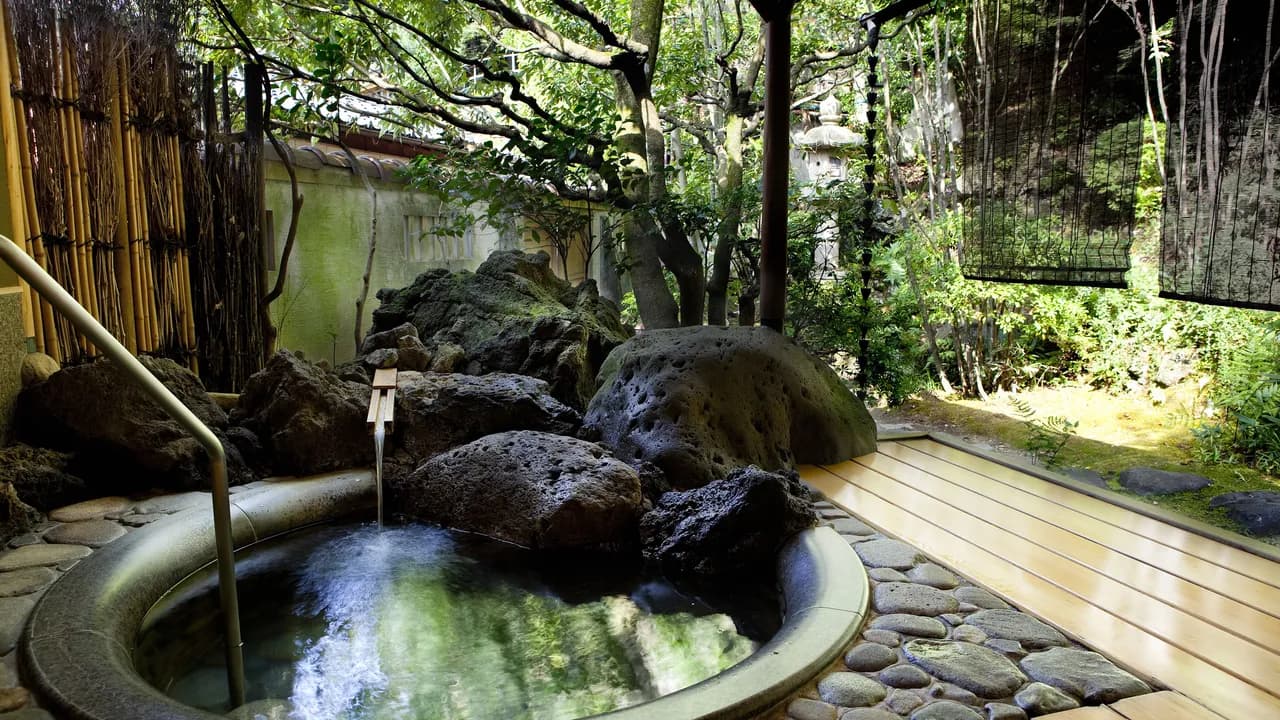 Photo: Expedia Group9.8
Kinosaki Onsen, Hyogo★★★★½
Nishimuraya Honkan
Rated 9.8/10 from 100 Hotels.com reviews
A family inn founded in the 1850s in the middle of Kinosaki, where guests walk in yukata between the town's seven public baths.
- Hiratakan annex is a registered cultural property
- Chloride spring water
- Matsuba crab menus in winter
See prices for my dates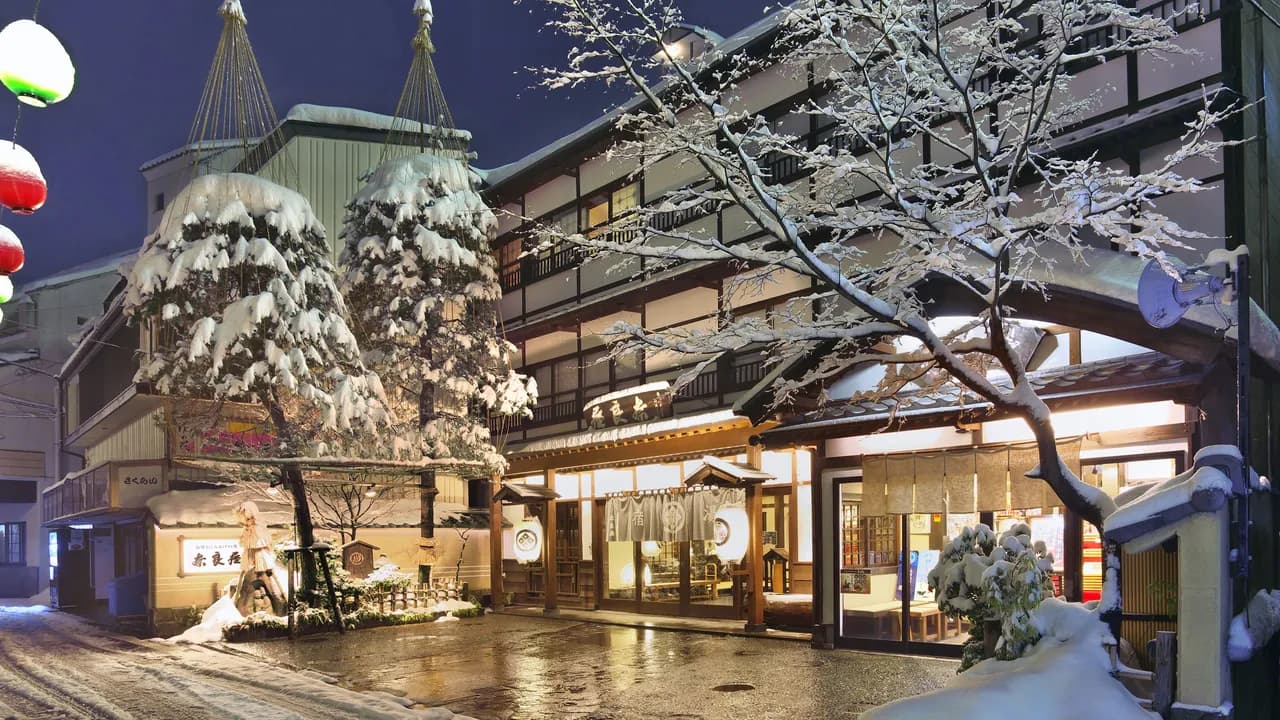 Photo: Expedia Group9.2
Yubatake, Kusatsu, Gunma★★★★
Naraya
Rated 9.2/10 from 109 Hotels.com reviews
Open since 1877 right in front of the Yubatake, Naraya draws its water from Shirahata no Yu, held to be Kusatsu's oldest source.
- Steps from the Yubatake
- Strongly acidic Kusatsu water
- Dinner in private dining rooms
See prices for my dates
Hotels.com ratings checked in November 2026. Prices and availability on Hotels.com for your dates.
What is a ryokan, and how is it different from a hotel?
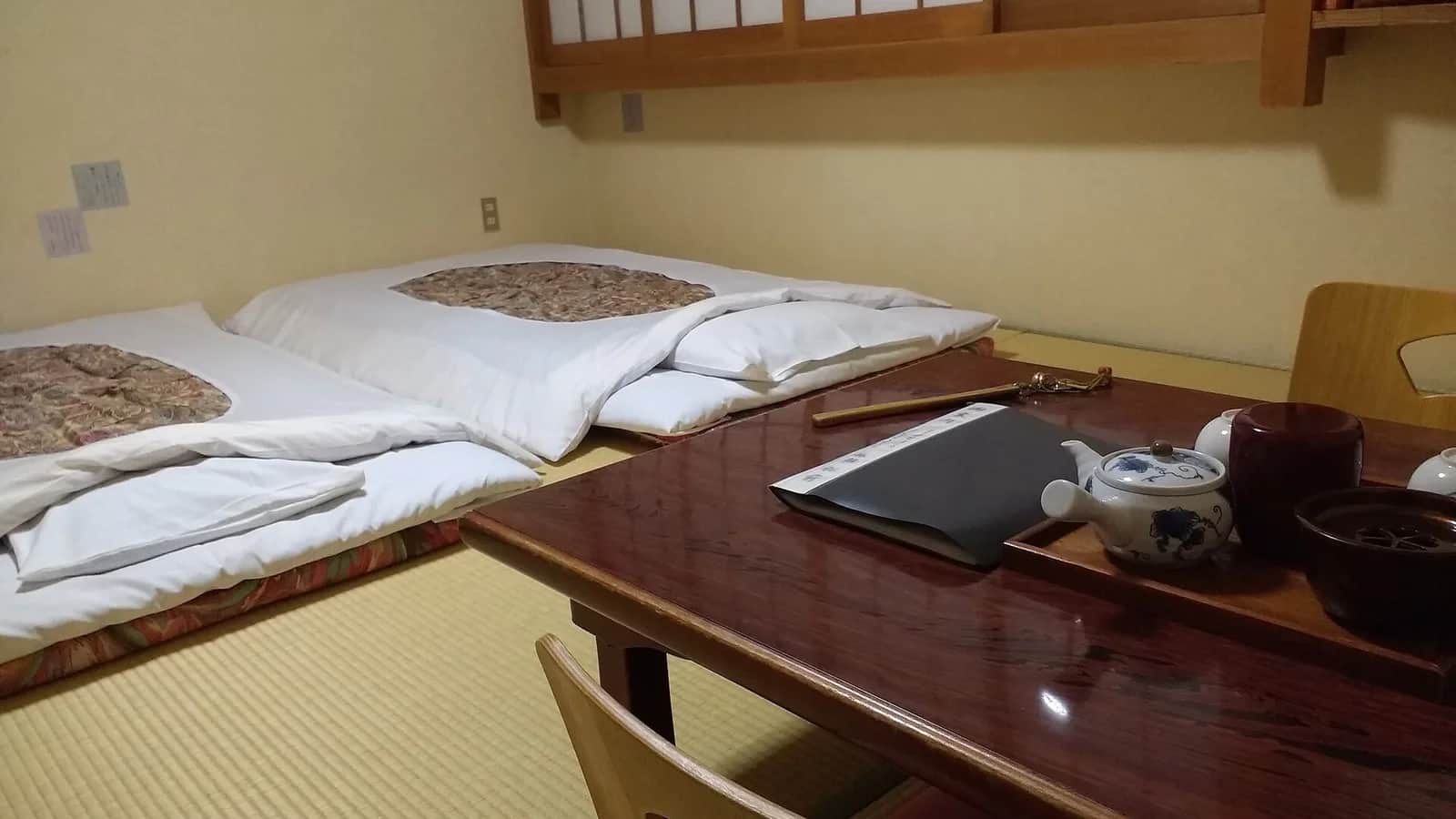
A ryokan sells an evening and a morning, not just a room. You arrive in the afternoon, change into a cotton yukata, bathe before dinner, eat a multi-course meal in your room or a private dining room, and find your bed made on the floor when you come back. Prices are given per person, with dinner and breakfast, where a hotel quotes per room. Ryokan range from family inns with five or six rooms to large hot-spring hotels with hundreds, and most of the good ones sit in onsen towns rather than city centres.
| Ryokan | Western-style hotel | |
|---|---|---|
| Price | Per person, dinner and breakfast usually included | Per room, meals extra |
| Room | Tatami floor, low table, futons laid out at night | Beds, desk, carpet |
| Bath | Shared onsen baths, sometimes a private bath in the room | En-suite bathroom |
| Meals | Fixed times, kaiseki dinner, Japanese breakfast | Restaurant or room service at any time |
| Check-in | From 3 pm, ideally an hour before dinner | From 3 pm, late arrival no problem |
Many hotels in hot-spring towns now mix the two, with Japanese-style rooms and a large onsen bath. If you only want one night of the real thing, book it where the baths are best: our Japan itinerary places a ryokan night in Hakone between Tokyo and Kyoto.
How much does a ryokan cost in 2026?
Ryokan rates are quoted per person per night, with two meals, so a couple pays double the figure. JNTO gives an average of around ¥15,000 per person, and japan-guide.com, updated in May 2025, puts the usual range at ¥15,000 to ¥30,000. Here is how prices break down by type, converted at ¥160 to the dollar.
| Type | Per person per night, dinner and breakfast | For a couple | What you get |
|---|---|---|---|
| Minshuku or family inn | ¥8,000 to ¥15,000 ($50 to $94) | ¥16,000 to ¥30,000 ($100 to $188) | Simple tatami room, shared baths, home cooking, sometimes no dinner |
| Mid-range ryokan | ¥15,000 to ¥40,000 ($94 to $250) | ¥30,000 to ¥80,000 ($188 to $500) | Kaiseki dinner, indoor and outdoor onsen, bookable private bath |
| Luxury ryokan | ¥40,000 to ¥100,000 and more ($250 to $625+) | ¥80,000 to ¥200,000 and more ($500 to $1,250+) | Room with its own open-air bath, private dining, top-end kaiseki |
Ranges compiled from JNTO, japan-guide.com, japanryokanguide.com and mileasia.com, checked on 14 November 2026. Prices move a lot with the calendar. Saturdays, Golden Week, Obon, New Year and the autumn leaf weeks cost the most, while a weeknight in January or June is noticeably cheaper at the same inn. Our guide to the best time to visit Japan lists the dates to avoid.
Is a ryokan cheaper than a hotel? For the bed alone, no. For the evening, often yes: in Kinosaki or Kusatsu, a family inn at ¥12,000 per person with dinner, breakfast and the baths costs about what you would spend on a hotel room, dinner out and a day pass to the public baths.
What's included in a ryokan stay: kaiseki dinner, breakfast, yukata and baths
A standard plan, called 1-haku 2-shoku (one night, two meals), includes:
- Kaiseki dinner: a seasonal multi-course meal, usually 8 to 12 small dishes, with sashimi, a simmered dish, a grilled dish, rice, pickles and dessert. Regional dishes are the point, such as Matsuba crab in Kinosaki in winter.
- Japanese breakfast: grilled fish, rice, miso soup, tofu or egg and pickles. Some ryokan offer a Western option if you ask in advance.
- Yukata, towels and slippers: a cotton robe to wear in the inn, to the baths and to dinner, plus a jacket (tanzen) in cold months.
- Green tea and a sweet on arrival, served in the room.
- The inn's onsen baths, free for guests and often open late at night and early in the morning.
Drinks with dinner, a private bath booked by the hour and room-only plans are extra. A sudomari plan (no meals) or choshoku-tsuki (breakfast only) costs less, but you miss what makes a ryokan worth it.
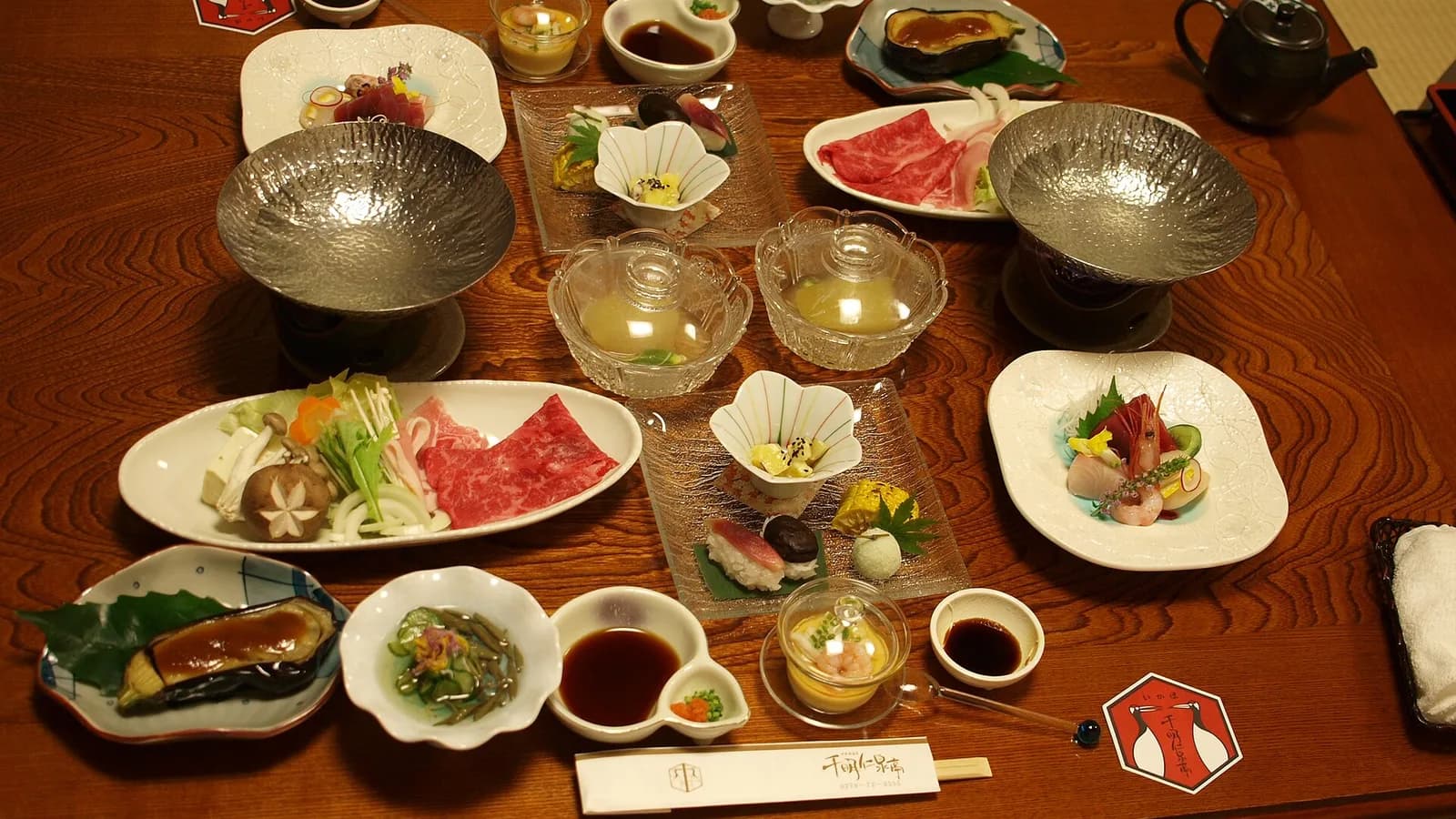
A night in a ryokan hour by hour
| Time | What happens |
|---|---|
| 3 pm to 5 pm | Check-in. Shoes off at the entrance, slippers on. Tea and a sweet in the room, a staff member shows you the yukata and confirms your dinner time. |
| 4 pm to 6 pm | First bath, before dinner, when the baths are quiet. Walk around the onsen town in yukata and geta if it has public baths. |
| 6 pm to 7 pm | Dinner starts at the agreed time and lasts one and a half to two hours. |
| Evening | Staff lay out the futons while you eat. Second bath, outdoor bath at night, early to bed. |
| Early morning | Morning bath, often the best moment in an outdoor bath. Some inns swap the men's and women's baths overnight, so you get to try both. |
| Morning | Breakfast at the time chosen the night before. |
| 10 am or 11 am | Check-out. Pay drinks and extras at the front desk. |
The one timing that matters: arrive at least an hour before dinner. Kitchens prepare kaiseki for a fixed sitting, and a guest who turns up at 8 pm may find dinner cancelled. If your train is late, phone the inn.
Ryokan etiquette: shoes, tatami, futon, yukata and dinner times
- Shoes: off at the genkan (entrance), slippers in the corridors, bare feet or socks on tatami. The toilet has its own slippers, which stay in the toilet.
- Tatami: no suitcase wheels on the mats. Put luggage in the small wooden area by the window or on the luggage rack.
- Yukata: wrap the left side over the right, for men and women. Right over left is how the dead are dressed. The belt (obi) ties at the hip. You can wear it to dinner, to the baths and around town.
- Futon: staff lay them out and put them away. Leave them in the morning, do not fold them back into the cupboard yourself unless the inn asks.
- Dinner: be on time, and tell the inn about allergies when you book. Try each dish, and leaving a little is fine.
- Noise: walls are thin paper and wood. Keep voices low in the corridors at night.
- Tipping: not expected. Cash left on the table usually gets handed back.
Booking a ryokan: hot-spring tax, local taxes and payment
The price you see online is not always the total. Japanese prices must be shown with the 10% consumption tax included, but two local taxes are often added at check-out, and some ryokan add a service charge, shown in the price breakdown.
| Tax | Where | Amount in 2026 |
|---|---|---|
| Hot-spring bathing tax (nyuto-zei) | Any inn or bath on a hot spring | Standard ¥150 per person per day, set by each town, children often exempt |
| Kyoto accommodation tax | Kyoto city, since March 2026 | ¥200 under ¥6,000 per person per night, ¥400 up to ¥19,999, ¥1,000 up to ¥49,999, ¥4,000 up to ¥99,999, ¥10,000 from ¥100,000 |
| Tokyo accommodation tax | Tokyo metropolis | Nothing under ¥10,000, ¥100 up to ¥14,999, ¥200 from ¥15,000. A flat 3% rate is planned from 1 April 2027 |
| Osaka accommodation tax | Osaka prefecture, since September 2025 | Nothing under ¥5,000, ¥200 up to ¥14,999, ¥400 up to ¥19,999, ¥500 from ¥20,000 |
| Fukuoka accommodation tax | Fukuoka city | ¥200 under ¥20,000, ¥500 from ¥20,000 |
Kyoto rates from the city tourism office (kyoto.travel), the others from the tax tables in force on 14 November 2026. For a couple in a mid-range Kyoto ryokan at ¥30,000 each, that is ¥2,000 a night in city tax, about $12.50. More on picking an area in our guide to where to stay in Kyoto.
Most ryokan now take credit cards, but small family inns may not: carry enough cash for the taxes and drinks. Cancellation rules are stricter than in hotels, with fees often starting a few days before arrival because the kitchen orders food for you. Book Saturdays and holiday periods two to three months ahead in Hakone and Kyoto.
Ryokan for foreigners, vegetarians and food allergies
Most ryokan on Hotels.com and other international sites are used to foreign guests, with an English page, a card explaining the baths and staff who manage with gestures and a translation app. Inns that advertise private baths, beds on a raised frame or rooms with chairs suit travellers who find sitting on the floor hard.
Food is the harder part. Kaiseki is built on fish, and dashi stock made from bonito goes into almost everything, including dishes that look vegetarian. Tell the ryokan at the time of booking, by email, exactly what you do not eat: "no meat, no fish, no fish stock" is clearer than "vegetarian". Most inns will adapt if they have notice. A strict vegan diet can be hard for a small inn, so get a written yes before you pay. The same goes for allergies to shellfish, nuts or wheat: write them down, in Japanese if you can.
How to use an onsen: the bathing rules step by step
An onsen is a bath fed by natural hot-spring water. The rules are the same in a ryokan, a public bath house or an outdoor pool on a mountain.
- Pick the right curtain. Red is usually women (女), blue men (男). Some inns swap them at night.
- Undress completely in the changing room. No swimsuit, no underwear. Leave clothes in a basket or locker, take only the small towel.
- Wash first. Sit on the stool at a shower point, soap and rinse your whole body and hair, remove make-up.
- Pour hot water over yourself (kakeyu), starting with the feet and hands, to get used to the heat.
- Tie long hair up so it stays out of the water.
- The towel never goes in the water. Fold it on your head or put it on the edge.
- Get in slowly and keep quiet. No swimming, no diving, no head under water. Phones and cameras are banned in the bathing area.
- Dry off before you go back into the changing room, with the small towel.
Water is usually 40 to 44°C. Many Japanese bathers do not rinse at the end, to keep the minerals on the skin, but the Ministry of the Environment advises a rinse with tap water after acidic or sulphur springs and for sensitive skin.
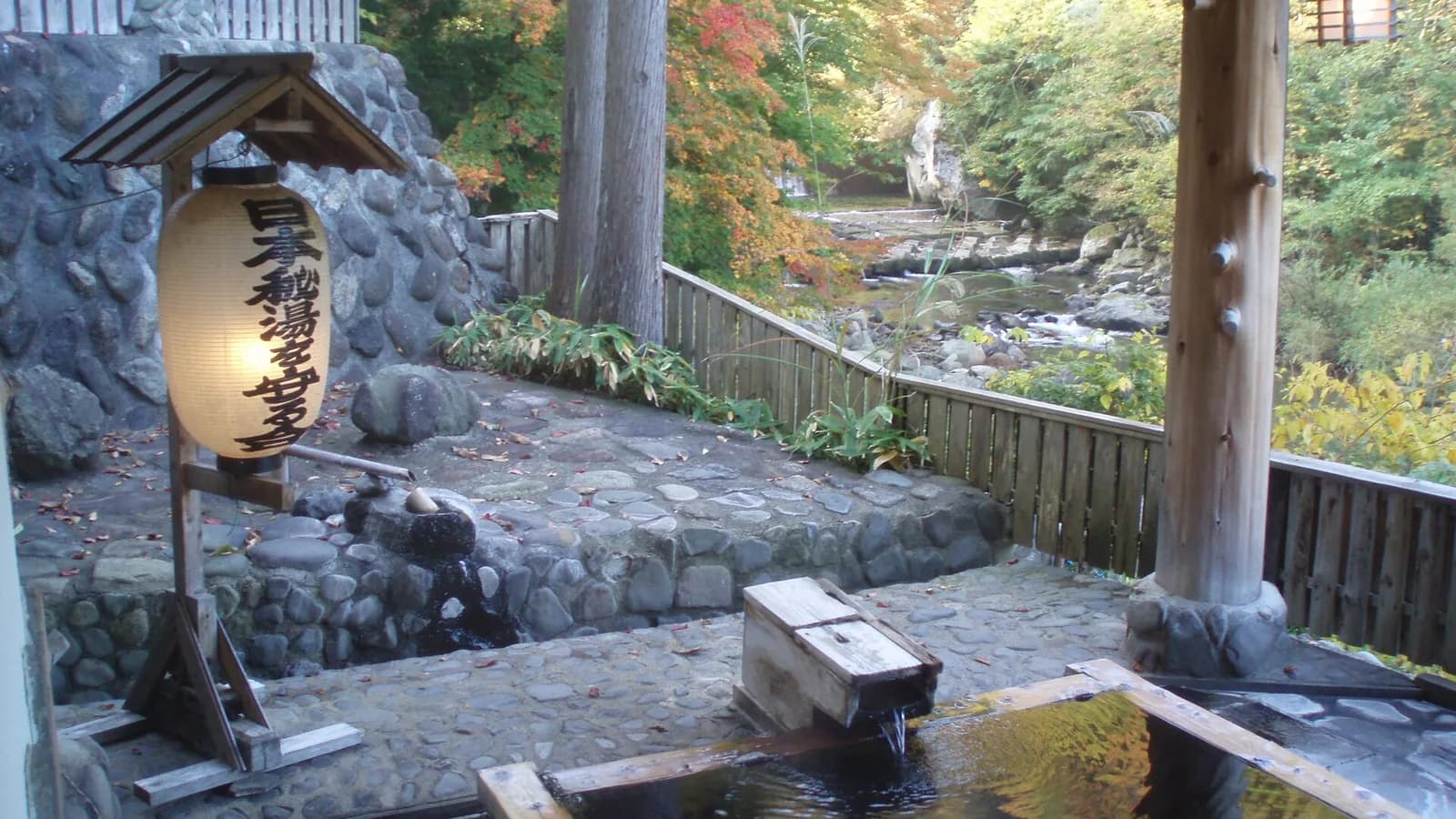
Onsen with tattoos in 2026: what is allowed and where
There is no national ban, only house rules. In a 2015 survey by the Japan Tourism Agency, about 56% of hotels and ryokan refused tattooed bathers, just over 30% had no restriction and 13% accepted them under conditions. No newer official survey exists, but the agency has asked operators to relax their rules for foreign visitors, and JNTO now says more baths accept tattoos than before. In practice in 2026:
- Small tattoos: many baths accept them under a skin-coloured cover sticker, sold at Don Quijote and in some convenience stores in onsen towns. JNTO notes it only works for a small tattoo.
- Private baths (kashikiri or kazoku-buro): the surest option. You lock the door and bathe alone or with your partner, often for about ¥2,000 to ¥3,000 for around 40 minutes, or free for guests at some ryokan.
- Room with its own bath: the most expensive but stress-free solution at a ryokan.
- Tattoo-friendly towns: Kinosaki's official tourism site says all the town's public baths accept tattoos, which it notes is rare in Japan. Beppu has many small public baths with relaxed rules.
Onsen vs sento: what's the difference?
The difference is the water. Under Japan's Hot Spring Act of 1948, an onsen is water, steam or gas from the ground that comes out at 25°C or more, or contains at least one of 19 listed substances above a set level. A sento is a neighbourhood public bath with heated tap water, built for locals who did not have a bath at home.
Sento prices are capped by each prefecture. In Tokyo, the cap rose to ¥600 per adult on 1 August 2026, about $3.75, with ¥200 for children aged 6 to 11 and ¥100 under 6. The rules are the same as in an onsen, and a sento is a cheap way to try them in the city before your ryokan night. Some Tokyo sento do pump natural hot-spring water and call themselves onsen. If you are staying in the capital, our guide to where to stay in Tokyo covers the areas with old bath houses nearby, like Asakusa.
Onsen water types: sulphur, chloride, bicarbonate, acidic and iron
Every onsen must display an analysis of its water by the changing room. The Ministry of the Environment sorts springs into around ten types. The ones you will meet most:
| Water type | What it feels like | Where to try it |
|---|---|---|
| Simple spring | Clear, soft, low in minerals, gentle on skin | Hakone Yumoto, Gero |
| Chloride (salt) | Keeps you warm long after the bath, called the "onsen of heat" | Atami, Kinosaki |
| Bicarbonate | Slippery, smooth skin afterwards, the "onsen of beauty" | Gero |
| Acidic | Stings on cuts, strong smell, rinse after | Kusatsu, Tamagawa |
| Sulphur | Milky white or yellow, smells of eggs, tarnishes silver | Manza, Nikko Yumoto, Noboribetsu |
| Iron | Rust-brown water that stains towels | Arima (kinsen, the "gold" water) |
Take jewellery off before sulphur and acidic baths, which blacken silver. Beppu alone has eight hot-spring areas with most of these types, plus sand baths at Takegawara for ¥1,500.
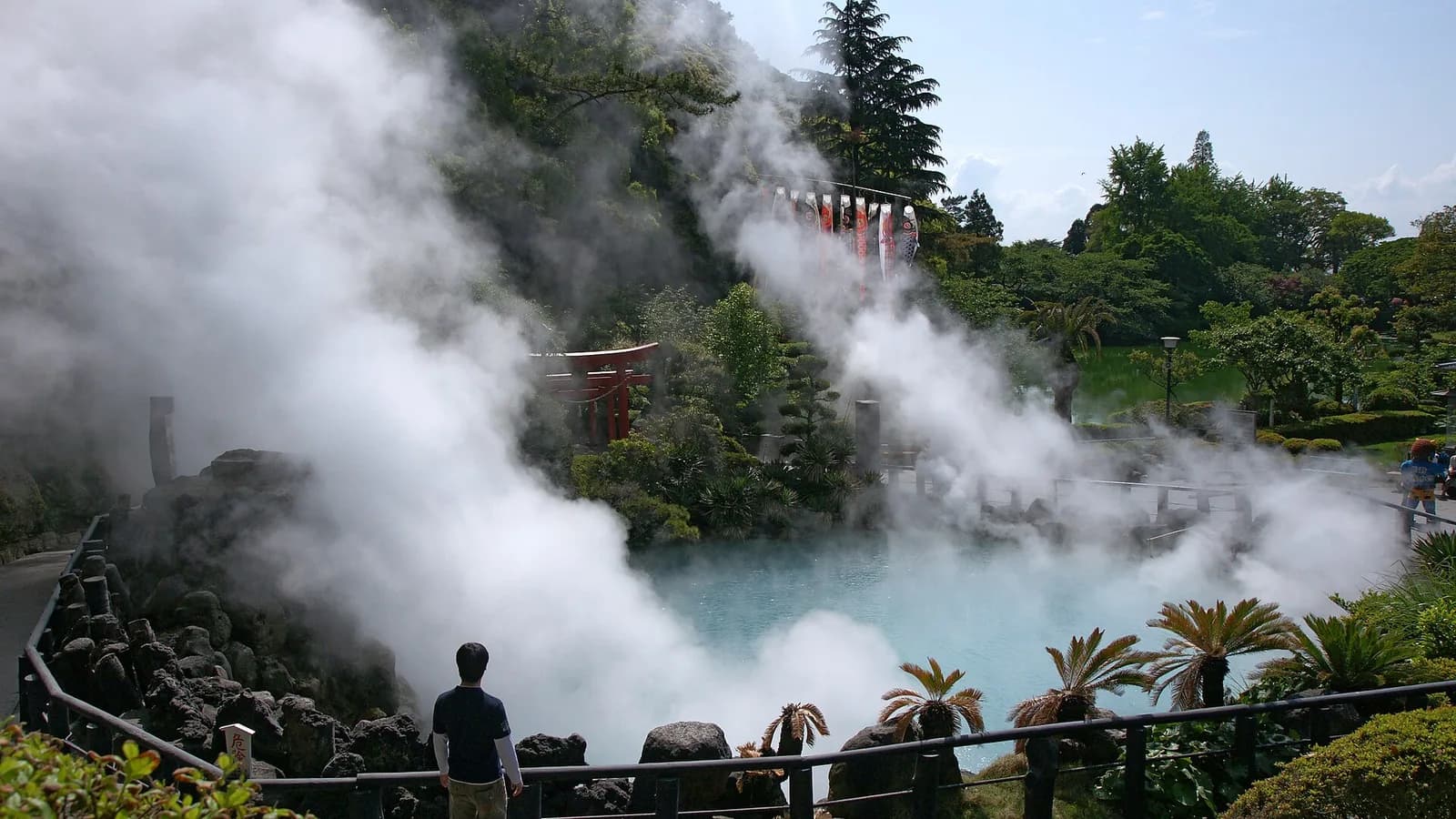
Mixed bathing (konyoku) and modesty in Japanese onsen
Prefectural bath rules require men and women to bathe separately in public baths, with exceptions for family baths and places where swimsuits are required. A handful of mixed baths (konyoku) survive, mostly in remote villages such as Tsurunoyu in Akita and Hoshi Onsen in Gunma. Some allow women to wear a bath wrap, others insist on full nudity. Young children can go in with a parent of the other sex up to an age set by each prefecture, from 6 in Kyoto to 9 in Tokyo.
If being naked with strangers is the problem, you have three options: bathe at odd hours (right after check-in or at 5 am, baths are often empty), book a private bath, or choose a room with its own bath. Nobody stares, and keeping the small towel in front of you on the way in is normal.
Best onsen towns in Japan: where to stay for the baths
| Town (prefecture) | Getting there | Known for | Public bath price |
|---|---|---|---|
| Hakone (Kanagawa) | About 80 minutes from Shinjuku to Hakone-Yumoto on the Odakyu Romancecar | Over a dozen springs, Fuji views, the closest ryokan town to Tokyo | Day baths ¥500 to ¥2,000 |
| Kusatsu (Gunma) | About 3 hours from Tokyo by limited express and bus, or direct highway bus | The steaming Yubatake in the town centre, very acidic sulphur water, yumomi water-stirring shows | Sainokawara open-air bath ¥800, some free baths |
| Beppu (Oita) | About 2 hours from Hakata by JR limited express | Eight spring areas, the "hells" (jigoku), sand baths | Takegawara sand bath ¥1,500 |
| Kinosaki (Hyogo) | About 2.5 to 3 hours from Kyoto or Osaka by JR limited express | Public bath houses along a willow-lined canal, yukata strolling, tattoos accepted | One-day pass ¥1,500 |
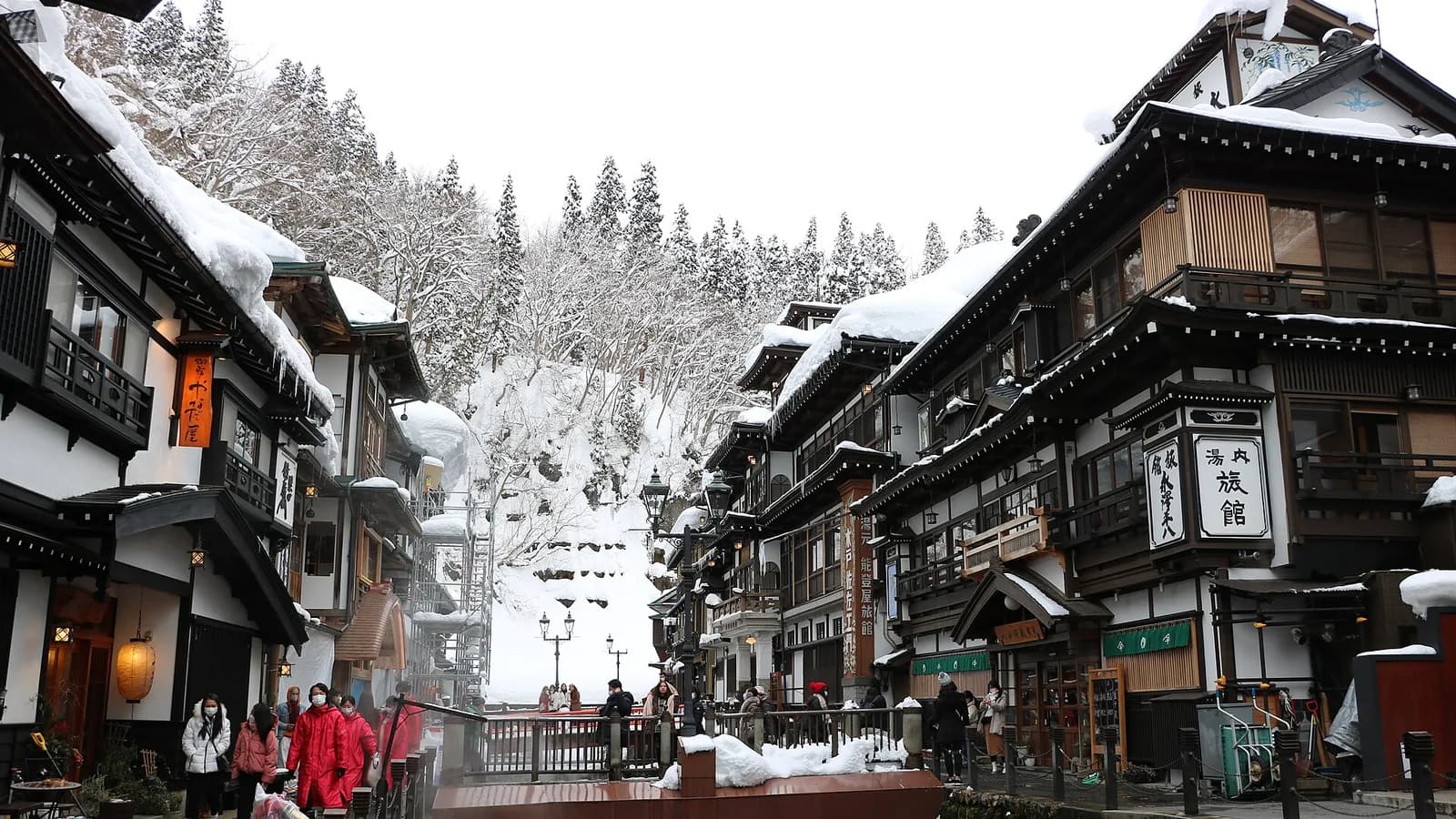
| Ginzan (Yamagata) | Yamagata Shinkansen to Oishida, about 3 hours 20 minutes from Tokyo, then 35 minutes by bus | Three and four-storey wooden inns along a river, gas lamps, snow scenes | Small public baths, mostly inn baths |
| Noboribetsu (Hokkaido) | About 75 minutes from Sapporo by train, then bus | Jigokudani "Hell Valley", many water types in one town | Mostly hotel baths |
| Dogo (Ehime) | About 20 minutes by tram from JR Matsuyama | Dogo Onsen Honkan, a wooden bath house from 1894 | From ¥700 |
| Gero (Gifu) | About 90 minutes from Nagoya on the JR Hida limited express | Smooth bicarbonate water, free foot baths | Yumeguri pass ¥1,300 for 3 baths |
| Kurokawa (Kumamoto) | About 3 hours by direct bus from Fukuoka, twice a day | Rural village of two dozen small ryokan with outdoor baths | Wooden bath pass (tegata) ¥1,500 for 3 baths |
Times and prices from japan-guide.com and the town tourism offices, checked on 14 November 2026. Two things to know this season: in Kinosaki, Satono-yu has been closed since April 2024. In Ginzan, access for visitors is restricted from 19 December 2026 to 7 March 2027, with a paid shuttle for day visitors (¥1,000 to ¥1,500). Snow-covered Ginzan, Zao and Nozawa feature in our guide to Japan in winter, and the snow monkeys who bathe near Yudanaka have their own page.
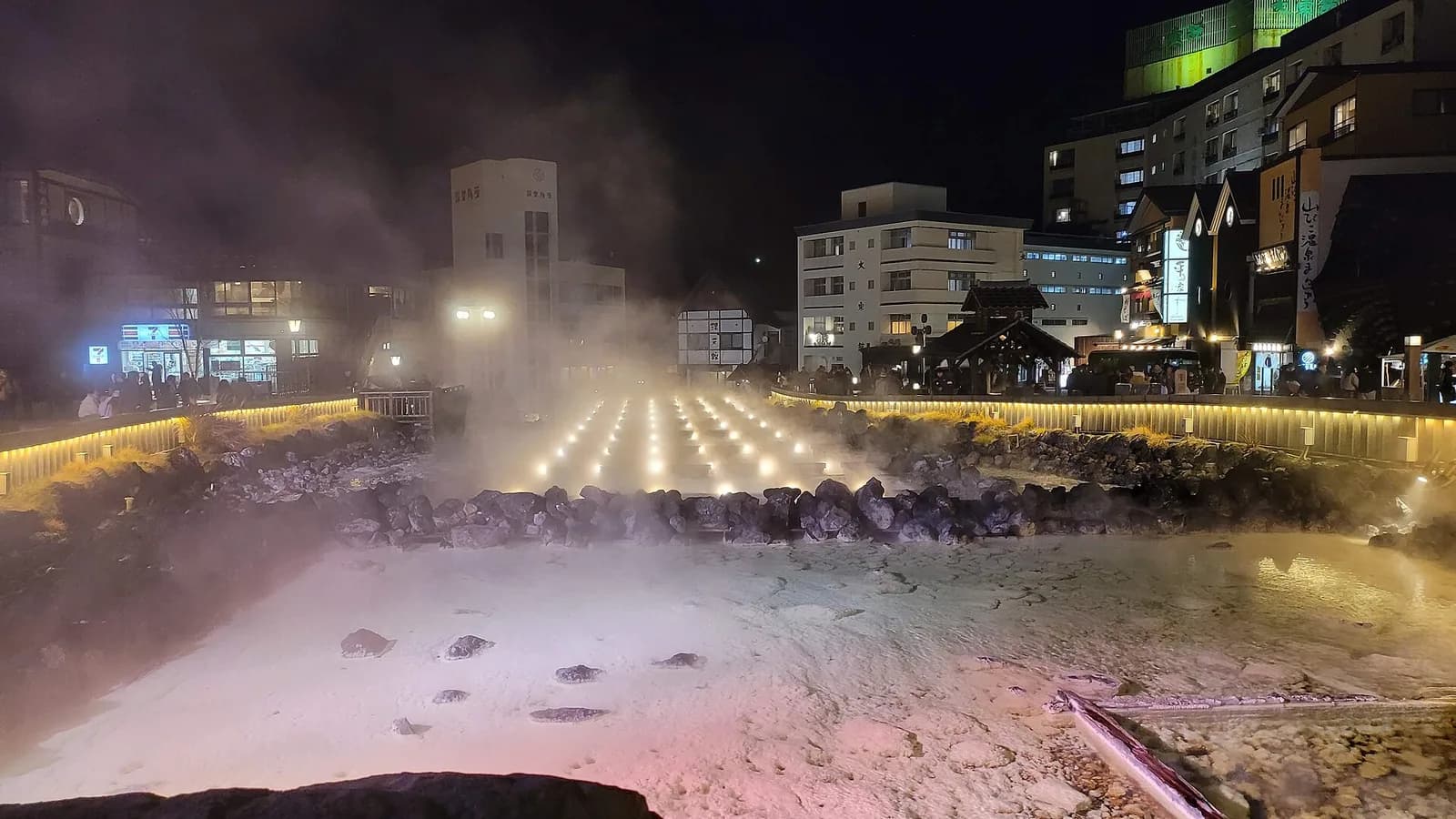
Onsen day trips from Tokyo, Kyoto and Osaka
From Tokyo: Hakone, Atami and Kinugawa
Hakone is the classic, and the day baths at Hakone Yumoto open to visitors (Tenzan ¥1,450, Hakone Yuryo ¥1,700 on weekdays) are 1.5 hours from Shinjuku. Combine it with the ropeway and Lake Ashi, covered in our Mount Fuji and Hakone guide. Atami, on the coast, is 40 to 50 minutes by Shinkansen (about ¥4,000) or 1 hour 40 minutes on the slower JR Tokaido line for ¥2,090, with salty chloride water. Kinugawa, north of Tokyo near Nikko, has large riverside ryokan with clear, soft water.
From Kyoto: Arashiyama and Arima
Kyoto has few real hot springs. Arashiyama Onsen, by the Togetsukyo bridge, is the one inside the city, and a few Arashiyama ryokan pipe its water into their baths. For a proper onsen town, Arima is about 70 minutes by direct bus from Kyoto for ¥1,850.
From Osaka: Arima Onsen
Arima, behind Kobe, is one of Japan's oldest onsen towns and the easiest from Osaka: 60 minutes by bus from Hankyu Umeda or JR Osaka for ¥1,400, or 50 minutes from Shin-Osaka for ¥1,250. Try both waters: the rust-brown kinsen at Kin no Yu (¥800, ¥600 on weekdays) and the clear ginsen at Gin no Yu (¥700), or ¥1,200 for both. Kinosaki is too far for a day trip, but a good one-night stop from Osaka or Kyoto by JR limited express.
Onsen health rules: who should not bathe and how to avoid dizziness
Hot water at 42°C puts real strain on the heart. The Ministry of the Environment's guide to safe onsen use (2019) gives these rules:
- Do not bathe with a fever, an active illness, severe heart, lung or kidney disease, bleeding, or during the acute phase of a chronic condition. Ask a doctor if in doubt, especially when pregnant.
- Older people and anyone with high blood pressure or a heart condition should avoid water at 42°C or more and bathe up to the chest only.
- No bath right after a meal, after alcohol, or within 30 minutes of exercise.
- Drink water before and after, since you sweat a lot.
- Children, elderly and disabled bathers should not bathe alone.
- Acidic and sulphur springs can irritate dry or sensitive skin: rinse after.
Keep the first soak short, sit on the edge to cool down and get out at the first sign of dizziness.