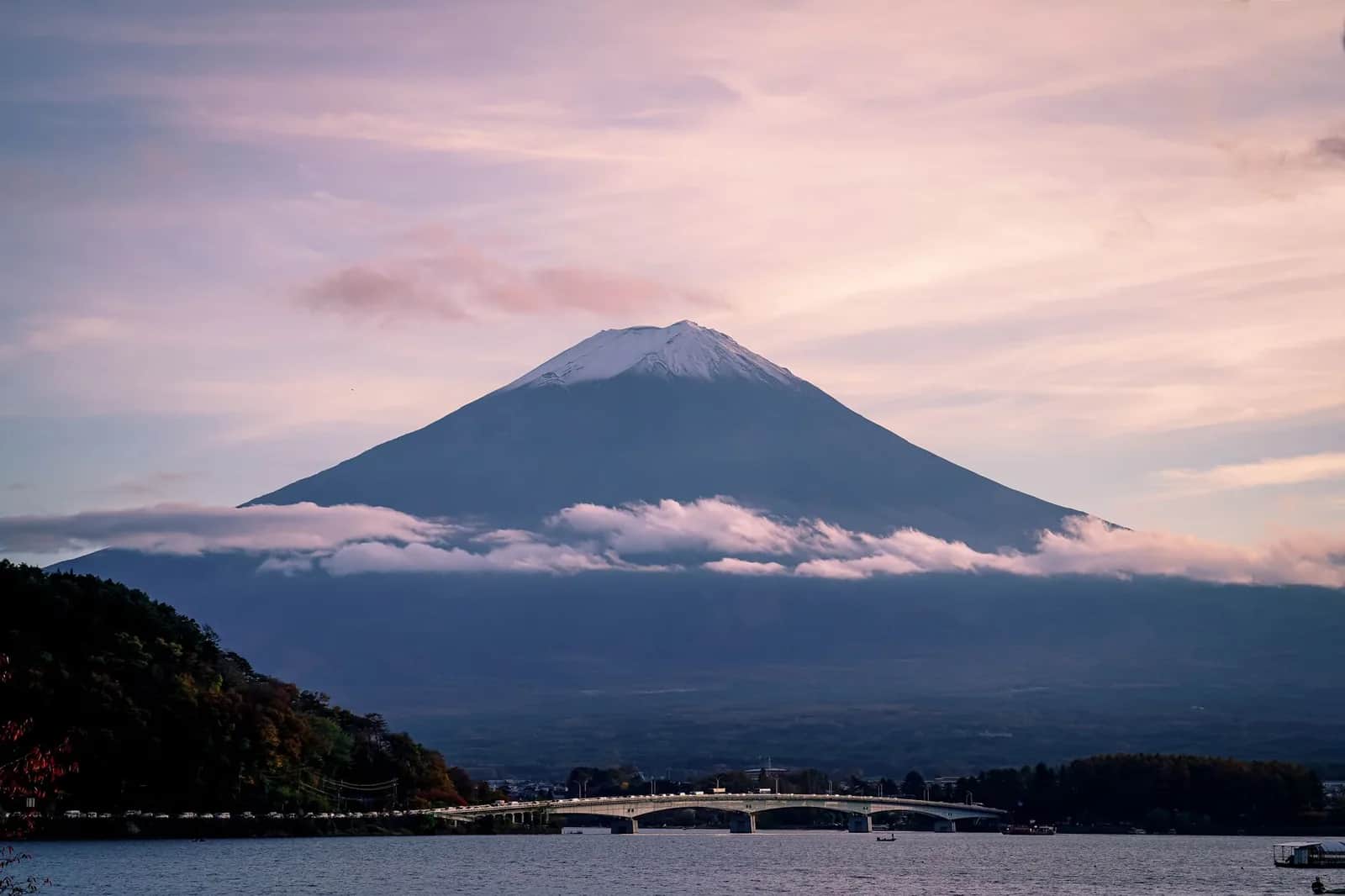
- the summit of Mount Fuji, Japan's highest mountain, about 100 km west of Tokyo
- 3,776 m
- from Shinjuku to Lake Kawaguchiko by highway bus or direct train. The Romancecar reaches Hakone-Yumoto in about 80 minutes
- 2 hours
- climbing fee per person on all four trails in 2026, with the season open from 1 or 10 July to 10 September
- ¥4,000
On this page
Mount Fuji is best seen from the Fuji Five Lakes around Kawaguchiko or from Hakone, both about two hours from Tokyo, on a clear morning between November and February. The summit hides behind cloud on most summer days, so give yourself a spare morning. Climbing is only allowed from July to 10 September, and the 2026 season is over. Below: the viewpoints, things to do around the lakes and in Hakone, the 2026 climbing rules, and how to get there, checked on the official sites on 14 November 2026.
Mount Fuji tours from Tokyo
Five day trips and one guided climb with strong reviews, all leaving from Tokyo, for those who prefer a coach or a driver to two train changes.
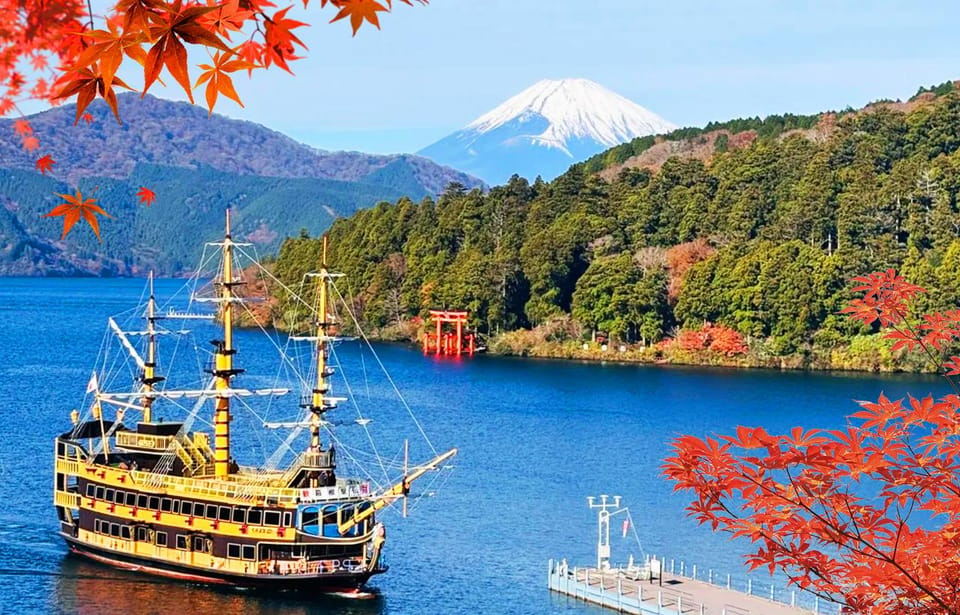
Tokyo: Mt. Fuji Tour, Hakone Ropeway, Owakudani, Lake Ashi
A coach day from Tokyo that pairs the Fuji area with Hakone: the ropeway over Owakudani and Lake Ashi.
4.6(8,628 reviews)
- 10 hours
- Free cancellation
From $54per person
See prices & availability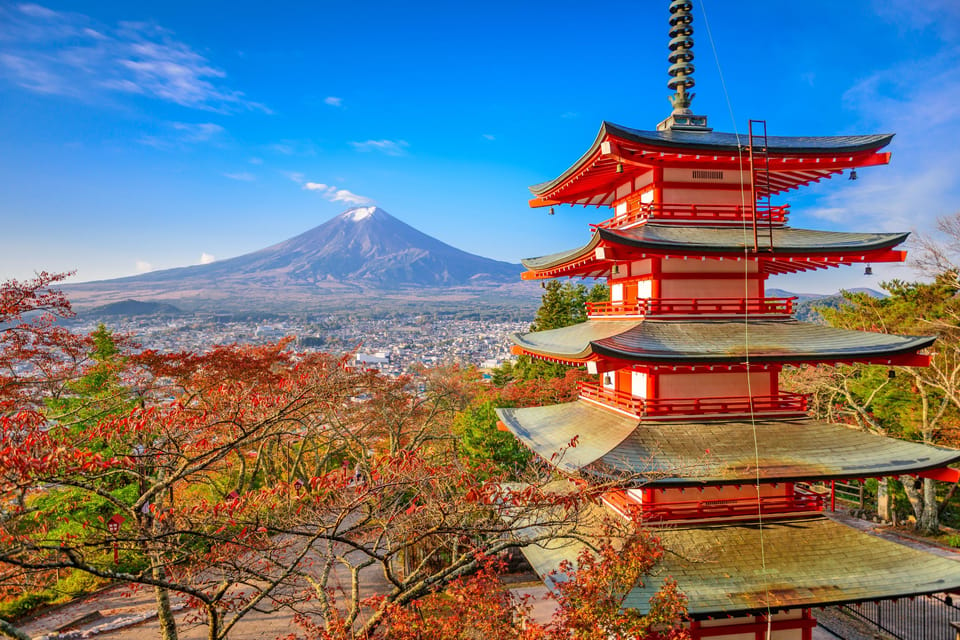
From Tokyo: Mount Fuji Full-Day Highlights Sightseeing Trip
A full day by coach from Tokyo around Lake Kawaguchiko, with a stop at the Gotemba outlets.
4.5(5,347 reviews)
- 10 hours
- Free cancellation
From $64per person
See prices & availability
Tokyo: Mt. Fuji Lake Kawaguchi Small Group Tour with Pickup
A small-group day around Lake Kawaguchi with pickup in Tokyo and six stops around the lake area.
4.6(857 reviews)
- 10 hours
- Free cancellation
- Pickup included
From $68per person
See prices & availability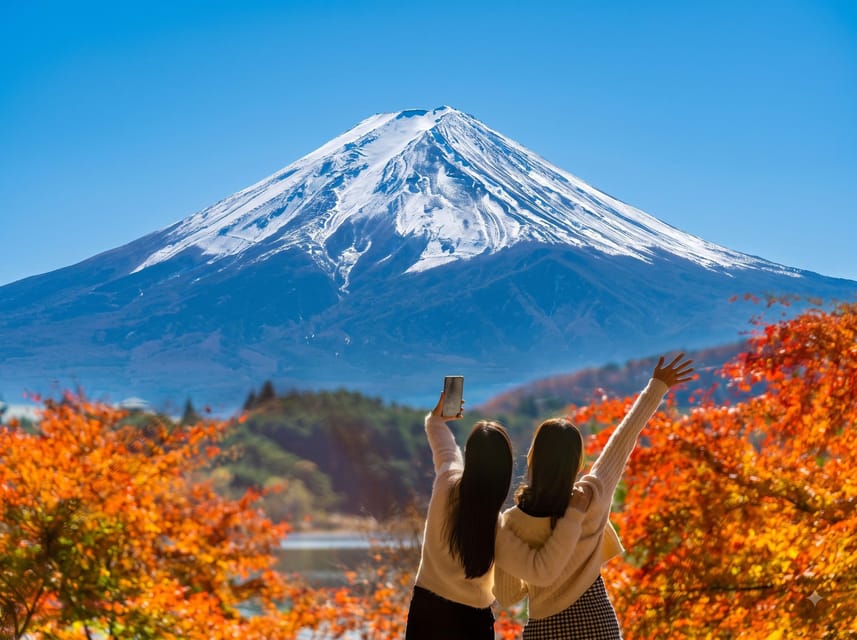
Tokyo: Ultimate Mt. Fuji Day Tour - Classics and Hidden Gems
Eleven to twelve hours from Tokyo that mix the classic Fuji stops with a few lesser-known places.
4.6(893 reviews)
- 11 to 12 hours
- Free cancellation
From $69per person
See prices & availability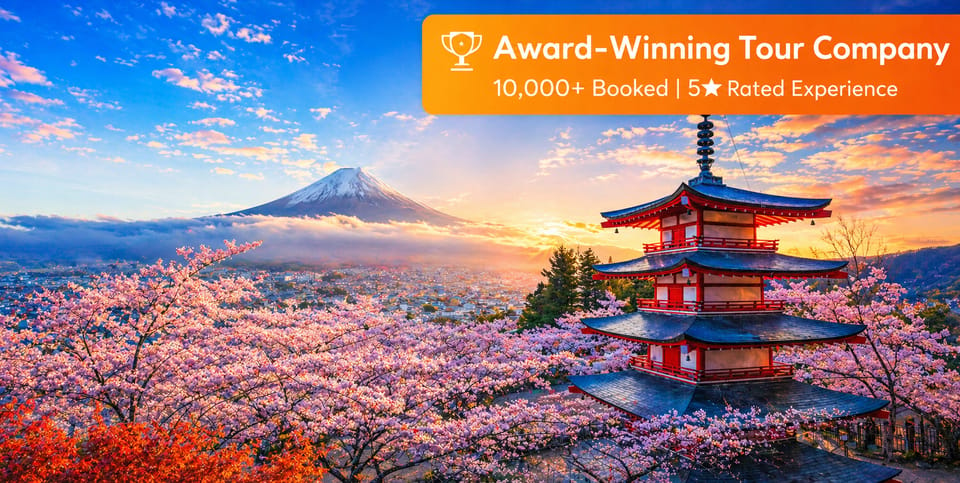
From Tokyo: Mount Fuji Private Tour With English Guide
A private car with an English-speaking guide for up to three people, on a route you choose together.
4.9(960 reviews)
- 10 to 11 hours
- Free cancellation
- Pickup included
From $320per group
See prices & availability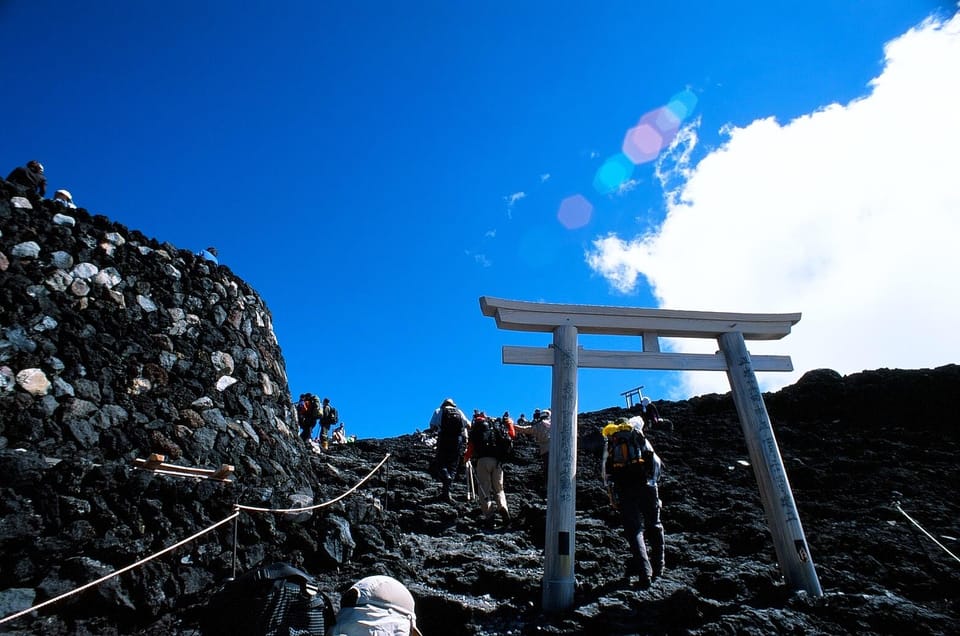
Mt. Fuji: 2-Day Climb – Summit Lodge Stay, Wake to Sunrise
Two days on the mountain in the July to September season, with a night in a hut near the top before sunrise.
4.6(66 reviews)
- 2 days
- Free cancellation
From $269per person
See prices & availability
See more activities in Fujikawaguchiko
Best places to see Mount Fuji
The closer you are, the better the odds: from the lakes on the north side, the mountain fills the sky. Hakone and the Shinkansen are further away, and Tokyo only gets the view on the clearest winter days.
| Viewpoint | Side of the mountain | Cost |
|---|---|---|
| Chureito Pagoda, Arakurayama Sengen Park | North, Fujiyoshida | Free |
| North shore of Lake Kawaguchi and Oishi Park | North, Fujikawaguchiko | Free |
| Mt. Fuji Panoramic Ropeway (Mount Tenjo) | North, Lake Kawaguchi | ¥1,000 ($6) return |
| Oshino Hakkai spring ponds | North, Oshino village | Free |
| Lake Ashi and Hakone Ropeway | South-east, Hakone | Covered by the Hakone Freepass |
| Tokaido Shinkansen, window seat E | South, near Shin-Fuji | Price of your ticket |
| Tokyo observation decks | About 100 km east | Free to ¥2,700 |
Chureito Pagoda, the postcard view
The five-storey red pagoda with Fuji behind it is the picture on half the posters of Japan. It stands in Arakurayama Sengen Park in Fujiyoshida, a short walk uphill from Shimoyoshida Station on the Fujikyu line, and the viewing deck behind it is reached by nearly 400 steps. Entry is free. Be there before 8:00: the light is clearer and the tour coaches have not arrived. It is busiest in April, when the cherry trees below the pagoda flower, which our cherry blossom guide dates year by year.
Lake Kawaguchi and Oishi Park
The north shore of Lake Kawaguchi looks straight across the water at the mountain, and on a still morning you get the reflection. Oishi Park is a small free garden on that shore, always open, with lavender in early summer and red kochia bushes in autumn. Walk or cycle the lakeside road from there towards the Kawaguchiko Music Forest. The Mt. Fuji Panoramic Ropeway on the south shore climbs Mount Tenjo for a view over the lake and the mountain together, ¥1,000 ($6) return or ¥600 one way.
Hakone and Lake Ashi
From Hakone, Fuji rises behind the hills on the far side of Lake Ashi, smaller than from Kawaguchiko but framed by water and the red torii of Hakone Shrine. The best views are from the ropeway above Owakudani and the boat across the lake. It is the right choice if you want hot springs as well, and a lottery if the view is your only reason to go.
From the Shinkansen
On the Tokaido Shinkansen from Tokyo to Kyoto or Osaka, sit on the right-hand side, window seat E in an ordinary car (seat D in the Green Car). The mountain appears 40 to 45 minutes after Tokyo, around Shin-Fuji Station, and is gone in a few minutes. Coming back, the view is on the left, still seat E. Our Shinkansen guide explains how to pick that seat when you book.
From Tokyo
On clear winter mornings, Fuji shows on the western horizon from the free observatories of the Tokyo Metropolitan Government Building in Shinjuku, from Shibuya Sky and from Tokyo Skytree. It looks small at 100 km, and in summer you will almost never see it. Treat it as a bonus on a day of sightseeing in Tokyo, not as a plan.
When can you see Mount Fuji? Chances of a clear view by season
We found no official count of "Fuji days" to quote, but the pattern is the same every year: cold dry air means clear skies, warm humid air means haze. Whatever the month, the first hours after sunrise give the best odds, and cloud tends to build from late morning.
| Season | Chance of seeing the summit | What to expect |
|---|---|---|
| December to February | Best | Clear, cold mornings, full snow cap, short days |
| March to May | Fair | Spring haze, cherry blossom at Chureito in April |
| June to August | Worst | Rainy season then humid haze, summit often in cloud, climbing season |
| September | Poor | Typhoons and showers, little or no snow on top |
| October to November | Good | First snow on the summit, autumn leaves around the lakes |
If your dates are flexible, keep the Fuji day for the morning with the best forecast and check the live cameras of the Fuji Five Lakes before you leave Tokyo. For the weather month by month, see the best time to visit Japan.
Fuji Five Lakes: things to do around Kawaguchiko
The Fuji Five Lakes (Fujigoko) are Kawaguchiko, Saiko, Shojiko, Motosuko and Yamanakako, strung along the northern foot of the mountain. Kawaguchiko is the one with the trains, buses, hotels and most of the sights, and the easiest base. Lake cruises of about 20 minutes cost ¥1,000 ($6) one way. Saiko and Motosuko, further west, are quieter, with campsites and forest walks, and Motosuko is about 30 to 45 minutes by bus from Kawaguchiko (¥1,470).
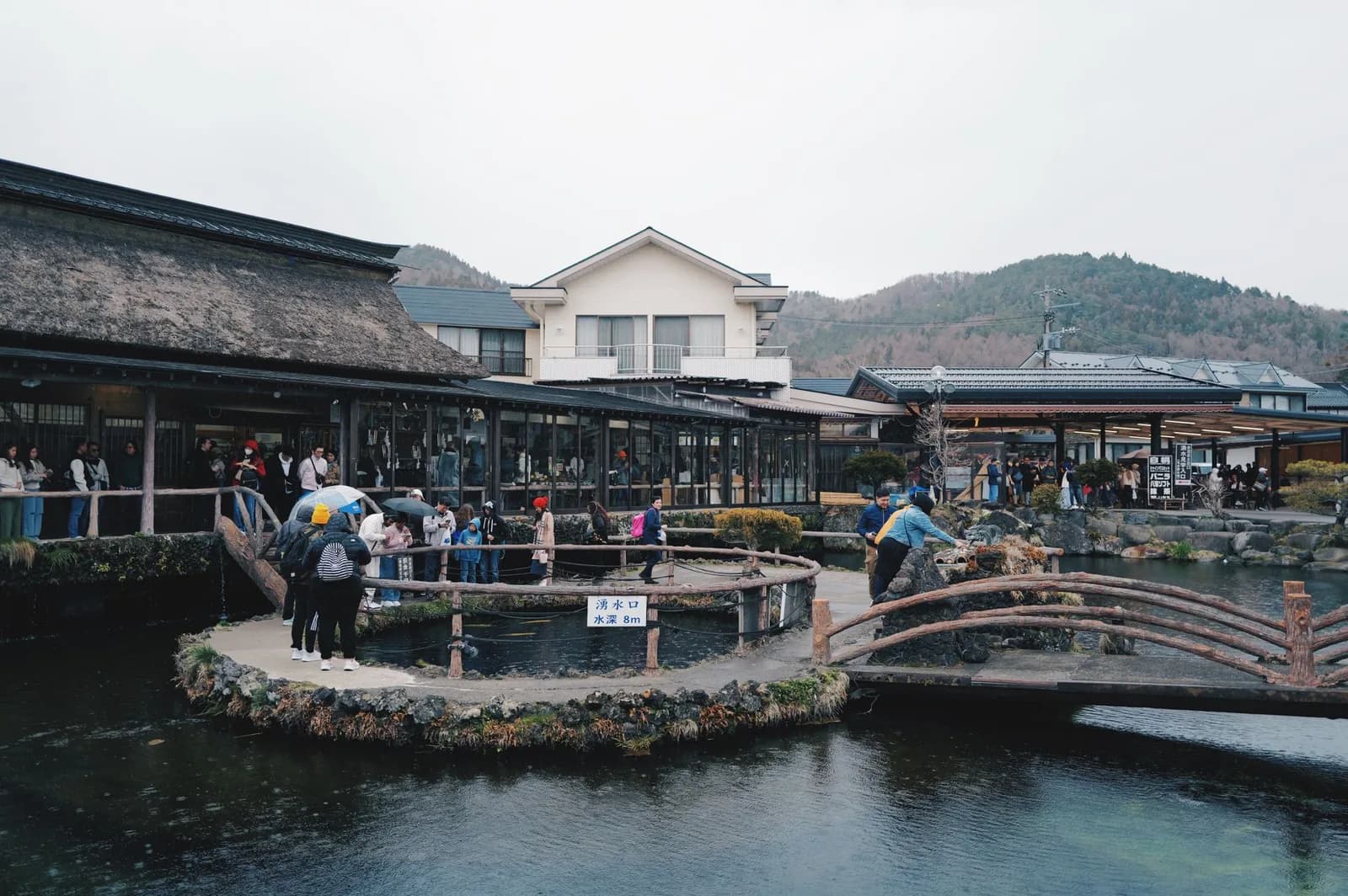
Oshino Hakkai, the spring-fed ponds
Between Kawaguchiko and Yamanakako, the village of Oshino has eight ponds fed by snowmelt from Fuji, filtered through the lava for decades, with thatched houses around them. The ponds are free, the small Hannoki Bayashi museum costs ¥300, open 9:00 to 17:00. It is on almost every coach tour, so expect crowds by late morning and go early or late in the day.
Around the lakes on a second day
With a night at the lakes, add the Aokigahara forest and the lava caves near Saiko, the Kawaguchiko Music Forest, or Fuji-Q Highland, the roller-coaster park with its own station on the Fujikyu line. If the morning is clear, start with Chureito and Oishi Park, then use the afternoon for these, which do not depend on the view.
The Lawson Mount Fuji photo spot in Kawaguchiko in 2026
The Lawson convenience store near Kawaguchiko Station, with Fuji appearing to sit on its roof, became a social media spot in 2023 and 2024. After complaints about crowds in the road, litter and trespassing, the town put up a tall black screen on 21 May 2024 to hide the view. It came down in August 2024. A lower barrier, about 1.4 m high, went up in August 2025 to keep people off the road without blocking the mountain, according to Time Out Tokyo.
Things to do in Hakone
Hakone is a hot-spring area in the mountains south-east of Fuji, and most of what there is to do sits on a single loop of trains, a cable car, a ropeway and a boat. You can do it in a long day from Tokyo, but a night in a ryokan makes it far more pleasant.
The Hakone loop and the Hakone Freepass
The classic loop runs from Hakone-Yumoto on the Tozan train to Gora (about 40 minutes of switchbacks), up the cable car to Sounzan, over Owakudani on the Hakone Ropeway to Togendai, then across Lake Ashi by boat to Hakone-machi or Moto-Hakone, and back to Yumoto by bus. The Hakone Freepass costs ¥7,100 ($44) for two days from Shinjuku (Odakyu, 14 November 2026) and covers all of it, plus the Odakyu train to Odawara and back. The Romancecar limited express from Shinjuku adds ¥1,200 ($7.50) for a reserved seat. Do not confuse it with the "Hako Ticket Plus" version, which adds museum and onsen entries and costs ¥13,100 from Shinjuku. The Japan Rail Pass is not valid on the loop: our JR Pass guide covers what it does include.
Owakudani and the Hakone Ropeway
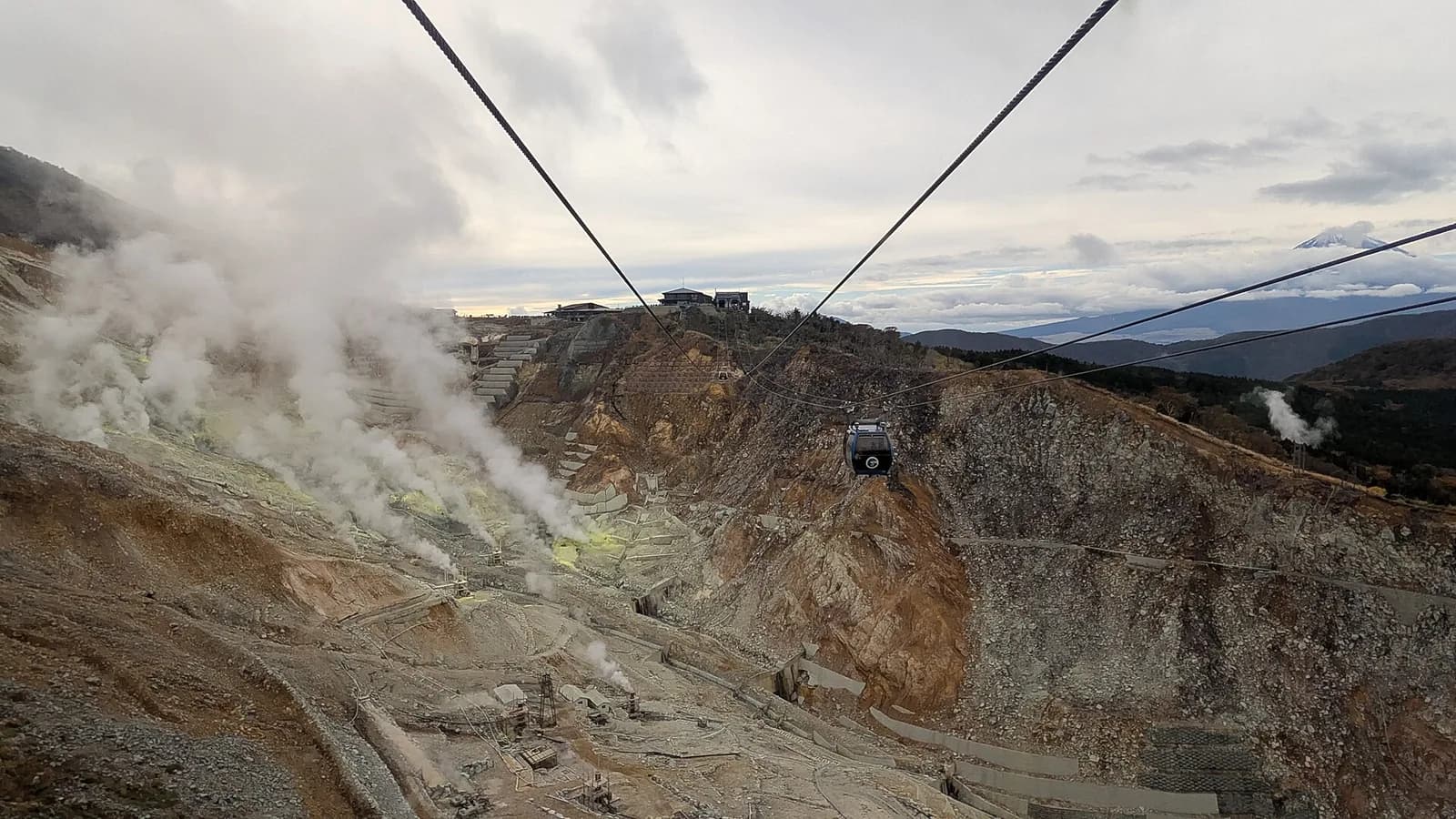
Owakudani is a volcanic valley of steam vents and yellow sulphur, formed by an eruption of the Hakone volcano about 3,000 years ago. The ropeway stops there between Sounzan and Togendai. The thing to eat is a black egg, boiled in the hot springs until the shell turns black. The ropeway stops when volcanic gas or wind is too strong, and the operator runs replacement buses during maintenance, so check the status on the Hakone Navi site before you set off.
Lake Ashi cruise and Hakone Shrine
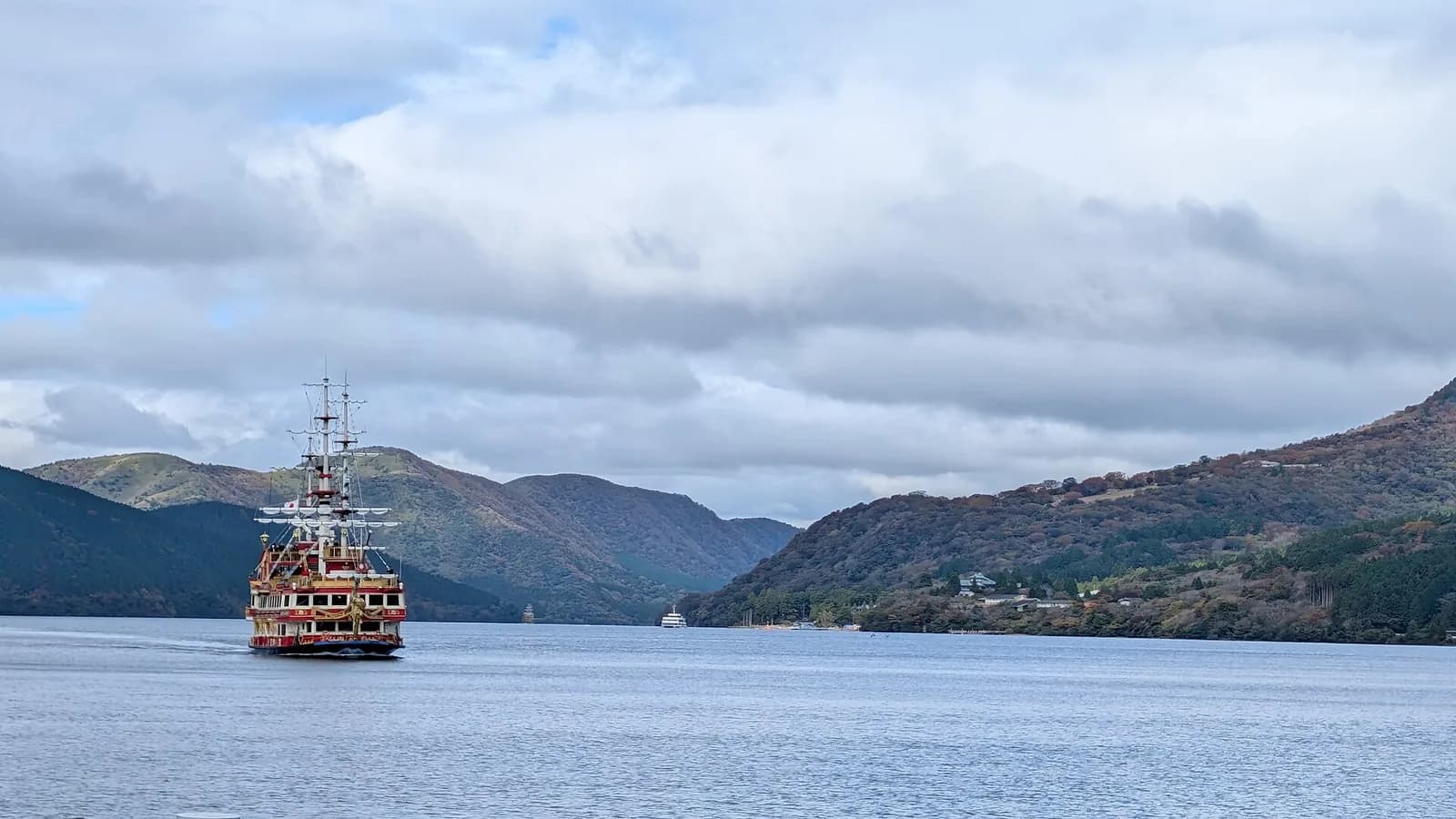
The Hakone Sightseeing Cruise crosses Lake Ashi in replica pirate ships, about 25 to 40 minutes depending on the pier, and is included in the Freepass. Get off at Moto-Hakone and walk ten minutes along the shore to Hakone Shrine and its red torii standing in the water. There is usually a queue for the photo at the torii: arrive before 9:00 or late in the afternoon. The cedar-lined Old Tokaido road starts close by.
Hakone Open-Air Museum
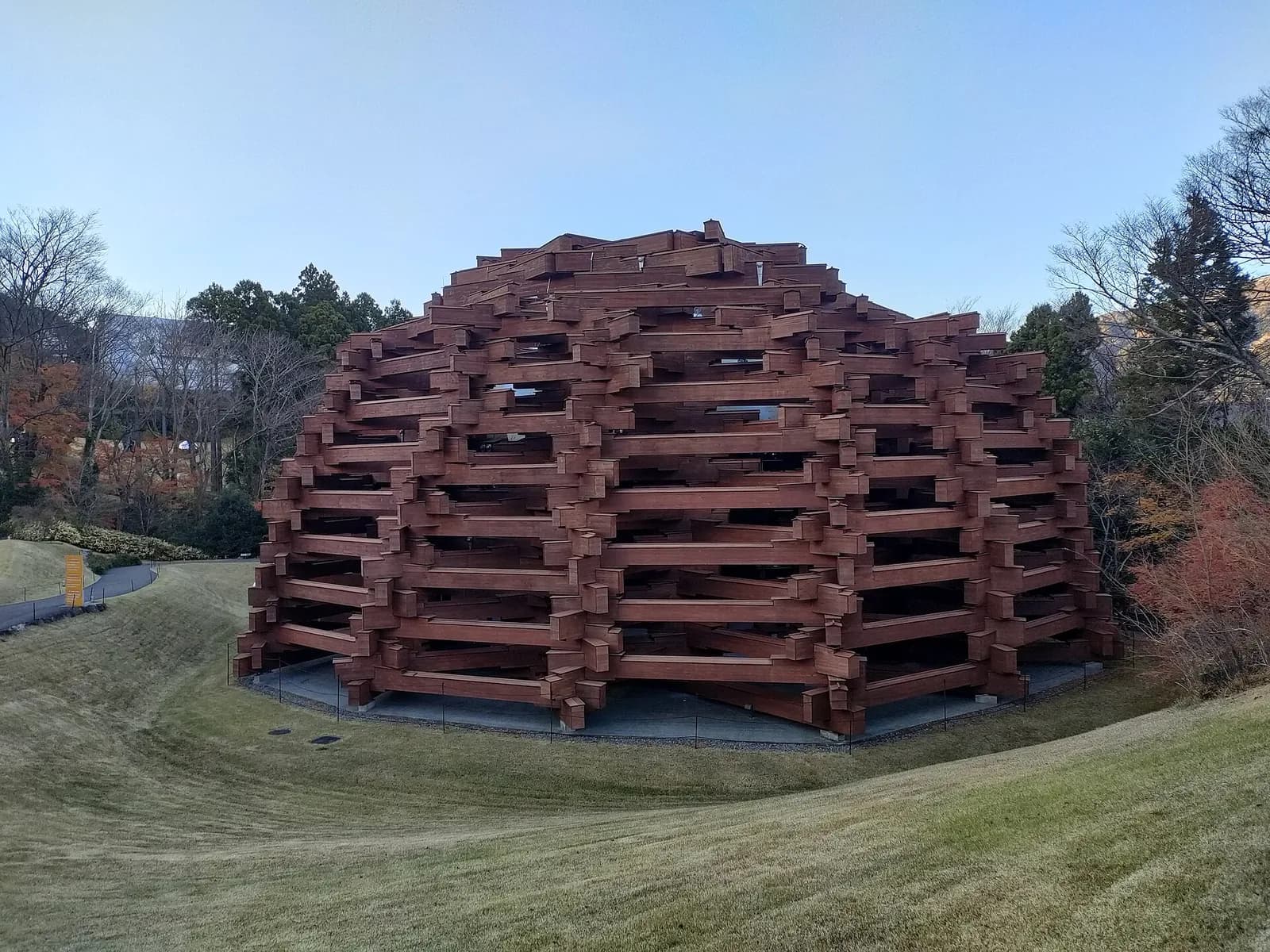
The first open-air art museum in Japan puts over a hundred sculptures on a hillside, with a pavilion of Picasso works and a hot-spring footbath. It is next to Chokoku-no-Mori Station, one stop before Gora on the Tozan line. Entry costs ¥2,000 ($12.50), or ¥1,900 with the Freepass, open 9:00 to 17:00, last entry 30 minutes before closing. The museum is closed from 30 November to 4 December 2026.
Onsen in Hakone
Hakone has more than a dozen hot-spring areas. On a day trip, the day-use baths of Hakone-Yumoto, next to the station, are the easiest to fit in at the end of the loop. Many baths refuse guests with tattoos: some, such as Tenzan in Yumoto, are known to accept them, but ask before paying. To sleep in a ryokan with its own baths, our ryokan and onsen guide lists the best Hakone inns and explains the bathing rules.
Climbing Mount Fuji in 2026: season, fee and rules
The 2026 climbing season is over: it ended on 10 September. The official site announces the 2027 season for "early July to early September", with dates still to be published. These are the 2026 rules, which are likely to stay close.
| Trail | Prefecture | 2026 season | 5th station | Time up |
|---|---|---|---|---|
| Yoshida | Yamanashi | 1 July to 10 September | About 2,300 m | 5 to 7 hours |
| Subashiri | Shizuoka | 1 July to 10 September | About 2,000 m | 5 to 8 hours |
| Fujinomiya | Shizuoka | 10 July to 10 September | About 2,400 m | 4 to 7 hours |
| Gotemba | Shizuoka | 10 July to 10 September | About 1,400 m | 7 to 10 hours |
Since 2025 the climbing fee is the same on all four trails: ¥4,000 ($25) per person, whatever the age, paid in advance through the official online registration. Yoshida and the three Shizuoka trails use separate booking systems. The fee is not a hut booking, and descending by another trail does not cost a second fee. Going up to a 5th station without climbing further is free.
- Daily cap: 4,000 climbers a day on the Yoshida trail only. It was never reached in 2024 or 2025. The Shizuoka trails have no cap.
- Gate closing time: on the Yoshida trail, the gate at the 5th station is shut from 14:00 to 3:00 the next morning, except for climbers with a hut reservation, who are asked to pass before 14:00.
- Gear check: in 2026, staff at the Yoshida gate could turn back climbers without hiking boots, warm clothes and rain gear.
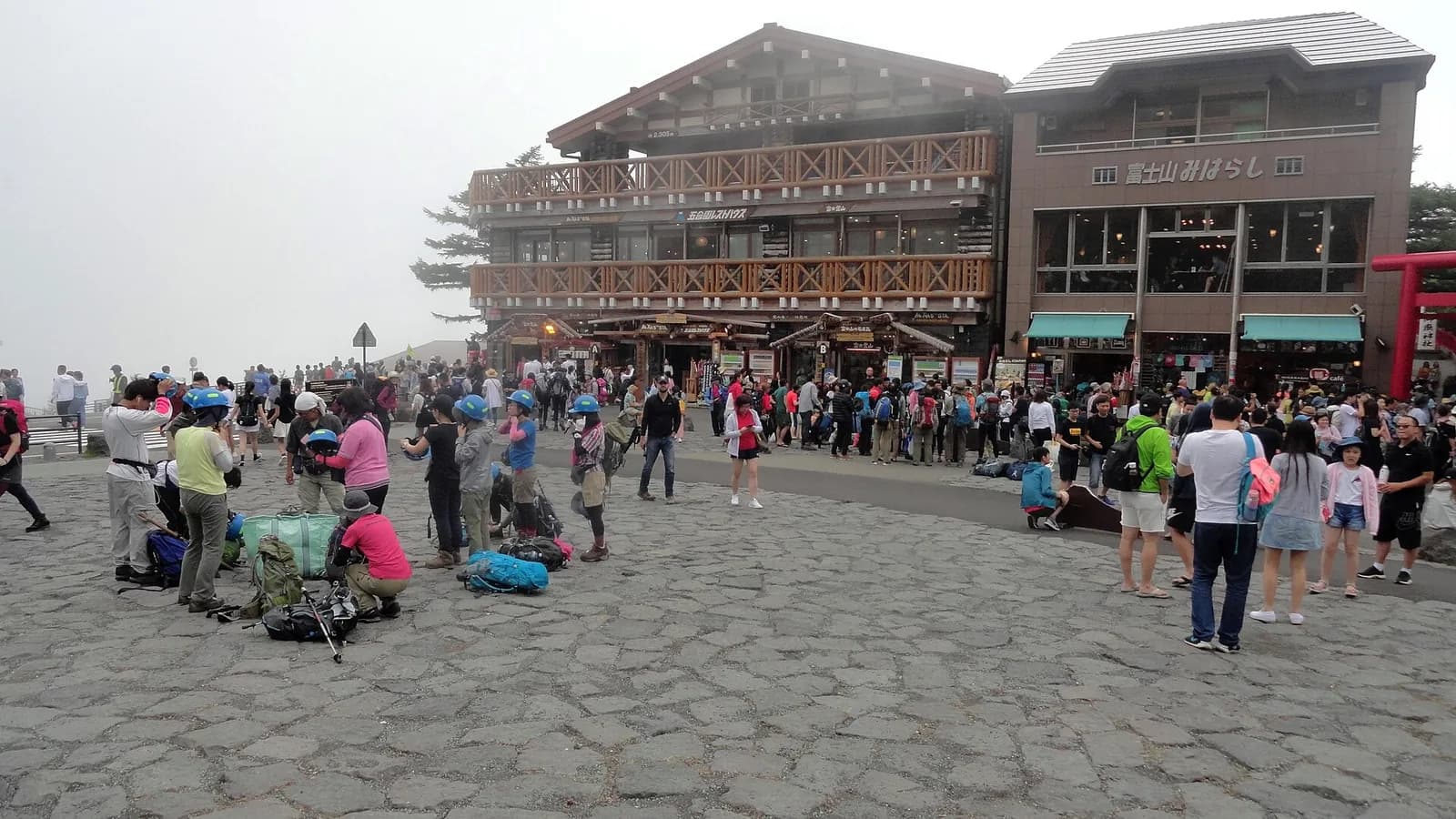
Buses from Shinjuku reach the Subaru Line 5th station in about 2 hours 30 minutes for ¥4,800 ($30) in season, and from Kawaguchiko in about 50 minutes for ¥2,000 ($12.50). Private cars are banned from the Subaru Line during the climbing season (3 July to 10 September in 2026), so you park at the foot and take the shuttle. For a first climb, a guided two-day trip with a hut night, like the one in the cards above, takes care of the booking, the hut and the gear.
Can you climb Mount Fuji in winter? Off-season rules
No. Outside the official season, the trails above the 5th stations are closed by law, under the Road Act. Climbing anyway can cost up to six months in prison or a ¥300,000 fine ($1,875). The official climbing site warns that the temperature on the upper mountain stays below 0°C almost all the time and below -10°C from November to April, with gusts over 40 m per second, and that huts, toilets, first-aid stations and phone coverage are all gone.
What you can do in winter: visit the lakes and Hakone, when the views are best, and take the bus to a 5th station while the road is open, which depends on snow. On the Fujinomiya side, the trail between the 5th and 6th stations was open from 23 June to 10 November in 2026. For skiing near Fuji and the rest of the cold months, see Japan in winter.
How to get to Mount Fuji from Tokyo
There is no single "Mount Fuji" station. Pick a base: Kawaguchiko for the views and the lakes, Hakone for the onsen, or a 5th station in July and August for the climb.
| Route | Time | One-way fare | Japan Rail Pass |
|---|---|---|---|
| Highway bus, Shinjuku to Kawaguchiko | About 2 hours | ¥2,200 ($14), ¥2,000 online | Not valid |
| Fuji Excursion direct train, Shinjuku to Kawaguchiko | About 2 hours | About ¥4,200 ($26), seat reservation required | Covers Shinjuku to Otsuki only |
| JR Chuo line to Otsuki, then Fujikyu line | 2 to 3 hours | From about ¥2,580 | Covers JR to Otsuki, Fujikyu extra |
| Odakyu Romancecar, Shinjuku to Hakone-Yumoto | About 80 minutes | ¥1,200 seat on top of the Freepass | Not valid |
| Bus, Shinjuku to Subaru Line 5th station | About 2 hours 30 minutes | ¥4,800 ($30) | Not valid |
The bus is the cheapest and the simplest, but book a seat a few days ahead at weekends. With a Japan Rail Pass, the Fuji Excursion is free as far as Otsuki and you pay the Fujikyu section on top, about ¥1,770 on the limited express or ¥1,170 on a local train. The JR Tokyo Wide Pass covers the whole trip to Kawaguchiko except panorama seats. These train fares were last published in 2025: check them on the operator's site before you go. A hire car makes sense for the lakes on the Shizuoka side and the Fuji views from the south, which the car rental guide covers.
How many days for Mount Fuji and Hakone
One day from Tokyo is enough for Kawaguchiko or for the Hakone loop, not both, unless you take a coach tour that does a short version of each. Two days is the right length: a night at Lake Kawaguchi gives you two chances at a clear sunrise, or a ryokan night in Hakone lets you take the loop slowly. With three days, do the lakes, then cross to Hakone by bus via Gotemba, and continue to Kyoto from Odawara by Shinkansen. Our Japan itinerary shows where this fits between Tokyo and Kyoto.
Where to stay near Mount Fuji
For the view, sleep on the north shore of Lake Kawaguchi: rooms facing the lake look straight at the mountain, and you are out at sunrise before the day-trippers arrive. Ask for a Fuji-view room when you book, as they cost more and sell out first. For hot springs, sleep in Hakone, in a ryokan with dinner, breakfast and its own baths. Our guide to ryokan and onsen in Japan has our picks in Hakone and what a night costs.
Mount Fuji facts: height, volcano and nearest town
Mount Fuji is 3,776 m high, the tallest mountain in Japan, on the border of Yamanashi and Shizuoka prefectures, about 100 km west of Tokyo. It is an active stratovolcano: its last eruption, the Hoei eruption of 1707, covered Edo, today's Tokyo, in ash. It was listed as a UNESCO World Heritage Site in 2013 as a cultural site, a sacred mountain and a source of art, from pilgrims' trails to Hokusai's prints. The nearest towns are Fujiyoshida and Fujikawaguchiko on the north side, and Fujinomiya and Gotemba on the south.