- no ticket for the shrine, the gates or the mountain trails, every day of the year
- Free
- the grounds and the trails never close, and the lower paths are lit at night
- 24 hours
- for the full loop to the 233 m summit and back, about 4 km of trails
- 2 to 3 hours
On this page
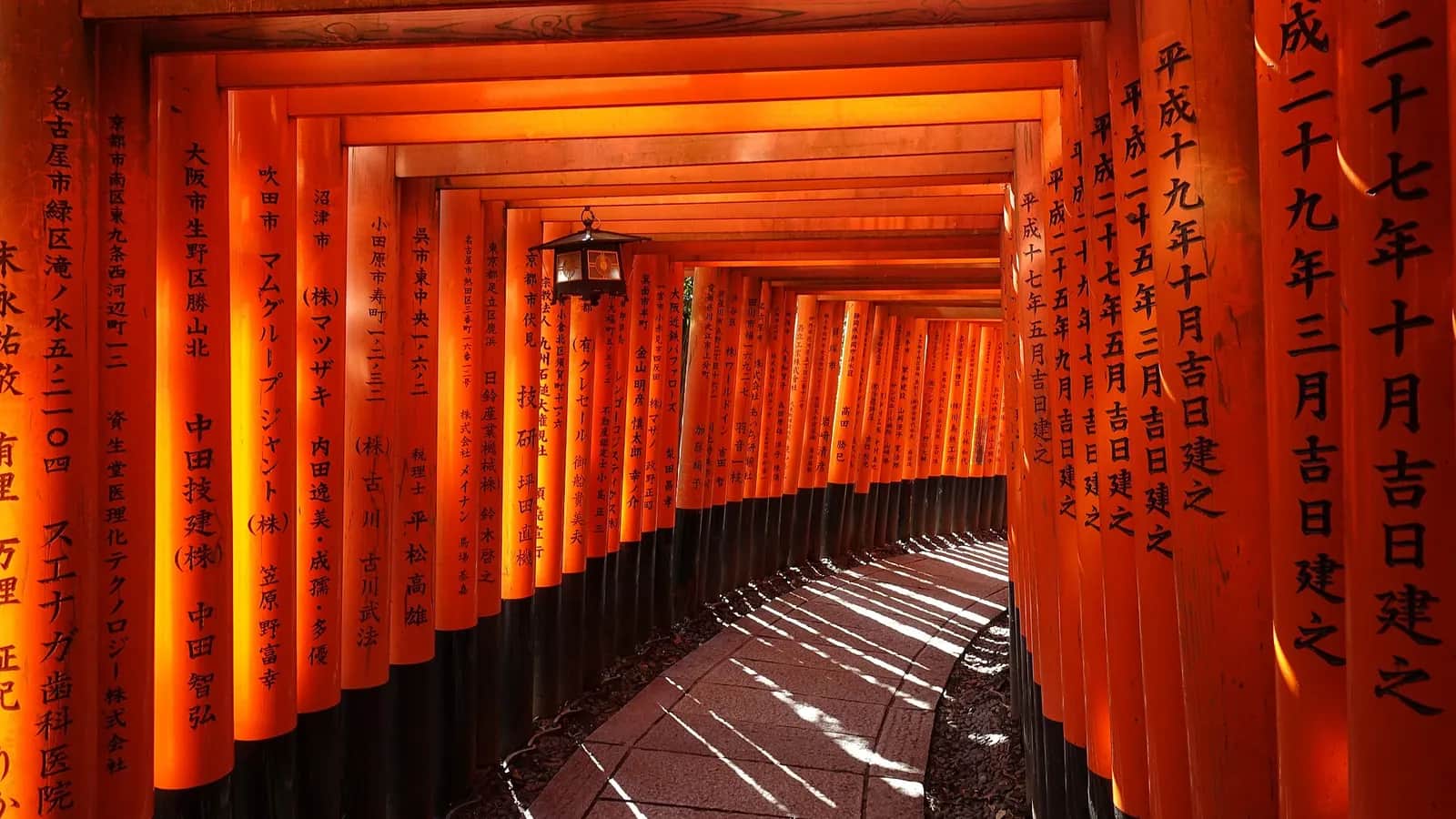
Fushimi Inari Taisha is the shrine of the thousands of orange torii gates, in southern Kyoto. It is free and open 24 hours a day, every day, and it sits right in front of JR Inari Station, 5 minutes from Kyoto Station. Its gates climb the whole of Mount Inari: the famous Senbon torii take 30 minutes, the viewpoint at Yotsutsuji about an hour and a half return, and the full loop to the 233 m summit 2 to 3 hours. Facts below were checked on the shrine's site and official sources on 14 November 2026.
Fushimi Inari tours
You do not need a guide to walk the gates, but one takes you onto the side trails and explains what the shrines on the mountain are.
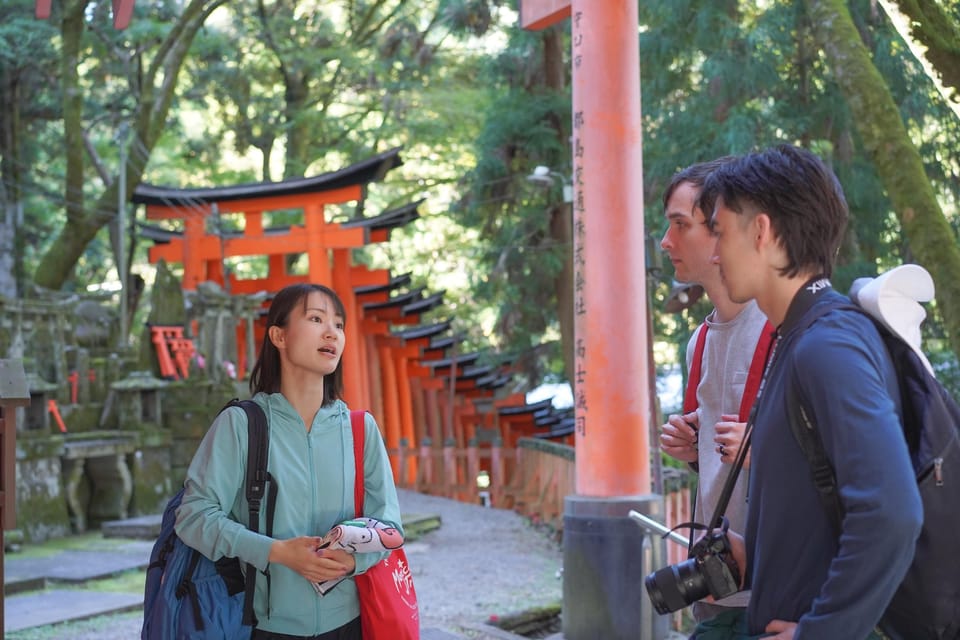
Kyoto: 3-Hour Fushimi Inari Shrine Hidden Hiking Tour
Three hours on Mount Inari with a guide, leaving the main tunnel of gates for the quieter trails, shrines and bamboo of the mountain.
4.9(340 reviews)
- 3 hours
- Free cancellation
From $47per person
See prices & availability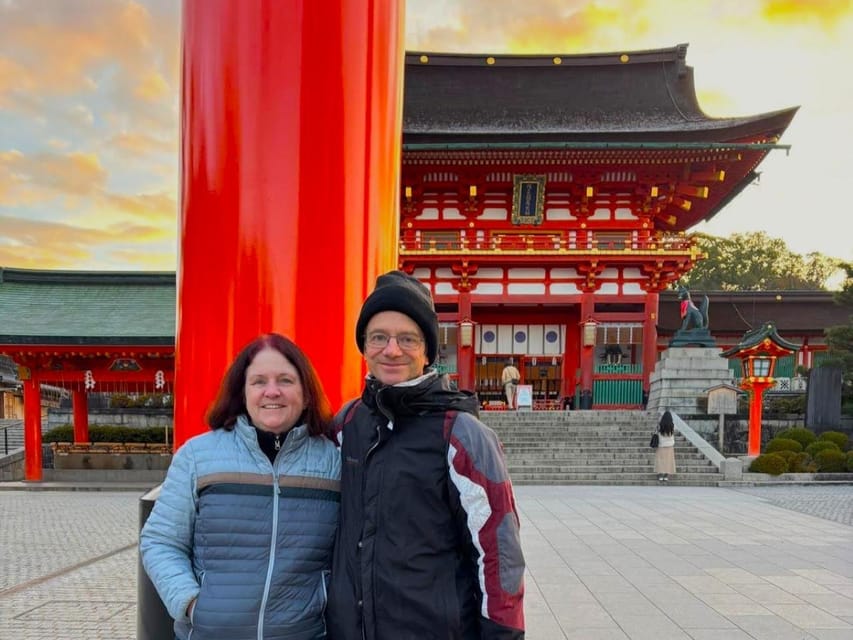
Kyoto: Early Morning Fushimi Inari Shrine - Beat the Crowds
A 2.5-hour guided walk that starts early, so you reach the Senbon torii before the tour groups and the day crowd arrive.
4.7(71 reviews)
- 2.5 hours
- Free cancellation
From $68per person
See prices & availability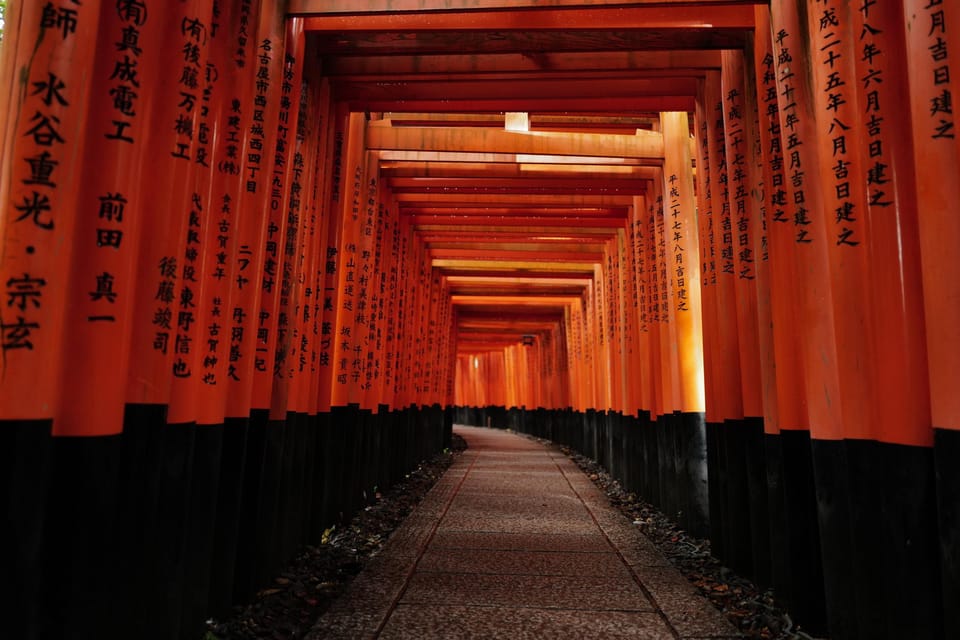
Kyoto: Early Morning Tour of Fushimi Inari, Arashiyama and Kinkakuji
Six hours with an English-speaking guide: Fushimi Inari at the start of the day, then Arashiyama and the Golden Pavilion.
4.9(1,812 reviews)
- 6 hours
- Free cancellation
From $74per person
See prices & availability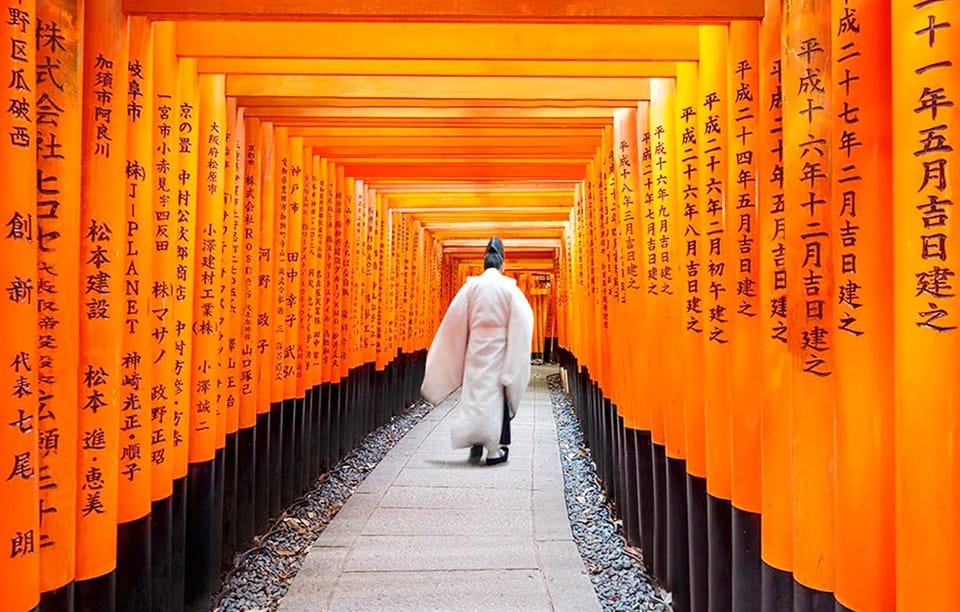
Kyoto/Osaka: Nara, Fushimi Inari Taisha, Arashiyama Bus Tour
A full day by coach from Kyoto or Osaka: the deer of Nara, the red gates of Fushimi Inari and the Arashiyama bamboo grove.
4.8(4,097 reviews)
- 9 to 10 hours
- Free cancellation
From $51per person
See prices & availability
Fushimi Inari opening hours and entrance fee in 2026
There are no Fushimi Inari tickets to buy. The grounds, the gates and the trails are open day and night with no closing day, and the shrine charges nothing to walk them. What does keep hours are the buildings where you deal with the priests:
| What | Hours or price |
|---|---|
| Grounds, torii tunnels, Mount Inari trails | Open 24 hours, free |
| Formal prayer (gokito) | 8:30 to 16:30, reception until about 16:00 |
| Prayer offering | From ¥5,000 ($31), from ¥30,000 ($190) with a kagura dance |
| Shrine office (enquiries, torii offerings) | 9:00 to 16:00, phone 075-641-7331 |
Prayer hours can change over New Year and on festival days. The amulet counters next to the main hall close in the late afternoon too, so buy your omamori or goshuin stamp before you start the climb if you plan to come down after dark.
How to get to Fushimi Inari: JR Inari and Keihan Fushimi-Inari stations
The easy way is the JR Nara Line from Kyoto Station to Inari, the second stop, about 5 minutes for ¥150 ($1). Take a local train, since rapid services skip Inari. The shrine gate stands across the road from the station exit, so you are at the first torii in a minute.
From Gion, Kawaramachi or Osaka, the Keihan Main Line stops at Fushimi-Inari Station, about 5 minutes on foot east of the shrine through the shopping street. Both lines take a Suica or ICOCA card, and the JR leg is covered by the Japan Rail Pass if you hold one. The shrine itself advises against coming by car: its car parks fill early and are kept for worshippers. The street address is 68 Fukakusa Yabunouchi-cho, Fushimi-ku, Kyoto.
Fushimi Inari hike: from the Senbon torii to the summit of Mount Inari
The trails up Mount Inari form a loop of about 4 km with many stone steps, all of it under torii. There is no wrong turn: signs in English and maps at each junction show the way and where you are. Here is the climb in order.
Romon gate and the main hall
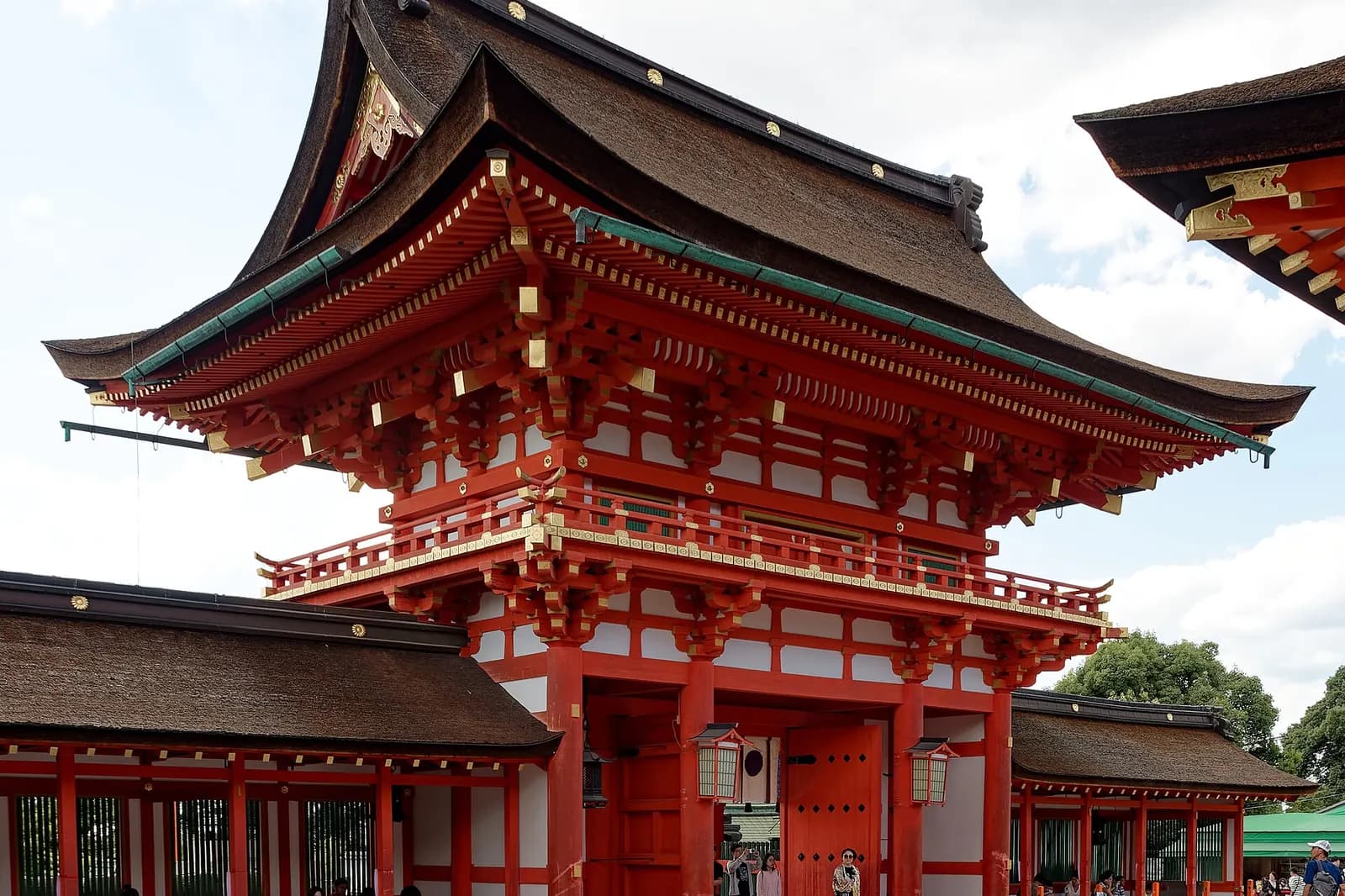
The big vermilion Romon gate, donated by the warlord Toyotomi Hideyoshi in 1589, opens onto the main hall (honden), where most visitors stop to pray. Look at the two foxes on either side of the gate: one holds a key in its mouth, the other a jewel.
Senbon torii, the thousand gates
Behind the hall, the path splits into two parallel tunnels of closely set gates, the Senbon torii ("thousand torii"). It is the photo everyone comes for, and the first 10 minutes of the walk. The two tunnels run side by side and meet again a few minutes later, so either one works.
Okusha Hohaisho and the omokaru stones
The tunnels end at the Okusha Hohaisho, the inner shrine from which people pray towards the mountain. Behind it stand the omokaru-ishi, two stone lanterns with a round stone on top. Make a wish and lift the stone: if it feels lighter than you expected, the wish is said to come true. Many visitors turn back here, about 15 minutes from the main hall.
Yotsutsuji intersection and the view over Kyoto
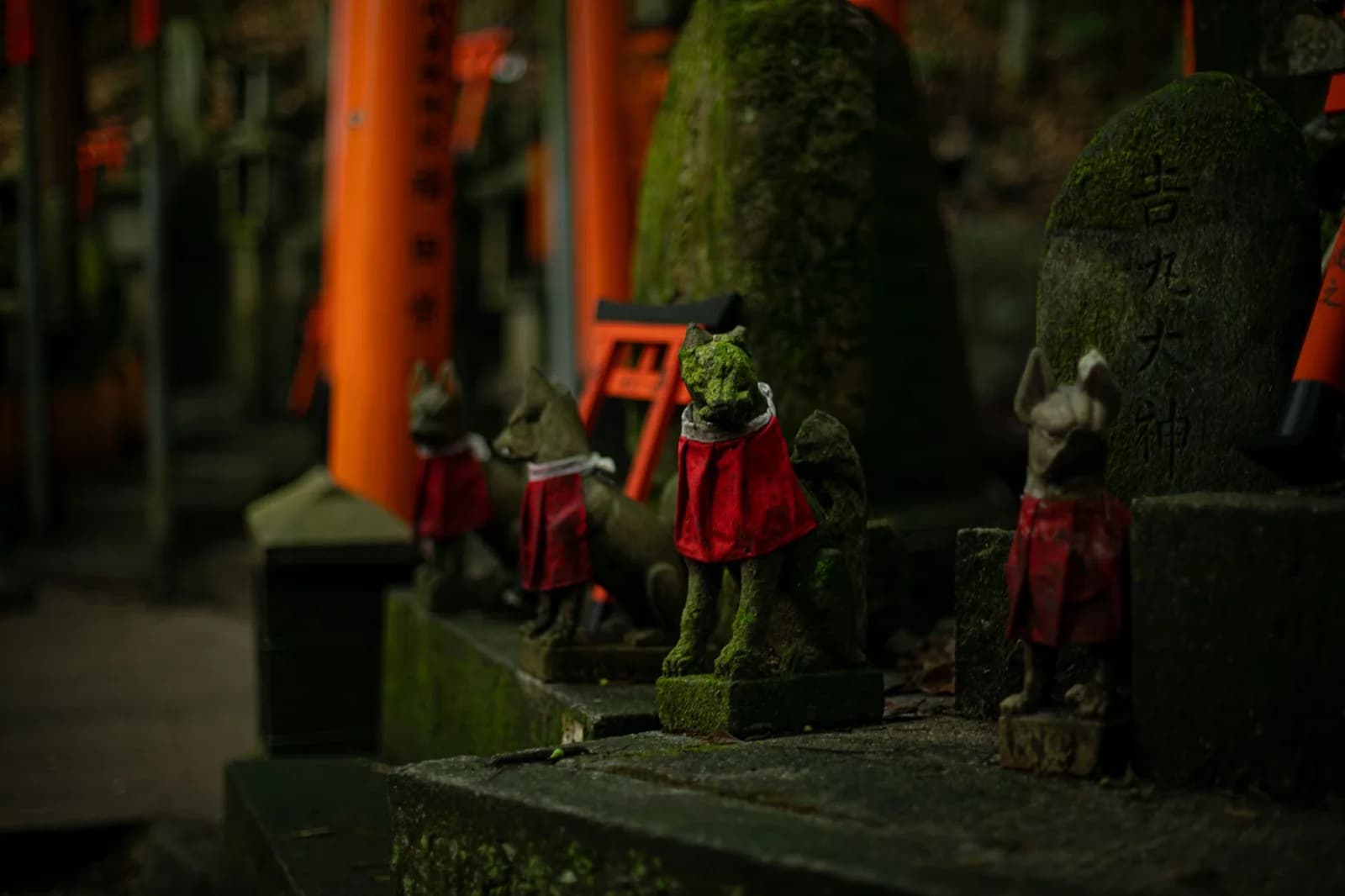
From Okusha the trail climbs steadily past small sub-shrines, stacked with miniature torii and fox statues, to the Yotsutsuji intersection, 30 to 45 minutes from the bottom. A tea house sits at the junction and the terrace opens onto the whole of Kyoto, best at sunset. This is the halfway point and the place to decide: back down the same way, or on round the summit loop.
Ichi-no-mine, the summit at 233 m
Past Yotsutsuji, the loop runs one way round the top of the mountain and the crowds fall away. The summit, Ichi-no-mine, is a shrine among the trees at 233 metres, with no view to speak of, so the reward is the walk itself rather than the top. The full round trip from the main hall takes 2 to 3 hours at an easy pace, with stops.
Inari, the foxes and the torii of Fushimi Inari Taisha
Inari is the Shinto kami of rice and harvests, and over the centuries of business and prosperity in general. According to the shrine, Inari Okami was enshrined on Mount Inari in 711, which makes Fushimi Inari the head of about 30,000 Inari shrines across Japan. The shrine grounds cover some 870,000 m², most of it the mountain.
The foxes (kitsune) you see everywhere are not Inari but Inari's messengers. They usually carry something in their mouths: a key to the rice granary, a jewel, a scroll or a sheaf of rice. People leave offerings of sake, rice and fried tofu, said to be the foxes' favourite food, and buy fox-shaped ema prayer boards to write their wishes on.
The torii are offerings too. The custom of donating a gate, to ask for success or to give thanks for a wish granted, spread from the Edo period, and companies are the main donors today. The donor's name is painted on the back of each gate, with the date it was given, which you see on the way down. The shrine counts around 10,000 torii on the mountain and publishes its own price list for a new one: ¥300,000 ($1,900) for the smallest size, No. 5, rising to ¥1,000,000 for No. 8 and ¥1,890,000 ($11,800) and more for No. 10. Old gates are replaced as the wood rots, which is why some look freshly painted and others weathered.
Best time to visit Fushimi Inari to avoid the crowds
The lower gates are busiest from about 9:00 to 16:00, and at weekends and in the cherry blossom and autumn leaf seasons all day. Three ways around it work:
- Arrive before 7:00. The first trains reach Inari before 6:00, and at dawn you share the Senbon torii with joggers and a few photographers.
- Come after 17:00. Tour groups leave in the late afternoon, and the gates in the low sun are as good as in the morning.
- Keep climbing. Most people turn back at Okusha or Yotsutsuji. Above them, even at midday, you can walk long stretches of gates alone.
Avoid the first three days of January unless you want the crowd. Hatsumode, the first prayer of the year, brings more people here than to any other shrine in western Japan: police counted 2.69 million visitors over three days in 2006. In spring, it is one of the few big Kyoto sights where blossom does not add much, so it is a good choice on a busy day of our cherry blossom season guide.
Fushimi Inari at night: is it safe?
Yes. The shrine stays open all night, crime against visitors is rare in Kyoto, and the main path is lit by lamps along the gates and watched by security cameras. Walking the Senbon torii after dark, with the vermilion glowing under the lights and almost no one around, is one of the best things to do in Kyoto at night.
The caveats are practical. The lighting is good up to Okusha and fair to Yotsutsuji, then patchy on the upper loop, where some sections are dark between lamps. Take a phone torch, stay on the main trail and come down the way you went up if you are alone. The stone steps are uneven and the woods are home to wild animals, which the shrine asks visitors not to feed. Tea houses and food stalls are closed at night.
Fushimi Inari rules and etiquette
The shrine published a list of requests for visitors in January 2022, and they are worth knowing because staff do enforce them:
- No eating or drinking while walking. Use the rest areas and benches.
- No smoking, no drones, no pets and no sitting on the ground.
- Do not block the narrow tunnels to take photos. Step aside to let people through.
- No commercial photo shoots or wedding dresses without permission.
- Do not feed wild animals on the mountain.
Leave the offerings alone: the sake cups, rice and fox figures on the small shrines belong to the people who left them. At the main hall, bow twice, clap twice, pray and bow once more, the usual way at a Shinto shrine. Photos are fine everywhere outside, but not of people praying inside the hall.
Where to eat at Fushimi Inari: inari sushi and kitsune udon
The two dishes to try are named after the foxes. Inari sushi is rice packed into a pouch of sweet fried tofu, and kitsune udon ("fox udon") is a bowl of noodles topped with a sheet of the same tofu. The shops and restaurants on the street between the two stations and the shrine gate serve both, along with grilled skewers, rice crackers and matcha sweets. Most are open for lunch and close in the early evening, so eat before you climb if you come late.
On the mountain, tea houses at Okusha, along the climb and at Yotsutsuji sell inari sushi, udon and cold drinks during the day. Bring some cash for them and for the vending machines.
Near Fushimi Inari: Tofuku-ji and the Fushimi sake district
Tofuku-ji, one stop north
Tofuku-ji, a Zen temple with a covered bridge over a ravine of maples, is one stop north on the JR Nara Line or the Keihan Line. The Hojo gardens cost ¥600 ($4) since 1 November 2026, and from 14 November to 6 December 2026 the Tsutenkyo bridge ticket is ¥1,000 ($6), with the bridge open from 8:30. Fushimi Inari at dawn, then Tofuku-ji at opening, is the classic southern Kyoto morning in our guide to things to do in Kyoto.
Fushimi sake district and the Gekkeikan Okura Sake Museum
South of the shrine, Fushimi has brewed sake for centuries with the soft groundwater of the area, and old brewery warehouses still line its canal. Ride the Keihan Line south to Chushojima, 5 minutes on foot from the Gekkeikan Okura Sake Museum. It opens from 9:30 to 16:30 (last entry 16:00) and costs ¥600 ($4) from age 20, with a tasting and a small gift, ¥100 for ages 13 to 19 and free under 12. Since 1 July 2026 the museum is cashless only, so bring a card or an IC card. It closes from 28 December to 4 January and from 13 to 16 August, and it had announced a short closure in mid-November when we checked, so look at its site before you go.
Fushimi Inari festivals: Hatsuuma, Motomiya-sai and New Year
| Festival | Usual date | What happens |
|---|---|---|
| Hatsumode | 1 to 3 January | New Year prayers and the biggest crowds of the year |
| Hatsuuma | First day of the horse in February (around 8 February in 2027) | The day the kami first came down to Mount Inari, with pilgrims buying sprigs of cedar for luck |
| Yoimiya-sai | The evening before Motomiya-sai, from 18:00 | Stone lanterns on the mountain and thousands of donated lanterns lit at once |
| Motomiya-sai | First Sunday or public holiday after the start of doyo in late July | Thanksgiving festival of Inari shrines from all over Japan, with about 400 painted lanterns on show |
| Hitaki-sai | 8 November | Fire festival, with prayer sticks burned to thank the kami for the harvest |
The shrine sets Hatsuuma by the old calendar and had not yet published the 2027 date when we checked, so confirm it on inari.jp. The same goes for the Motomiya-sai: by the shrine's rule it should fall on Sunday 25 July 2027, with the lantern evening on the Saturday, but no date has been announced yet. The lantern night is the best reason to plan a summer evening here, and our Japan itinerary shows how to fit Fushimi Inari into a first trip, on the way back from Nara. If you want to sleep close to the Inari line, our guide to where to stay in Kyoto compares the Kyoto Station area with the centre.