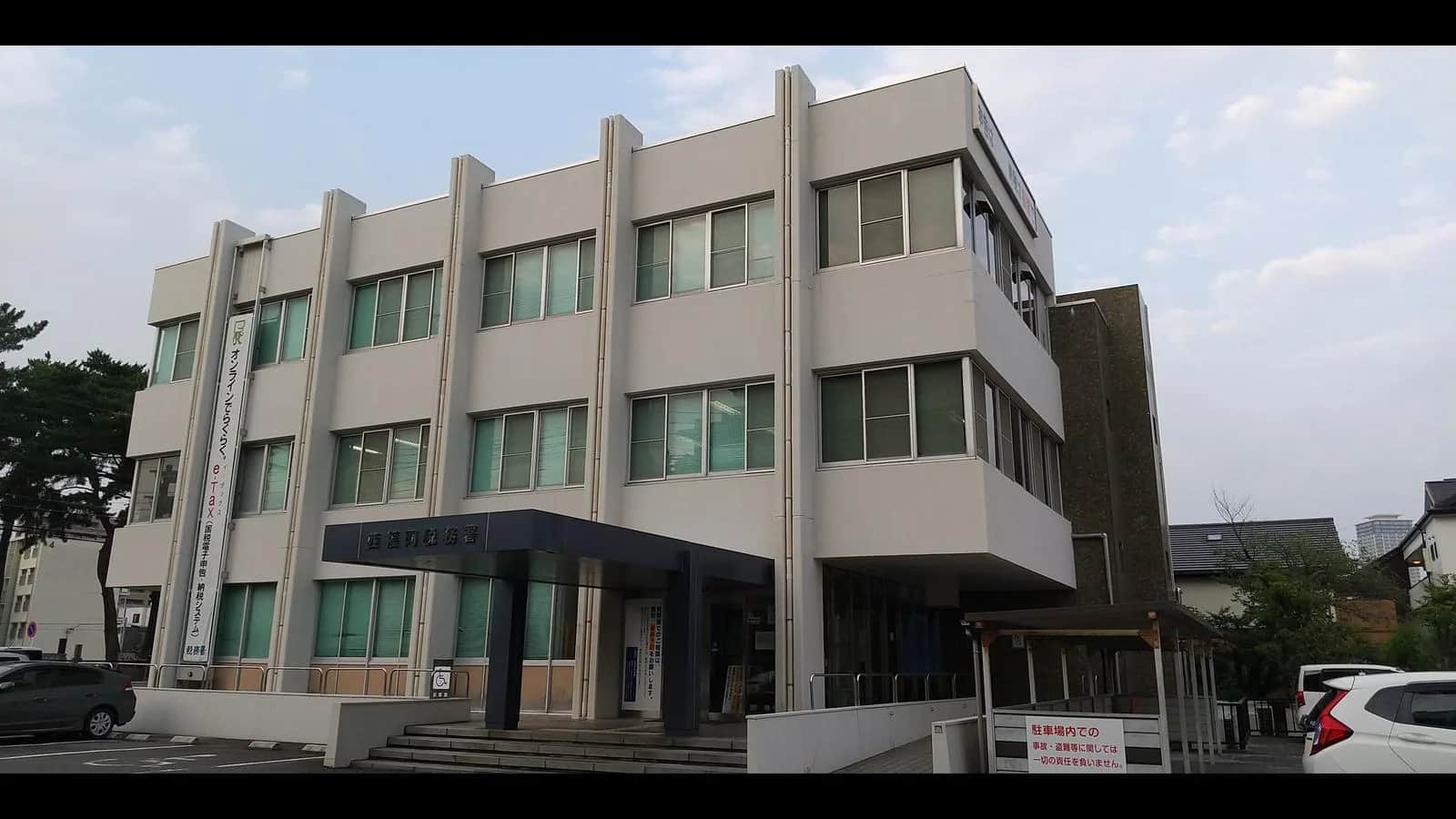
- national income tax rates for 2026, plus a 2.1% reconstruction surtax (National Tax Agency)
- 5% to 45%
- residence tax on the previous year's income, billed from June, plus a flat ¥5,000
- 10%
- maximum counted for the pension refund in November 2026, a cap the 2025 pension law will raise to 8 years
- 60 months
On this page
Japan taxes foreigners by residence, not by passport or visa. If you live in Japan, you pay national income tax at 5% to 45%, a 2.1% reconstruction surtax and about 10% residence tax a year later, mostly withheld from your pay. In your first five years, foreign income you keep abroad is usually left alone. When you leave, you can claim back part of your pension contributions through the lump-sum withdrawal payment, and usually the tax withheld on it too. Figures below are for the 2026 tax year, checked on the National Tax Agency and Japan Pension Service sites on 14 November 2026.
This page is about tax for people who live and work in Japan. The tax-free shopping scheme and the departure tax on plane tickets are visitor matters and work differently.
Tax residency in Japan: non-resident, non-permanent or permanent resident
The Income Tax Act sorts individuals into three groups. Your visa does not decide which one you are in, and neither does your intention to stay. Several English guides still define the middle group by "no intention to stay permanently", which is not the legal test.
| Status | Who it covers | What Japan taxes |
|---|---|---|
| Non-resident | No domicile in Japan and less than one year of continuous residence | Japanese-source income only, often at a flat 20.42% withheld at source |
| Non-permanent resident | A resident without Japanese nationality who has lived in Japan for 5 years or less in total over the past 10 years | Japanese-source income, plus foreign income paid in Japan or remitted to Japan |
| Permanent resident (for tax) | Any other resident, including foreigners after more than 5 years out of 10 | Worldwide income |
A domicile is the centre of your life: where you live, work and keep your family. The National Tax Agency treats a person as a resident from the day they arrive if they have one, which is the case for anyone who moves to Japan with a job contract of a year or more. Someone who comes for less than a year, such as most working holiday makers, starts as a non-resident. Our page on the Japan working holiday visa shows what the flat 20.42% does to a wage.
"Permanent resident" for tax is not the visa of the same name. A foreigner who has spent more than five of the last ten years in Japan is taxed on worldwide income, with or without the permanent residency status. The count is in days of residence, so a year spent abroad in the middle delays the switch.
Japan income tax rates for 2026 and the reconstruction surtax
National income tax is progressive and applies to taxable income, what is left after the employment income deduction, social insurance contributions and personal deductions. The National Tax Agency publishes these brackets for 2026, with a quick formula: income times the rate, minus the amount in the last column.
| Taxable income | Rate | Amount to deduct |
|---|---|---|
| Up to ¥1,949,000 ($12,180) | 5% | ¥0 |
| ¥1,950,000 to ¥3,299,000 | 10% | ¥97,500 |
| ¥3,300,000 to ¥6,949,000 | 20% | ¥427,500 |
| ¥6,950,000 to ¥8,999,000 | 23% | ¥636,000 |
| ¥9,000,000 to ¥17,999,000 | 33% | ¥1,536,000 |
| ¥18,000,000 to ¥39,999,000 | 40% | ¥2,796,000 |
| ¥40,000,000 ($250,000) and above | 45% | ¥4,796,000 |
On top comes the special income tax for reconstruction, 2.1% of the tax, charged since 2013 to pay for the 2011 earthquake. On ¥7 million of taxable income, the NTA example gives ¥974,000 of income tax and ¥20,454 of surtax. The 2026 tax reform carves a new defence income tax out of this surtax from 2027 and extends it, with the combined rate unchanged.
The 2026 deductions are the most generous in years. The basic deduction is ¥1.04 million for a total income up to ¥4.89 million, ¥670,000 up to ¥6.55 million and ¥620,000 up to ¥23.5 million, and the minimum employment income deduction is ¥740,000. As a result, a salary below ¥1.78 million pays no income tax. The new amounts took effect on 1 December 2026, so employers apply them in the year-end adjustment. Non-residents get a basic deduction of ¥620,000 at most.
In practice, a single employee in Tokyo with a ¥5 million salary pays about ¥91,700 of national income tax in 2026, and one on ¥8 million about ¥434,400, by the estimate worked out line by line in our guide to salaries in Japan after tax. Social insurance weighs more than income tax at both levels.
Residence tax in Japan: 10% of last year's income
Residence tax (juminzei) is the local income tax. It is 10% of taxable income, 6% for the city or ward and 4% for the prefecture, plus a flat ¥5,000 a year in Tokyo: ¥3,000 for the ward, ¥1,000 for the metropolis and ¥1,000 of national forest environment tax. Its basic deduction is smaller, ¥430,000, so it costs more than income tax on low and middle salaries. On ¥5 million it comes to about ¥245,600 a year.
The bill is set on the income of the previous year and sent to whoever lives in Japan on 1 January. A newcomer pays nothing in the first months, then the full amount from June of the following year. Employers deduct it from 12 monthly salaries from June. Freelancers and people whose employer does not withhold it receive a payment slip with four instalments, in June, August, October and January. The monthly cost by city is in our cost of living in Japan estimates.
Residents who pay residence tax can also use furusato nozei, a donation to a municipality of their choice that is refunded through income and residence tax above ¥2,000, within a cap that rises with income. Employees who give to five municipalities or fewer and do not file a return can use the one-stop form instead.
Withholding tax and the year-end adjustment (nenmatsu chosei)
A Japanese employer withholds income tax from every payslip using official tables, then settles the year in the December payroll. This year-end adjustment, nenmatsu chosei, uses the forms you hand in during the autumn: dependants, life and earthquake insurance premiums, private pension contributions and a housing loan credit from the second year. The difference is refunded or deducted in December or January.
By the end of January you receive a withholding slip, the gensen choshuhyo, for the previous year. Keep every one. It is the proof of income for a visa renewal, a flat or a loan, and the document you need to file a return or claim a foreign tax credit at home. If you change jobs in the year, give the slip from the first employer to the second so it can include that income in its adjustment.
Filing a tax return in Japan (kakutei shinkoku): who, when and e-Tax
Most employees never file. The National Tax Agency lists who must: an employee whose salary is above ¥20 million, one with more than ¥200,000 of other income (rent, side work, foreign income that is taxable), someone with two employers, and anyone paid by an employer that does not withhold Japanese tax, which includes most people working in Japan for a foreign company. Freelancers and landlords file every year.
Returns for 2026 are due between 16 February and 15 March 2027, and any tax owed is paid by 15 March, or by direct debit in late April if you arrange it. Filing only to get money back, for medical expenses above ¥100,000 or furusato nozei over five municipalities for instance, is possible from 1 January and for five years.
You can file at the tax office of your address, by post, or online. The NTA's return creation corner walks you through the forms in Japanese, and e-Tax submits them with a My Number Card read by a smartphone or a card reader. The NTA also publishes an English guide to income tax for each year. A return for a freelancer with foreign income is where an hour with a licensed tax accountant (zeirishi) pays for itself.
Tax for freelancers, remote workers and digital nomads in Japan
Freelancers declare business income, takings minus expenses, on the annual return. Filing a blue return, after registering with the tax office, with double-entry books and online submission, gives a special deduction of up to ¥650,000. Three other taxes can apply: consumption tax once taxable sales passed ¥10 million two years earlier, or from registration as an invoice issuer, prefectural enterprise tax of 3% to 5% on business income above ¥2.9 million for listed trades, and residence tax.
A remote worker who lives in Japan and is paid by a company abroad is a resident employee with no Japanese withholding. That person files a return every year and pays residence tax, National Health Insurance and the National Pension directly. Your home employer may also keep withholding home tax, which is then settled through the treaty and a foreign tax credit.
The digital nomad visa works the other way. The Immigration Services Agency states that pay for work done in Japan during a stay of up to six months is exempt when the conditions of your tax treaty are met, which usually means 183 days or less and no Japanese employer. The details and the day count are in our page on the Japan digital nomad visa.
Japan tax treaties with the US, UK, Canada, Australia and France
Japan has income tax treaties with most countries English speakers come from. They decide which country taxes what when you are a resident of both, cap withholding on dividends and interest, and let you offset tax paid in one country against the other. Separate social security agreements decide where you pay pension contributions and whether years in each country can be added together.
| Home country | Income tax at home once you live in Japan | Social security agreement with Japan |
|---|---|---|
| United States | Citizens file every year on worldwide income. The foreign earned income exclusion ($132,900 for 2026) or the foreign tax credit usually removes the US tax. FBAR above $10,000 | In force since 2005, contributions and totalization of periods |
| United Kingdom | Usually no longer UK resident under the statutory residence test, so taxed only on UK income such as rent | In force since 2001, contributions only, no totalization of pension periods |
| Canada | Non-resident once ties are cut. Leaving triggers a deemed sale of most assets for Canadian tax | In force since 2008, with totalization |
| Australia | Non-resident if you set up home in Japan. Leaving is a capital gains event on most assets unless you defer it | In force since 2009, with totalization |
| France | Non-resident once your home and main activity are in Japan. French-source income stays taxable in France | In force since 2007, with totalization |
Older guides promise American teachers two years free of Japanese tax under the treaty. JET USA's own tax guide now says that exemption is no longer available. The US side, Form 2555, Form 1116, FBAR and FATCA, is covered in our guide to moving to Japan from the USA. Citizens of other countries can check the treaty text on the Japanese Ministry of Finance site or their own tax authority's, and an employee sent by a home employer for up to five years can usually stay in the home pension system with a certificate of coverage.
Social insurance contributions in Japan in brief
For an employee, social insurance costs more than income tax up to well above the average salary. In 2026 the employee pays 9.15% for the employees' pension on monthly pay up to ¥650,000, about 4.9% for health insurance in Tokyo plus a 0.115% child support levy since April 2026, 0.5% for employment insurance, and a further 0.81% for nursing care from age 40. The employer pays a similar share on top.
The self-employed and most remote workers join National Health Insurance at the ward office, with a premium set by each municipality on last year's income, and the National Pension at a flat ¥17,920 a month for fiscal 2026. What the health side covers is explained in our guide to healthcare in Japan.
Leaving Japan: residence tax, tax agent and exit tax
The residence tax trap catches most people who leave. If you are living in Japan on 1 January, you owe a full year of residence tax on the previous year's income, billed in June, after you may have gone. Someone who earned ¥5 million in 2026 and leaves in March 2027 still owes about ¥245,600 for fiscal 2027. An employee leaving between January and May also has the rest of the current year's bill taken from the final salary. Leaving before 1 January is the only way to avoid the next bill.
For income tax, an employer usually runs the year-end adjustment on your last payslip. If you have other income to declare, you either file a quasi-final return before departure, or you appoint a tax agent (nozei kanrinin) who lives in Japan, notify the tax office, and the agent files between 16 February and 15 March of the next year. Name one with your ward office too if residence tax is still due or if you keep property in Japan, as described in our guide to buying a house in Japan. A friend, a colleague or a tax accountant can act.
Japan also has an exit tax. A person who has lived in Japan for more than five of the last ten years and leaves with ¥100 million or more ($625,000) in shares, funds, derivatives and similar assets is taxed as if they had sold them on the day of departure. Payment can be deferred for five years, extendable to ten, with a tax agent and a guarantee, and cancelled if you return and still hold the assets. Few employees come close, but long-term residents with share plans should check.
Japan pension refund: the lump-sum withdrawal payment
Foreign nationals who leave Japan before they qualify for a Japanese pension can claim back part of what they paid in. The Japan Pension Service calls it the lump-sum withdrawal payment (dattai ichijikin). It erases the months it pays for, so weigh it against a future pension first.
Who can claim the Japan pension refund
You can claim if all of these are true: you do not hold Japanese nationality, you paid at least six months of National Pension premiums or employees' pension, you no longer have an address in Japan and are no longer insured, and you have never qualified for a pension, including a disability pension. With ten years or more of coverage you qualify for an old-age pension and cannot claim the refund. The deadline is two years from the day you no longer have an address in Japan.
The address condition is about the moving-out notification. If you file it at the ward office before you fly, you can claim even when you leave with a re-entry permit. If you leave on a re-entry permit without it, you are still enrolled in the National Pension and cannot claim until the permit expires.
The 5-year cap, and the change to 8 years
Since April 2021, the refund counts up to 60 months (5 years) of contributions, up from 36 months before. The old 3-year cap still applies to anyone whose last month of contributions was in March 2021 or earlier. Beyond 60 months, the extra months are paid nothing and are erased anyway: someone with 90 months receives the 60-month amount and loses all 90.
The pension reform law passed in June 2025 raises the cap from 5 to 8 years and stops payment to people who leave with a re-entry permit while the permit is valid, according to the Ministry of Health, Labour and Welfare. It takes effect on a date to be set by cabinet order within four years of the law, so by mid-2029. The Japan Pension Service still applied the 5-year cap when we checked on 14 November 2026. If you have more than five years and no urgent need for the money, it can be worth checking the date before you claim.
How much the pension refund is: amounts for 2026
For the employees' pension, the payment is your average standard remuneration, monthly pay and bonuses as recorded for pension, multiplied by a payment rate set by your months of cover. For the National Pension it is a flat amount set by the year of your last premium.
| Months of contributions | Employees' pension rate | National Pension amount (last premium April 2026 to March 2027) |
|---|---|---|
| 6 to 11 | 0.5 | ¥53,760 |
| 12 to 17 | 1.1 | ¥107,520 |
| 18 to 23 | 1.6 | ¥161,280 |
| 24 to 29 | 2.2 | ¥215,040 |
| 30 to 35 | 2.7 | ¥268,800 |
| 36 to 41 | 3.3 | ¥322,560 |
| 42 to 47 | 3.8 | ¥376,320 |
| 48 to 53 | 4.4 | ¥430,080 |
| 54 to 59 | 4.9 | ¥483,840 |
| 60 or more | 5.5 | ¥537,600 ($3,360) |
Three employees' pension examples, at 160 yen to the dollar. Eighteen months at ¥250,000 a month gives ¥400,000 ($2,500). Three years at ¥300,000 gives ¥990,000 ($6,190). Five years or more at ¥400,000 gives ¥2.2 million ($13,750), the maximum at that salary under the current cap. For an earlier last premium, the National Pension amounts are a little lower, ¥525,300 for 60 months in fiscal 2025.
The 20.42% withholding and how to get it back
The National Pension refund is paid in full. The employees' pension refund is taxed: the Japan Pension Service withholds 20.42%, so ¥202,158 on the ¥990,000 example, and you receive ¥787,842. Several guides round this to 20%, which understates it.
You can recover it by filing a refund return for retirement income taxed at the taxpayer's option. The lump sum is then taxed like a retirement allowance, after a deduction of ¥400,000 per year of coverage with a minimum of ¥800,000, and only half of what is left is taxable. On the 18-month and 3-year examples, the tax due is zero and the whole withholding comes back. On the 5-year example, about ¥444,000 of the ¥449,240 comes back. The return must be filed by a tax agent in Japan, notified to the tax office of your last address, and the Japan Pension Service sends you a payment notice that the agent needs in original.
How to claim the pension refund, step by step
- Before leaving, file the moving-out notification at your ward or city office, up to 14 days before departure, and keep your Basic Pension Number (pension handbook or notice).
- If you paid into the employees' pension, appoint a tax agent and file the notification of tax agent at your tax office.
- Download the claim form from the Japan Pension Service site (14 languages, form dated September 2026) and fill it in.
- Attach a copy of your passport pages showing name, birth date, nationality, signature and status of residence, a bank document showing the account in your name with its SWIFT code, and proof of your Basic Pension Number. Japan Post Bank accounts are not accepted.
- Send it by airmail to the Japan Pension Service (Foreign Business Group), 3-5-24 Takaido-Nishi, Suginami-ku, Tokyo 168-8505, or file it in Japan, as long as it arrives after your moving-out date.
- When the payment and its notice arrive, post the original notice to your agent, who files the refund return.
The refund is paid in your local currency for most countries, in US dollars elsewhere. Money left in Japan for the refund of the withholding can be sent on later, with the options compared in our page on sending money to and from Japan.