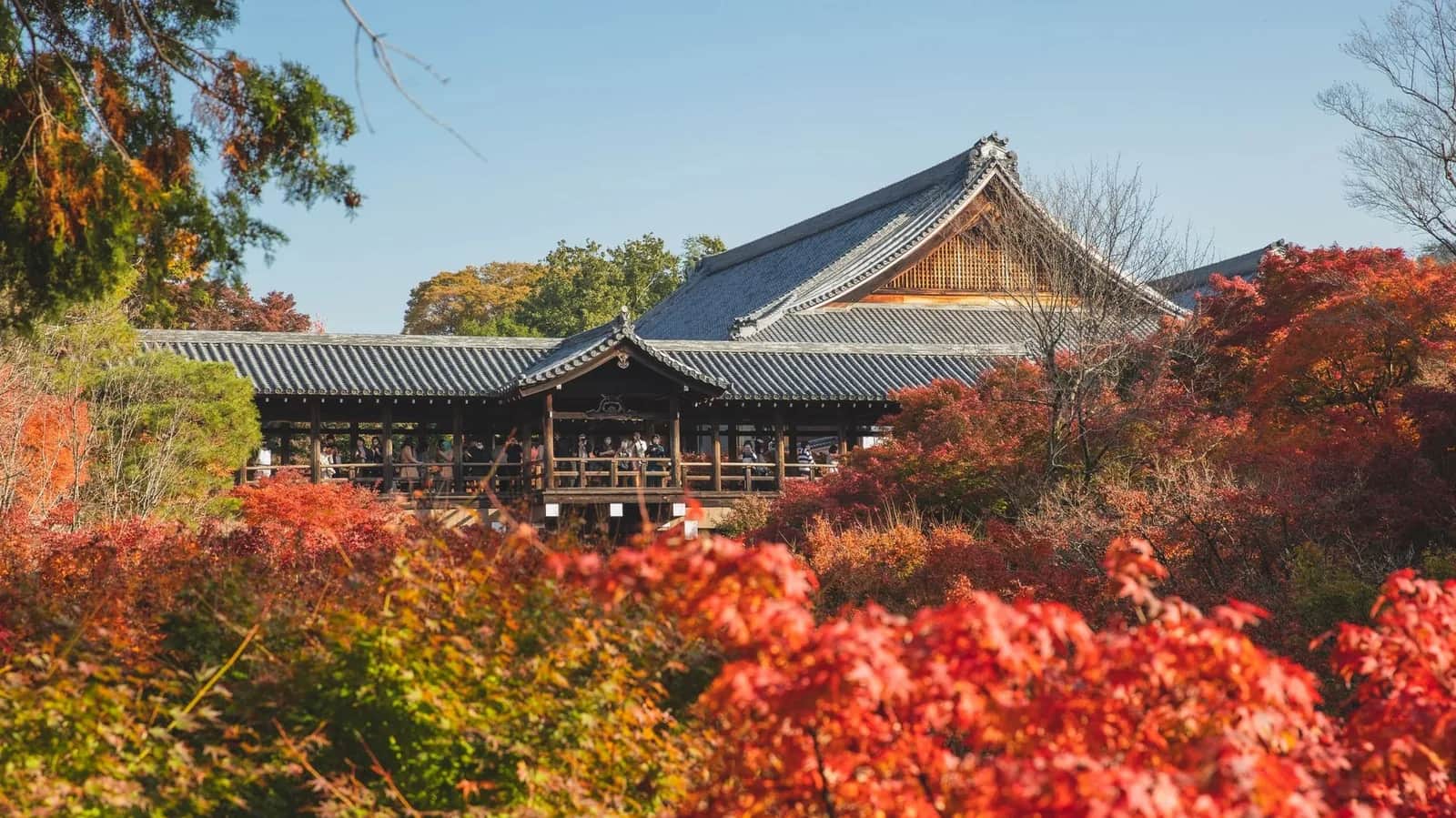
- average full bloom of the cherry trees in Tokyo, 4 April in Kyoto (JMA normals 1991-2020)
- 31 March
- average end of the rainy season in Tokyo, Kyoto and Osaka, about six weeks after it starts
- 19 July
- foreign visitors in 2025, a record. April and October were the two busiest months
- 42.7 million
On this page
Best time to visit Japan: late March to May, or October to November
The best time to visit Japan is from late March to May and from October to late November. Both windows give mild days, mostly dry weather and the two great seasonal sights: cherry blossom around the turn of March and April and the red and gold leaves of November. In Tokyo the average high is 19.4 °C (67 °F) in April and 16.7 °C (62 °F) in November, according to the Japan Meteorological Agency (JMA) normals for 1991-2020.
The catch is that everyone knows it. April and October were the two busiest months of 2025 for foreign arrivals, each close to 3.9 million visitors, and Kyoto hotels charge their highest rates at cherry blossom and in late November. If you want the weather without the peak, aim for mid-May, after Golden Week, or early December, when Kyoto still has its last maples and the crowds have thinned.
The two periods that disappoint first-time visitors are the rainy season from early June to mid-July and the humid heat of late July and August. Three Japanese holiday weeks also fill trains and hotels whatever the weather: New Year, Golden Week and Obon, with their exact 2027 dates further down.
Japan weather by month: temperatures in Tokyo, Kyoto, Sapporo and Naha
These are the official averages of the Japan Meteorological Agency for 1991-2020, the latest climate normals. They cover the four cities that sum up the country: Tokyo for the Kanto plain, Kyoto for the Kansai basin, Sapporo for Hokkaido and Naha for subtropical Okinawa. Each cell gives the average daily high, then the average daily low.
| Month | Tokyo | Kyoto | Sapporo | Naha |
|---|---|---|---|---|
| January | 9.8 / 1.2 °C (50 / 34 °F) | 9.1 / 1.5 °C (48 / 35 °F) | -0.4 / -6.4 °C (31 / 20 °F) | 19.8 / 14.9 °C (68 / 59 °F) |
| February | 10.9 / 2.1 °C (52 / 36 °F) | 10 / 1.6 °C (50 / 35 °F) | 0.4 / -6.2 °C (33 / 21 °F) | 20.2 / 15.1 °C (68 / 59 °F) |
| March | 14.2 / 5 °C (58 / 41 °F) | 14.1 / 4.3 °C (57 / 40 °F) | 4.5 / -2.4 °C (40 / 28 °F) | 21.9 / 16.7 °C (71 / 62 °F) |
| April | 19.4 / 9.8 °C (67 / 50 °F) | 20.1 / 9.2 °C (68 / 49 °F) | 11.7 / 3.4 °C (53 / 38 °F) | 24.3 / 19.1 °C (76 / 66 °F) |
| May | 23.6 / 14.6 °C (74 / 58 °F) | 25.1 / 14.5 °C (77 / 58 °F) | 17.9 / 9 °C (64 / 48 °F) | 27 / 22.1 °C (81 / 72 °F) |
| June | 26.1 / 18.5 °C (79 / 65 °F) | 28.1 / 19.2 °C (83 / 67 °F) | 21.8 / 13.4 °C (71 / 56 °F) | 29.8 / 25.2 °C (86 / 77 °F) |
| July | 29.9 / 22.4 °C (86 / 72 °F) | 32 / 23.6 °C (90 / 74 °F) | 25.4 / 17.9 °C (78 / 64 °F) | 31.9 / 27 °C (89 / 81 °F) |
| August | 31.3 / 23.5 °C (88 / 74 °F) | 33.7 / 24.7 °C (93 / 76 °F) | 26.4 / 19.1 °C (80 / 66 °F) | 31.8 / 26.8 °C (89 / 80 °F) |
| September | 27.5 / 20.3 °C (82 / 69 °F) | 29.2 / 20.7 °C (85 / 69 °F) | 22.8 / 14.8 °C (73 / 59 °F) | 30.6 / 25.8 °C (87 / 78 °F) |
| October | 22 / 14.8 °C (72 / 59 °F) | 23.4 / 14.4 °C (74 / 58 °F) | 16.4 / 8 °C (62 / 46 °F) | 28.1 / 23.5 °C (83 / 74 °F) |
| November | 16.7 / 8.8 °C (62 / 48 °F) | 17.3 / 8.4 °C (63 / 47 °F) | 8.7 / 1.6 °C (48 / 35 °F) | 25 / 20.4 °C (77 / 69 °F) |
| December | 12 / 3.8 °C (54 / 39 °F) | 11.6 / 3.5 °C (53 / 38 °F) | 2 / -4 °C (36 / 25 °F) | 21.5 / 16.8 °C (71 / 62 °F) |
Kyoto sits in a basin and swings further than Tokyo: it is about 2 °C hotter in summer and as cold on winter nights. Sapporo stays below freezing at night from December to March, while Naha never drops much below 15 °C.
Rain days and rainfall in Japan by month
A rain day here is a day with at least 1 mm of rain, the JMA threshold. JMA does not publish that count for Kyoto, so the table gives Kyoto's monthly rainfall and the rain days of Osaka, 40 km away, which has the same pattern. For Sapporo, the snowfall total of the month is added.
| Month | Tokyo | Kyoto | Sapporo | Naha |
|---|---|---|---|---|
| January | 4.5 days, 60 mm | 53 mm (Osaka 5.6 days) | 18.3 days, 108 mm, 137 cm of snow | 10.2 days, 102 mm |
| February | 5.2 days, 56 mm | 65 mm (Osaka 6.3 days) | 16 days, 92 mm, 116 cm of snow | 9.9 days, 114 mm |
| March | 9.2 days, 116 mm | 106 mm (Osaka 9.1 days) | 13.9 days, 78 mm, 74 cm of snow | 10.9 days, 143 mm |
| April | 9.5 days, 134 mm | 117 mm (Osaka 9.2 days) | 9.6 days, 55 mm, 6 cm of snow | 10.3 days, 161 mm |
| May | 10.1 days, 140 mm | 151 mm (Osaka 9.5 days) | 8.5 days, 56 mm | 11.4 days, 245 mm |
| June | 11.6 days, 168 mm | 200 mm (Osaka 11.3 days) | 7.5 days, 60 mm | 11.3 days, 284 mm |
| July | 10.5 days, 156 mm | 224 mm (Osaka 10 days) | 7.7 days, 91 mm | 9.4 days, 188 mm |
| August | 7.9 days, 155 mm | 154 mm (Osaka 7.2 days) | 9.5 days, 127 mm | 12.3 days, 240 mm |
| September | 11 days, 225 mm | 178 mm (Osaka 9.5 days) | 10.2 days, 142 mm | 11.8 days, 275 mm |
| October | 10.5 days, 235 mm | 143 mm (Osaka 8.3 days) | 11.6 days, 110 mm, 1 cm of snow | 8.8 days, 179 mm |
| November | 7.4 days, 96 mm | 74 mm (Osaka 6.2 days) | 14.6 days, 114 mm, 30 cm of snow | 8.2 days, 119 mm |
| December | 5.2 days, 58 mm | 57 mm (Osaka 6.1 days) | 16 days, 114 mm, 113 cm of snow | 9.3 days, 110 mm |
Two things stand out. September and October are the wettest months in Tokyo (225 mm and 235 mm), because typhoons and autumn rain fronts pass, so early October is less reliable than its reputation. And winter is the driest season on the Pacific side: Tokyo gets only 4.5 rain days in January, when the Sea of Japan side and Hokkaido get snow almost every other day.
Japan month by month: what to expect from January to December
January: cold, dry and quiet after the first week
Tokyo averages 9.8 °C by day and 1.2 °C at night with clear skies. The first three days of the year are a national holiday, with crowds at shrines and some museums and restaurants closed until about 4 January. After that, the cities are quiet. Hokkaido and the Japan Alps are deep in snow, and Okinawa has its first cherry blossom, the pink hikan-zakura, which opens on average on 16 January in Naha.
February: snow festivals, plum blossom and low prices
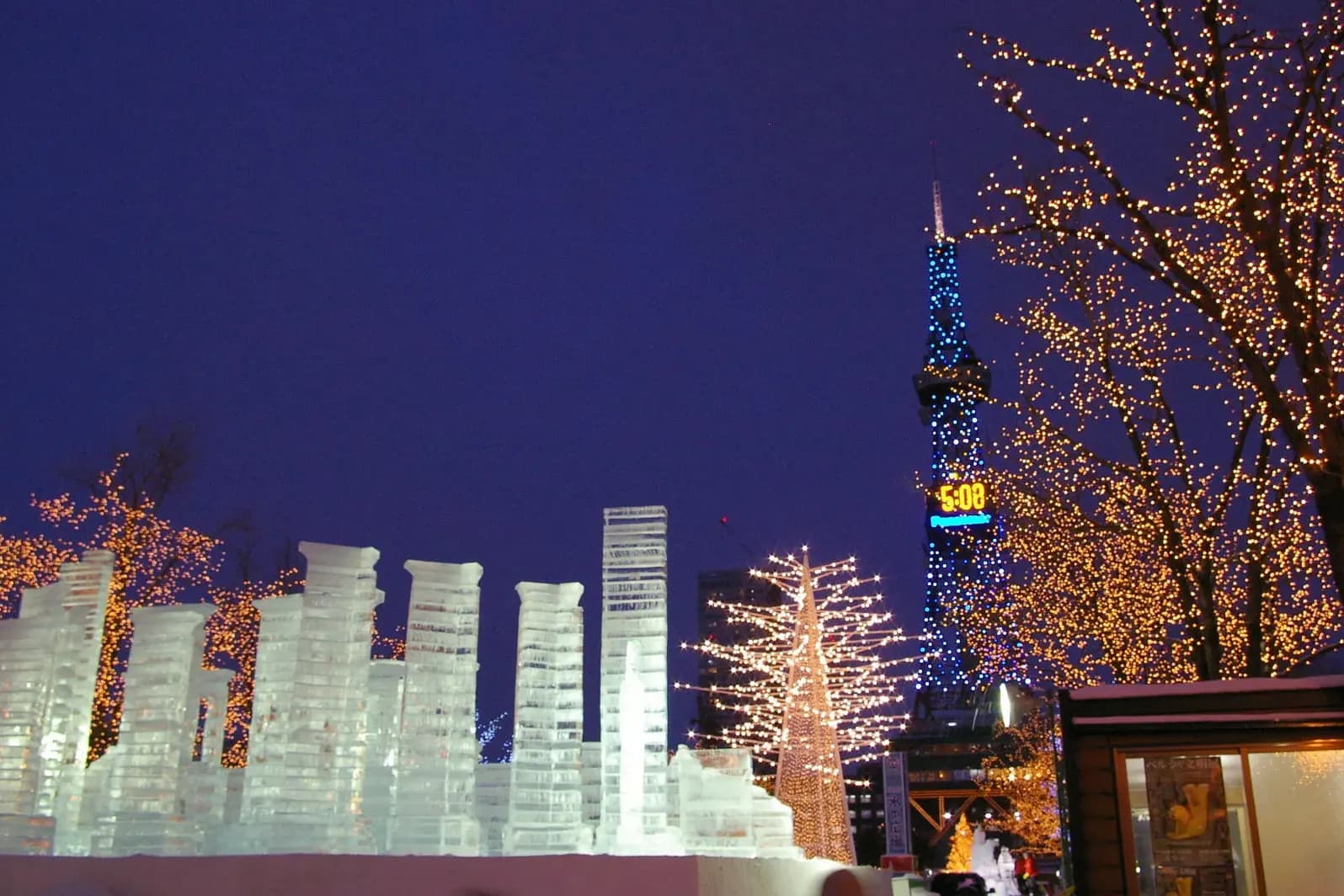
February is the coldest month in Sapporo (-6.2 °C at night) and one of the cheapest for hotels in the big cities. The Sapporo Snow Festival is scheduled for 4 to 11 February 2027, and the Lunar New Year falls on 6 February 2027, which brings visitors from across Asia that week. Plum blossom starts in Tokyo and Kyoto in late February.
March: cherry blossom arrives at the end of the month
Days warm to 14 °C in Tokyo, but rain doubles compared with February (9 rain days). The cherry trees open on average on 24 March in Tokyo and 26 March in Kyoto, so the last week of March is already busy. The spring equinox gives a three-day weekend from 20 to 22 March 2027, and Japanese school holidays run from late March into early April.
April: peak cherry blossom in Honshu
The trees are in full bloom on average on 31 March in Tokyo and 4 April in Kyoto and Osaka, then on 13 April in Sendai. Highs reach 19 to 20 °C. Hotels in Kyoto sell out weeks ahead for the first ten days of the month. The Takayama spring festival takes place on 14 and 15 April, and the month ends with the start of Golden Week on 29 April.
May: Golden Week first, then the best weeks of spring
The first five days of May are the busiest of the year for domestic travel. From about 6 May to early June, Japan is at its most comfortable: 23.6 °C in Tokyo, long days, green hills and fewer tourists. Sapporo finally gets its cherry blossom, in full bloom on average on 6 May. Okinawa enters its rainy season around 10 May.
June: rainy season on most of the country
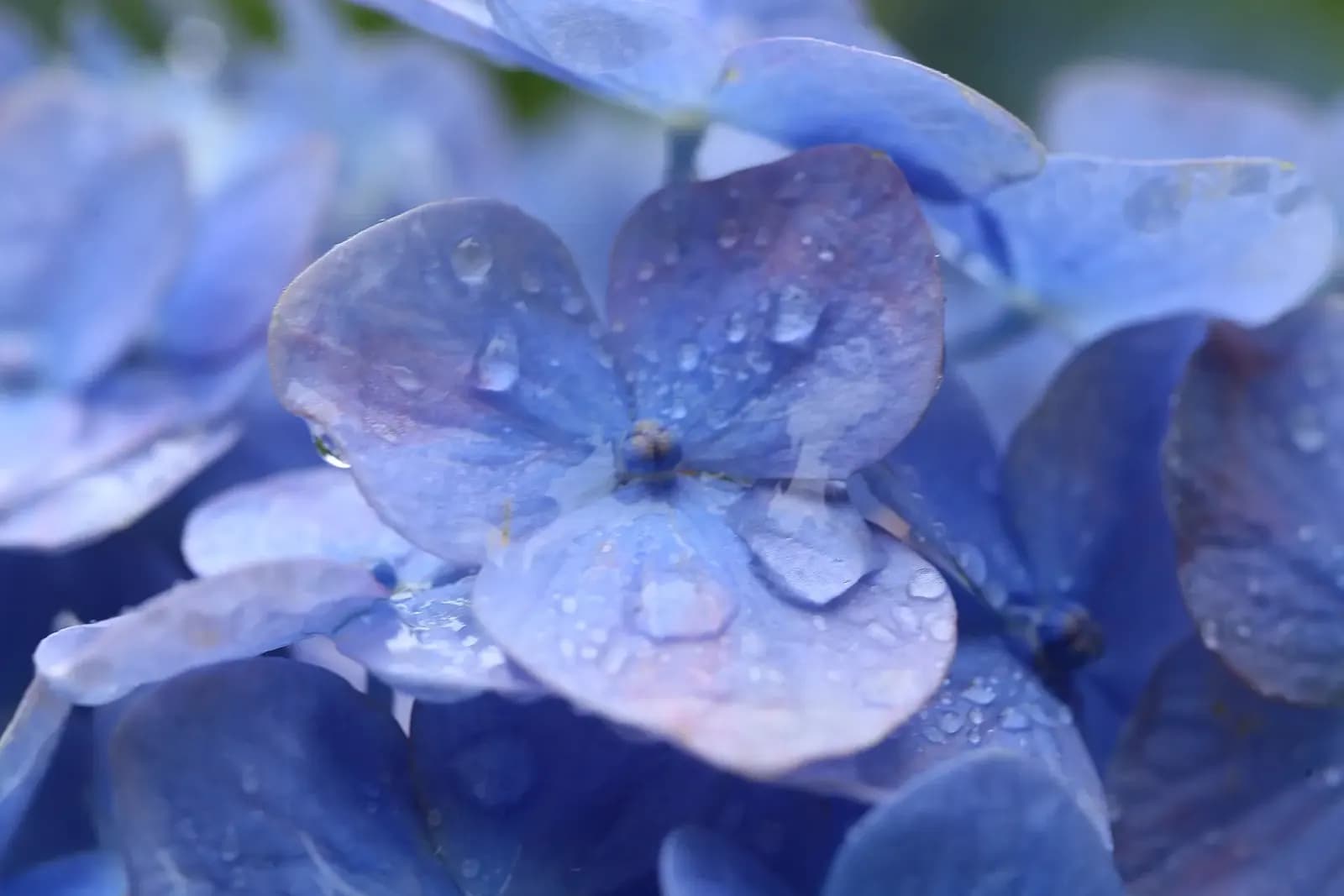
The rainy season starts on average around 7 June in Tokyo and 6 June in Kyoto. Tokyo has its highest number of rain days of the year (11.6), with frequent drizzle and humid air around 26 °C. It is a quiet, cheaper month with hydrangeas in the temples. Hokkaido has no rainy season and is at its best in late June. In Okinawa, the rain usually ends around 21 June and the beach season takes over.
July: end of the rain, start of the heat
The rainy season ends on average around 19 July in Tokyo, Kyoto and Osaka, then the heat sets in: Kyoto averages 32 °C by day. July is the month of the Gion Matsuri in Kyoto, the Tenjin Matsuri in Osaka and the opening of Mount Fuji, whose trails opened on 1 and 10 July in 2026. Typhoons start to reach the south, with 1.5 approaches of Okinawa in an average July.
August: heat, Obon and fireworks
August is the hottest month: 31.3 °C in Tokyo and 33.7 °C in Kyoto on average, and the recent summers have been hotter. Tokyo had a record 29 days at 35 °C or more in 2025, Kyoto 61. Obon in mid-August is a peak week for trains and hotels. It is the best month for the northern festivals and for Hokkaido, where Sapporo stays around 26 °C.
September: typhoons and lingering heat
September is still hot (27.5 °C in Tokyo) and it is the main typhoon month with August. It is also one of the quietest months for foreign arrivals and a good time for Hokkaido, where the leaves start turning in the high mountains of Daisetsuzan from mid-September. In 2027 there is no long Silver Week, only a three-day weekend from 18 to 20 September.
October: clear skies return in the second half
The first half can still bring a typhoon and heavy rain (Tokyo averages 235 mm in October). The second half is often superb: 22 °C, dry air and clear views of Mount Fuji. October 2025 was the busiest month ever recorded for foreign arrivals, with 3.9 million visitors. The leaves turn in Hokkaido and the mountains of Tohoku, Nikko and the Alps.
November: autumn leaves and the most stable weather
Tokyo averages 16.7 °C with 7 rain days and the typhoon season is over. The maples turn in the cities from mid-November: JMA's reference maple changes colour on average on 28 November in Tokyo and 5 December in Kyoto. Kyoto is as busy in the last two weeks of November as at cherry blossom. Book hotels three months ahead.
December: the last leaves, illuminations and ski season
The first ten days of December still have colour in Kyoto, with far fewer visitors than in November. Tokyo is dry at 12 °C by day, and the cities light up for the winter illuminations. Ski resorts in Hokkaido and Nagano open during the month. From 29 December, offices close for New Year and the whole country goes home.
Japan weather by region: Hokkaido, Tohoku, Kanto, Kansai, Kyushu and Okinawa
Japan stretches about 3,000 km from the drift ice of northern Hokkaido to the coral reefs of Okinawa, so the best time to visit depends on where you go.
Hokkaido: summer and winter, not spring
Sapporo has the coolest summers of the big cities (26.4 °C in August) and no rainy season, which makes late June to September ideal for hiking, the lavender fields of Furano and road trips. Winter, from December to March, brings about 4.8 m of snow a year to Sapporo and the powder that made Niseko famous. April and November are the awkward months, with melting snow or bare trees. Our guide to Hokkaido covers the island season by season.
Tohoku: late cherry blossom and summer festivals
The northeast of Honshu gets its cherry blossom a week or two after Tokyo, with full bloom on average on 13 April in Sendai. Its rainy season ends last, around 24 July in the south and 28 July in the north, just before the great summer festivals: Nebuta in Aomori from 2 to 7 August. Autumn colours in the mountains peak in October.
Kanto (Tokyo, Hakone, Nikko): dry winters, humid summers
Tokyo and its region have the classic Pacific climate: sunny, dry winters, a rainy June, a hot and sticky July and August, a wet September and a fine late October and November. Mount Fuji is most often visible from November to February, when the air is clear. See our guides to things to do in Tokyo and to Mount Fuji and Hakone for what to plan around the weather.
Kansai (Kyoto, Osaka, Nara): the two peaks
Kyoto is the city where timing matters most. It has the two biggest tourist peaks of the country, the first ten days of April and the second half of November, and the hottest summers of the main cities, at 33.7 °C on average in August. Its winters are cold but dry. Our page on things to do in Kyoto lists the temples that are worth an early start.
Kyushu: early spring, early rain
Fukuoka gets its cherry blossom first among the big cities of the main islands (on average 22 March). The rainy season starts about a week earlier than in Tokyo, around 30 May in southern Kyushu, and the island is more exposed to typhoons in late summer. Spring and autumn are the best seasons for the onsen towns of Beppu and Yufuin.
Okinawa: a subtropical calendar
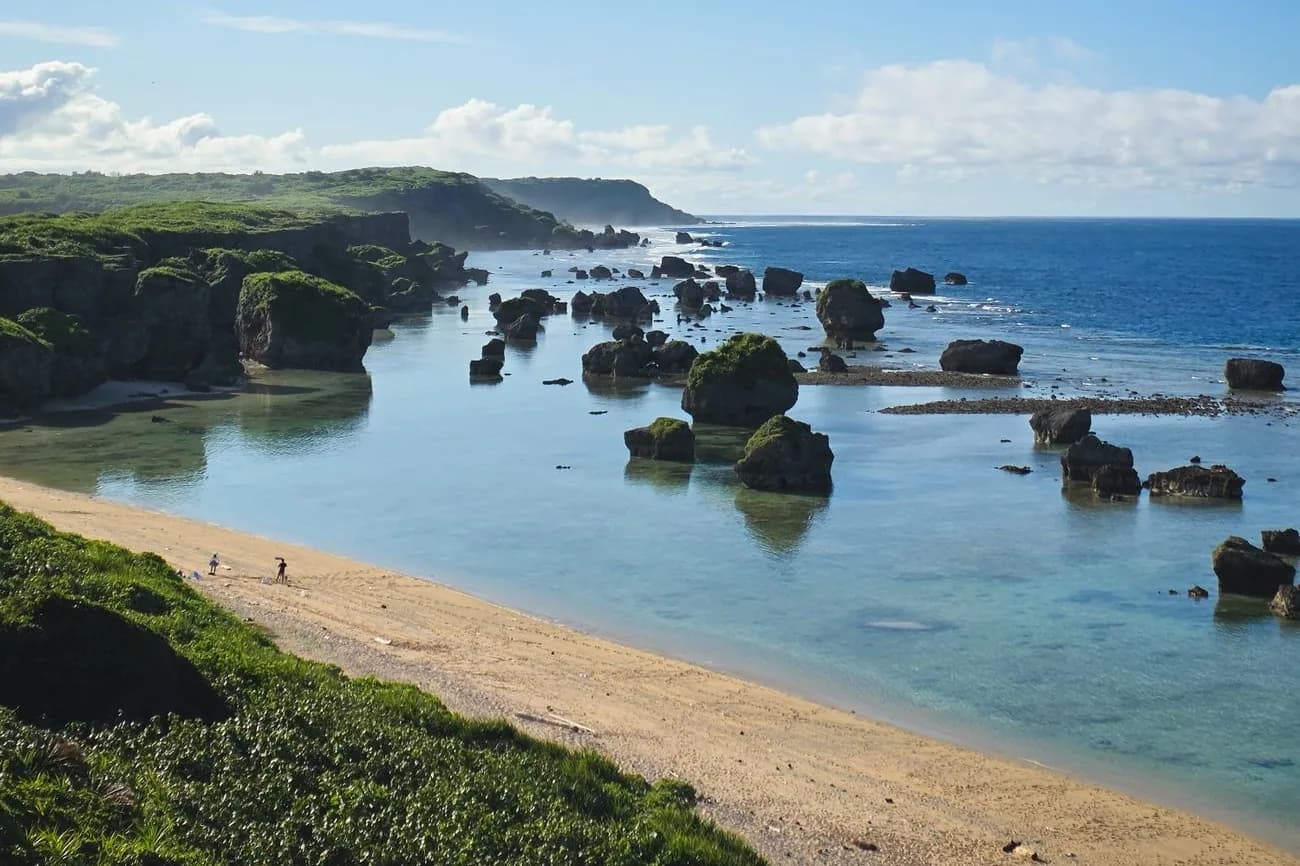
Naha never gets cold (19.8 °C by day in January) and is hot and humid from June to September. Its rainy season comes first, from about 10 May to 21 June, and it takes the most typhoons, with 7.9 approaches a year for Okinawa and Amami. The best beach months are late June to early July, after the rain and before the typhoon peak, and late September to October. Our guide to things to do in Okinawa has the islands and beaches.
Seasons in Japan: cherry blossom, rainy season, typhoons, heat, autumn leaves and snow
Cherry blossom season in Japan
The blossom moves north with spring. Average dates of full bloom (JMA normals 1991-2020) are 31 March in Tokyo and Fukuoka, 2 April in Nagoya, 4 April in Kyoto and Osaka, 13 April in Sendai and 6 May in Sapporo. Full bloom comes about a week after the first flowers, and the trees stay at their best for about a week more. In 2026 the season was early: Tokyo opened on 19 March and was in full bloom on 28 March. The first 2027 forecasts usually come out from mid-December. Our page on cherry blossom in Japan has the best spots and how to plan around the forecasts.
Rainy season (tsuyu) dates by region
The rainy season is a front that stalls over Japan and moves north. JMA gives average start and end dates, each the middle of a transition of about five days:
| Region | Average start | Average end |
|---|---|---|
| Okinawa | 10 May | 21 June |
| Amami | 12 May | 29 June |
| Southern Kyushu | 30 May | 15 July |
| Northern Kyushu (Fukuoka) | 4 June | 19 July |
| Shikoku | 5 June | 17 July |
| Chugoku (Hiroshima) | 6 June | 19 July |
| Kinki (Kyoto, Osaka) | 6 June | 19 July |
| Tokai (Nagoya) | 6 June | 19 July |
| Kanto-Koshin (Tokyo) | 7 June | 19 July |
| Hokuriku (Kanazawa) | 11 June | 23 July |
| Southern Tohoku (Sendai) | 12 June | 24 July |
| Northern Tohoku (Aomori) | 15 June | 28 July |
| Hokkaido | no rainy season | no rainy season |
Real years drift by one or two weeks: in 2026 Okinawa's rain started on 4 May and ended on 29 June. Tsuyu rarely means rain all day. Expect grey skies, drizzle and high humidity, and pack a light umbrella rather than cancelling. Hydrangea gardens, such as the temples of Kamakura, are at their best in mid-June.
Typhoon season in Japan
About 25 typhoons form in the western Pacific each year, and on average 11.7 come within 300 km of Japan, according to JMA. Only about 3 a year make landfall on the four main islands. The peak is August and September (3.3 approaches each), but July (2.1) and October (1.7) are not safe either. A typhoon usually stops flights, ferries and some Shinkansen for a day or two. Travel insurance that covers delays and cancellations is worth having for a summer trip, which our guide to travel insurance for Japan explains.
Summer heat in July and August
The JMA averages already describe a hot summer, and recent years have gone well beyond them. Tokyo had 29 days at 35 °C or more in 2025, its record, and 55 tropical nights above 25 °C. Kyoto had 61 days at 35 °C in 2025 and reached 39.7 °C on 23 July 2026. The Ministry of the Environment issues a Heat Stroke Alert when the heat index (WBGT) is forecast at 33 or more, announced at 5 pm the day before and 5 am on the day. On those days, plan temples for the early morning, museums and department stores for the afternoon, and drink before you feel thirsty.
Autumn leaves (koyo): when the leaves turn
The colours travel the other way, from north to south and from the mountains to the plains. They start from mid-September in Daisetsuzan, Hokkaido's high mountains, reach Sapporo around late October, then Nikko, the Alps and the mountains of Tohoku in October. In the cities, JMA's reference maple turns on average on 21 November in Sendai and Nara, 28 November in Tokyo and 5 December in Kyoto. The season has been getting later: in 2024 Kyoto's maple only turned on 20 December, a record.
Snow and ski season
Winter is a season in its own right in Japan. Sapporo receives about 4.8 m of snow a year, most of it from December to February, and the ski resorts of Hokkaido and Nagano usually run from December to April, with the best powder in January and February. Winter is also the time for the snow monkeys of Jigokudani bathing in their hot spring, the light-up villages of Shirakawa-go and an onsen under the snow. Our guide to Japan in winter and skiing in Japan covers resorts and passes, and the page on Niseko the best known of them.
When not to visit Japan: holiday dates to avoid in 2027
Three holiday periods fill Japan's trains, roads and hotels regardless of the weather. The dates below come from the official list of national holidays published by the Cabinet Office for 2027.
| Period | 2027 dates | What happens |
|---|---|---|
| New Year 2027 | Tue 29 December 2026 to Sun 3 January 2027 | Offices and many shops closed, trains full before 31 December and around 3 January |
| Golden Week | Thu 29 April, then Sat 1 to Wed 5 May 2027 | Five holidays in a row from 1 May, seven days for anyone who takes Friday 30 April off |
| Obon | Fri 13 to Mon 16 August 2027 | Not a public holiday but most companies close. Mountain Day falls on Wed 11 August |
| Autumn holidays | Sat 18 to Mon 20 September, Thu 23 September 2027 | No five-day Silver Week in 2027, only a long weekend and a separate Thursday |
| New Year 2028 | Wed 29 December 2027 to Mon 3 January 2028 | Same closures and travel peak |
Golden Week is the busiest. On those days, every seat on Nozomi trains is reserved and hotel prices in Kyoto and the resorts rise sharply. The peak departures are on the first day and the returns on the last. During Obon 2027, expect the outbound rush on Friday 13 August and the return on Sunday 15 and Monday 16. Our guide to the Shinkansen explains how to book seats a month ahead on those dates.
Long weekends are smaller peaks: 9 to 11 January, 20 to 22 March, 17 to 19 July, 18 to 20 September and 9 to 11 October 2027. Domestic tourists fill the onsen towns and the day trips from Tokyo, such as Hakone, Nikko and Kamakura, on those dates.
Crowds and prices in Japan by month
Japan welcomed a record 42,683,600 foreign visitors in 2025, 15.8% more than in 2024, according to the Japan National Tourism Organization (JNTO). In 2026 the total is slightly down: 30,730,200 from January to September, 2.9% fewer than a year earlier, because visitors from China fell by more than half. Visitors from the United States (+5.2%) and the United Kingdom (+4.6%) kept growing, so the famous sights do not feel any emptier.
| Period | Crowds | Hotel prices |
|---|---|---|
| 1 to 3 January | Very busy at shrines and on trains | High |
| Mid-January to February | Quiet, except Hokkaido in Snow Festival week | Lowest of the year in the cities, peak in ski resorts |
| Late March to mid-April | Very busy, cherry blossom | High, highest in Kyoto |
| 29 April to 5 May | Peak of the year for domestic travel | Very high |
| Mid-May to June | Moderate, then quiet in the rain | Moderate to low |
| July to August | Busy with Japanese school holidays, Obon peak | High in mid-August and in Hokkaido and Okinawa |
| September | Among the quietest months for foreign visitors | Moderate |
| October to November | Very busy, record month in October 2025 | High, highest in Kyoto in late November |
| Early to mid-December | Moderate | Moderate, then high from 28 December |
The yen remains weak, at about 160 yen to the dollar in November 2026, which keeps Japan good value for visitors paid in dollars, pounds or euros even in peak season. Two taxes have gone up in 2026. The departure tax paid with every international ticket rose from ¥1,000 to ¥3,000 (about $19) on 1 July 2026. Kyoto's accommodation tax changed on 1 March 2026 and now goes from ¥200 to ¥10,000 per person per night depending on the room price, for example ¥400 (about $2.50) for a room between ¥6,000 and ¥19,999.
Best time to visit Japan for your trip
First trip to Japan: Tokyo, Kyoto and Osaka
For a first trip around Tokyo, Kyoto, Osaka and a day trip to Hiroshima or Hakone, the safest choices are mid-May, late October and early December: comfortable weather, no holiday rush and no cherry blossom premium. If you want the blossom, go in the last days of March and the first days of April and book early. Our Japan itinerary shows how to split 10 days between the cities.
Budget trip
January after the first week and February are the cheapest months for hotels in the big cities, and the skies are clear in Tokyo and Kyoto. Late May and June are the other low season, if you accept some rain. Avoid the holiday weeks above, when even business hotels raise their rates.
Skiing
Go in January or February for the deepest powder in Niseko, Furano, Hakuba and Nozawa Onsen. December can be thin at the start, March brings sunnier days and softer snow. Avoid New Year and the Lunar New Year week if you want empty lifts.
Beaches in Okinawa
The best balance is late June to mid-July, after the rainy season ends around 21 June and before the typhoon peak. Late September to October is also good, with warm water and fewer families, but keep a spare day in case a typhoon cancels a ferry to the outer islands. In winter Okinawa is pleasant for walking and diving, at about 20 °C.
Hiking and climbing Mount Fuji
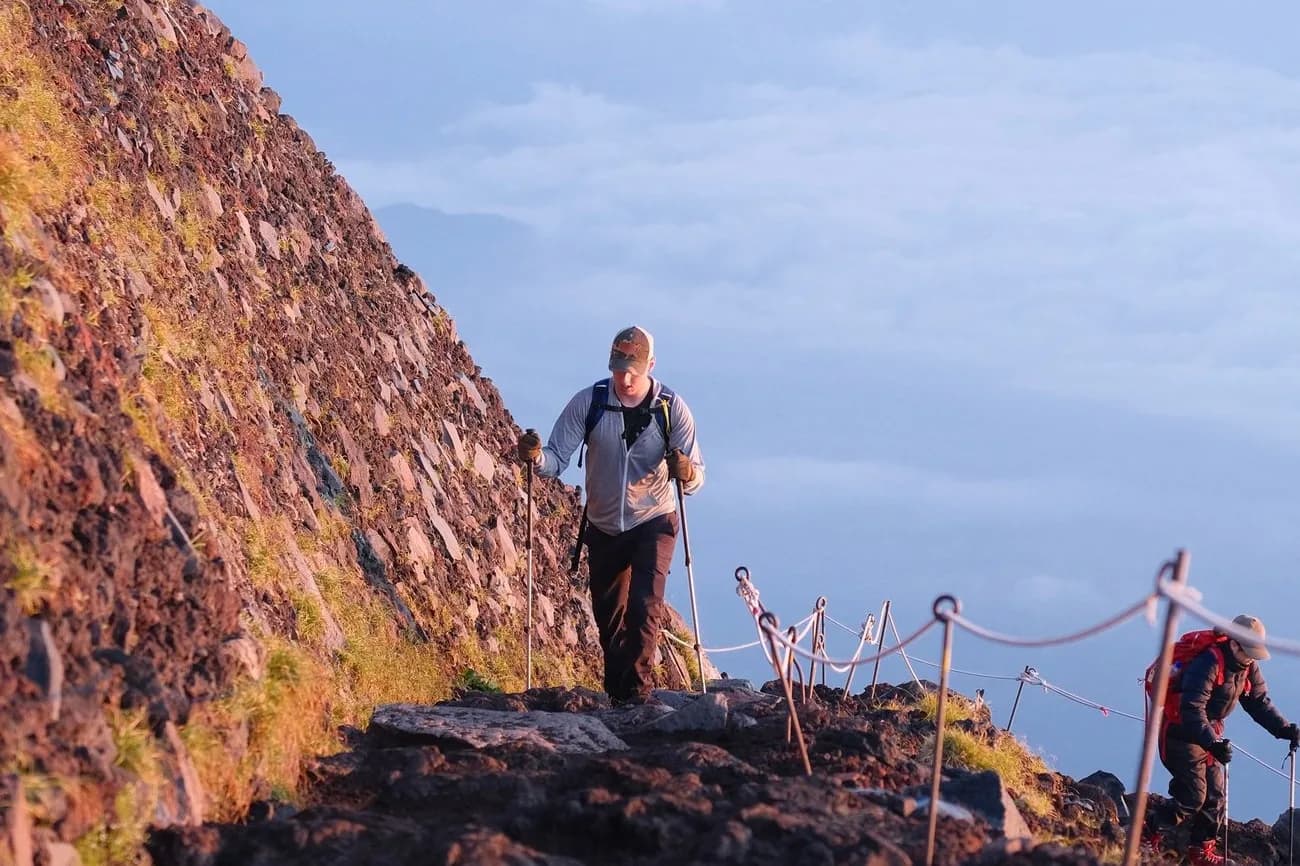
Mount Fuji can only be climbed in its official season. In 2026 the Yoshida and Subashiri trails opened from 1 July to 10 September, and the Gotemba and Fujinomiya trails from 10 July to 10 September. On the Yoshida trail, climbers pay ¥4,000 (about $25) and book a slot in advance, the trail is capped at 4,000 people a day and the gate at the 5th Station closes from 2 pm to 3 am except for climbers with a mountain hut reservation. The 2027 dates have not been announced yet: the 2026 rules were published on 13 March 2026. For general hiking, the Japan Alps and Hokkaido are best from July to early October, and the lower trails around Kyoto and Kamakura in spring and autumn.
Seeing Japan in winter
Beyond skiing, winter gives the clearest views of Mount Fuji, illuminations in Tokyo and Osaka, and onsen trips at their best. The snow monkeys of Jigokudani are most photogenic from January to February, when there is snow around the pool. A stay in a ryokan with an onsen is the classic winter treat.
Festivals in Japan by month in 2027
Most of the big festivals have fixed dates and happen every year. Those below are the ones worth building a trip around. A few depend on the weather, such as the Aoi Matsuri, which is postponed in case of rain.
| Month | Festival | Place | 2027 dates |
|---|---|---|---|
| February | Sapporo Snow Festival | Sapporo | Thu 4 to Thu 11 February (scheduled) |
| April | Takayama Spring Festival | Takayama | Wed 14 and Thu 15 April |
| May | Aoi Matsuri | Kyoto | Sat 15 May |
| May | Kanda Matsuri (main festival, odd-numbered years) | Tokyo | Mid-May, around the weekend of 15 and 16 May |
| May | Sanja Matsuri | Asakusa, Tokyo | Third weekend of May, likely Fri 14 to Sun 16 May |
| July | Gion Matsuri | Kyoto | All month, float processions Sat 17 and Sat 24 July |
| July | Tenjin Matsuri | Osaka | Sat 24 and Sun 25 July, boat procession and fireworks on the 25th |
| July | Sumida River Fireworks | Tokyo | Usually the last Saturday of July |
| August | Nebuta Matsuri | Aomori | Mon 2 to Sat 7 August |
| August | Awa Odori | Tokushima | Thu 12 to Sun 15 August |
| October | Takayama Autumn Festival | Takayama | Sat 9 and Sun 10 October |
| October | Jidai Matsuri | Kyoto | Fri 22 October |
| December | Chichibu Night Festival | Chichibu, Saitama | Thu 2 and Fri 3 December |
The dates follow each festival's usual calendar, and the official 2027 programmes come out a few weeks to a few months before. Hotels near the Gion Matsuri, the Tenjin Matsuri and the Nebuta Matsuri sell out months ahead, so book as soon as your dates are fixed. Visitors from most English-speaking countries enter Japan without a visa for up to 90 days, as our page on the Japan tourist visa explains, so the only real constraint on your dates is the season.