- entry to Ginkaku-ji since 1 April 2026, twice the old fee, about $6
- ¥1,000
- flat city bus fare in central Kyoto, and ¥1,100 ($7) for the subway and bus one-day pass
- ¥230
- of the Kyoto accommodation tax since 1 March 2026, from ¥200 to ¥10,000 per person per night
- 5 tiers
On this page
The best things to do in Kyoto sit in seven areas: Higashiyama and Gion in the east, Kinkaku-ji and Ryoan-ji in the north-west, Nijo Castle and the Imperial Palace in the centre, Fushimi Inari and Tofuku-ji in the south, Arashiyama in the west, and the mountain villages of Kurama, Kibune and Ohara to the north. Below are 30 sights grouped by area, each with its 2026 entry fee and opening hours checked on official sites on 14 November 2026, and the hour when it is quietest.
Best things to do in Kyoto: the 30 sights by area
Each area fills half a day or a day, and the order below is the one that keeps you ahead of the crowds. Fees are for one adult, at about 160 yen to the dollar.
| Area | Sights not to miss | Entry fees | Time needed |
|---|---|---|---|
| Higashiyama and Gion | Kiyomizu-dera, Sannenzaka, Gion, Ginkaku-ji | ¥500 + ¥1,000, streets free | 1 full day |
| North-west | Ryoan-ji, Kinkaku-ji, Ninna-ji | ¥600 + ¥500 + ¥800 | Half a day |
| Centre | Nijo Castle, Imperial Palace, Nishiki Market | ¥800, others free | Half a day |
| South | Fushimi Inari, Tofuku-ji, Sanjusangendo | Free + ¥600 to ¥1,000 + ¥600 | Half a day |
| West | Arashiyama bamboo grove, Tenryu-ji | Free + ¥500 | Half a day |
| North | Kurama-dera, Kifune shrine | ¥500, Kifune free | Half a day |
| Ohara | Sanzen-in, Hosen-in | ¥700 + ¥1,000 | Half a day |
Two rules beat every crowd in Kyoto. Be at the first sight of the day when it opens, which means 6:00 at Kiyomizu-dera, 8:00 at Ryoan-ji and any hour at Fushimi Inari. Then save the free places for the evening: Yasaka-jinja, Gion and Pontocho are at their best after dark, when the temples have closed.
Tours and activities in Kyoto
Six bookable experiences that add what a temple walk cannot, from a tea ceremony to a morning in Nara.
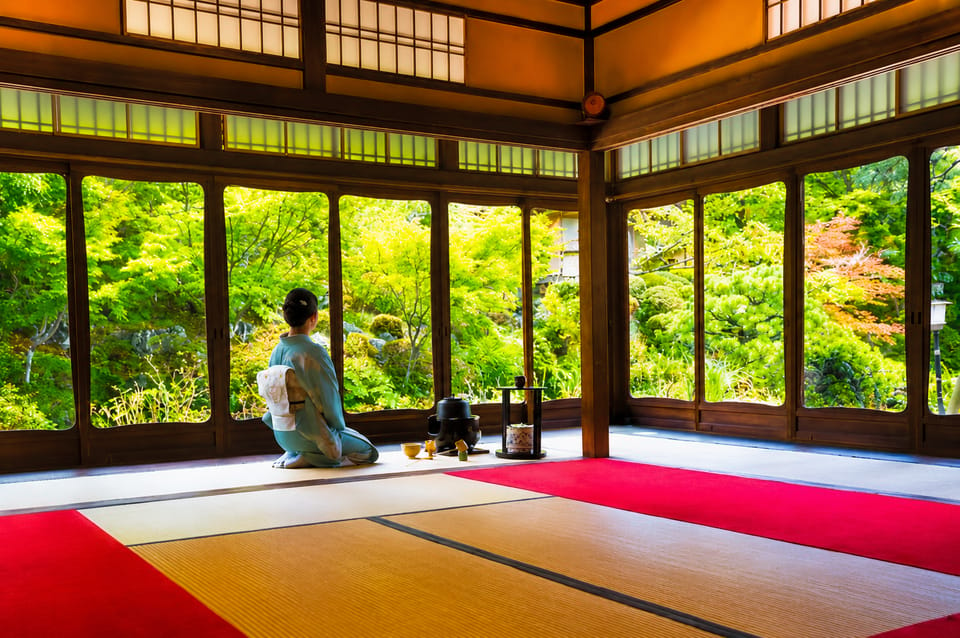
Kyoto: Tea Ceremony in a Garden Tea House near Kiyomizu-dera
A 50-minute tea ceremony in a traditional tea house with a garden, a short walk from Kiyomizu-dera. It fits a morning in Higashiyama.
4.8(4,662 reviews)
- 50 minutes
- Free cancellation
From $55per person
See prices & availability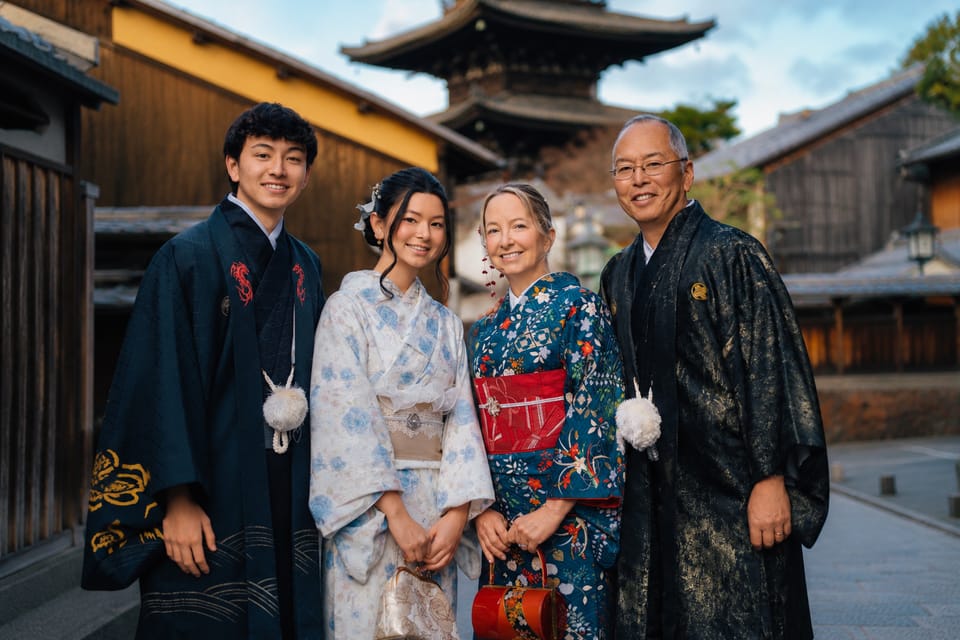
Kyoto: Kimono Rental with Hairstyling and Accessories
A kimono rental with hair styling and accessories included, to wear while you walk the temples and old streets of Higashiyama.
4.8(1,518 reviews)
- Free cancellation
From $21per person
See prices & availability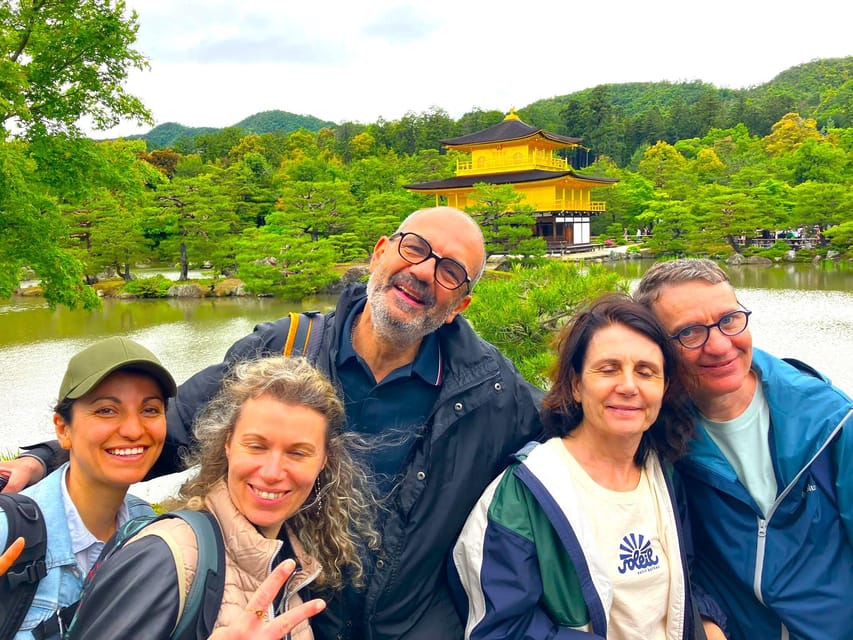
Kyoto: Kinkakuji Golden Pavilion Small Group Walking Tour
A guided small-group walk at Kinkaku-ji, for the history of the Golden Pavilion and its garden. Start the north-west day with it.
4.7(120 reviews)
- 1.5 to 3.5 hours
- Free cancellation
From $56per person
See prices & availability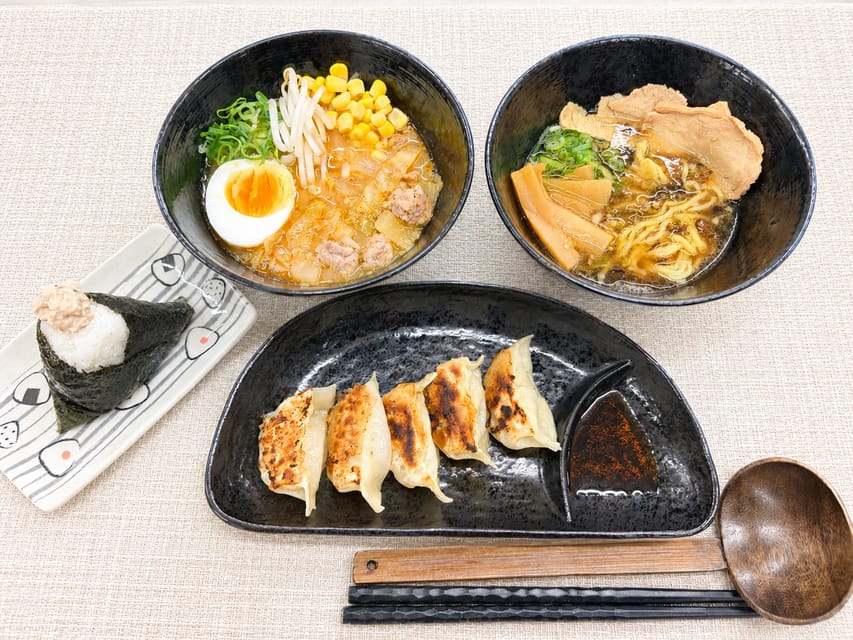
Kyoto: Ramen, Gyoza, and Onigiri Cooking Class
A 110-minute class where you cook ramen, gyoza and onigiri with an instructor. A good plan for a rainy afternoon in Kyoto.
4.9(677 reviews)
- 110 minutes
- Free cancellation
From $91per person
See prices & availability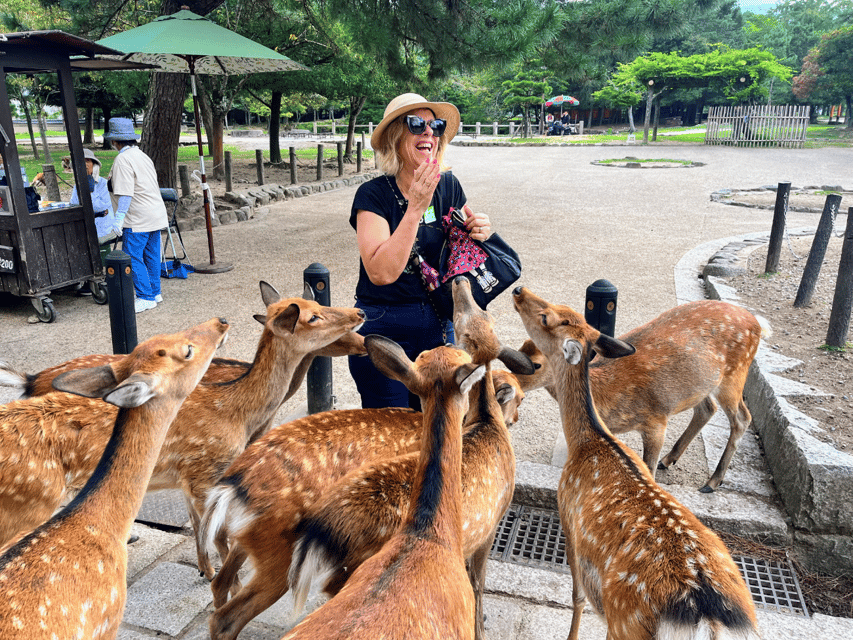
From Kyoto: Nara Guided Morning Tour
A guided morning tour of Nara that leaves from Kyoto and lasts about 4 hours, timed to reach the town ahead of the midday crowds.
4.6(467 reviews)
- 4 hours
- Free cancellation
From $75per person
See prices & availability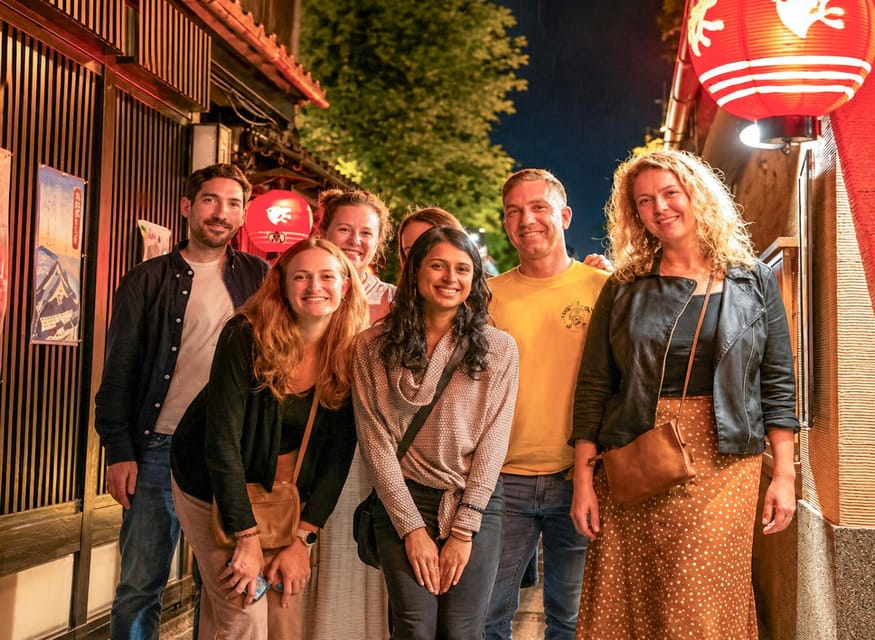
Kyoto: Kawaramachi Local Bar & Izakaya Crawl Tour
Three hours of local bars and izakayas around Kawaramachi with a guide, an easy way to spend a first evening in central Kyoto.
4.9(1,121 reviews)
- 3 hours
- Free cancellation
From $38per person
See prices & availability
Things to do in Higashiyama and Gion: Kiyomizu-dera to Ginkaku-ji
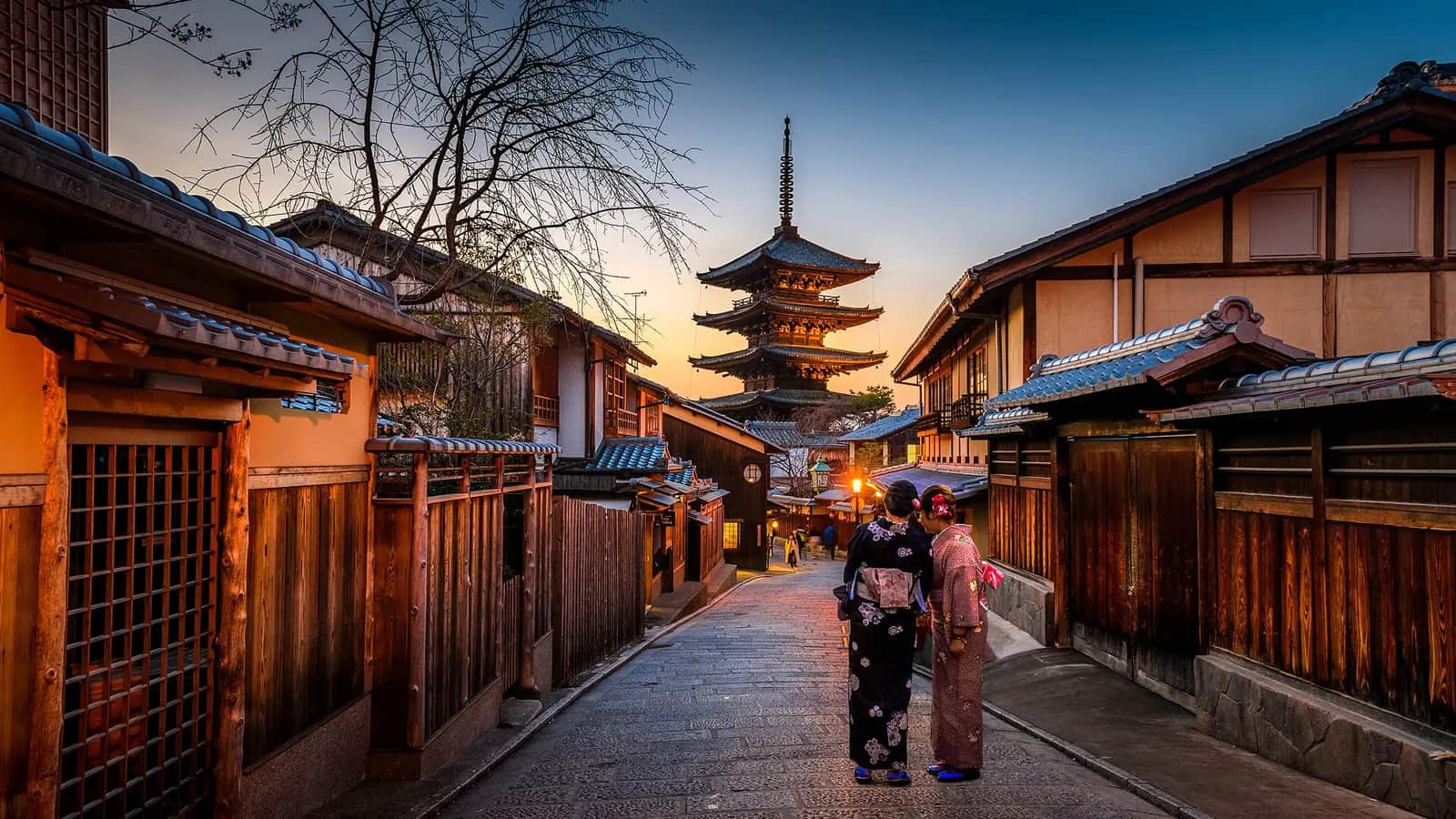
The eastern hills hold the densest run of temples in Kyoto, and all of it can be walked. Start at Kiyomizu-dera at 6:00, go down Sannenzaka and Ninenzaka, cross Maruyama Park to Yasaka-jinja and Gion, then head north through Okazaki to Nanzen-ji and the Philosopher's Path. That is about 5 km on foot, and on weekends and holidays the EX100 express bus links the same stops from Kyoto Station.
 1Photo jp pasku, Pexels
Higashiyama, top of Kiyomizu-zaka
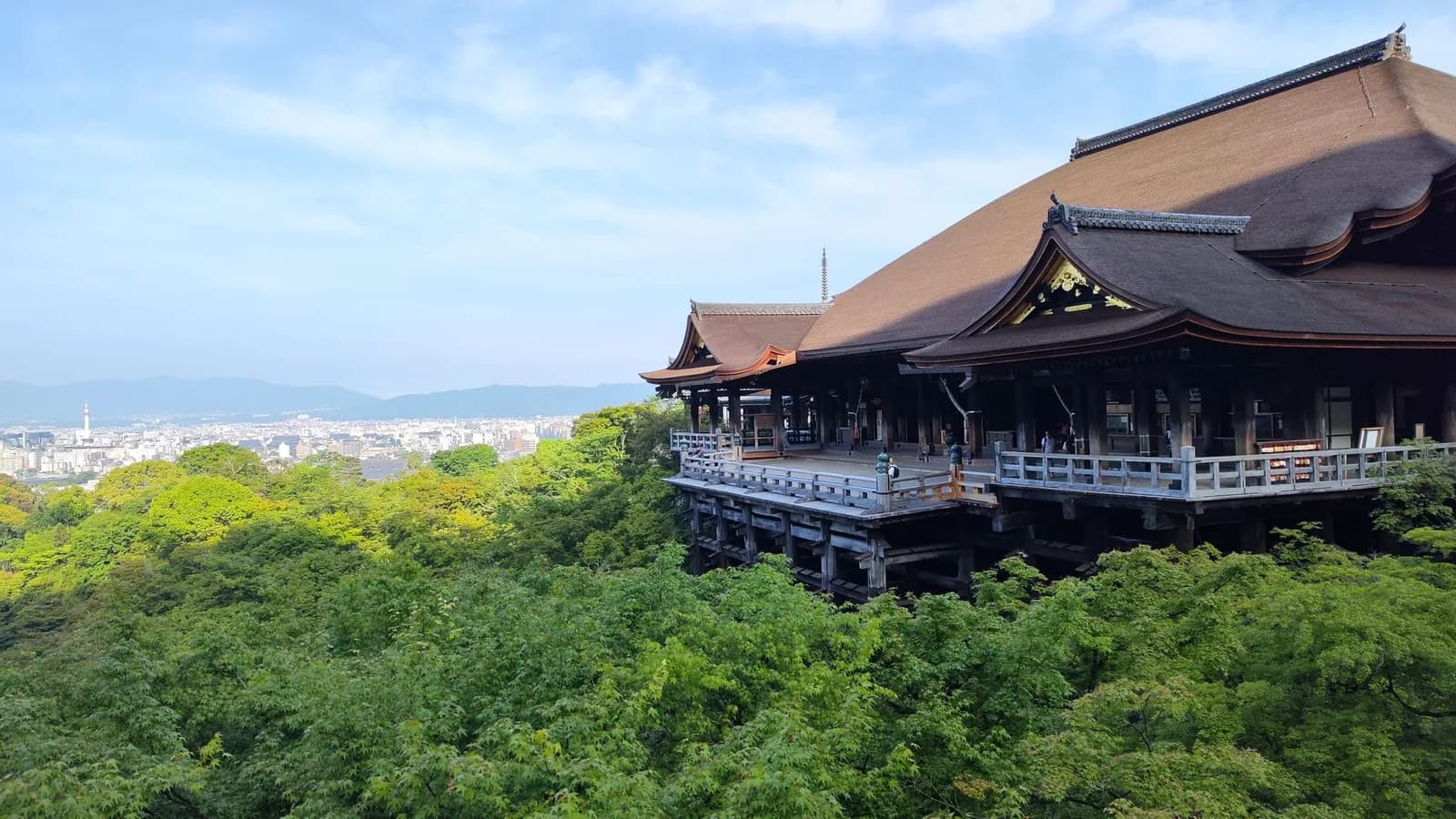
Kiyomizu-dera
The wooden stage of the main hall stands on pillars over the hillside, with the whole city below. Under it, the three streams of the Otowa waterfall draw a queue all day. The temple opens at 6:00, well before the shops on the slope, and that first hour is the only quiet one: tour groups and school trips arrive from mid-morning.
It closes at 18:00 most of the year (18:30 in July and August). The autumn night opening runs from 21 to 30 November 2026, until 21:30 with last entry at 21:00.
- Entry
- ¥500 ($3)
- Hours
- 6:00 to 18:00
- Quietest
- Before 8:00
2.
Higashiyama, stone-paved slopes
Sannenzaka, Ninenzaka and the Yasaka pagoda
The stepped lanes below Kiyomizu-dera are lined with wooden shops, tea rooms and the five-storey pagoda of Hokan-ji, known as the Yasaka pagoda. The streets are free and always open. Walk them downhill straight after Kiyomizu-dera at 7:00, before the shutters go up, or after 18:00 when the day visitors have left. At midday the lanes are shoulder to shoulder.
- Entry
- Free
- Quietest
- Before 8:00 or after 18:00
3.
Higashiyama, between Ninenzaka and Maruyama Park
Kodai-ji
Nene, the widow of the warlord Toyotomi Hideyoshi, founded this temple, and its dry gardens, tea houses and small bamboo grove make a calmer bamboo walk than Arashiyama. Entry is ¥800 ($5), or ¥1,200 with the nearby Entoku-in. Gates are open 9:00 to 17:30, last entry 17:00, and during its illuminations the temple reopens from 17:00 to 22:00 with the garden lit.
- Entry
- ¥800 ($5)
- Hours
- 9:00 to 17:30
- Night
- 17:00 to 22:00 in illumination seasons
4.
Gion, east end of Shijo-dori
Yasaka-jinja
The vermilion gate at the end of Shijo-dori belongs to the shrine of Gion and of its July festival, the Gion Matsuri. The grounds are open 24 hours and free, and the lanterns of the dance stage are lit every evening, which makes it the easiest stop after dinner. The shrine office for amulets and goshuin stamps is open 9:00 to 17:00. Maruyama Park, behind it, is one of the city's busiest cherry blossom spots in early April.
- Entry
- Free
- Hours
- 24 hours
 5Photo Christophe95, CC BY-SA 4.0, Wikimedia Commons
Gion, the geiko district
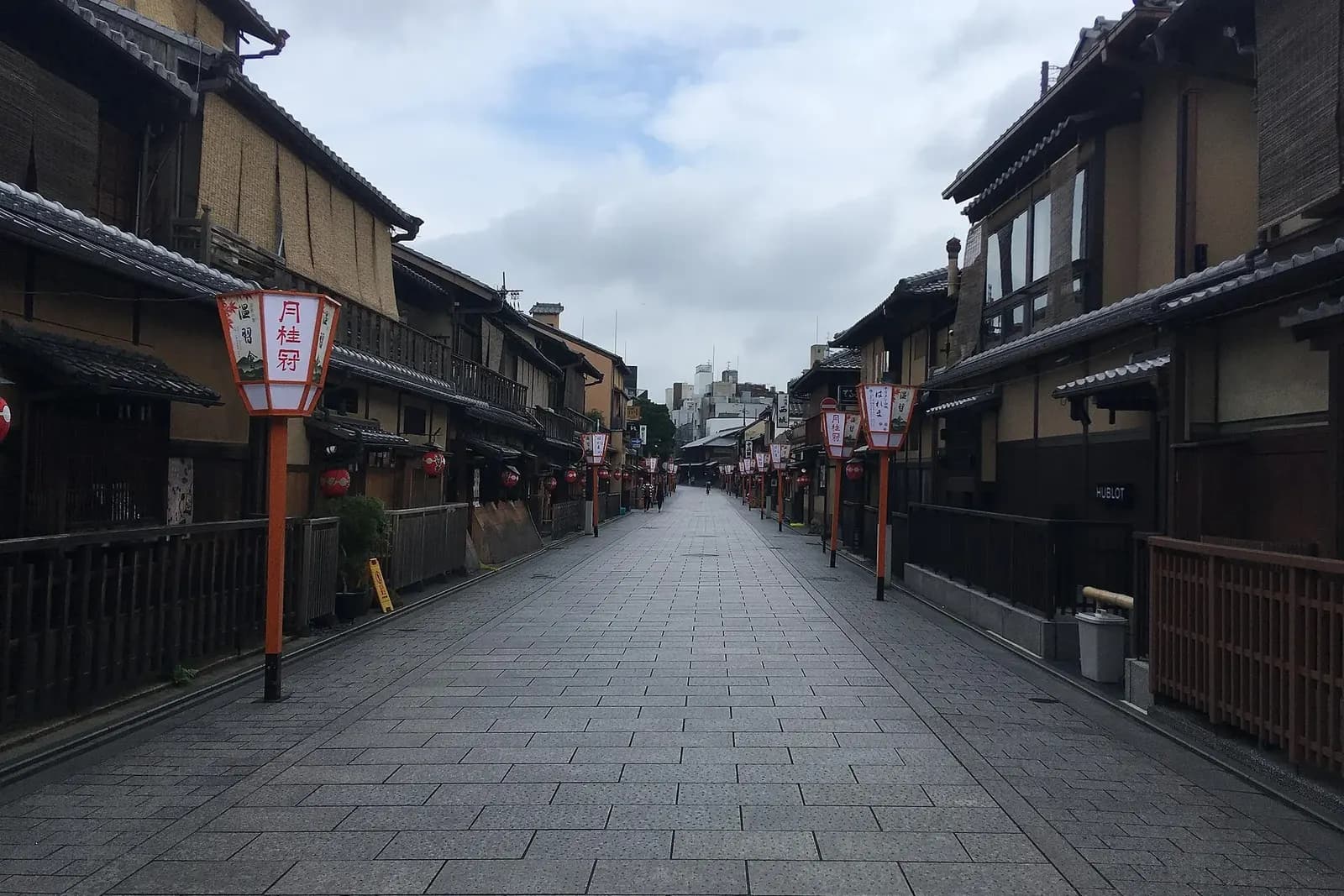
Gion: Hanamikoji-dori and Shirakawa
Hanamikoji-dori, south of Shijo, is the street of wooden teahouses most people picture, and it stays open to everyone. The side lanes off it are private roads, closed to tourists since 2024 with no-entry and no-photo signs. North of Shijo, the willow-lined Shirakawa canal is the prettiest stretch at dusk.
A geiko or maiko on her way to an appointment is working: do not follow, block or photograph her without asking. The fines that come with these rules are in the 2026 rules section. For a seated show, Gion Corner stages Kyomai performances at 18:00 and 19:00.
- Entry
- Free
- Best time
- Dusk on Shirakawa
6.
Higashiyama, north of Maruyama Park
Chion-in
The head temple of the Jodo school of Buddhism has one of the largest wooden gates in Japan, the Sanmon, at the foot of a steep stone stairway. The grounds, the gate and the Mieido hall are free. The two gardens cost ¥300 (Yuzen-en) and ¥400 (Hojo garden), or ¥500 for both. The halls are open 9:00 to 15:50, so come in the morning: it is one of the first places in the area to close.
- Entry
- Free, gardens ¥500 ($3)
- Hours
- 9:00 to 15:50
7.
Okazaki, near the Kyoto City Zoo
Heian Jingu
A giant orange torii straddles the road to this shrine, built in 1895 for the city's 1,100th anniversary. The gravel courtyard is free and opens at 6:00. The paid part is the Shin-en garden behind the halls, with its ponds, stepping stones and covered bridge: ¥600 ($4), from 8:30, last entry 16:30 from November to February (17:00 in October, 17:30 from March to September).
- Entry
- Free, garden ¥600 ($4)
- Garden
- From 8:30
8.
Higashiyama, foot of the eastern hills
Nanzen-ji
Climb the Sanmon gate for a view over the pines, then walk to the brick aqueduct that still carries Lake Biwa water through the temple grounds, free and the most photographed spot. The Sanmon and the Hojo with its rock garden cost ¥600 ($4) each. Hours are 8:40 to 17:00 from March to November and 8:40 to 16:30 from December to February, last entry 20 minutes before closing. The temple turns visitors away from 28 to 31 December.
- Entry
- ¥600 ($4) per building
- Hours
- 8:40 to 17:00
9.
Higashiyama, between Nanzen-ji and the Philosopher's Path
Eikan-do
Kyoto's most famous temple for autumn colour charges a seasonal fee while the maples turn. From 11 November to 6 December 2026, the day ticket for the halls and garden is ¥1,500 ($9), from 9:00 to 16:00. The night illumination, from 20 November, costs ¥1,000 and runs 17:30 to 20:30. The two are separate entries, so you cannot stay on from the day into the evening. There is no advance sale: queue at the gate.
- Autumn entry
- ¥1,500 ($9)
- Night
- ¥1,000, 17:30 to 20:30
 10
Northern Higashiyama, end of the Philosopher's Path
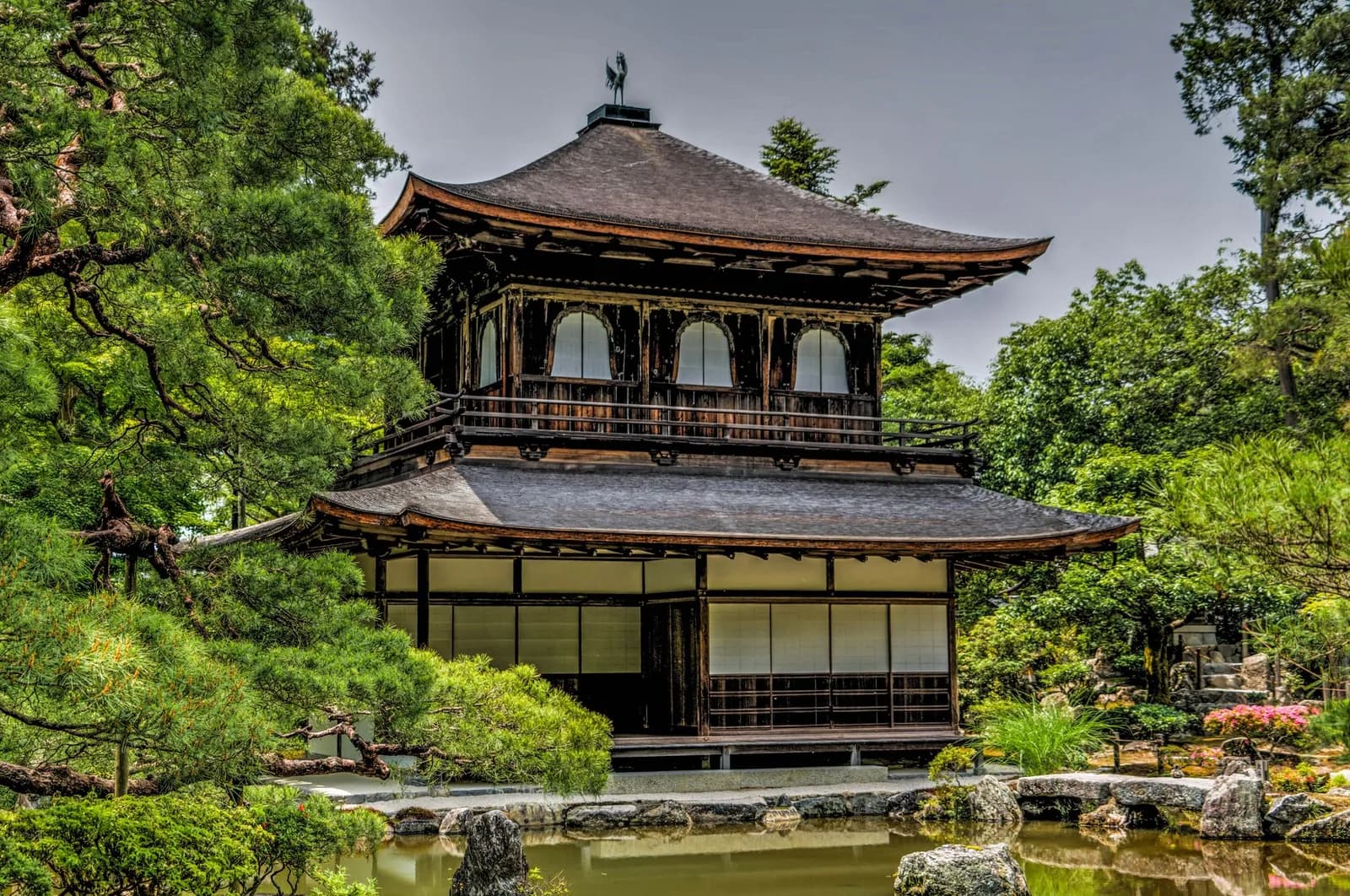
Ginkaku-ji (Silver Pavilion)
The pavilion was never covered in silver. People come for the raked sand garden and its flat-topped cone, then the moss path up the hill behind. The fee doubled to ¥1,000 ($6) on 1 April 2026, so older guides that still say ¥500 are out of date. Hours are 8:30 to 17:00 from March to November and 9:00 to 16:30 in winter.
The canal walk south to Nanzen-ji starts at its foot and takes about 30 minutes. It is at its best in early April, as our guide to cherry blossom in Japan explains.
- Entry
- ¥1,000 ($6)
- Hours
- 8:30 to 17:00
- Quietest
- At 8:30
 View on Google Maps
Kinkaku-ji, Ryoan-ji and Ninna-ji: things to do in north-west Kyoto
The three temples of the north-west lie along one road, the Kinukake-no-michi, about 20 minutes' walk apart. City buses from Kyoto Station take 40 minutes or more and are often full, so the subway to Kitaoji and a short bus or taxi ride is often faster. Begin at Ryoan-ji at 8:00, reach Kinkaku-ji for its 9:00 opening and finish at Ninna-ji.
1.
Kita ward, north-west Kyoto
Kinkaku-ji (Golden Pavilion)
The top two floors of the pavilion are covered in gold leaf and reflected in the pond in front, and the paper ticket is a temple charm you can keep. The walk is one-way and takes 30 to 45 minutes. Entry is ¥500 ($3), from 9:00 to 17:00 every day. The viewing spot by the pond is packed by 10:00, so be at the gate for opening or come in the last hour.
- Entry
- ¥500 ($3)
- Hours
- 9:00 to 17:00
- Quietest
- 9:00 or after 16:00
 2Photo Bjørn Christian Tørrissen, CC BY-SA 4.0, Wikimedia Commons
Ukyo ward, 20 minutes' walk from Kinkaku-ji
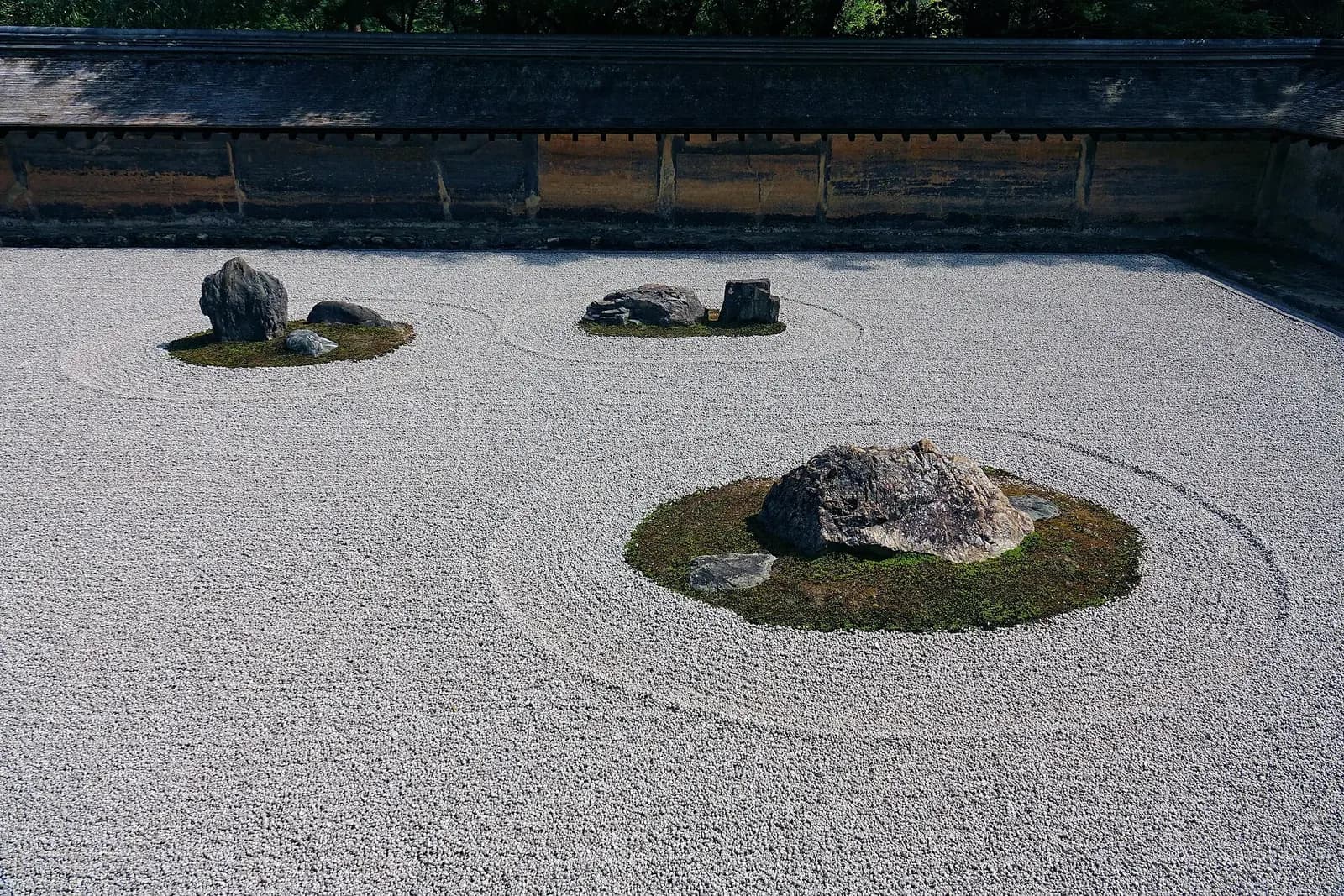
Ryoan-ji
Fifteen rocks sit in raked white gravel, placed so that you can never see all of them from one spot on the veranda. Ryoan-ji opens at 8:00 from March to November, an hour before Kinkaku-ji, so the smart order is Ryoan-ji first, then the Golden Pavilion at 9:00. Entry is ¥600 ($4). Winter hours are 8:30 to 16:30. Leave time for the pond garden around the temple, which most visitors skip.
- Entry
- ¥600 ($4)
- Hours
- 8:00 to 17:00
- Quietest
- At 8:00
3.
Omuro, west of Ryoan-ji
Ninna-ji
A former imperial temple with a five-storey pagoda and the Omuro cherry trees, short trees that bloom after the rest of the city, often in mid-April. The paid area is the Goten palace and its garden, ¥800 ($5), from 9:00 to 17:00 (last entry 16:30) from March to November and until 16:30 in winter. It is the least crowded of the three temples on this road.
- Entry
- ¥800 ($5)
- Hours
- 9:00 to 17:00
4.
Kamigyo ward, south-east of Kinkaku-ji
Kitano Tenmangu
Students come here to pray for exam results, and the grounds are free, with plum trees in February and March and a maple garden lit at night in autumn. The big draw is the flea and antiques market on the 25th of every month, which fills the shrine and the streets around it from the morning. Gates open at 7:00.
- Entry
- Free
- Market
- 25th of each month
5.
Kita ward, north of the centre
Daitoku-ji
A walled complex of Zen sub-temples where only a few open to the public. Daisen-in has a dry garden that reads like a landscape of river and mountains, for ¥500 ($3), 9:00 to 16:30. Ryogen-in, with the smallest rock garden in Japan, costs ¥350. Koto-in, famous for its maple-lined approach, has been closed indefinitely. The temple publishes no official fee page, so confirm at the gate.
- Entry
- ¥350 to ¥500 per sub-temple
- Hours
- 9:00 to 16:30
Central Kyoto: Nijo Castle, the Imperial Palace and Nishiki Market
The flat centre is the one part of Kyoto where the subway helps: the Tozai Line stops at Nijojo-mae, the Karasuma Line at Marutamachi and Imadegawa for the Imperial Palace. Do Nijo Castle in the morning, eat at Nishiki Market around 11:00 and keep Pontocho for dinner.
 1
Nakagyo ward, Nijojo-mae subway station
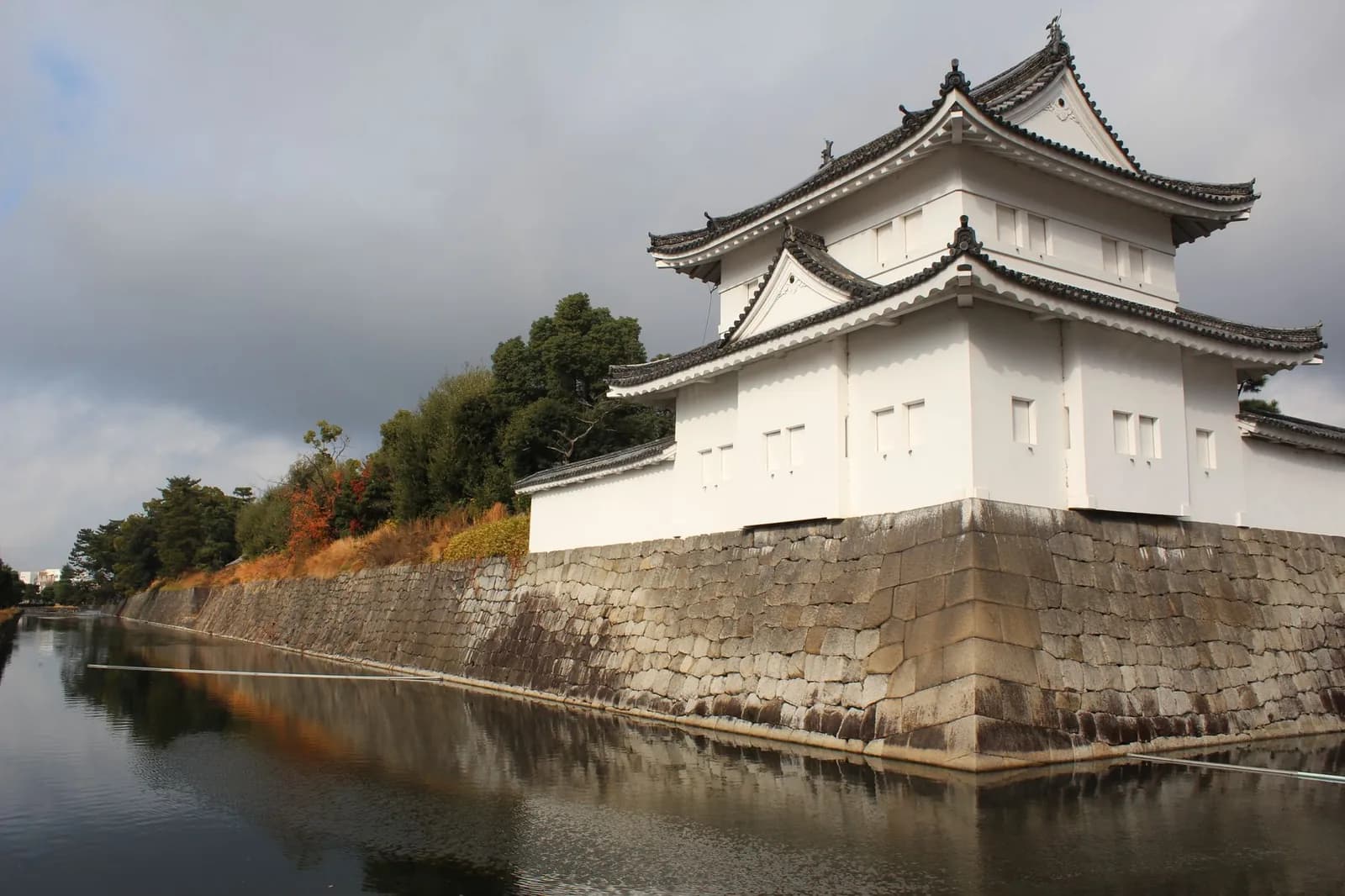
Nijo Castle
The shoguns' Kyoto residence is a palace more than a fortress. Inside Ninomaru Palace, the corridors are "nightingale floors" that chirp under every step. Entry to the grounds is ¥800 ($5), or ¥1,300 ($8) with Ninomaru Palace, and the restored Honmaru Palace costs ¥1,000 more with a timed web booking required.
Last entry is 16:00 (closing at 17:00). Ninomaru is closed on Tuesdays in January, July, August and December, and the castle closes from 29 to 31 December. Show a subway or subway and bus day pass at the ticket office and the grounds ticket drops to ¥700.
- Entry
- ¥800, ¥1,300 with palace
- Last entry
- 16:00
2.
Kyoto Gyoen, Imadegawa or Marutamachi station
Kyoto Imperial Palace
The emperors lived here until 1869, and the palace grounds are free with no booking. You enter through the Seishomon gate, where bags are checked, and follow a marked route past the halls, which you see from outside only. Free guided tours in English start at 10:00 and 14:00 and last about 50 minutes. The palace is closed on Mondays (Tuesday after a public holiday) and from 28 December to 4 January.
- Entry
- Free
- English tours
- 10:00 and 14:00
- Closed
- Mondays
3.
Nakagyo ward, between Teramachi and Takakura
Nishiki Market
A covered food street of pickles, tofu, knives and skewered snacks, a block north of Shijo-dori. It is free to walk and the stalls are at their liveliest late morning, which is also when the crowd is thickest. Most stalls ask you to eat in front of them rather than while walking. Our page on Nishiki Market lists the stalls worth queuing for.
- Entry
- Free
4.
Nakagyo ward, along the Kamo River
Pontocho
A lantern-lit alley one person wide in places, running between Sanjo and Shijo parallel to the Kamo River, with restaurants on both sides. From May to September, the restaurants on the river side build wooden kawadoko platforms over the water for dinner outside. It is an evening place: many doors stay shut until 17:00. Look for a posted menu with prices before you go in.
- Entry
- Free
- Best time
- After 18:00
Southern Kyoto: Fushimi Inari, Tofuku-ji, Sanjusangendo and To-ji
South of Kyoto Station, the JR Nara Line and the Keihan Line link Fushimi Inari and Tofuku-ji in a few minutes. A good morning runs Fushimi Inari at dawn, Tofuku-ji at 8:30, then Sanjusangendo and the National Museum before lunch. To-ji and the Railway Museum, west of the station, fill the afternoon.
1.
Fushimi ward, JR Inari station
Fushimi Inari Taisha
The tunnels of orange torii climb the whole of Mount Inari, two stops from Kyoto Station on the JR Nara Line. The shrine is free and never closes, so go before 7:00 or after dark. The crowd thins sharply after the first stretch of gates. Routes, timings and the summit loop are in our guide to Fushimi Inari.
- Entry
- Free
- Hours
- 24 hours
- Quietest
- Before 7:00
 2Photo Ryutaro Tsukata, Pexels
Higashiyama ward, Tofukuji station
Tofuku-ji
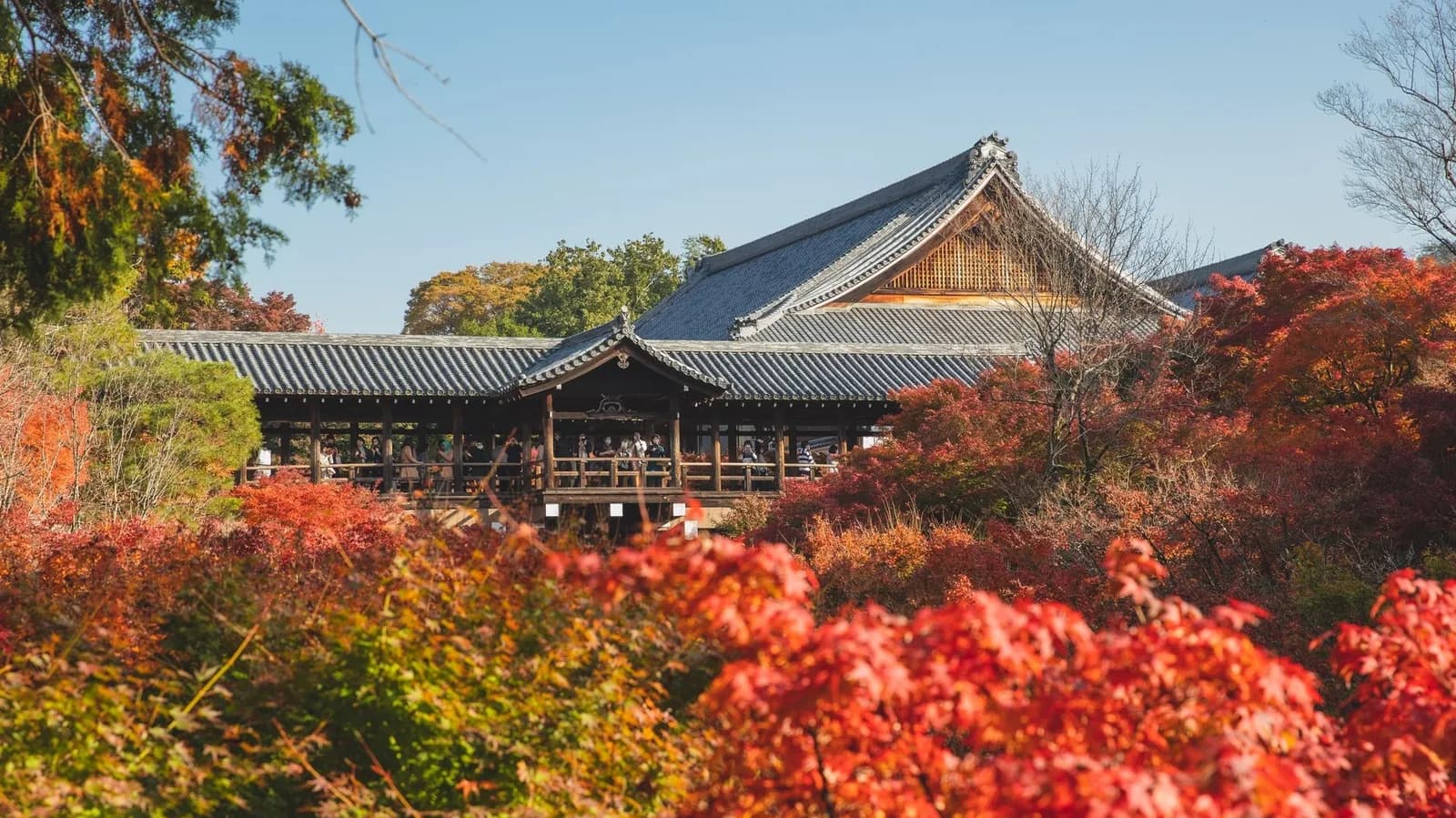
The covered Tsutenkyo bridge crosses a ravine filled with maples, and in late November the view from it is one of the busiest in Kyoto. One stop from Fushimi Inari, it pairs with it in the same morning. The Hojo, with its chequerboard moss gardens, costs ¥600 ($4) since 1 November 2026.
From 14 November to 6 December 2026, the Tsutenkyo ticket is ¥1,000 ($6), there is no combined ticket and no re-entry. The bridge opens at 8:30 in that period, so be there for it. From 7 December the temple keeps winter hours, 9:00 to 15:30.
- Entry
- ¥600 Hojo, ¥1,000 bridge (autumn)
- Autumn hours
- 8:30 to 16:00
3.
Higashiyama ward, 15 minutes' walk from Kyoto Station
Sanjusangendo
A wooden hall about 120 metres long holds 1,001 standing statues of the goddess Kannon in gilded rows, a sight no photo prepares you for (photos are banned inside anyway). Entry is ¥600 ($4). Hours change on 16 November: 9:00 to 16:00 until 31 March, last entry 15:30, then 8:30 to 17:00 from April. It is open every day of the year.
- Entry
- ¥600 ($4)
- Winter hours
- 9:00 to 16:00
4.
Higashiyama ward, opposite Sanjusangendo
Kyoto National Museum
Japan's art from Buddhist statues to scrolls and ceramics, across the road from Sanjusangendo. The special exhibition on The Tale of Genji runs until 29 November 2026 for ¥2,200 ($14). Collection exhibitions cost ¥700 and return from 22 December, and from 1 to 20 December only the gardens are open, for ¥300. It stays open until 20:00 on Fridays and closes on Mondays.
- Entry
- ¥700 to ¥2,200
- Closed
- Mondays
5.
Minami ward, 15 minutes' walk from Kyoto Station
To-ji
Its five-storey pagoda, about 55 metres tall, is the tallest wooden pagoda in Japan, visible from the Shinkansen as you pull into Kyoto. The gates open at 5:00, and the Kondo and Kodo halls, full of Buddhist statues, open at 8:00 for ¥800 ($5), last entry 16:30. Come on the 21st of the month for the Kobo-ichi market, one of the largest in Kyoto.
- Entry
- ¥800 ($5)
- Market
- 21st of each month
6.
Shimogyo ward, Umekoji-Kyotonishi station
Kyoto Railway Museum
Steam locomotives in a working roundhouse, early Shinkansen cars and driving simulators, the best rainy-day plan with children. Adult entry is ¥1,500 ($9), plus ¥300 for a short steam train ride, from 10:00 to 17:00. It is closed on Wednesdays except public holidays and school holidays. A rise to ¥1,900 has been reported for March 2027, so check the museum site before you go.
- Entry
- ¥1,500 ($9)
- Closed
- Wednesdays
Arashiyama in western Kyoto: the bamboo grove and Tenryu-ji
Arashiyama is as busy as Higashiyama by late morning, and the JR Sagano Line reaches it from Kyoto Station in about 15 minutes. It deserves its own morning, starting with the bamboo path at sunrise.
1.
Ukyo ward, JR Saga-Arashiyama station
Arashiyama bamboo grove and Tenryu-ji
The bamboo path is free and open at all hours, and before 7:30 it is still quiet. Tenryu-ji, whose garden backs onto it, charges ¥500 ($3) for the garden from 8:30 to 17:00, and from 7:30 between 14 and 30 November 2026. Togetsukyo bridge, the monkey park and the boat rides are covered in our guide to Arashiyama.
- Entry
- Free, Tenryu-ji ¥500
- Quietest
- Before 7:30
Kurama and Kibune: a mountain day trip north of Kyoto
These two villages sit in the forested valleys an hour north of the centre, reached by the Eizan Railway from Demachiyanagi. The classic plan is to ride to Kurama, hike over the ridge and come down to Kibune for a late lunch. In winter the trail can be icy, so check before you set off.
1.
Kurama, Eizan Railway from Demachiyanagi
Kurama-dera
A mountain temple reached in about 30 minutes on the small Eizan train from Demachiyanagi. Visitors pay a ¥500 ($3) mountain fee, and a cable car (¥200 one way) saves part of the climb, from 8:40 with the last ride up at 16:20. The Reihoden museum (¥200) is closed on Tuesdays and from 12 December to the end of February. Walk on over the mountain to Kibune: allow 1.5 to 2 hours, with tree roots and steps.
- Entry
- ¥500 ($3)
- Cable car
- ¥200, last up 16:20
 2Photo Chi King, CC BY 2.0, Wikimedia Commons
Kibune, Kifuneguchi station
Kifune shrine
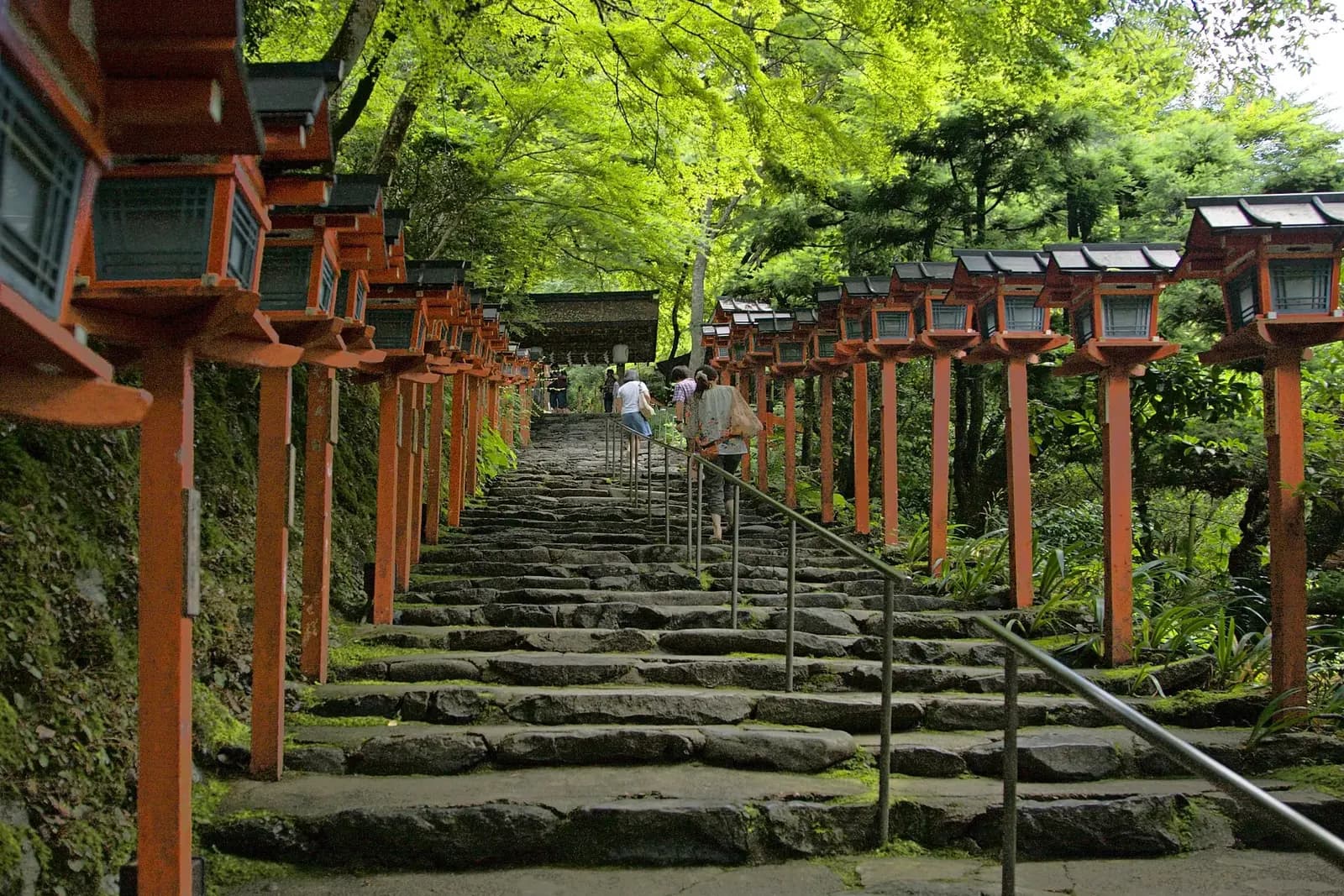
The stone steps lined with red lanterns lead to a shrine to the god of water, where you float a paper fortune on the spring to read it. Entry is free, and the main hall is open 6:00 to 20:00 from May to November. The autumn illumination runs from 7 to 24 November 2026, from dusk to 20:30. In summer, the restaurants of the valley serve lunch on platforms over the stream.
- Entry
- Free
- Hours
- 6:00 to 20:00
Ohara: Sanzen-in and Hosen-in, a quiet half day in the hills
Ohara is a farming valley north-east of Kyoto with a handful of temples, and the one area on this list where you will rarely queue. Kyoto Bus 17 runs there from Kyoto Station in about an hour, and the subway and bus one-day pass covers it.
 1Photo Motokoka, CC BY-SA 4.0, Wikimedia Commons
Ohara, Kyoto Bus 17 from Kyoto Station
Sanzen-in
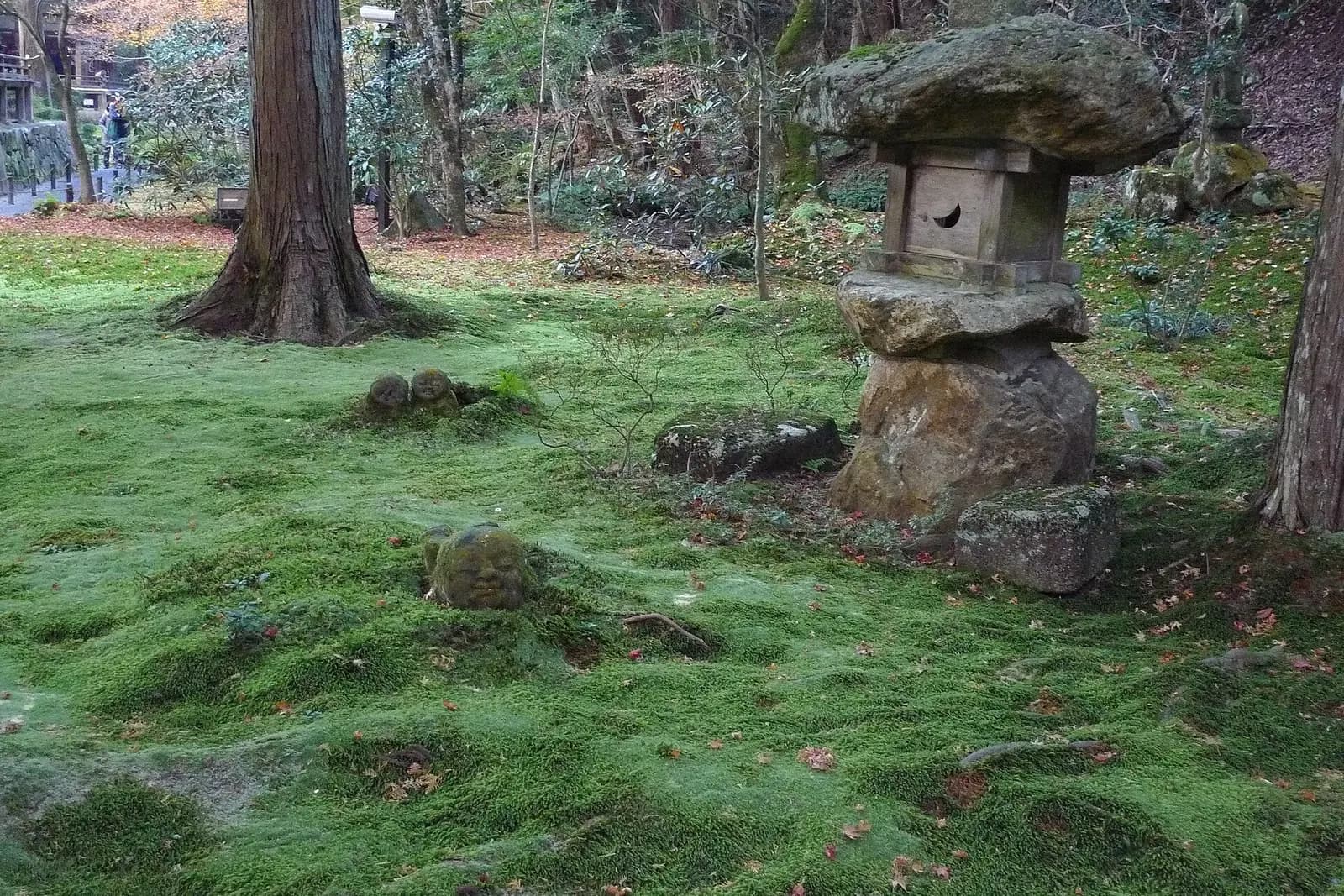
A moss garden under tall cedars, with small stone jizo statues half buried in the green. Entry is ¥700 ($4). Hours shift with the seasons: 9:00 to 17:00 from March to October, 8:45 to 16:45 in November and 9:00 to 16:30 from December to February. Ohara is about an hour by Kyoto Bus from Kyoto Station, so it fills a morning on its own.
- Entry
- ¥700 ($4)
- November
- 8:45 to 16:45
2.
Ohara, 5 minutes' walk from Sanzen-in
Hosen-in
You sit on tatami with a bowl of matcha while the garden and an old pine fill the open wall of the room like a framed picture. The fee rose to ¥1,000 ($6) on 10 April 2026, with the matcha and a sweet included. It is open 9:00 to 17:00, last entry 16:30, and far quieter than Sanzen-in.
- Entry
- ¥1,000 ($6), matcha included
- Hours
- 9:00 to 17:00
Kyoto rules in 2026: Gion's private lanes, fines and the accommodation tax
Kyoto has spent two years trying to manage the crowds, and three changes affect visitors directly: closed lanes in Gion, a much higher accommodation tax since March 2026, and new measures on the city buses.
Gion private lanes and the fines for bad behaviour
Since 2024, the residents of southern Gion have closed the private lanes off Hanamikoji-dori to tourists, with signs in English banning entry and photos. The signs announce a fine of ¥10,000 ($63), a figure reported by the press when they went up and set by the local district council rather than by a city law. Hanamikoji-dori itself remains a public street.
The penalties that do come from Japanese law are heavier. The Kyoto City Tourism Association lists them: following or blocking a geiko or maiko can lead to up to 30 days' detention or a fine under ¥10,000, grabbing her sleeve or hand up to ¥500,000, entering temples, shrines or private property without permission up to ¥100,000, blocking the road up to ¥50,000, and dropping litter up to ¥30,000.
Kyoto accommodation tax: the new 2026 rates
On 1 March 2026, Kyoto replaced its three-band accommodation tax with five bands, and the top rate rose tenfold. The tax is charged per person and per night on the room price per person, and the hotel, ryokan or rental adds it to your bill.
| Room price per person per night | Tax before 1 March 2026 | Tax since 1 March 2026 |
|---|---|---|
| Under ¥6,000 | ¥200 | ¥200 |
| ¥6,000 to ¥19,999 | ¥200 | ¥400 |
| ¥20,000 to ¥49,999 | ¥500 | ¥1,000 |
| ¥50,000 to ¥99,999 | ¥1,000 | ¥4,000 |
| ¥100,000 and above | ¥1,000 | ¥10,000 |
In practice, a couple in a ¥12,000 room (¥6,000 each) pays ¥400 each per night, so ¥2,400 ($15) for three nights. A luxury ryokan at ¥60,000 per person costs ¥4,000 per person per night in tax. Rates are from the Kyoto City Tourism Association, published on 26 February 2026. If you plan a night in a ryokan, our page on ryokan and onsen explains how their per-person prices work.
Kyoto city buses: the crowding and the visitor fare
The buses to Kiyomizu-dera, Gion and Ginkaku-ji are the most crowded in Kyoto, to the point where residents cannot board. The city's answer is the EX100 and EX101 express buses, which run straight from Kyoto Station to the eastern sights for ¥500 on weekends and holidays only (details below). Mayor Koji Matsui has also announced a higher bus fare for non-residents, expected around April 2027. The amount had not been fixed when we checked on 14 November 2026.
Getting around Kyoto: buses, subway, express bus and bike
Kyoto has only two subway lines, so the bus does most of the work, and walking does the rest. IC cards such as Suica and ICOCA work on the buses and the subway, as explained on our Suica card page. Fares below were read on the Kyoto Municipal Transportation Bureau site on 14 November 2026.
| Ticket | Adult fare | What it covers |
|---|---|---|
| City bus, single ride | ¥230 ($1.40) | Flat fare in the central zone, paid when you get off |
| EX100 and EX101 express bus | ¥500 ($3) | Weekends and holidays only. Kyoto Station to Gojozaka (Kiyomizu-dera) in 10 min, Gion in 17 min, Ginkaku-ji in 30 min. The EX101 stops at Kiyomizu-dera only |
| Subway, single ride | ¥220 to ¥360 | Karasuma and Tozai lines, by distance, fares since 1 October 2025 |
| Subway and bus one-day pass | ¥1,100 ($7) | Subway, city buses, the express buses and most Kyoto Bus routes, for one calendar day |
| Bicycle rental | About ¥1,000 to ¥1,500 a day | Electric bikes about ¥1,700 to ¥2,500 |
The one-day pass pays off from five bus rides, or from two express bus trips plus two buses. It is valid on the calendar day you first use it, not for 24 hours, and not on seasonal buses 51, 90 and 95. The old bus-only day pass is no longer sold. For Fushimi Inari, Arashiyama and Uji, JR trains are faster than any bus.
A bicycle is the best way to link the centre, Gion and the Kamo River, which are flat. Park only in paid bicycle lots: bikes left on the pavement are removed by the city. The north-west and the eastern hills are steep enough to make an electric bike worth the extra.
How many days in Kyoto: 2, 3 or 5 days
Three full days cover the main areas without rushing, two days are enough if you start every morning at dawn, and five let you add Nara or Uji and a mountain village. Most visitors arrive by Shinkansen from Tokyo in about 2 hours 15 minutes, as our Shinkansen guide details, and Kyoto then usually takes three of the ten nights in our Japan itinerary.
Things to do in Kyoto in 3 days
Day 1, Higashiyama and Gion: Kiyomizu-dera at 6:00, Sannenzaka and Ninenzaka, Kodai-ji, Yasaka-jinja, lunch, then Nanzen-ji and the Philosopher's Path to Ginkaku-ji, and dinner in Gion. Day 2, south and centre: Fushimi Inari at dawn, Tofuku-ji at 8:30, Sanjusangendo, then Nishiki Market for lunch, Nijo Castle in the afternoon and Pontocho at night. Day 3, west and north-west: the bamboo grove at sunrise and Tenryu-ji, then a bus or taxi to Ryoan-ji, Kinkaku-ji and Kitano Tenmangu.
With two days, merge days 1 and 3 and drop the centre. With a fourth and fifth day, add Nara or Uji, then Kurama and Kibune or Ohara. To keep journeys short, stay near Kyoto Station, Shijo-Kawaramachi or Gion: our guide to where to stay in Kyoto compares the areas and their hotels.
Things to do in Kyoto at night and in winter
Kyoto at night
Most temples close between 16:00 and 17:30, so evenings belong to the streets and to the autumn and spring illuminations. In autumn 2026, Kiyomizu-dera stays open until 21:30 from 21 to 30 November, Eikan-do opens at night from 20 November to 6 December, Kodai-ji lights its garden until 22:00 and Kifune shrine until 20:30 up to 24 November. All year, Fushimi Inari and Yasaka-jinja never close, Gion and Pontocho are at their liveliest after 18:00, and the Kyoto Tower observation deck opposite the station stays open until 21:00, for ¥1,000 ($6) since 1 October 2026.
Things to do in Kyoto in December and winter
Winter is the quietest season, with short days. Plan around earlier closing times: Tofuku-ji 15:30 from 7 December, Sanjusangendo 16:00, Ryoan-ji and Ginkaku-ji 16:30, and the Kurama Reihoden closed from 12 December to the end of February. Over New Year, Nanzen-ji is shut from 28 to 31 December, Nijo Castle from 29 to 31 December and the Imperial Palace from 28 December to 4 January, while the shrines fill with crowds for the first prayers of the year. Our page on the best time to visit Japan compares the seasons in Kyoto.
Day trips from Kyoto: Nara, Uji, Osaka and Himeji
Kyoto Station is the hub for the whole Kansai region, and these four trips need no overnight stay. Fares are for one adult on a single ticket and rounded, so treat them as approximate.
| Day trip | Train from Kyoto Station | Time | Fare |
|---|---|---|---|
| Nara | JR Miyakoji Rapid, or Kintetsu | 35 to 45 min | ¥720 (JR) to ¥1,280 (Kintetsu limited express) |
| Uji | JR Nara Line | 20 to 30 min | ¥240 |
| Osaka | JR Special Rapid to Osaka Station | About 30 min | ¥580 |
| Himeji | JR Special Rapid, or Shinkansen | About 90 min, or 45 min by Shinkansen | About ¥2,300, or about ¥5,000 by Shinkansen |
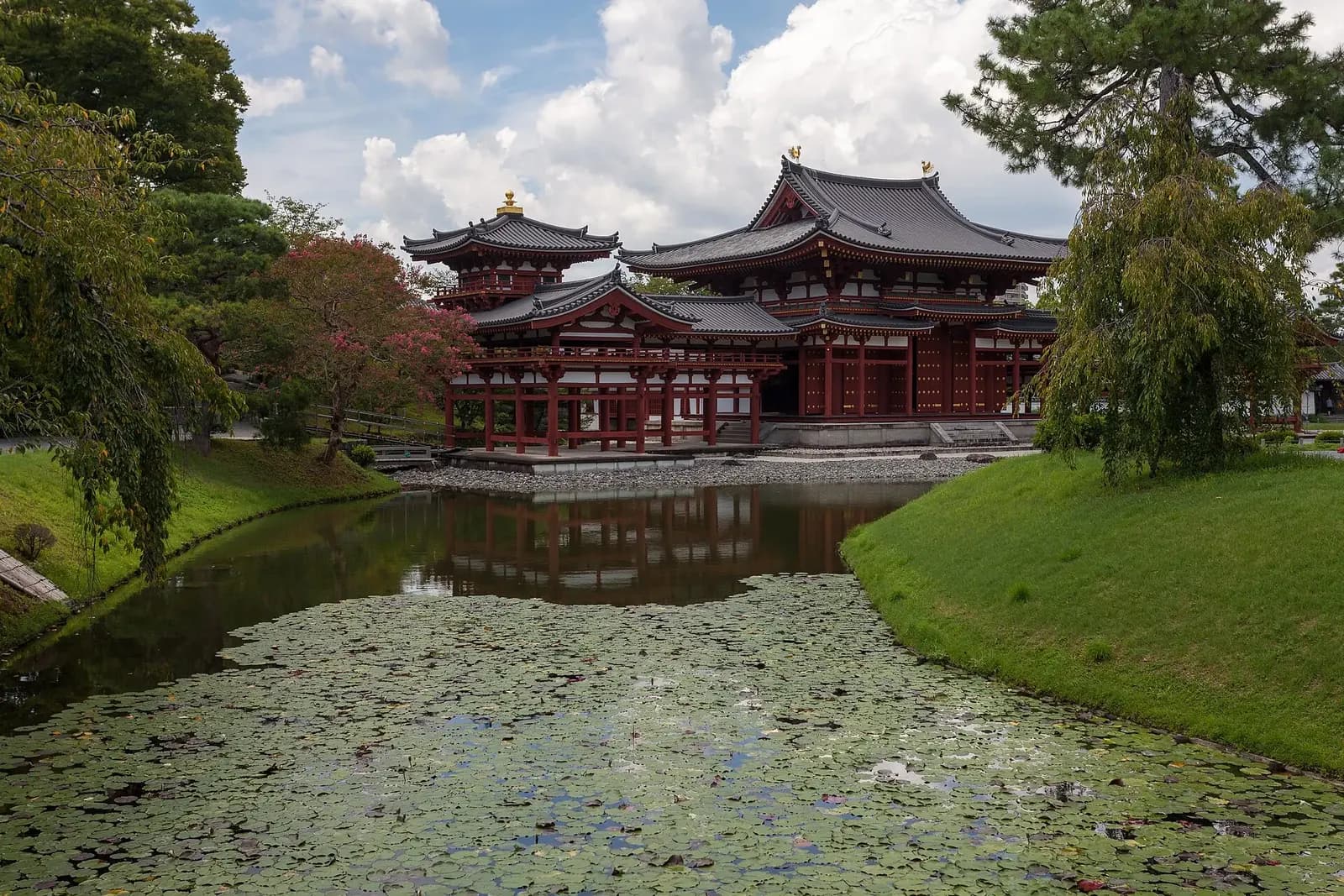
Nara is the obvious first choice, for the bowing deer of Nara Park and the giant Buddha of Todai-ji. Uji is the short one: the Phoenix Hall of Byodo-in, on the 10-yen coin, is 10 minutes' walk from JR Uji station. Its garden and museum cost ¥700 ($4), plus ¥300 to enter the hall in groups of 35 at most, and the garden is open 8:45 to 17:30. The town's tea houses serve the local matcha.
Osaka is the opposite of Kyoto, all street food and neon, and our guide to things to do in Osaka works as a day plan or a base. Himeji has the best-preserved original castle in Japan, covered in our page on Himeji Castle. With a Shinkansen ticket, Hiroshima and the floating torii of Miyajima are a long but possible day out.