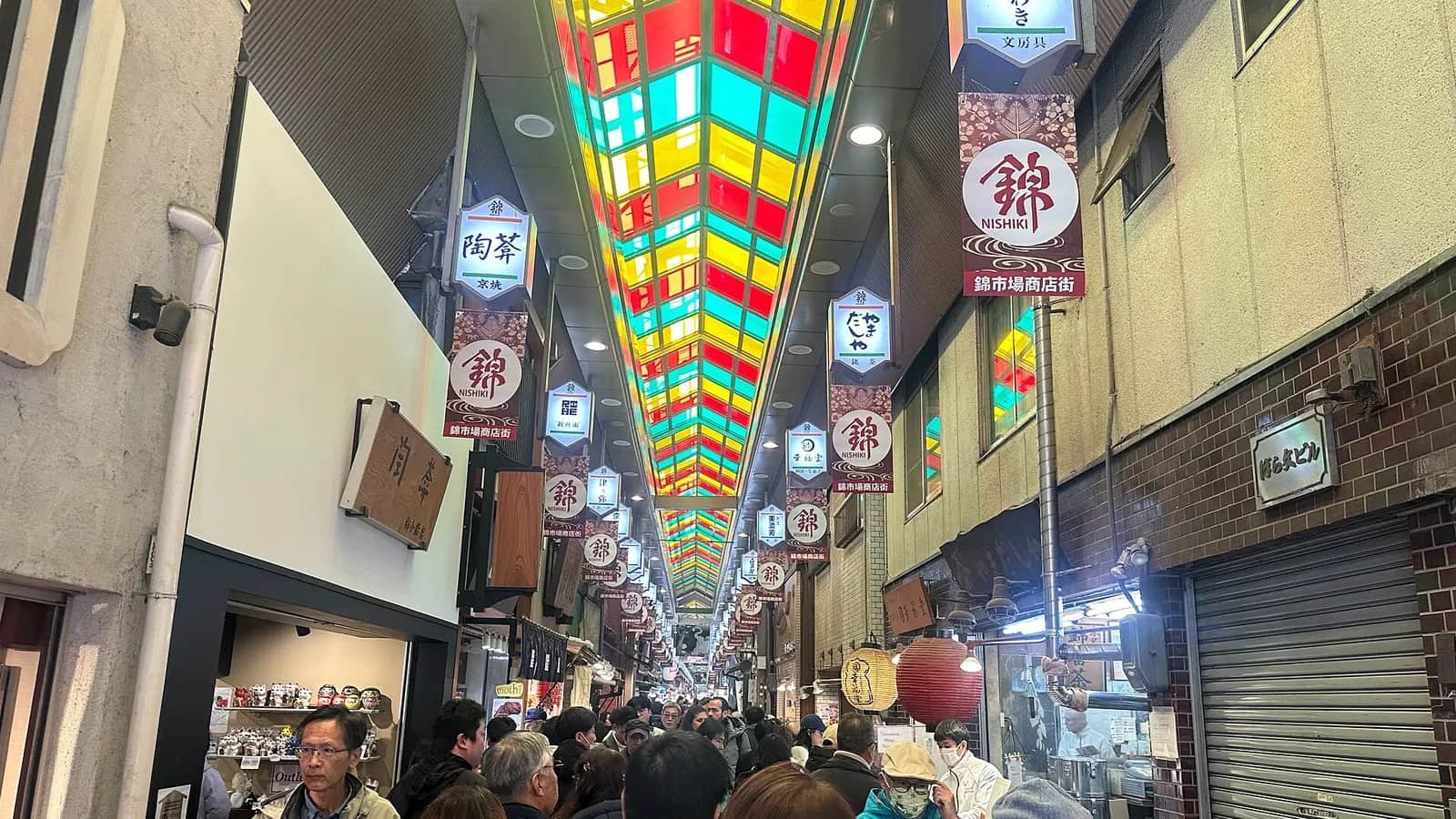
- of covered street between Teramachi and Takakura, with 133 shops on the official map
- 390 m
- when most stalls are open, each shop sets its own hours
- About 10:00 to 17:00
- the day many shops close, there is no closing day for the whole market
- Wednesday
On this page
Nishiki Market is a covered food street in the centre of Kyoto, about 390 metres long and barely four metres wide, one block north of Shijo-dori. Fish merchants traded on Nishiki-koji as early as 1311, which is why it is called Kyoto's kitchen. The official map lists 133 shops: pickles, tofu and yuba, fish, sweets, tea, kitchen knives and a growing number of snack stalls.
The short answer: entry is free, most stalls are open from about 10:00 to 17:00, and many close on Wednesdays. Go on a weekday morning, bring cash, and eat at the stall where you buy, not while walking. One to two hours is enough for the street itself.
Nishiki Market food tours
A guide is useful here mostly to know what the pickles, yuba and dried goods are, and which stalls Kyoto people actually buy from.

Kyoto: Nishiki Market Brunch Walking Tour - 7 Tastings + Brunch
Three hours through the market lanes with a guide, seven tastings at the stalls and a brunch to finish.
4.8(271 reviews)
- 3 hours
- Free cancellation
From $65per person
See prices & availability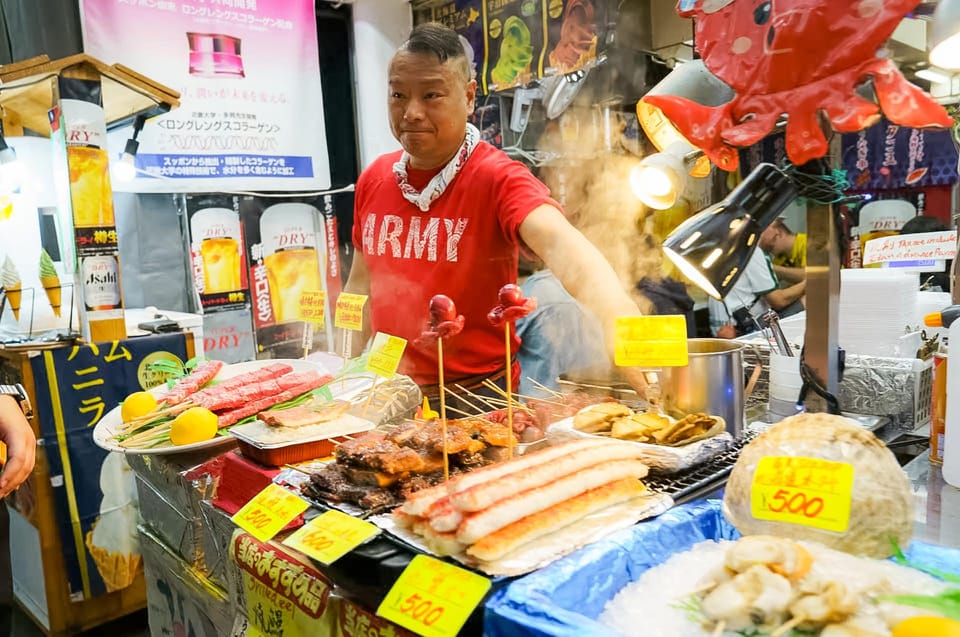
Kyoto: Nishiki Market Food Tour-7 Tastings
Three hours in Nishiki Market with a local guide, with seven tastings at the stalls along the way.
4.9(116 reviews)
- 3 hours
- Free cancellation
From $59per person
See prices & availability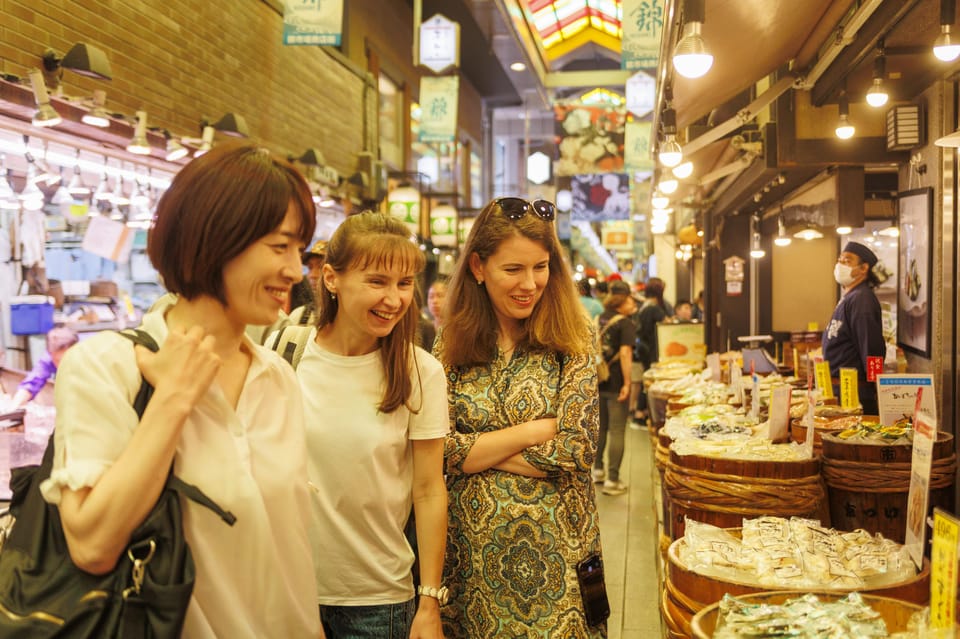
Kyoto: Nishiki Market Food & Culture Tour with Izakaya Lunch
A guided food walk through Nishiki that explains the stalls and Kyoto cooking, ending with lunch in an izakaya.
4.7(151 reviews)
- 3 hours
- Free cancellation
From $85per person
See prices & availability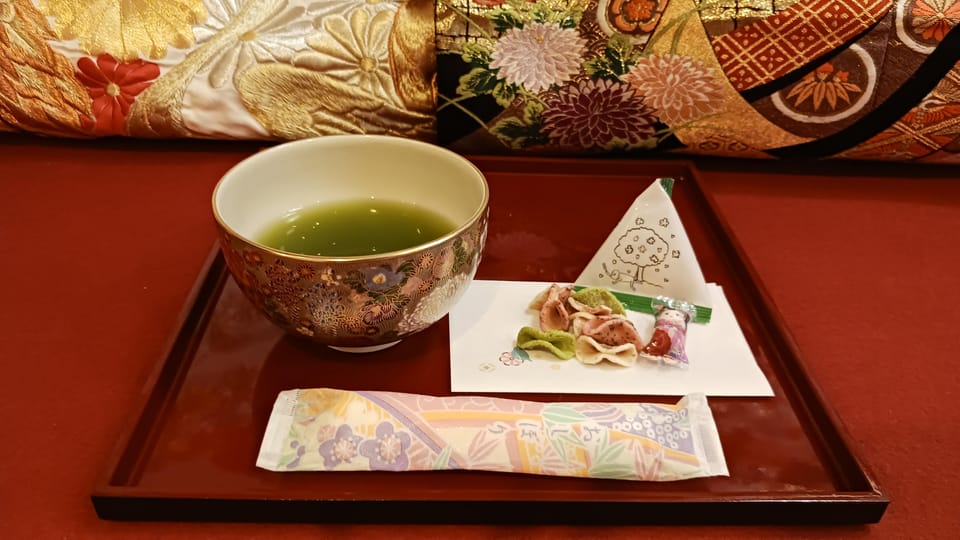
Kyoto: Nishiki Market Tea Ceremony with Koto Performance
A one-hour tea ceremony in a room inside Nishiki Market, with a live performance on the koto, the Japanese harp.
4.9(342 reviews)
- 1 hour
- Free cancellation
From $48per person
See prices & availability
Nishiki Market opening hours and closed days
The market association is clear on one point that most guides get wrong: there is no closing day for the whole market. Each shop picks its own hours and days off, and many close on Wednesdays. Most shops stay open over the end of the year, and many close from 1 to 3 January. In practice, the street is busy from about 9:00 or 10:00, and most shutters come down between 17:00 and 18:00.
These are the hours the shops give on the association website, read on 14 November 2026. They change, so check before you build a morning around one shop.
| Shop | What it sells | Hours | Closed |
|---|---|---|---|
| Aritsugu | Kitchen knives, since 1560 | About 10:00 to 16:00 | Wednesday, 1 to 3 January |
| Yubakichi | Fresh and dried yuba, since 1790 | 9:00 to 18:00 | Sunday and the 4th Wednesday |
| Konnamonja | Soy milk doughnuts, soy ice cream | 10:00 to 18:00 | Irregular |
| Tanabeya | Dried food, seasonings, bonito, alcohol | 9:00 to 18:00 | Wednesday or Sunday, by season |
| Kawamasa | Fruit and vegetables | 9:00 to 15:00, Sunday 9:00 to 12:00 | Wednesday |
A Wednesday visit still works, but expect many shutters down. Sunday is open for most shops and is the most crowded day with Saturday. National holidays follow the same pattern as weekends.
Can you eat while walking at Nishiki Market? The rules
No. The association asks visitors to refrain from eating while walking through the market and to eat in front of or inside the shop where they bought the food. The reason is practical: the street is under four metres wide, the crowd moves slowly, and a skewer or a cup of soft serve ends up on someone's coat. Stall staff will point you to their counter if you walk off with food.
It is a request from the shopkeepers, not a city law with a fine. Many stalls have a small standing counter, a shelf or a few stools for this, and a few, such as Taco Hai and Nishiki Hirano, have seats. Finish each snack where you bought it and hand the stick or cup back to the stall rather than carrying it down the street. Other courtesies: ask before photographing a shop's staff, do not touch the produce, and keep large luggage at your hotel or in a station locker.
What to eat at Nishiki Market, with prices
Most snacks cost ¥300 to ¥700 ($2 to $4), and a wagyu skewer or grilled scallops run higher. Bring cash: many stalls are cash only, though a few take cards or PayPay. Prices below come from Leaf Kyoto for the named shops (September 2024) and from Japan Activity and Mileasia for typical ranges (June to September 2026).
| What | Where | Price |
|---|---|---|
| Tako tamago, baby octopus with a quail egg in the head | Several fish stalls | ¥300 to ¥700 ($2 to $4) |
| Umaki, rolled omelette around grilled eel | Tanaka Keiran | ¥1,450 ($9), 2024 |
| Thick dashimaki omelette sandwich | Nishiki Hirano | ¥700 ($4), 2024 |
| Soy milk doughnuts, bag of 10 | Konnamonja | ¥300 to ¥400 ($2 to $3) |
| Yuba rolls and wraps | Yuba and tofu shops | ¥400 to ¥600 ($3 to $4) |
| Strawberry daifuku | Nishiki Kofukudo | ¥330 ($2), 2024 |
| Butter and red bean taiyaki | Nishiki Ichiyo | ¥440 ($3), 2024 |
| Takoyaki, set of three | Taco Hai | ¥1,150 ($7), 2024 |
| Wagyu skewer | Grill stalls | ¥1,000 to ¥2,500 ($6 to $16) |
| Grilled scallops | Fish stalls | ¥800 to ¥1,200 ($5 to $8) |
Tamagoyaki, tako tamago and the other classics
Two egg shops on the street, Miki Keiran and Tanaka Keiran, make dashimaki tamago, the light Kyoto omelette made with dashi stock, and you can often watch the cooks roll it in square pans. A slice on a stick is the cheapest way in, and the umaki with eel inside is the version to try once. Tako tamago, a glazed baby octopus on a skewer with a quail egg stuffed in its head, is the photo everyone takes. It is sweet and chewy rather than fishy.
Tsukemono, yuba and things to take home
Pickles are what Kyoto households still come to Nishiki for. The pickle shops sell senmai-zuke (thin turnip slices), shibazuke (purple with shiso) and suguki, often with tasting bowls on the counter, and small packs start at a few hundred yen. Yubakichi, the only shop in the market that makes its own yuba, sells the tofu skin fresh and dried. Dried shrimp, including the small pink sakura-ebi, bonito flakes, sansho pepper and tea are easy gifts that survive a flight, while fresh pickles need a fridge.
Mochi, sweets and sake
For sweets, look for daifuku and warabi mochi at the wagashi shops, and the soy milk doughnuts and soy soft serve at Konnamonja, run by the tofu maker Kyo Tofu Fujino. Tanabeya and a few grocers sell local sake and other drinks to take away. Kyoto's big sake district is Fushimi, south of the centre, near the shrine on our Fushimi Inari guide.
Aritsugu: buying a Japanese kitchen knife at Nishiki Market
Aritsugu opened in 1560 as a swordsmith's workshop and now makes kitchen knives, on the west half of the market near Gokomachi-dori. The cheapest kitchen knives start at about ¥10,000 ($63), and a good gyuto or santoku costs several times that. Staff sharpen the knife on a stone before you take it, and can engrave your name or initials on the blade if you ask. Ask for the price and waiting time when you order, as they are not published.
The shop opens around 10:00 and closes around 16:00 or 17:00, earlier than the rest of the market, and is closed on Wednesdays. Sources differ on the exact hours, so go before mid-afternoon. Two more knife shops on the map, Yayoi Knives and Zaku Knives, are an alternative when Aritsugu is closed. Knives go in checked luggage, never in your cabin bag. Aritsugu in Kyoto is not the same company as the Aritsugu shop at Tsukiji in Tokyo.
Best time to visit Nishiki Market, and is it a tourist trap?
The best slot is a weekday from 9:30 to 11:00. The shops are open, you can see the stalls stock up, and the crowd is still thin. From late morning to mid-afternoon, and all day on weekends, the street moves at a shuffle. Late afternoon, from 15:00, is quieter again, but some stalls have sold out and the knife shop is about to close. The roof makes it a good plan on a rainy day.
Is it a tourist trap? The snack stalls aimed at visitors have grown and their prices are higher than elsewhere in Kyoto. But the old shops, pickles, tofu, yuba, dried fish and knives, still sell to residents and restaurants, and their prices are normal. Taste a few things rather than lunch on skewers, buy something to take home, and it is worth an hour. Our things to do in Kyoto guide fits it into a day in the centre, between Nijo Castle in the morning and Pontocho at night.
How to get to Nishiki Market
The market runs east to west between Teramachi-dori and Takakura-dori, parallel to Shijo-dori and one block north. Times on foot are from the association.
| Station or stop | Line | Walk |
|---|---|---|
| Shijo | Karasuma subway line, 4 min from Kyoto Station | About 3 min |
| Karasuma | Hankyu Kyoto line | About 3 min |
| Kyoto-kawaramachi | Hankyu Kyoto line | About 4 min |
| Gion-shijo | Keihan line | About 10 min |
| Shijo Takakura | City bus 5 from Kyoto Station | About 2 min |
From Kyoto Station, the Karasuma subway to Shijo is the quickest, 4 minutes for ¥220 ($1.40), and it takes a Suica or ICOCA card (see our Suica card guide). Enter from the west end at Takakura if you come from Shijo or Karasuma, from the east end at Teramachi if you come from Kawaramachi. Staying nearby makes an early visit easy: our guide to where to stay in Kyoto covers the Shijo-Karasuma and Kawaramachi areas, both within a few minutes on foot.
Around Nishiki Market: Teramachi, Shinkyogoku, Nishiki Tenmangu and Pontocho
At its east end, Nishiki meets two covered shopping arcades that run north towards Sanjo. Teramachi has older shops selling tea, incense, paper, antiques and Buddhist goods, while Shinkyogoku, one street east, is younger and busier, with souvenir shops, clothes and cheap food. At the corner stands Nishiki Tenmangu, a small shrine to Sugawara no Michizane, the patron of learning, on this site since 1587. Its stone torii is so wide that both ends disappear into the buildings on each side of the street.
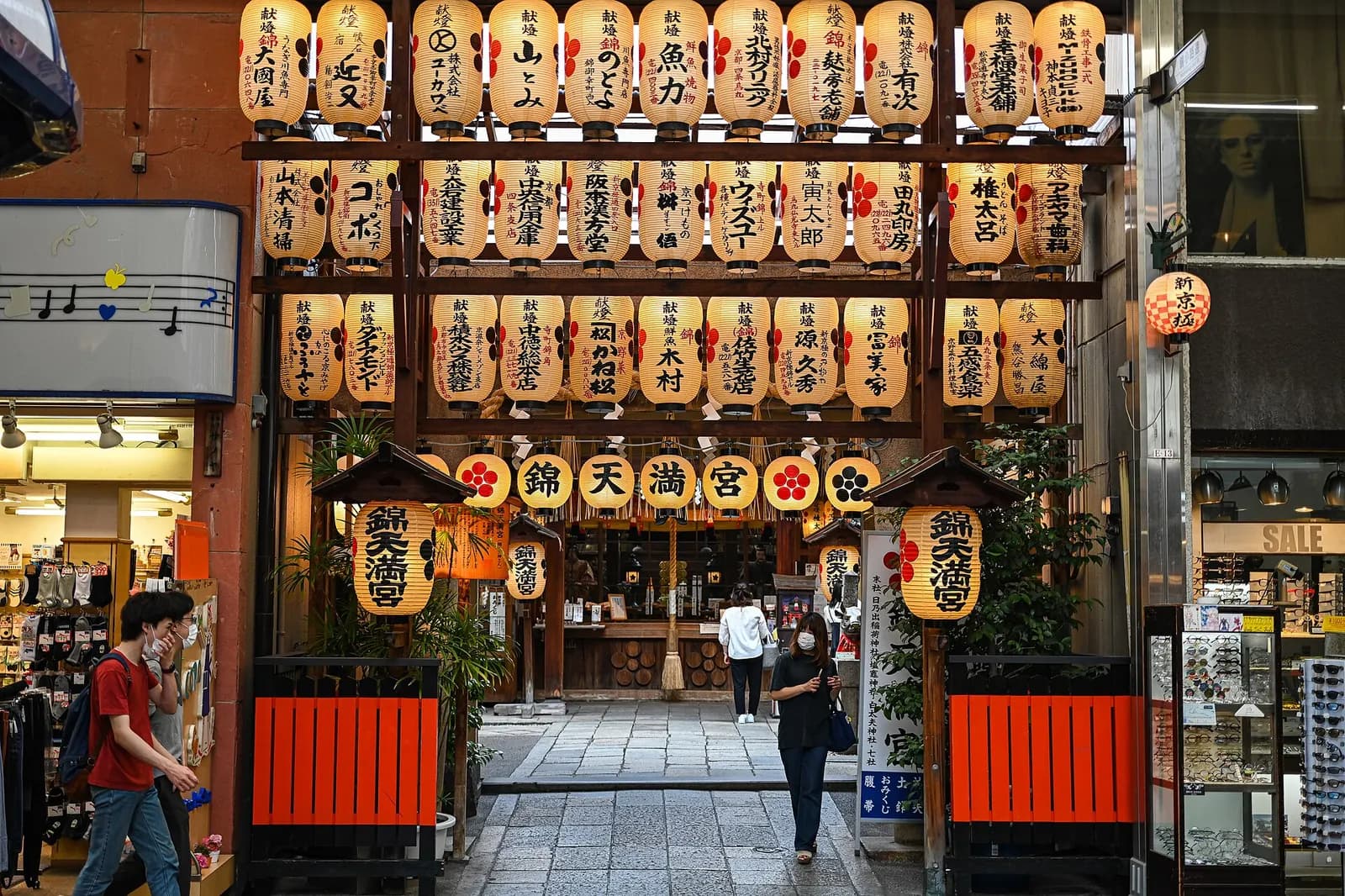
Ten minutes east, across Kawaramachi-dori, Pontocho is the narrow lantern-lit alley along the Kamo River, with restaurants that build platforms over the water from May to September. It comes alive after 17:00, just as Nishiki closes, which makes the two an easy afternoon and evening pair. Gion is a few minutes further, across the Shijo bridge.
Where to eat sitting down near Nishiki Market
Inside the market, a few shops serve proper meals at a table: Unagiya Hanamichi for eel, Nishiki Ishiya for sushi and tempura and Nishiki Gyoza for dumplings. For lunch nearby, Gogyo, known for its burnt miso ramen, is a short walk north, and the department store food halls on Shijo-dori, at Daimaru and Takashimaya, sell bento and sweets. In the evening, Pontocho and Kiyamachi have the widest choice in the city.
Nishiki Market, Tsukiji or Kuromon: which food market to visit?
Nishiki is the smallest and most local of Japan's three famous food markets, and the least about fish. Tokyo's Tsukiji Outer Market is busier and centred on seafood breakfasts, from about 9:00 to 14:00, with the Toyosu tuna auction nearby. Osaka's Kuromon Ichiba, about 600 metres long near Nippombashi, is the most geared to grilled seafood and wagyu eaten on the spot, from about 8:00 to 18:00, and it is covered on our things to do in Osaka page.
Pick Nishiki for pickles, tofu, sweets and knives, Tsukiji for a sushi or seafood bowl breakfast, and Kuromon for a grilled lunch before Dotonbori. If you are crossing the country, our Japan itinerary shows where each city fits on a first trip.