- things to do on the main island and five outer islands, with entry prices and hours checked on 14 November 2026
- 27
- the day the rebuilt main hall of Shuri Castle opens to visitors, seven years after the 2019 fire
- 23 Nov 2026
- for an adult ticket to the Churaumi Aquarium ($14), open every day until at least 31 March 2027
- ¥2,180
On this page
The best things to do in Okinawa split between the main island and the outer islands. On the main island, start with Naha and Shuri Castle, drive south for the war memorials and north for the Churaumi Aquarium and the Kouri Bridge, then take a boat or a plane to the Kerama, Miyako or Yaeyama islands for the clearest water. Below are 27 of them by area, with prices and hours checked on 14 November 2026, then the islands, the beaches, the typhoon season, the food, how to get around and a budget.
The 15 best things to do in Okinawa
| What | Area | Adult price |
|---|---|---|
| Whale sharks at the Churaumi Aquarium | North, Motobu | ¥2,180 ($14) |
| Shuri Castle and its rebuilt main hall | Naha | ¥1,000 ($6) |
| Drive over the Kouri Bridge | North, Nakijin | Free |
| Snorkel at the Blue Cave of Cape Maeda | Central, Onna | Guided tour |
| Day trip to the Kerama Islands | By boat from Naha | Ferry or tour |
| Kokusai-dori and the Makishi market | Naha | Free |
| Okinawa Peace Memorial Park | South, Itoman | Park free |
| Himeyuri Peace Museum | South, Itoman | ¥450 ($3) |
| Okinawa World and Gyokusendo cave | South, Nanjo | ¥2,000 ($12.50) |
| Cape Manzamo cliffs | Central, Onna | ¥100 |
| Sunset at American Village | Central, Chatan | Free |
| JUNGLIA theme park | North, Yanbaru | ¥6,930 ($43) for a day |
| Nakijin Castle ruins | North, Nakijin | Small fee |
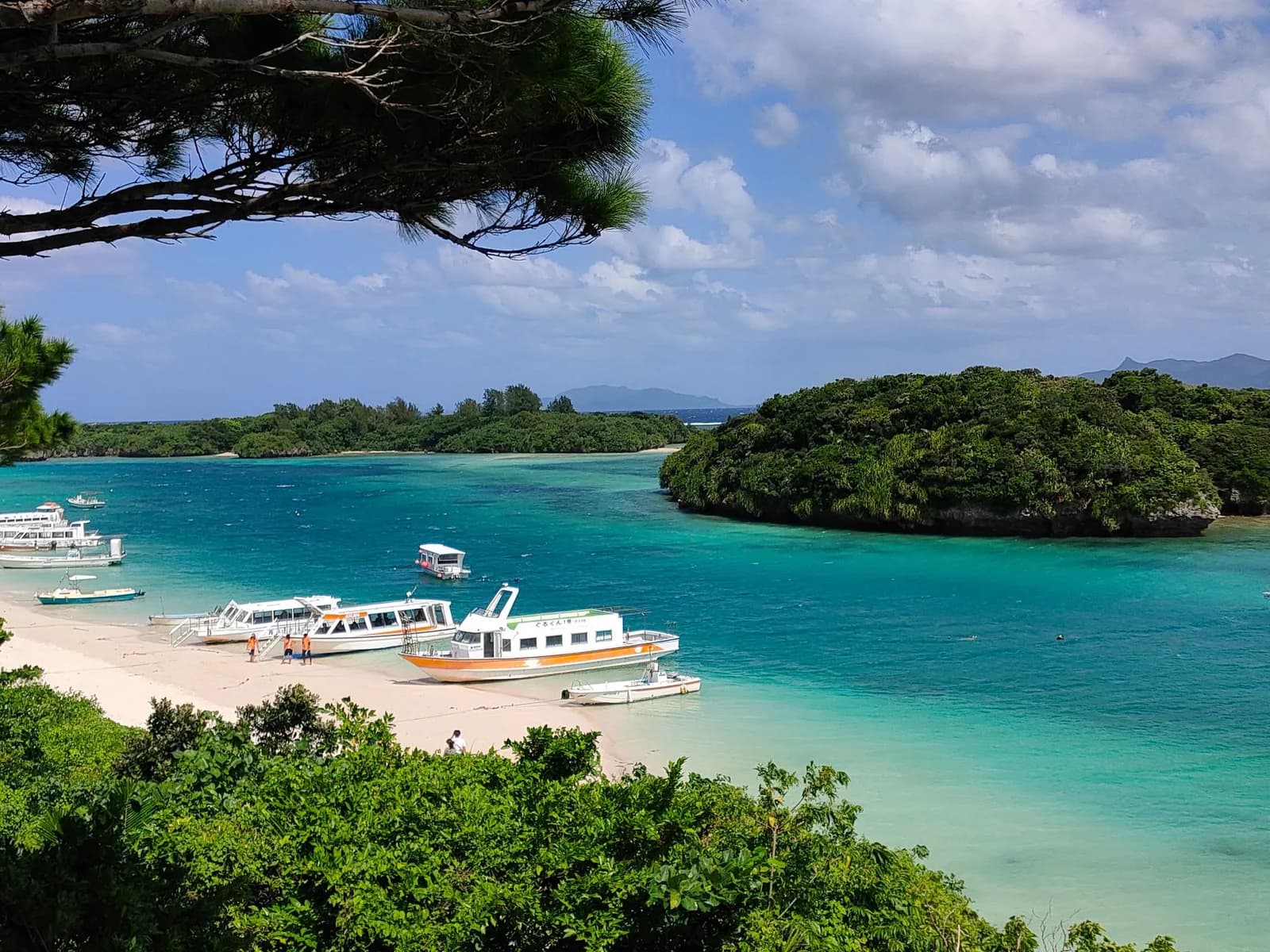
| Kabira Bay by glass-bottom boat | Ishigaki | Boat ticket |
| Mangrove kayak on Iriomote | Iriomote | Guided tour |
Tours and activities in Okinawa
Six well-reviewed trips on the water and on the road, from the Keramas and the Blue Cave to the turtles of Miyako and the mangroves of Iriomote.
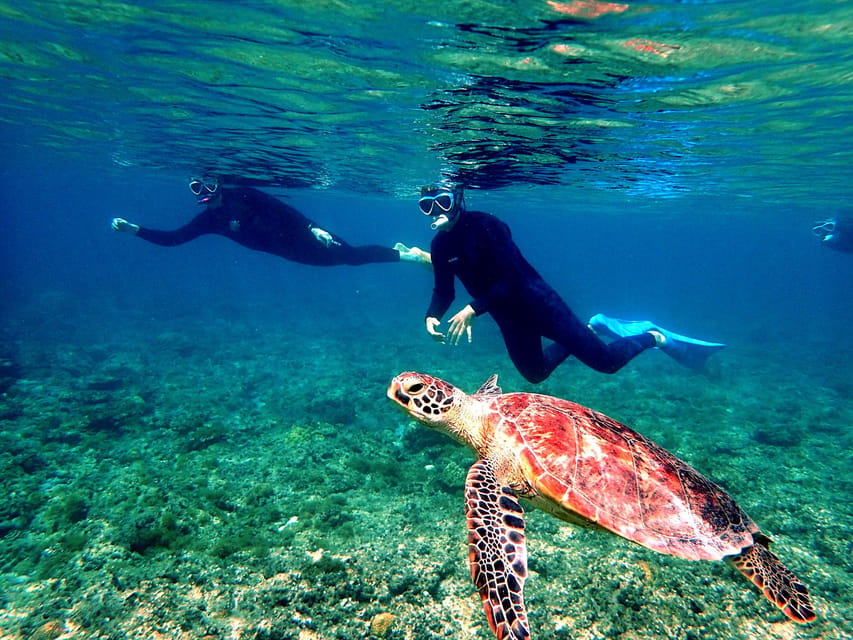
Okinawa: From Naha Full-Day Kerama Islands Snorkeling Tour
A boat day from Naha to the clear water of the Kerama Islands, with snorkelling stops and the gear provided.
4.5(1,085 reviews)
- 7 hours
- Free cancellation
- Pickup included
From $81per person
See prices & availability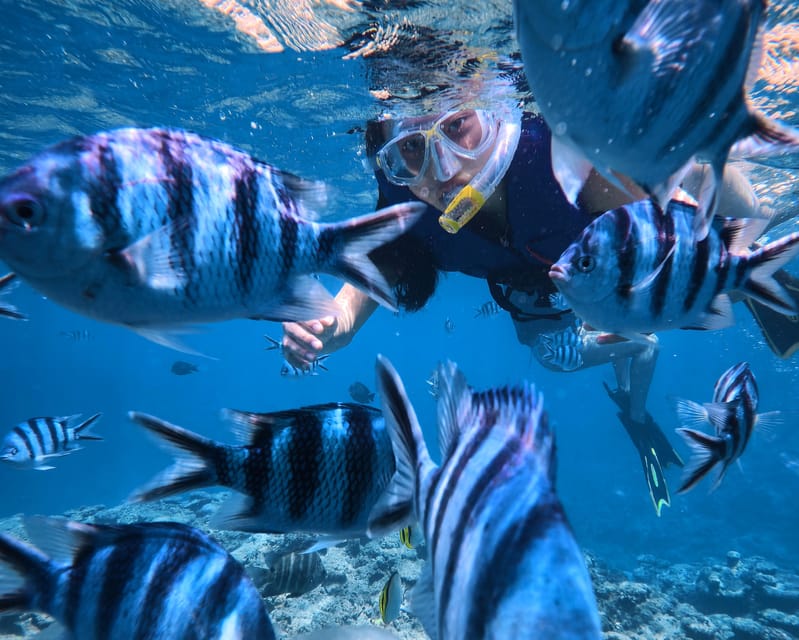
Okinawa: Blue Cave 100% Private Snorkeling Tour with Photos
A private snorkelling trip to the Blue Cave at Cape Maeda, only your group with the guide, and the photos included.
4.9(223 reviews)
- 1.5 hours
- Free cancellation
From $55per person
See prices & availability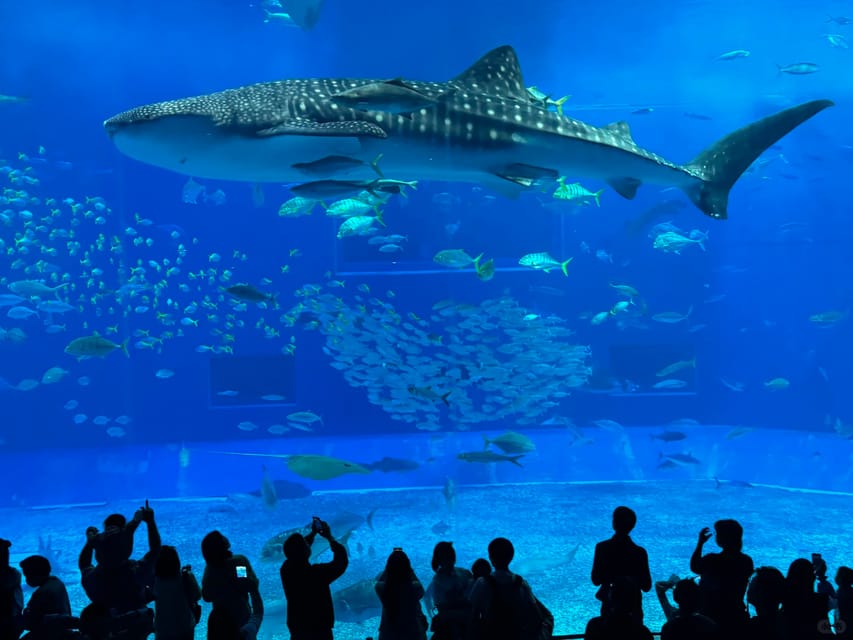
Okinawa: Churaumi Aquarium, Kouri Island & Manzamo Tour
A full day by bus from Naha to the Churaumi Aquarium, the bridge to Kouri Island and the cliffs of Cape Manzamo.
4.4(123 reviews)
- 10 hours
- Free cancellation
- Pickup included
From $49per person
See prices & availability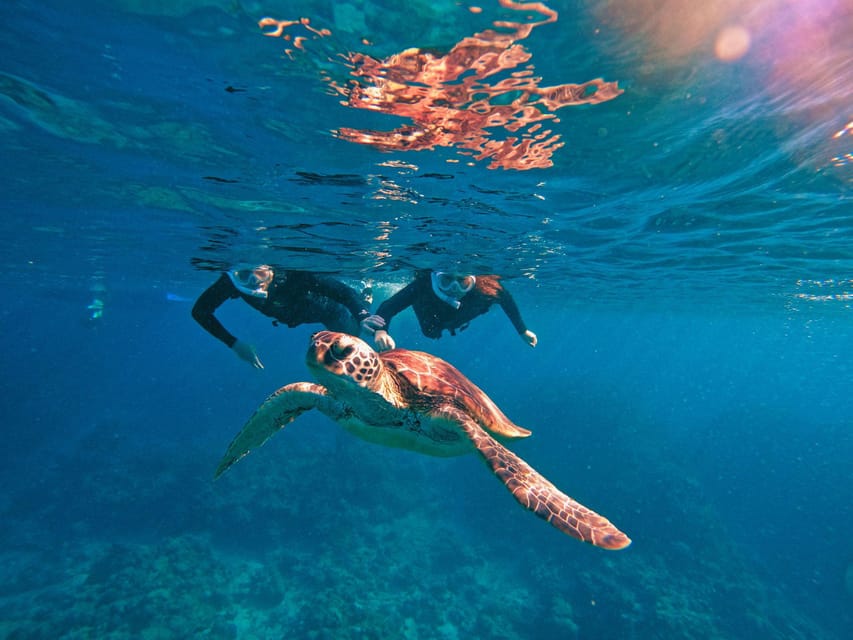
Okinawa Ishigaki Island: Blue Cave Tour with Turtle Snorkel
A three-hour trip on Ishigaki to a sea cave and a reef where green sea turtles feed, with a guide in the water.
4.8(214 reviews)
- 3 hours
- Free cancellation
- Pickup included
From $44per person
See prices & availability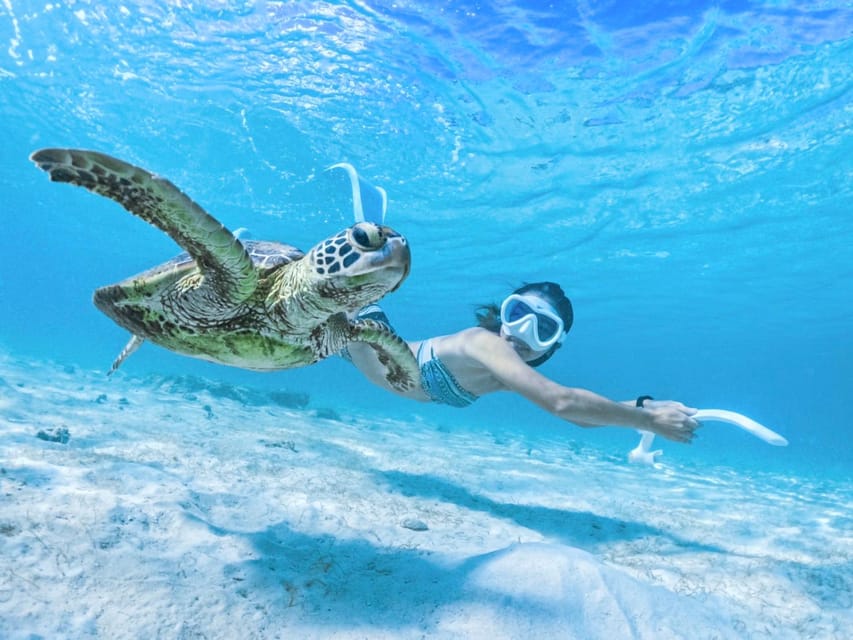
Miyako Island: Sea Turtle Snorkeling Tour
A two-hour snorkel off Miyako with a guide who takes you to the spots where sea turtles come to graze.
4.8(122 reviews)
- 2 hours
- Free cancellation
From $43per person
See prices & availability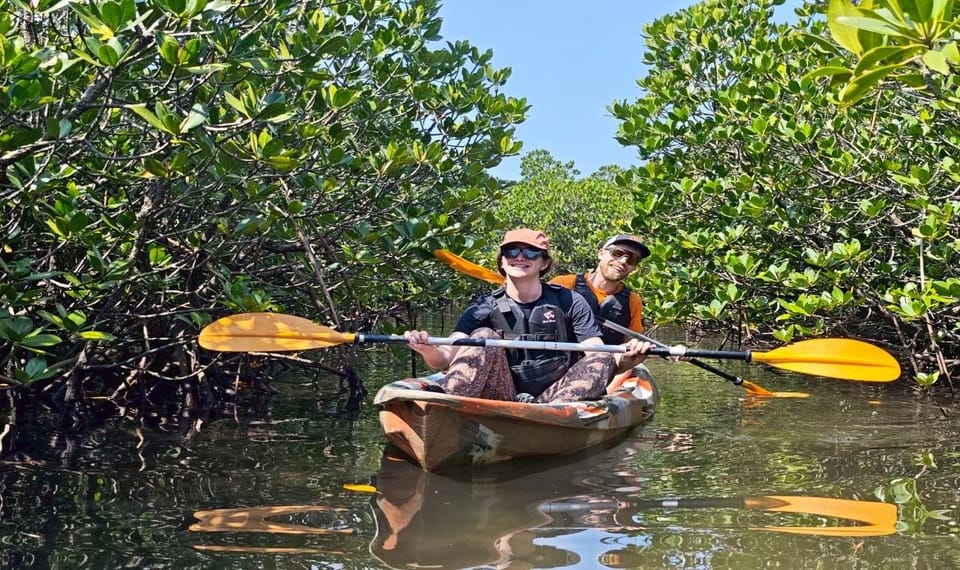
Iriomote: Mangrove SUP or Canoe and Yubujima sightseeing
Paddle into the mangroves of Iriomote by SUP or canoe, then cross to Yubujima, the island reached by buffalo cart.
4.7(31 reviews)
- 6 hours
- Free cancellation
From $81per person
See prices & availability
See more activities in Okinawa
Things to do in Naha: Kokusai-dori, Shuri Castle and Tsuboya
Naha is where you land and, for most visitors, where you sleep the first nights. The monorail links the airport, Kokusai-dori and Shuri, so this is the one part of Okinawa you can see without a car. Give it one full day, with Shuri in the morning and Kokusai-dori in the evening.
 1Photo 663highland, CC BY 2.5, Wikimedia Commons
Central Naha, Makishi or Kencho-mae station
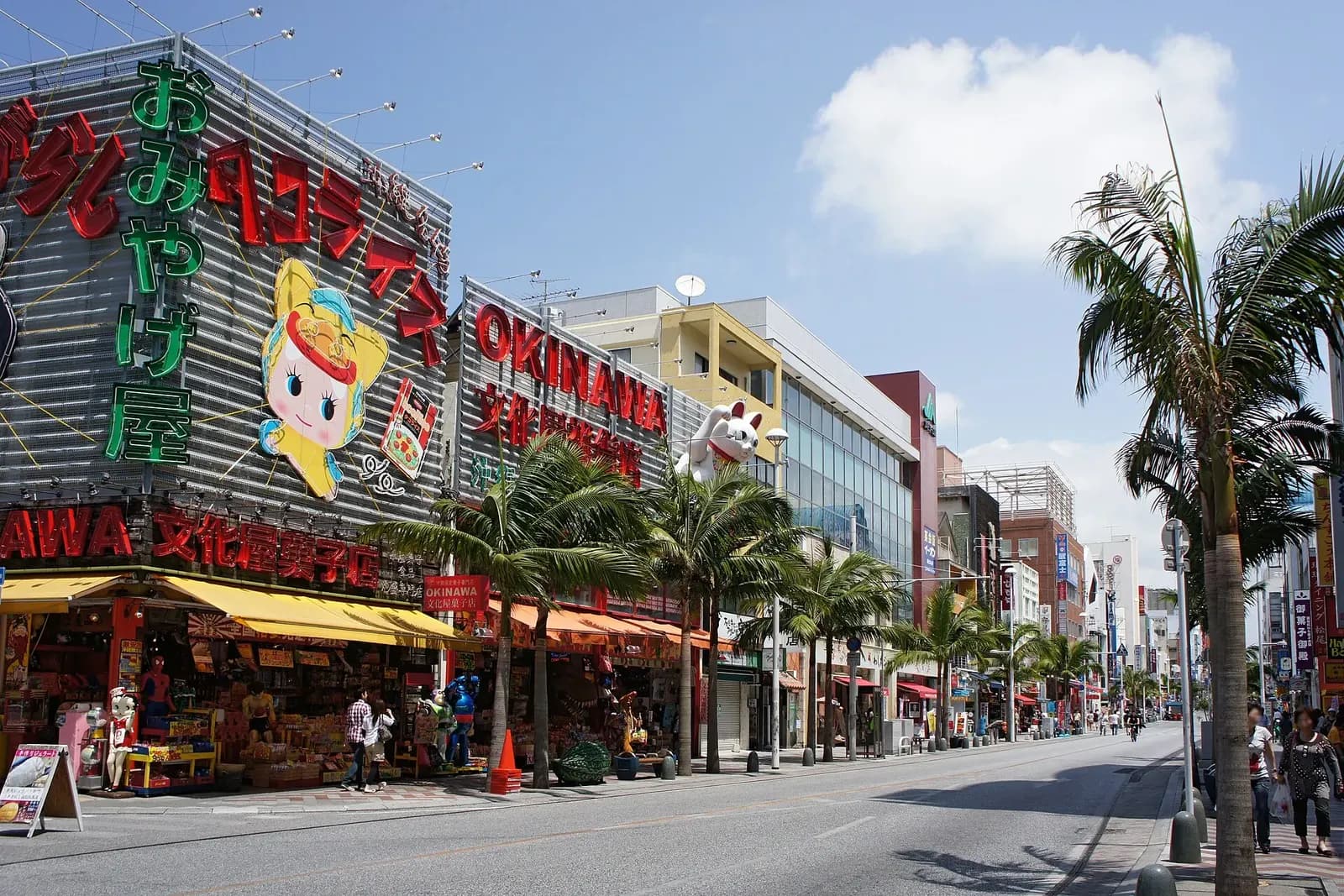
Kokusai-dori and the Makishi public market
Naha's main street runs for about 1.6 km between Kencho-mae and Makishi monorail stations, with souvenir shops, awamori bars and restaurants open late. The interest is in the covered arcades that branch off it: Heiwa-dori and the Makishi public market, where you can pick fish downstairs and have it cooked upstairs. It is the obvious first evening after a flight, and it works in the rain.
- Entry
- Free
- Monorail
- Makishi, 16 min from the airport
- Best time
- Evening
 2Pexels
Shuri, on the hill east of central Naha
Shuri Castle (Shurijo)
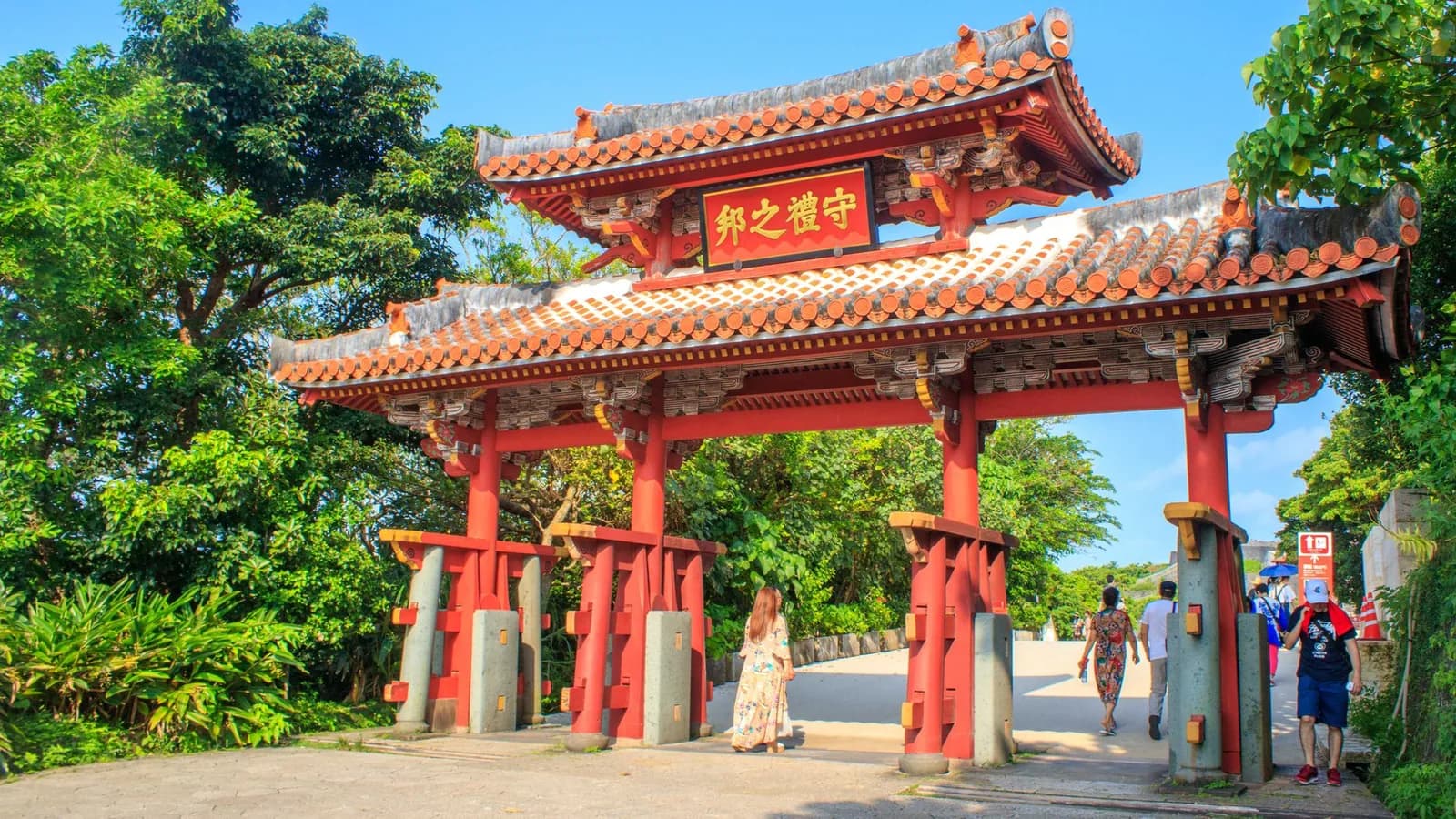
The palace of the Ryukyu kings burned on 31 October 2019. Its rebuilt main hall, the red Seiden, opens to the public on 23 November 2026 at noon. The park closes all day on 22 November for the completion ceremony and on the morning of the 23rd. From 23 November an adult ticket costs ¥1,000 ($6), ¥760 for high school students and ¥370 for children, with no separate price for foreign visitors.
Entry to the inside of the Seiden needs a timed reservation, made with your ticket at no extra cost. The free zone (Shureimon gate, the Suimukan centre and the west terrace with its view over Naha) is open from 8:00 to 19:30 and the paid zone from 8:30 to 19:00, last tickets 18:30, in the summer and autumn timetable. Expect crowds in the first weeks.
- Adult
- ¥1,000 ($6) from 23 Nov 2026
- Hours
- Paid zone 8:30 to 19:00
- Monorail
- Shuri, 27 min and ¥360 from the airport
3.
Shuri, 5 minutes on foot from the castle
Tamaudun royal mausoleum
The stone tomb of the second Sho dynasty, built in 1501 and listed by UNESCO in 2000 with the other Gusuku sites of the Ryukyu Kingdom. It looks like a house carved in limestone, with guardian lions on the roof. It is quiet even on busy days, which makes it a good stop between the castle and the Kinjo-cho stone path that winds down the hill through old walls.
- Visit
- 30 minutes
- Combine with
- Shuri Castle and the Kinjo-cho stone path
4.
Tsuboya and Wakasa, both near Kokusai-dori
Tsuboya pottery street and Naminoue shrine
Tsuboya is the old kiln quarter of Naha, a short walk from the east end of Kokusai-dori. Workshops sell yachimun pottery and the shisa lion figures that guard Okinawan roofs. On the other side of the city, Naminoue shrine sits on a cliff above Naminoue beach, the only beach within walking distance of the centre and one of the eight with an official jellyfish net.
- Entry
- Free
- Beach
- Naminoue, with a jellyfish net
 View on Google Maps
Things to do in southern Okinawa: Peace Memorial Park, Himeyuri and Sefa-utaki
The south is a short drive from Naha and holds most of the memory of the Battle of Okinawa, which killed more than 200,000 people between April and June 1945, many of them Okinawan civilians. It also has the oldest sacred site of the Ryukyu Kingdom. A loop of Itoman, Okinawa World and Sefa-utaki fits in one day by car.
1.
Mabuni, Itoman, about 45 minutes by car from Naha
Okinawa Peace Memorial Park
The Battle of Okinawa ended here in June 1945. The park sits on the cliffs of Mabuni, where the Cornerstone of Peace lists the names of everyone who died in the battle, Japanese, Okinawan, American, British, Korean and Taiwanese, side by side. The park and the stone walls are free. The prefectural peace memorial museum inside charges a small fee, and its displays on civilian life in the caves are the reason most visitors stay two hours rather than twenty minutes.
- Park
- Free
- Visit
- 1 to 2 hours with the museum
2.
Itoman, 10 minutes by car from the Peace Memorial Park
Himeyuri Peace Museum
A small museum about the students of two girls' schools sent to work as nurses in the battle, most of whom died. It tells their story through the survivors' own accounts, translated into English. Entry costs ¥450 ($3) for adults, ¥250 for high school students and ¥150 for children. It opens daily from 9:00 to 17:25, last entry 17:00, and the memorial outside stays open when the museum is closed.
- Adult
- ¥450 ($3)
- Hours
- 9:00 to 17:25, last entry 17:00
3.
Nanjo, about 30 minutes by car from Naha
Okinawa World and Gyokusendo cave
A theme park built around Gyokusendo, a long limestone cave with walkways past stalactites and underground pools. The visit starts in the cave, then continues through a reconstructed old Ryukyu village with craft workshops, an eisa drum show and a habu snake museum. Adults pay ¥2,000 ($12.50), children aged 4 to 14 pay ¥1,000. It opens from 9:00 to 17:30, last entry 16:00, and the park suggests three to five hours.
- Adult
- ¥2,000 ($12.50)
- Hours
- 9:00 to 17:30, last entry 16:00
- Visit
- 3 to 5 hours
4.
Nanjo, on the southeast coast
Sefa-utaki sacred grove
The holiest site of the Ryukyu religion, where the kingdom's high priestess was consecrated. There is no building, only paths through the forest to prayer spots under rock walls, ending at a triangle of two leaning slabs that frames a view of Kudaka island. It is part of the UNESCO Gusuku listing. Tickets are sold at the visitor building below the site, and the grove closes for a few days twice a year for rituals, so check the Nanjo city site before you drive out.
- Visit
- About 1 hour
- Note
- Closed a few days twice a year for rituals
Things to do in central Okinawa: American Village, Cape Manzamo and the Blue Cave
Central Okinawa is the resort coast. The west side between Chatan and Onna has most of the beach hotels, the dive shops and the sunset spots, about 40 minutes to an hour north of Naha by the expressway.
 1Pexels
Chatan, about 40 minutes by car north of Naha
American Village (Mihama)
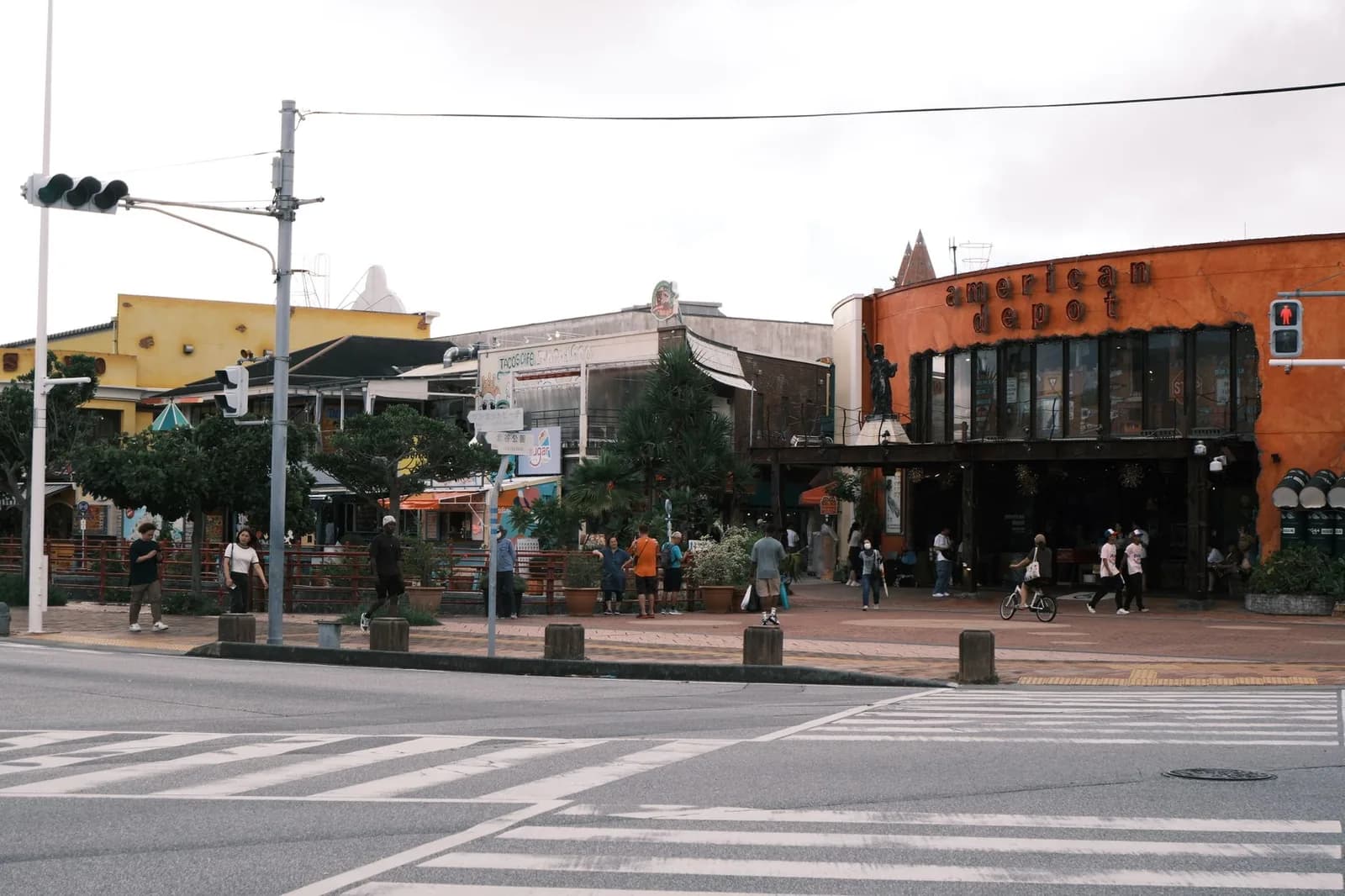
A seaside shopping and dining district built on land returned by the US military, between Kadena Air Base and Camp Foster. It looks more like California than Japan: a Ferris wheel, burger bars, vintage clothing and a sea wall where people gather for the sunset. Next door, Araha beach and Sunset beach are good for an evening swim, and Araha has a jellyfish net.
- Entry
- Free
- Best time
- Late afternoon to sunset
 2Photo CEphoto, Uwe Aranas, CC BY-SA 3.0, Wikimedia Commons
Onna, about 1 hour by car from Naha
Cape Manzamo
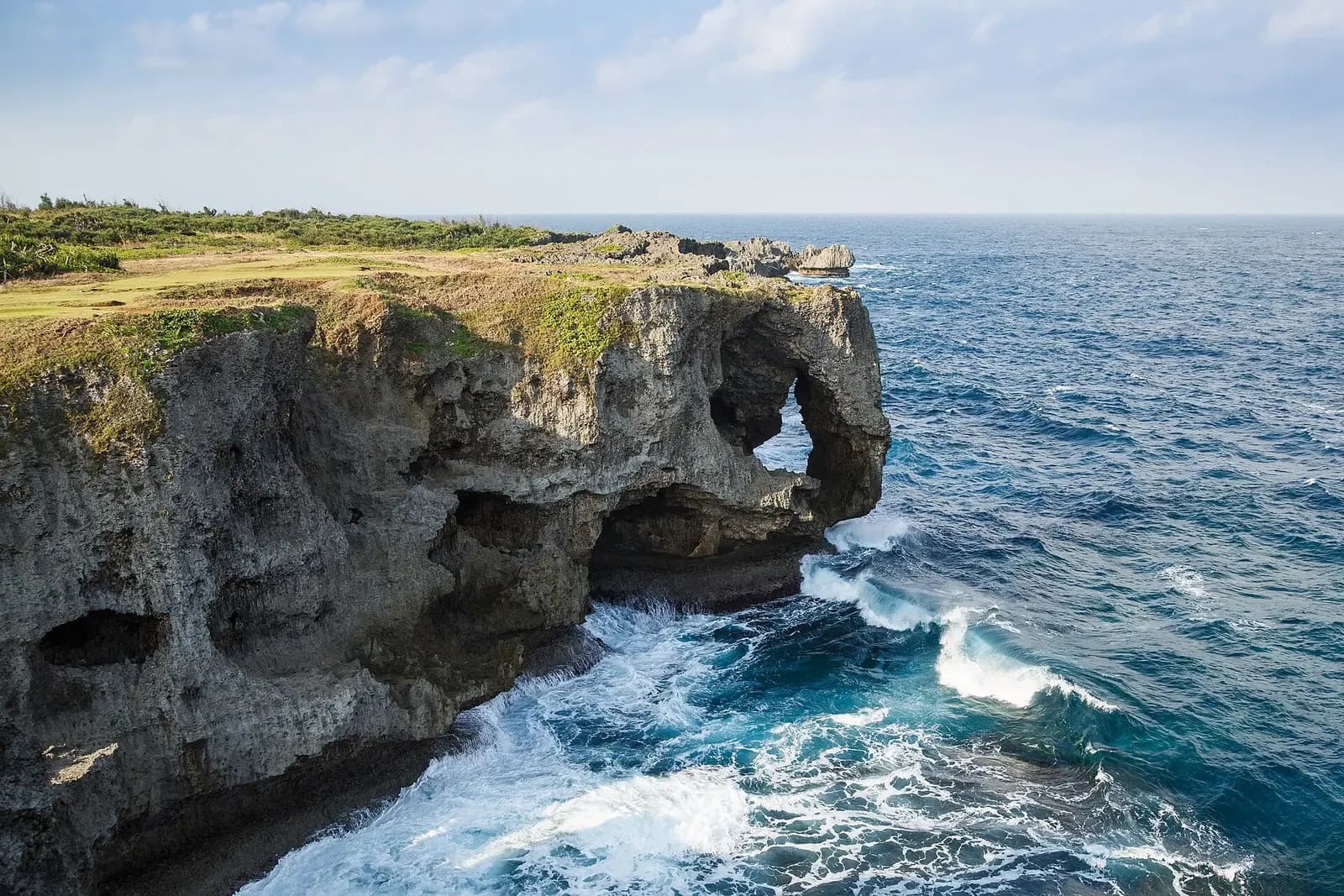
A coral cliff whose tip looks like an elephant's trunk dipping into the sea, with a short loop path along the top. Entry costs ¥100 per person, free for children under primary school age, and the cliffs can be visited until sunset all year, except when a typhoon closes them. Come early: it is a stop on every tour bus heading north.
- Entry
- ¥100
- Visit
- 30 minutes
3.
Onna, 15 minutes south of Cape Manzamo
Blue Cave at Cape Maeda
A sea cave under the cliffs of Cape Maeda where sunlight turns the water a glowing blue. You reach it by swimming or diving with a guide, from the steps below the cape or by boat. Tours only go in when the sea is calm, so book it early in your stay to keep a spare day. It is the most booked snorkel on the main island and fills up at weekends.
- Access
- Guided snorkel or dive
- Note
- Calm sea only, keep a spare day
4.
Yomitan, about 1 hour by car from Naha
Zakimi Castle ruins
Curving limestone walls on a hilltop, built in the early 15th century and listed by UNESCO with the other Gusuku sites. Only the walls and two arched gates remain, but you can walk on top of them for a view of the East China Sea. It is far less visited than Shuri and pairs well with the pottery village of Yomitan nearby.
- Visit
- 30 to 45 minutes
- Combine with
- Yomitan pottery village, Cape Zanpa
Things to do in northern Okinawa: Churaumi Aquarium, Kouri Island and JUNGLIA
The Motobu peninsula is about two hours from Naha by car, so most people either spend a night in Nago or Motobu or join a day tour. Group the aquarium, Bise, Nakijin and Kouri on the same day: they all sit within 20 minutes of each other. JUNGLIA and the Yanbaru forest need another day.
 1Pexels
Ocean Expo Park, Motobu, about 2 hours by car from Naha
Okinawa Churaumi Aquarium
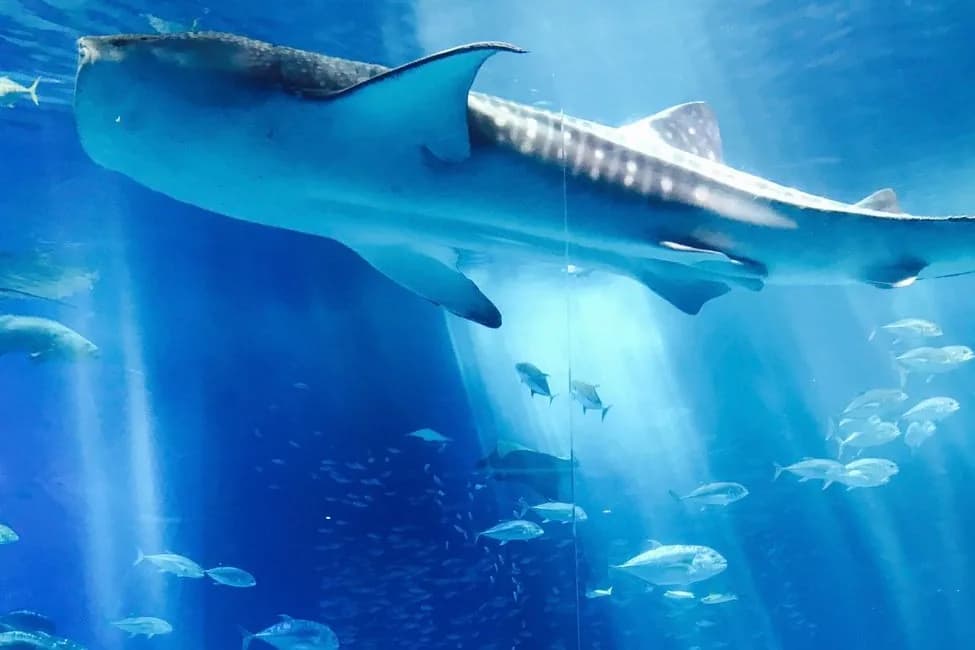
The main reason people drive north. Its Kuroshio Sea tank, one of the largest in the world, holds whale sharks and manta rays behind a huge acrylic panel. An adult ticket costs ¥2,180 ($14), ¥1,440 for high school students and ¥710 for children, free under six. It opens from 8:30 to 18:30 in the low season, including December 2026, last entry 17:30.
The aquarium has no closing day planned until 31 March 2027, apart from typhoons, but the dolphin show in the park is suspended from 4 to 9 January 2027. Arrive at opening or after 16:00 to avoid the coach groups.
- Adult
- ¥2,180 ($14)
- Hours
- 8:30 to 18:30, last entry 17:30
- Closed
- No planned closing day to March 2027
2.
Motobu, next to the aquarium
Bise fukugi tree road and Emerald beach
Two quiet extras within 10 minutes of the aquarium. In Bise village, sandy lanes run between rows of old fukugi trees planted as windbreaks around the houses, and you can rent a bicycle or ride a water buffalo cart. Emerald beach, inside Ocean Expo Park, is a sheltered lagoon beach with lifeguards in season.
- Entry
- Free
- Visit
- 1 hour
3.
Nakijin, 15 minutes by car from the aquarium
Nakijin Castle ruins
The largest of the Gusuku ruins after Shuri, the seat of the northern kingdom before Okinawa was unified in the 15th century. Its stone walls climb along a ridge for 1.5 km, and the cherry trees along the entrance steps bloom in late January and February, the earliest blossom in Japan. Another UNESCO site, and a short detour on the way to Kouri.
- Visit
- 45 minutes
- Cherry blossom
- Late January to February
4.
Nakijin, 20 minutes by car from the aquarium
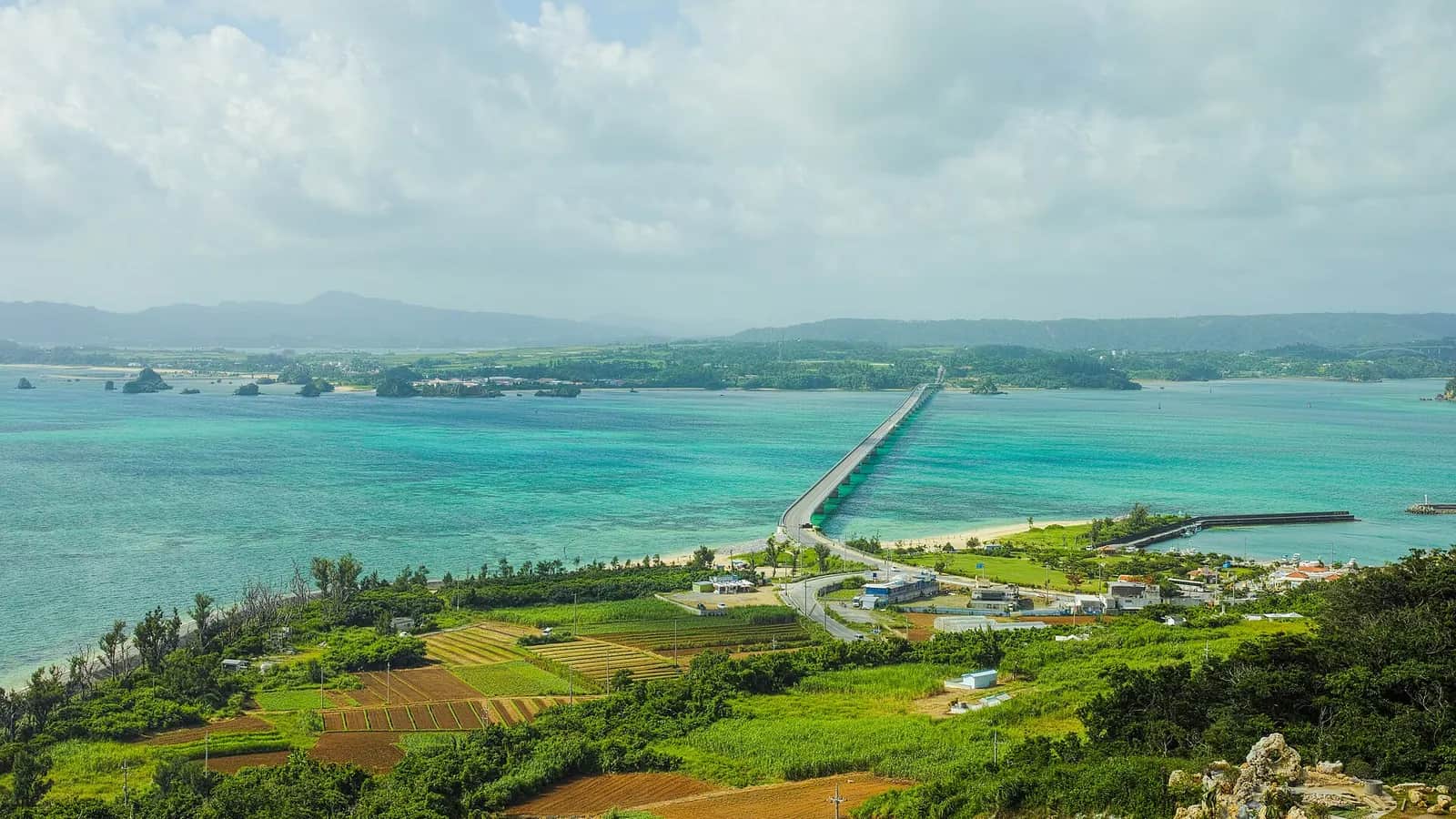
Kouri Island and the Kouri Bridge
The 1,960-metre Kouri Bridge crosses a shallow turquoise strait from Yagaji island to Kouri, and the drive over it is one of the classic images of Okinawa. On the island, Tinu beach has two heart-shaped rocks, and the beach next to the bridge is shallow enough for children. The road around the island takes 20 minutes.
- Entry
- Free
- Best light
- Morning, sun behind you
5.
Yanbaru, about 90 minutes by car from Naha
JUNGLIA Okinawa theme park
The new theme park of the north opened on 25 July 2025 on a former golf course at the edge of the Yanbaru forest, with dinosaur safaris, a balloon ride and buggies. Its YAMBARU TORNADO ride opened on 29 April 2026. There is no separate price for foreign visitors: a one-day adult ticket costs ¥6,930 ($43), and the Quick Visit ticket, with one ride and the free shows, costs ¥3,190 ($20) for adults and ¥2,200 for children aged 4 to 11.
The park is open from 10:00 to 17:00 on the current calendar, which is published for four months at a time. From January 2027 it closes on most Mondays for maintenance, except public holidays and peak periods. Parking at the park costs ¥2,000 a car, and a direct bus from Naha takes about two hours.
- 1-day adult
- ¥6,930 ($43)
- Quick Visit
- ¥3,190 ($20)
- Parking
- ¥2,000 a car
6.
Kunigami, about 2 hours 30 by car from Naha
Yanbaru forest and Cape Hedo
The far north is a subtropical forest of hills and rivers, listed as a UNESCO natural heritage site in 2021 with Iriomote and Amami. It is home to the flightless Okinawa rail, which you may see crossing the road at dusk, so drive slowly. Walking trails lead to Hiji falls, and the road ends at Cape Hedo, the northern tip of the island, with Yoron island visible on clear days.
- Visit
- Full day by car
- Note
- Few shops and fuel stations north of Nago
Okinawa islands: Kerama, Miyako, Ishigaki, Iriomote and Taketomi
Okinawa prefecture has more than 160 islands, and the water gets clearer the further you go from Naha. The Keramas are a boat ride away and work as a day trip. Miyako and the Yaeyama group (Ishigaki, Iriomote, Taketomi) are flights of about 45 minutes to an hour from Naha and deserve two or three nights each.
| Island | How to get there | Time | Best for |
|---|---|---|---|
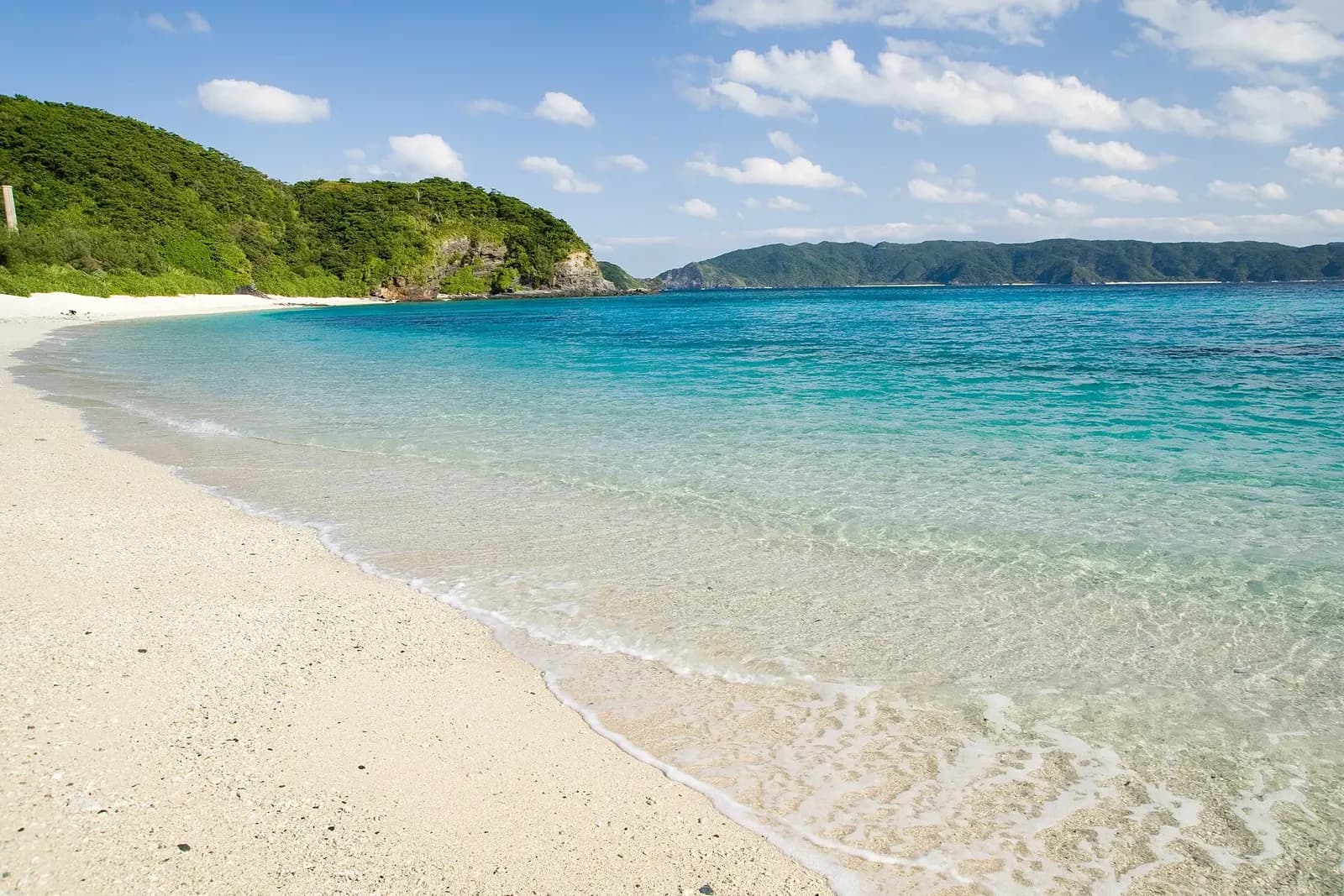
| Zamami (Kerama) | Ferry from Tomari port, Naha, at 9:00 and 13:15 | About 2 hours by ferry | Furuzamami beach, winter whale watching |
| Tokashiki (Kerama) | Fast boat from Tomari at 9:00 and 16:00, ferry at 10:00 | Under 2 hours | Aharen beach, a day trip from Naha |
| Miyako | Flight from Naha, or direct from Tokyo, Osaka, Nagoya and Fukuoka | About 45 to 50 min from Naha | Beaches, the Irabu Bridge, turtles |
| Ishigaki | Flight from Naha, direct from Tokyo and some Asian cities | About 1 hour from Naha | Kabira Bay, manta rays, base for Yaeyama |
| Iriomote | Fast boat from Ishigaki to Ohara or Uehara | 35 to 50 min | Mangroves, waterfalls, jungle |
| Taketomi | Ferry from Ishigaki, ¥970 ($6) adult in October 2026 | About 15 min | Traditional village, buffalo carts |
Kerama Islands: Zamami and Tokashiki
The Keramas are a national park west of Naha with some of the clearest water in Japan, a reef close to shore and sea turtles off the beaches. Zamami has Furuzamami beach and, in winter, humpback whales that come to breed, roughly from January to March. Tokashiki is the larger island, with the long sand of Aharen beach. The ferries leave from Tomari port in Naha and the morning boats fill up in summer, so reserve by phone or online.
Miyako Island and its bridges
Miyako is flat, ringed with white beaches and linked to its neighbours by long bridges. The Irabu Bridge, 3,540 metres, is the longest toll-free bridge in Japan and leads to Irabu and Shimoji, while the Ikema and Kurima bridges lead to smaller islands. Yonaha Maehama, about 7 km of fine sand on the south coast, is the beach most people come for. There is no rail and little bus service, so rent a car at the airport.
Ishigaki, Iriomote and Taketomi in the Yaeyama Islands
Ishigaki is the hub, with flights from Naha, Tokyo, Taiwan and Hong Kong and ferries to the other islands from the port in town. You cannot swim at Kabira Bay: the bay is seen by glass-bottom boat, and manta rays gather off the island from about July to mid-October. Ishigaki is also an International Dark Sky Place, so the night tours are worth it.
Iriomote, 35 to 50 minutes away by fast boat, is almost all jungle and mangrove, a UNESCO natural heritage site since 2021, and home to about 100 Iriomote wild cats. Paddle up the Urauchi or Nakama rivers, walk to the 55-metre Pinaisara falls, and come between late February and late April for the fireflies. Taketomi, about 15 minutes from Ishigaki, is a village of low houses with red tiled roofs and coral walls, best seen by bicycle or water buffalo cart early in the morning before the day-trippers arrive.
Okinawa beaches: swimming season, jellyfish nets and safety
Most managed beaches on the main island open their swimming season in spring, often with an umi-biraki opening ceremony between late March and April, and keep lifeguards on duty until about the end of October. The main summer risk is the box jellyfish, habu-kurage, whose sting can be dangerous. Swim inside the nets where they exist, keep a bottle of vinegar in the car, as the prefecture recommends for stings, and call the coast guard on 118 in an emergency at sea.
The official list of the Okinawa Convention and Visitors Bureau names eight beaches with a jellyfish net: Naminoue, Sesoko, Araha, Zanpa, Okuma, Ginowan Tropical Beach, Manza and Maesato. Coral and rocks are sharp at low tide, so wear water shoes, and never take coral or shells from the reef.
Best time to visit Okinawa and the typhoon season
Okinawa never gets cold: Naha averages 19.8 °C by day in January. Its rainy season comes earlier than in the rest of Japan, on average from about 10 May to 21 June (in 2026 it ran from 4 May to 29 June). It also takes the most typhoons, with 7.9 approaches a year on average for Okinawa and Amami, mostly from July to October.
For the beaches, aim for late June to mid-July, after the rain and before the typhoon peak, or late September to October, with warm water and fewer families. Keep a spare day on any island trip, because a typhoon can cancel flights and ferries for one or two days. Our guide to the best time to visit Japan has the full monthly weather for Naha and the rest of the country.
Things to do in Okinawa in November, December and January
From November to February the sea is too cool for most swimmers, the wind picks up and boat trips are cancelled more often. It is the best season for everything else: Shuri Castle's new main hall from 23 November 2026, the aquarium without the summer queues, hiking in Yanbaru, whale watching off the Keramas from about January, and the cherry blossom at Nakijin Castle and on Yaedake in Motobu in late January, the earliest in Japan.
Ryukyu Kingdom history and culture in Okinawa
Okinawa was an independent kingdom, the Ryukyu Kingdom, for more than four centuries. Shuri Castle was its royal palace from 1429, when the island was unified, until 1879, when Japan annexed it and turned it into Okinawa prefecture. The kingdom traded with China, Japan and Southeast Asia, and its culture mixes all three: red-tiled roofs, shisa lions, bingata textiles dyed in bright colours, the sanshin and eisa drum dances. Nine of its sites, including Shuri, Nakijin, Zakimi and Sefa-utaki, were listed by UNESCO in 2000 as the Gusuku Sites and Related Properties of the Kingdom of Ryukyu.
The island was devastated by the Battle of Okinawa in 1945 and stayed under US administration until 1972, and cars only switched to the left side of the road, like the rest of Japan, in 1978. Karate was born here, and the Okinawa Karate Kaikan in Tomigusuku, near the airport, tells its story.
US military bases in Okinawa
Okinawa makes up about 0.6 percent of Japan's land but holds about 70 percent of the land area of the facilities reserved for the exclusive use of US forces in Japan, according to the prefectural government (70.3 percent in its figures). Bases shared with Japan's Self-Defense Forces are not in that count. These exclusive-use bases cover about 8 percent of the prefecture. The largest are Kadena Air Base and Camp Foster in the centre and the Marine Corps Air Station Futenma in Ginowan, whose planned move to Henoko in the north has been disputed for decades. As a visitor, you see the bases mainly as long fences along Route 58 and in the American feel of Chatan and Koza. Their presence remains a local political issue, and most residents want it reduced.
What to eat in Okinawa: goya champuru, Okinawa soba and awamori
Okinawan food is its own cuisine, built on pork, tofu, seaweed and sweet potato. Goya champuru is the dish to try first: bitter melon stir-fried with tofu, egg and pork. Okinawa soba is not buckwheat but thick wheat noodles in a pork and bonito broth, topped with soki (stewed pork ribs) or rafute (pork belly braised in awamori and brown sugar). Taco rice, invented near Camp Hansen in the 1980s, puts taco meat, cheese and salsa on rice.
Awamori is the local spirit, distilled from Thai long-grain rice and aged in clay pots, often at 30 to 43 percent. Orion is the island beer. For dessert, try beni-imo purple sweet potato tarts and an ice cream at Blue Seal, an American-founded brand. The idea of hara hachi bu, stopping at 80 percent full, comes from here too.
Getting around Okinawa: Yui Rail monorail and car rental
The Yui Rail monorail is the only train in Okinawa. It runs through Naha over 19 stations, from Naha Airport to Tedako-Uranishi in Urasoe. A 24-hour pass costs ¥1,000 ($6) and a 48-hour pass ¥1,800 ($11), half price for children under 12.
| From Naha Airport to | For | Time | Adult fare |
|---|---|---|---|
| Makishi | Kokusai-dori | 16 min | ¥320 |
| Omoromachi | Shopping malls, bus terminal for the north | 19 min | ¥320 |
| Shuri | Shuri Castle | 27 min | ¥360 |
| Tedako-Uranishi | End of the line, expressway link | 37 min | ¥390 |
Everything outside Naha is easiest by car. Buses reach the north and the resort coast, but they are slow in Naha traffic, and the capes, castles and beaches are spread out. Rent at the airport for the days you leave the city, and use the Okinawa Expressway to save time on the way north. Our guide to car rental in Japan covers the International Driving Permit, insurance and the map codes used on Okinawan sat-navs.
How to get to Okinawa: flights from Tokyo, Osaka and abroad
Almost everyone flies to Naha. From Tokyo the flight takes about 2 hours 30 to 3 hours, from Osaka about 2 hours, with JAL and ANA plus the low-cost carriers Peach and Jetstar Japan from Narita and Kansai, and Skymark from Haneda. Booked ahead, the low-cost seats are often cheaper than the train from Tokyo to Osaka.
Naha also has direct flights from Taipei, Kaohsiung, Hong Kong, Seoul, Busan, Shanghai, Beijing, Bangkok and Singapore, so a stopover in Asia can save the domestic leg. From the US, United starts San Francisco to Naha on 27 March 2027, three times a week. From Europe, Canada or Australia, fly into Tokyo, Osaka or an Asian hub and connect. Our page on flights to Japan compares the routes, and the Osaka guide or the Tokyo guide help you plan the nights before or after.
How many days in Okinawa is enough
Three to four days cover the main island. Spend day one in Naha and Shuri, day two in the south, and days three and four in the north, with a night in Motobu or Nago so you reach the aquarium at opening and still have time for Kouri and Yanbaru. With a week, add a Kerama day trip and two nights on Miyako or Ishigaki. Ten days or more let you do the main island, Ishigaki, Iriomote and Taketomi without rushing. If Okinawa is part of a longer trip, our guide to things to do in Japan shows how it fits with the mainland.
Okinawa budget per day in 2026
Okinawa costs about the same as mainland Japan for food and a bit more for transport, because of the car. Hotels are cheapest from November to March, outside the New Year week, and most expensive in July, August and Golden Week.
| Item | Typical price in 2026 |
|---|---|
| Bowl of Okinawa soba | About ¥800 to ¥1,200 ($5 to $7.50) |
| Monorail day pass | ¥1,000 ($6) for 24 hours |
| Small rental car, 24 hours | About ¥10,000 to ¥12,000 at the big companies, less on comparison sites |
| Churaumi Aquarium | ¥2,180 ($14) |
| Shuri Castle | ¥1,000 ($6) |
| JUNGLIA one-day ticket | ¥6,930 ($43) |
| Kerama snorkelling day trip | Shown on the tour card above |
Count about ¥12,000 to ¥18,000 ($75 to $110) a day per person on a budget, with a hostel or shared room, and about ¥25,000 to ¥40,000 ($155 to $250) for a mid-range trip with a hotel, a car shared by two and one paid sight a day. Add the flights to the islands. Before you go, see our guides to travel insurance for Japan and the best eSIM for Japan, which also covers Okinawa and its islands.