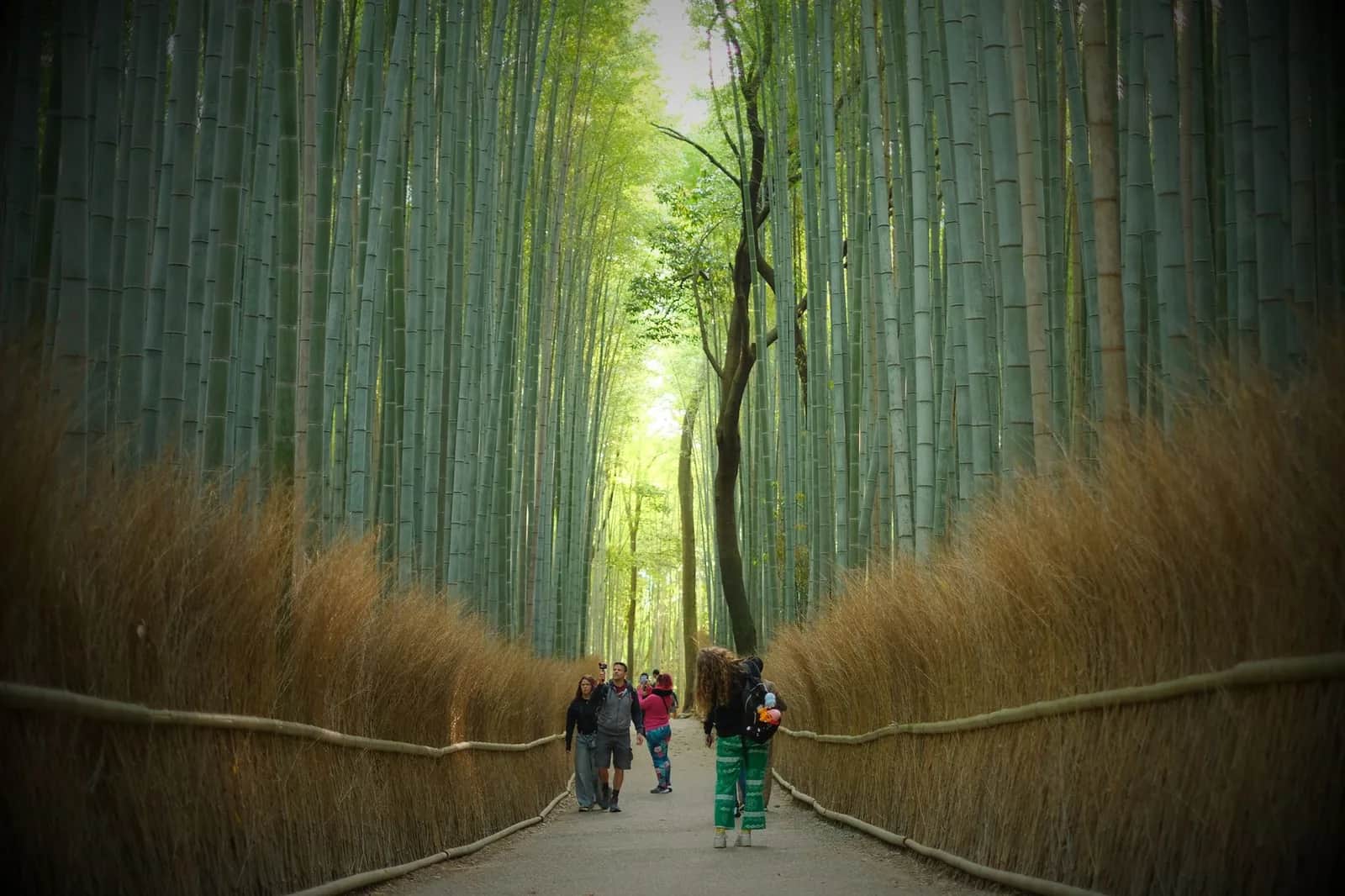
- no ticket and no gate: the bamboo path is open 24 hours a day
- Free
- of bamboo path, walked in 10 to 30 minutes
- About 400 m
- from Kyoto Station on the JR Sagano Line, about ¥240 ($1.50)
- 15 minutes
On this page
The Arashiyama bamboo grove, in western Kyoto, is a lane of tall bamboo that is free and open 24 hours a day. The path is only about 400 metres long, and from mid-morning it is one of the busiest spots in the city, so the trick is to arrive before 8:00 and treat it as the start of a half day in Arashiyama, not the whole trip. Prices and hours below were checked on official sites on 14 November 2026.
Arashiyama tours
None of these is needed to see the grove, but they solve the Sagano train and river logistics or add Arashiyama to a wider Kyoto day.
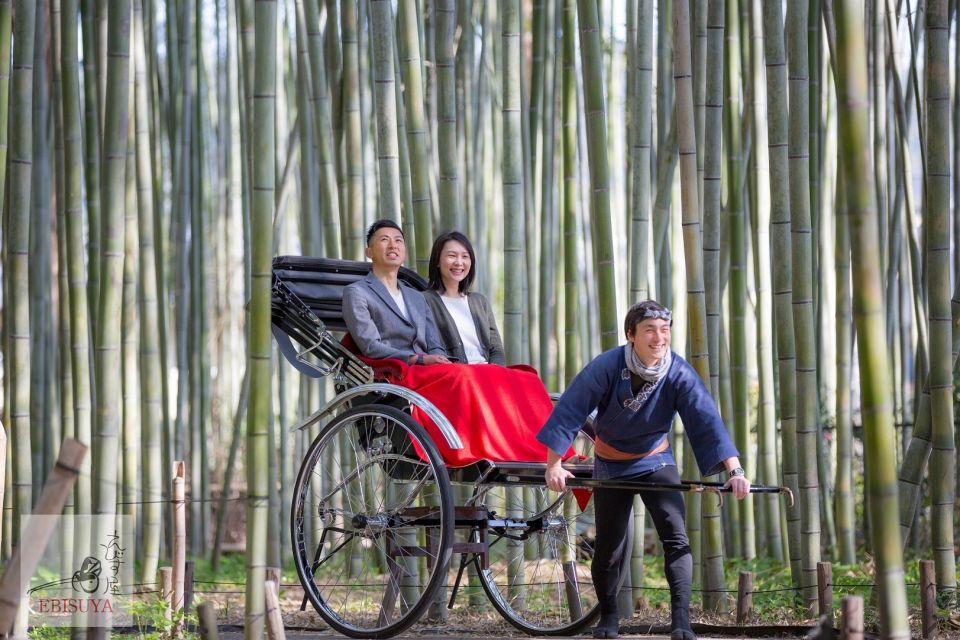
Kyoto: Arashiyama Customized Rickshaw Tour & Bamboo Forest
A rickshaw puller takes you through the bamboo grove area and the back lanes of Arashiyama, from 45 minutes to about three hours.
5.0(583 reviews)
- 45 to 190 minutes
- Free cancellation
From $50per person
See prices & availability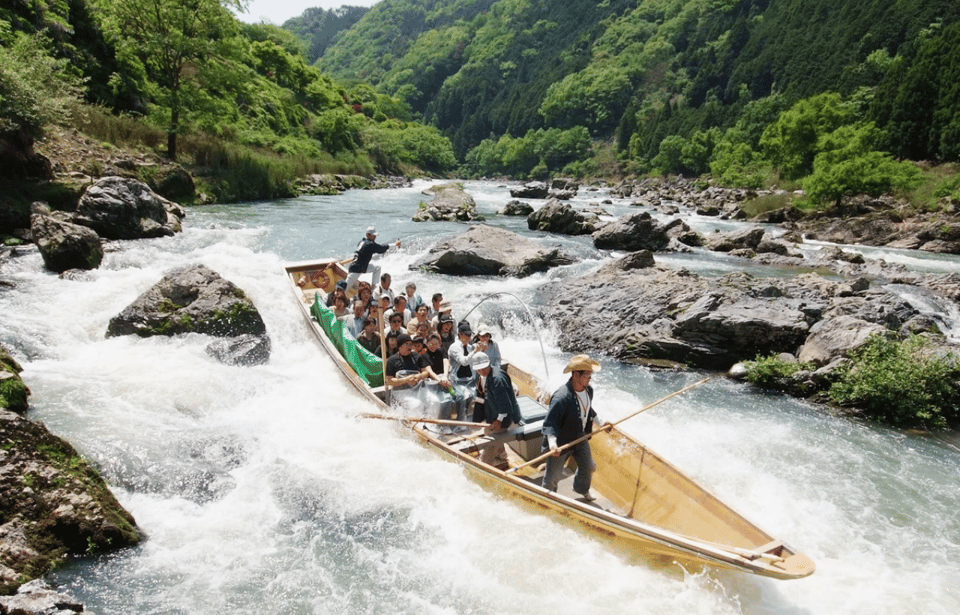
Kyoto: Arashiyama, Sagano Railway, Hozugawa River Cruise Day Tour
A day in Arashiyama with Tenryu-ji and Jojakko-ji, the Sagano train along the Hozu gorge and the boat ride back down the river.
4.3(91 reviews)
- 7.5 to 10 hours
- Free cancellation
From $106per person
See prices & availability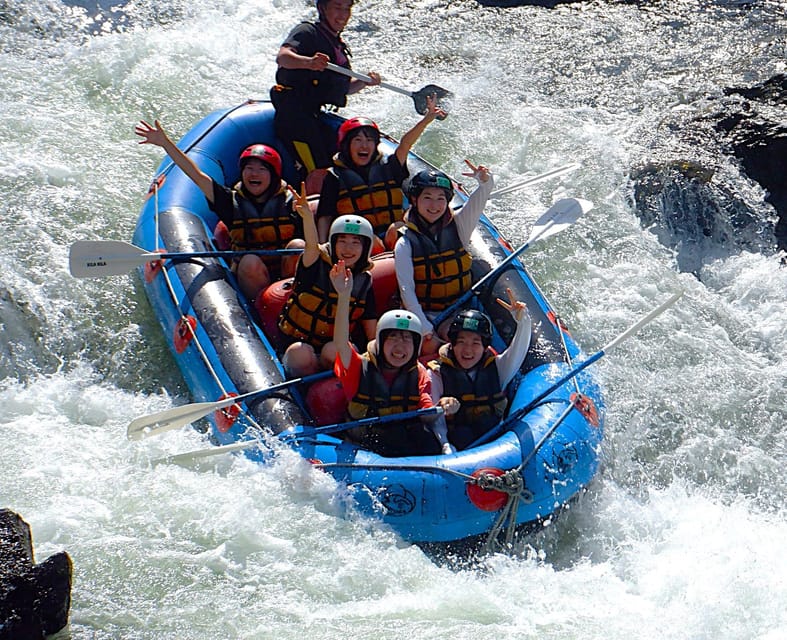
Kyoto: Hozugawa River Half-day White Water Rafting Adventure
Three and a half hours of white-water rafting on the Hozu River west of Kyoto, a livelier way down the gorge than the boat.
4.9(427 reviews)
- 3.5 hours
- Free cancellation
From $60per person
See prices & availability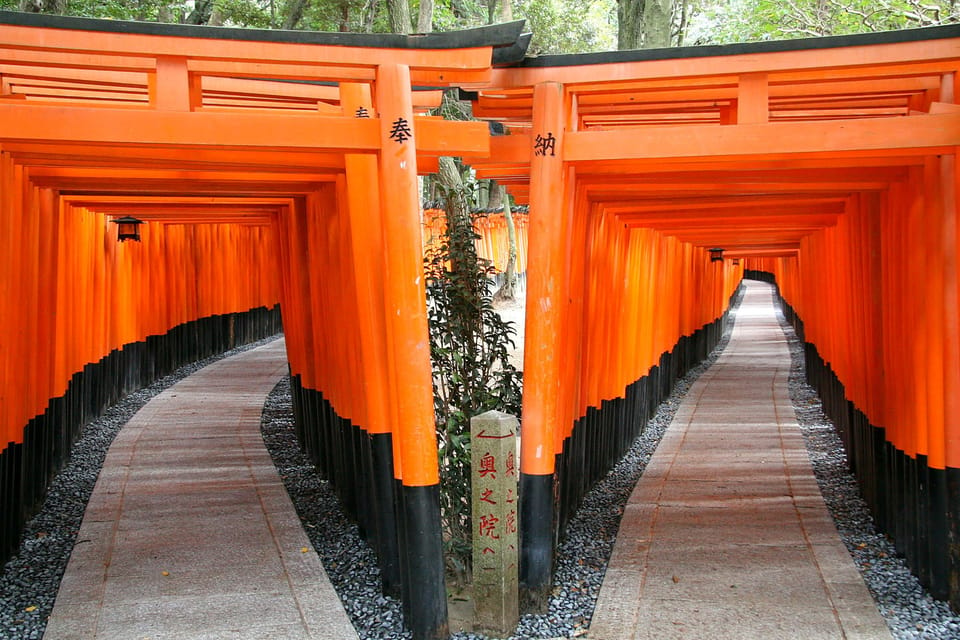
Kyoto: Fushimi Inari, Kinkakuji, Bamboo Grove 1-Day Bus Tour
A full day by coach from Kyoto to Fushimi Inari, Kinkaku-ji and the Arashiyama bamboo grove, about 8.5 to 9 hours.
4.8(5,478 reviews)
- 8.5 to 9 hours
- Free cancellation
From $119per person
See prices & availability
Arashiyama bamboo grove: entrance fee, opening hours and how long the path is
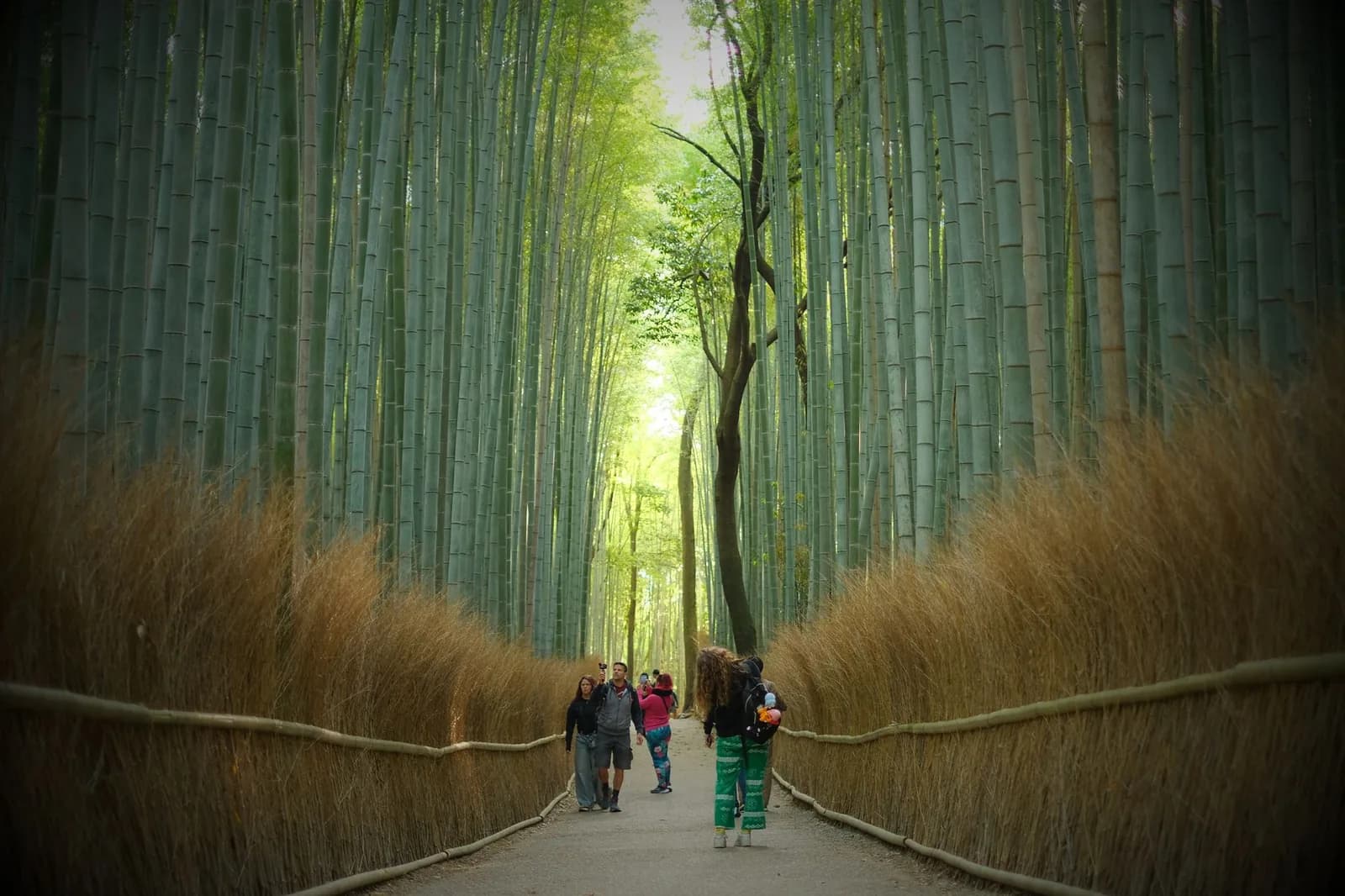
There is no entrance fee, no gate and no closing time. The bamboo path, called Chikurin no Michi in Japanese, is a public lane through the Sagano district, a ten-minute walk from JR Saga-Arashiyama station. It runs gently uphill for about 400 metres, from the north gate of Tenryu-ji to the entrance of the Okochi Sanso villa, with a smaller branch towards Nonomiya Shrine and the railway crossing.
Set your expectations: the walk takes 10 minutes without stopping, the lane is paved and easy with a stroller, and you share it with rickshaws. The famous photos are taken at dawn or with a long lens. At 11:00 on a Saturday in November, you will be moving in a slow line of people between two bamboo walls. It is still a striking place, the sound of the stalks creaking in the wind included, but it is a ten-minute highlight, not a forest hike.
The bamboo is fenced off with low brushwood fences, and local guides report that carving names into the stalks is treated as damage to property. Stay on the path, do not touch or carve the bamboo, keep tripods out of the way, and step aside to let the rickshaws pass.
The paid tickets you may see online are tours or the evening light-up. In autumn 2026, a bamboo light-up ran from 30 September to 8 November, 18:00 to 21:00, with a paid section and free entry for children 12 and under. The old Arashiyama Hanatouro lantern event in December is no longer held, according to local event listings, so do not plan a December night around it.
Best time to visit the Arashiyama bamboo grove to avoid crowds
Go at sunrise, and before 8:00 at the latest. At 7:00 on a weekday you share the path with joggers and a few photographers. Tour groups arrive from about 10:00, from March to November, and the lane stays crowded until mid-afternoon. Tuesdays and Wednesdays are the quietest days, weekends and public holidays the worst, and the cherry blossom and autumn leaf weeks are the busiest of the year.
Two tips help even at busy times. Enter from the north side, through the Tenryu-ji garden or from Okochi Sanso, rather than from the main street, where the groups come in. And after about 17:00, once day visitors leave for Kyoto, the path empties again. Staying a night in Arashiyama makes the dawn visit easy, see our guide to where to stay in Kyoto for the ryokan and riverside hotels there.
Things to do in Arashiyama near the bamboo grove, in walking order
Arashiyama is the riverside area around Togetsukyo Bridge, and Sagano is the quieter district of temples and fields to the north. Done in this order, the walk starts at the bamboo, heads north into the moss temples and ends back at the river, about 5 km on foot in total.
Tenryu-ji and the Sogenchi garden
Tenryu-ji is the head temple of its Zen school and a World Heritage site, and its 14th-century pond garden, Sogenchi, faces the Arashiyama hills. According to the temple, the garden costs ¥500 ($3), ¥300 for school children, and the main buildings ¥300 more. The Hatto hall, with its dragon painted on the ceiling, is a separate ¥500 ticket and opens on weekends and holidays, plus every day until 6 December 2026. Hours are 8:30 to 17:00, last entry 16:50. The north gate of the garden opens straight onto the bamboo path.
Okochi Sanso villa
At the top of the bamboo path, the former villa of the silent film actor Okochi Denjiro has hillside gardens, a tea house and views over Kyoto, and it is far calmer than the grove below it. Entry is about ¥1,000 ($6) with matcha and a small sweet, served at the end of the visit, and it opens roughly 9:00 to 17:00. Allow 45 minutes.
Jojakko-ji, Gio-ji and Adashino Nenbutsu-ji
North of the bamboo, three hillside temples show the quieter Sagano. Jojakko-ji, with its mossy stone steps and small pagoda, costs ¥600 and opens 9:00 to 17:00. Gio-ji, 15 minutes further on, is a tiny thatched hermitage in a garden of moss under maples, about ¥300. Adashino Nenbutsu-ji holds around 8,000 stone statues and markers for the dead, with its own small bamboo path. The temple charges ¥500 ($3) and admits visitors until 16:30, or 15:30 in December, January and February, and closes in storms or snow.
Saga-Toriimoto preserved street
The road up to Adashino runs into Saga-Toriimoto, a protected street of old wooden houses and a few thatched roofs. It leads to a red torii, the foot of the pilgrim path to Mount Atago, and the old tea houses there still serve grilled sweetfish in season. Few visitors walk this far. From here, head back down towards the river, or take a taxi to Otagi Nenbutsu-ji, with its 1,200 comic stone figures, which charges ¥1,000 and is closed on Wednesdays and Saturdays.
Togetsukyo Bridge and the Katsura River
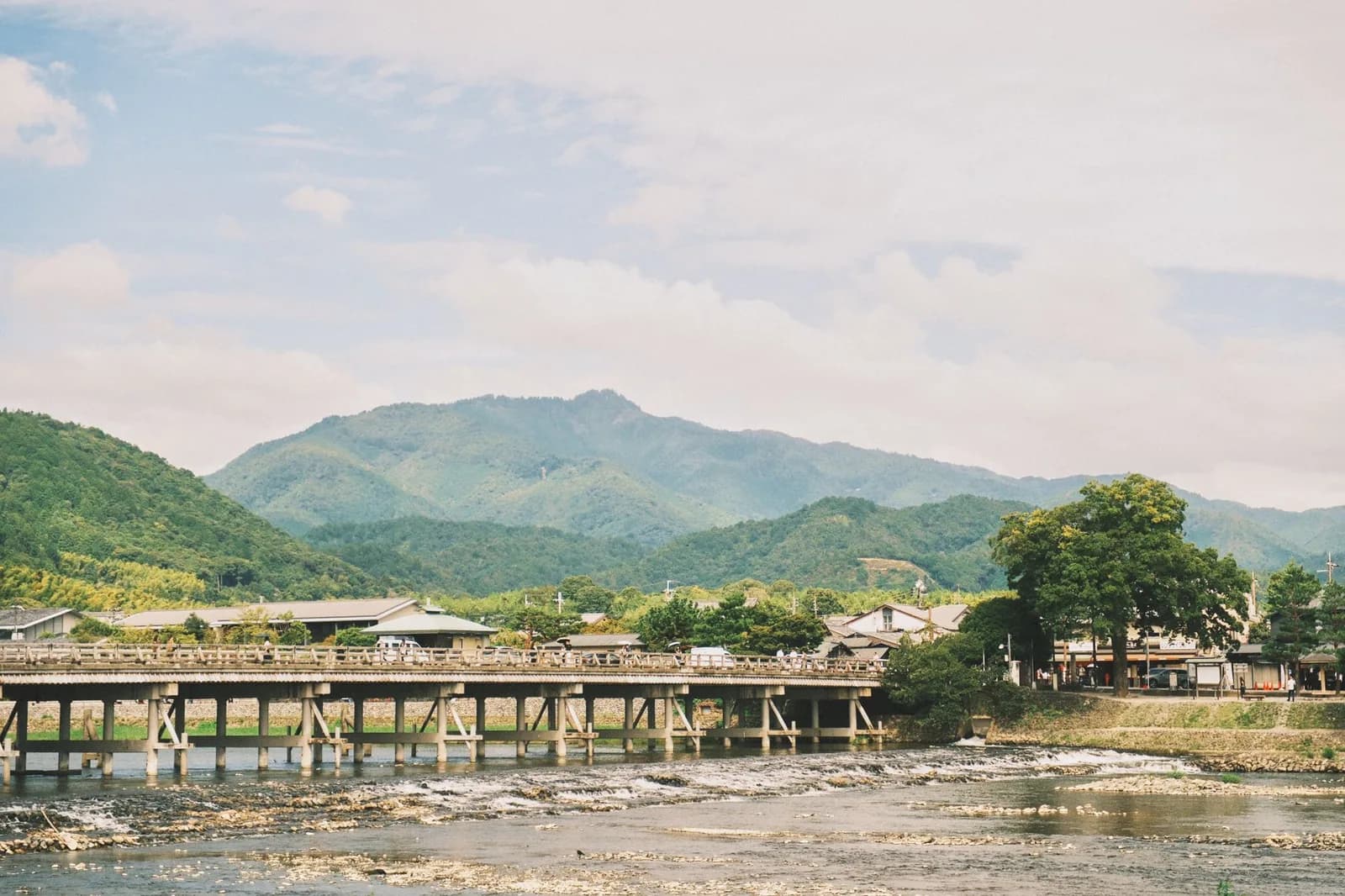
Back at the river, Togetsukyo, the Moon Crossing Bridge, is the postcard view of Arashiyama, free and open at all hours. Rowing boats rent from the riverbank in the warm months, and the main street that runs from the bridge to Tenryu-ji is lined with snack stands and souvenir shops. It is at its most crowded around midday.
Iwatayama Monkey Park
Across the bridge, a steep path climbs for about 20 minutes to a hilltop where more than a hundred wild Japanese macaques roam freely. You go into a hut to feed them, and the view over Kyoto from the top is the best in the area. The park's own site lists adult entry (16 and over) at ¥800 ($5) and ¥400 for children aged 4 to 15, with opening hours of 9:00 to 16:00, so bring cash. The park closes in bad weather, and the climb is not suitable for strollers.
Sagano Romantic Train and Hozugawa river boat in 2026
The Sagano Romantic Train is an old-style sightseeing train that follows the Hozu River gorge for about 25 minutes, from Torokko Saga, next to JR Saga-Arashiyama, to Torokko Kameoka. The usual plan is to ride the train up to Kameoka and come back down the same gorge by boat.
| Ride | Price in 2026 | Good to know |
|---|---|---|
| Sagano Romantic Train, one way | ¥880 ($5.50) adult, ¥440 child aged 6 to 11 | About 25 minutes, hourly from Torokko Saga between 9:02 and 16:02 |
| Hozugawa river boat | ¥6,000 ($37.50) adult, ¥4,500 child | About 2 hours from Kameoka to Arashiyama, minimum height 80 cm |
Train seats go on sale online one month ahead, at midnight Japan time, with free cancellation until 23:59 the day before, and they sell out in November and at cherry blossom. Same-day tickets are sold at the station counters from about 8:35, with standing tickets when the train is full. Car No. 5, The Rich, has no glass in its windows and a glass roof, so you can get wet in the rain and umbrellas are not allowed. The train runs every day in November 2026 but stops on some Wednesdays, on 16, 30 and 31 December, and through January and February.
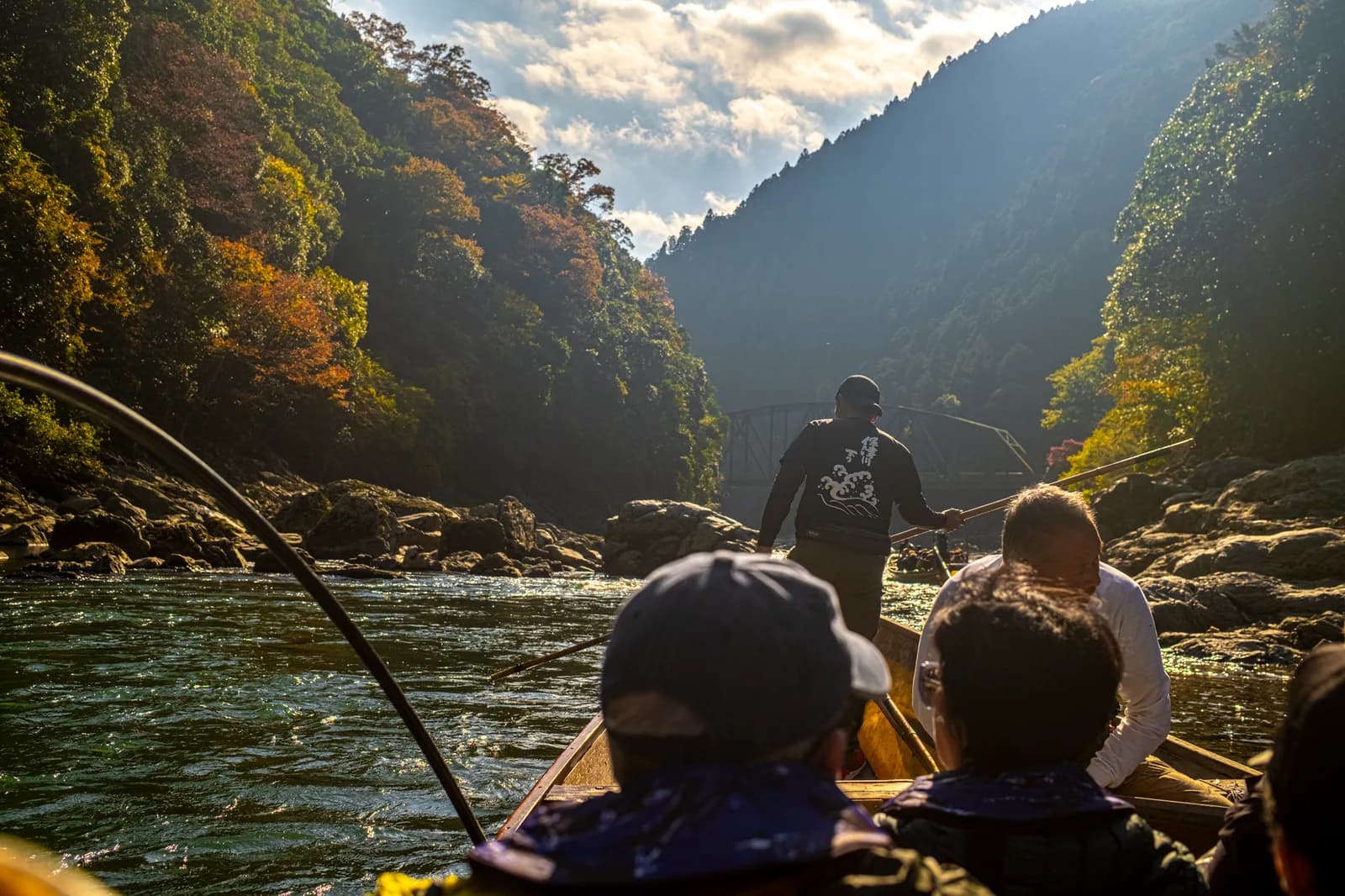
The Hozugawa boats leave from Kameoka with boatmen who pole and steer them through the rapids. Until 13 December 2026 they leave hourly from 9:00 to 15:00 on weekdays, and when the boats fill at weekends. In winter, from 5 January to 9 March 2027, there are four departures a day in an open boat. The boats do not run from 29 December to 4 January, on safety check days, or when the river is high after rain, and the operator posts one-off suspensions on its site, as it did for 15 November 2026. Booking is online only.
Arashiyama in cherry blossom season and autumn leaves
Arashiyama has two peak seasons. The cherry trees around Togetsukyo and Nakanoshima Park usually bloom in early April, and our Japan cherry blossom guide follows the forecasts city by city. The maples turn from mid-November, with the peak expected in late November to early December in 2026, when Tenryu-ji, Jojakko-ji and the Hozu gorge are at their best and the crowds at their worst.
In winter the grove stays green and the area is at its quietest, though the Sagano train stops for January and February. Snow on the bamboo happens a few days a year, and it rarely lasts past mid-morning.
How to get to the Arashiyama bamboo grove from Kyoto
- JR Sagano Line: about 15 minutes from Kyoto Station to Saga-Arashiyama for ¥240 ($1.50), then 10 minutes on foot to the grove. The fastest option, and covered by the Japan Rail Pass.
- Randen tram (Keifuku Arashiyama Line): from Shijo-Omiya, in the centre, to Arashiyama Station on the main street, a flat fare of ¥250. Slower, but a pleasant ride if you are staying downtown.
- Hankyu line: from Kyoto-kawaramachi or Karasuma, change at Katsura for Hankyu Arashiyama, south of the river, then about 15 minutes on foot across Togetsukyo.
All three take an IC card such as a Suica card on your phone. City buses also run to Arashiyama, but they are slow and full in season. To fit the area into a longer trip, see our day-by-day Japan itinerary, which pairs it with Kinkaku-ji.
How long to spend in Arashiyama
The grove alone takes 10 to 30 minutes. A half day covers the bamboo at dawn, the Tenryu-ji garden, Okochi Sanso and Togetsukyo. A full day adds the Sagano temples up to Adashino, or the train and boat, but rarely both: the train and the boat together take about three hours with the transfer at Kameoka.
Fushimi Inari, in the south of the city, is the other sight that rewards a dawn start, so do them on different mornings. Our Fushimi Inari guide has the times, and the Kyoto guide lists the 30 main sights of the city by area.
Where to eat in Arashiyama: yudofu and Saga tofu
The local dish is yudofu, soft tofu simmered in a kelp broth, eaten with a dipping sauce, a speciality of the Zen temples of western Kyoto. Shoraian, a tea house above the river, serves tofu set lunches from ¥5,500 ($34) on its 2026 menu, with tofu from the Saga workshop Morika, and closes on Wednesdays outside the busy seasons. Yudofu Sagano, near the station, is a large garden restaurant with sets around ¥4,400, according to recent guides.
For less, the main street sells matcha soft serve, tofu doughnuts and skewers, and most restaurants close by 17:00 or 18:00. If you stay the night, eat in your inn: our guide to ryokan and onsen explains how a stay with dinner works.