- average room rate in Kyoto's main hotels in 2025, about $133, before tax (Kyoto City Tourism Association)
- ¥21,286
- average room rate in April 2026, cherry blossom month, the highest since records began in 2014
- ¥31,296
- of the Kyoto accommodation tax since 1 March 2026, from ¥200 to ¥10,000 per person per night
- 5 tiers
On this page
The best area to stay in Kyoto for most visitors is Shijo-Kawaramachi, the downtown grid between Karasuma-dori and the Kamo River, with Gion a few minutes' walk across the bridge. Pick Kyoto Station if you arrive late, leave early or have only one or two nights, and Gion or Higashiyama if you want old wooden streets outside your door. Below, the right area for each type of trip, four real hotels, then each district with its transport, prices and weak points.
Best area to stay in Kyoto by type of trip
| Your trip | Where to stay | Why |
|---|---|---|
| First time, 3 to 4 nights | Shijo-Kawaramachi | Restaurants, shopping, Hankyu and Keihan trains, Gion and Nishiki Market on foot |
| Short stop, 1 or 2 nights | Kyoto Station | No transfer with luggage, Shinkansen, JR lines and subway in the same building |
| Late arrival or early departure | Kyoto Station | Haruka airport train and airport buses leave from here |
| Budget | South of Kyoto Station, Shijo-Karasuma | The largest choice of business hotels and chains |
| Traditional atmosphere | Gion, Higashiyama, a ryokan or machiya | Wooden streets and temples before the day crowds |
| Families and strollers | Kyoto Station, Karasuma line | Flat streets, subway rather than crowded buses, more twin and triple rooms |
| Luxury | Higashiyama, Kamo riverside, Arashiyama | Five-star hotels and high-end ryokan with gardens or river views |
| Quiet and nature | Arashiyama, North Kyoto | Calm evenings, but far from the eastern sights |
Kyoto is small enough that no area is a bad choice, but it is slow to cross by bus. What matters most is staying close to a train or subway line, not a particular temple. For what to see once you are there, our guide to things to do in Kyoto lists 30 sights by area.
Hotels in Kyoto: four picks in four areas
One hotel per area, from the station building to a ryokan on the Nanzen-ji approach.
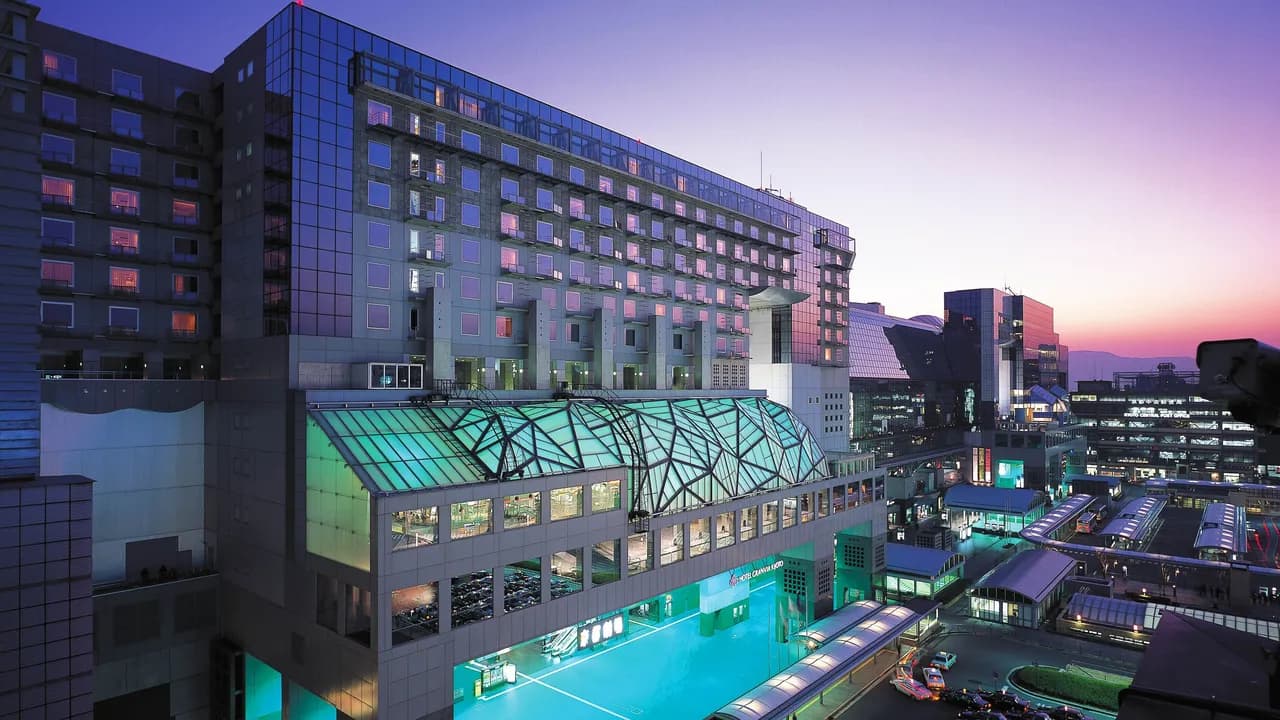 Photo: Expedia Group9.4
Kyoto Station★★★★½
Hotel Granvia Kyoto
Rated 9.4/10 from 1,838 Hotels.com reviews
The hotel built into the Kyoto Station building, for short trips, late arrivals and early Shinkansen or Haruka departures.
- Inside JR Kyoto Station
- Haruka to Kansai Airport from the same station
- Kyoto Tower across the square
See prices for my dates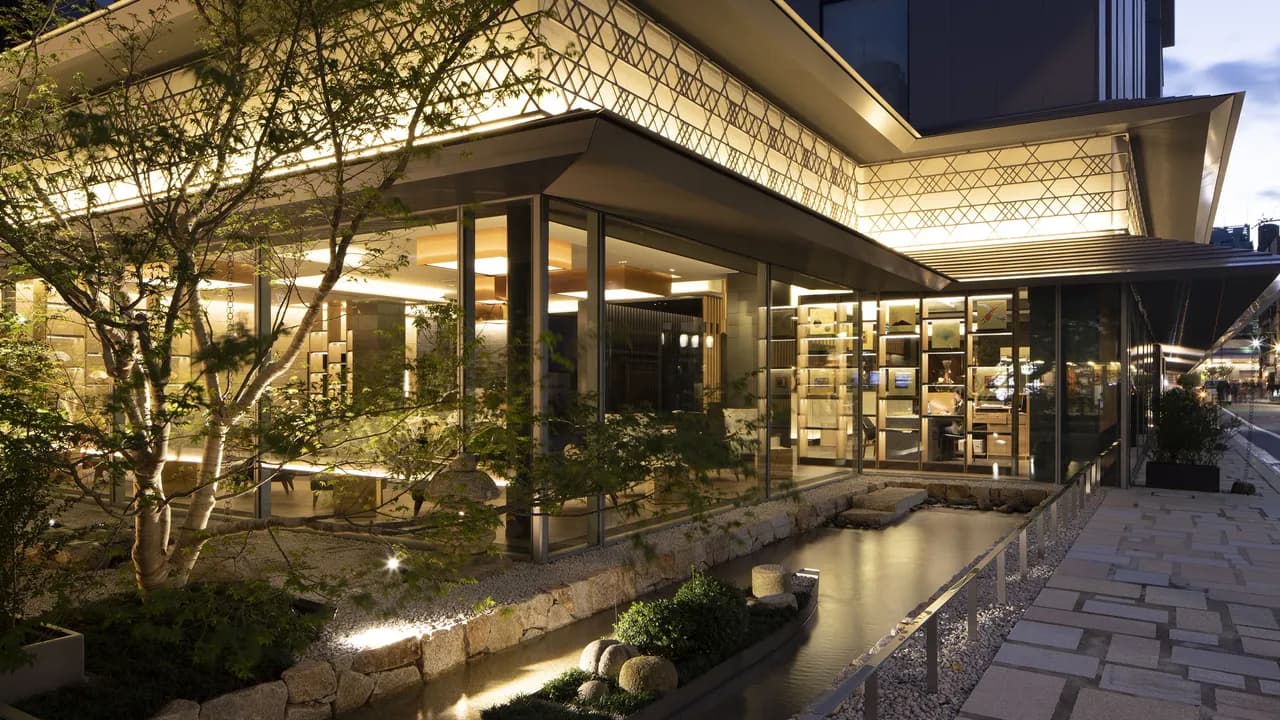 Photo: Expedia Group9.6
Kawaramachi-Sanjo, central Kyoto★★★½
Cross Hotel Kyoto
Rated 9.6/10 from 2,515 Hotels.com reviews
A mid-range hotel on Kawaramachi-dori, in the shopping and dining centre, with Pontocho and the Kamo River a few minutes away.
- About 4 min on foot from Kawaramachi
- About 6 min on foot from Nishiki Market
- Japanese suite for up to 5 guests
See prices for my dates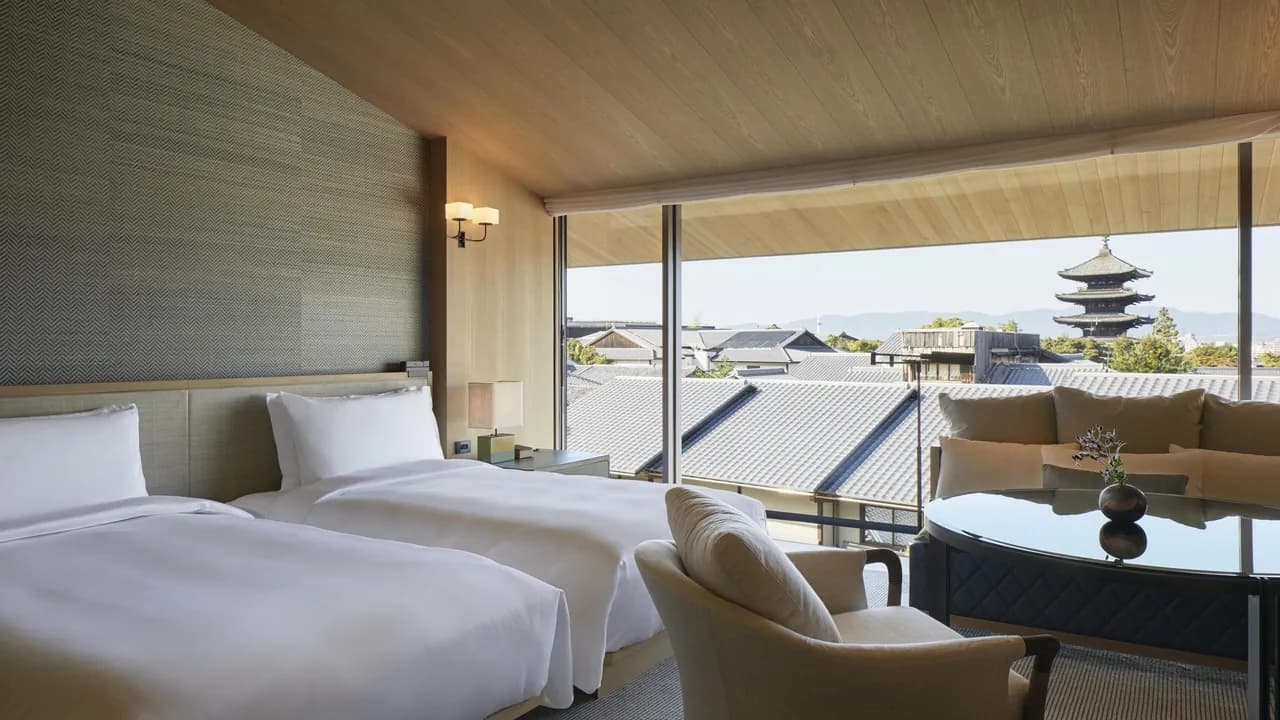 Photo: Expedia Group9.6
Ninenzaka, Higashiyama★★★★★
Park Hyatt Kyoto
Rated 9.6/10 from 57 Hotels.com reviews
A luxury hotel on the old Higashiyama slopes, so you can walk Ninenzaka and Kiyomizu-dera before the day crowds arrive.
- Within 5 min on foot of Kodai-ji
- Yasaka Pagoda (Hokan-ji) a short walk away
See prices for my dates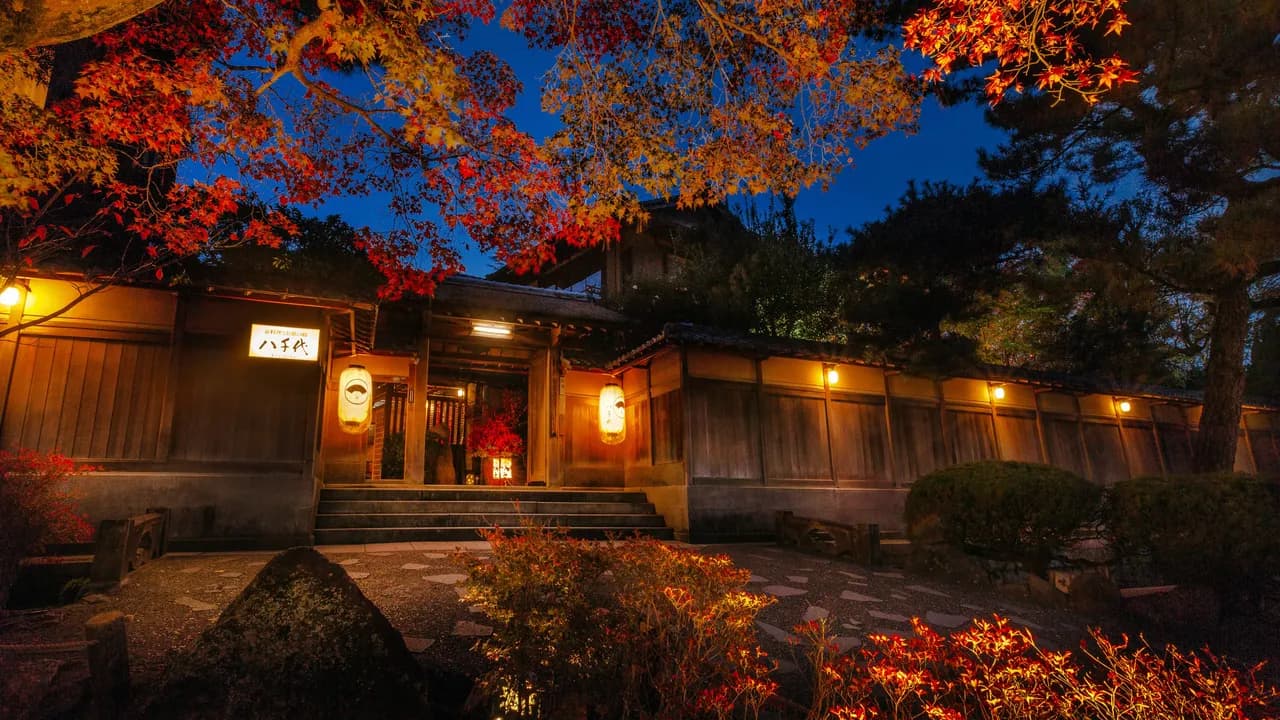 Photo: Expedia Group8.6
Nanzen-ji, Okazaki★★★½
Kyoto Nanzenji Garden Ryokan Yachiyo Established in 1915
Rated 8.6/10 from 255 Hotels.com reviews
A ryokan at the start of the Nanzen-ji approach with a pond garden by the garden maker Ogawa Jihei VII, for a traditional night with a quiet morning walk.
- About 5 min on foot from Keage Station
- 16 rooms, main building and annex
- Next to the Keage Incline
See prices for my dates
Hotels.com ratings checked in November 2026. Prices and availability on Hotels.com for your dates.
Kyoto neighbourhoods compared: transport, price and weak points
| Area | Best for | Main transport | Weak point |
|---|---|---|---|
| Kyoto Station | Short stays, late arrivals, day trips | Shinkansen, JR, Karasuma subway, Haruka, bus terminal | Modern and busy, little charm in the evening |
| Shijo-Karasuma | Budget and business hotels, families | Karasuma subway, Hankyu Karasuma Station | Office district feel, 15 min on foot to Gion |
| Kawaramachi and Pontocho | First trip, food, nightlife | Hankyu Kyoto-kawaramachi, Keihan across the river, many buses | Crowded streets, noisier at night |
| Gion | Atmosphere, couples | Keihan Gion-Shijo, buses on Higashioji-dori | Higher prices, no JR or subway |
| Higashiyama | Temples at dawn, luxury | Buses only, Tozai subway further north | Hills, saturated buses, quiet after 6 pm |
| Arashiyama | Ryokan, nature, a second base | JR Sagano Line, Randen tram, Hankyu | 30 to 45 min from the eastern sights |
| North Kyoto | Quiet, return visits, Kurama and Ohara | Karasuma subway north, Eizan Railway, Keihan at Demachiyanagi | Few hotels, far from most restaurants |
Staying near Kyoto Station: hotels by the trains
Kyoto Station is the city's transport hub, and the area has the largest number of mid-range and business hotels. The Shinkansen, the JR lines to Nara, Arashiyama and Fushimi Inari, the Karasuma subway and the main bus terminal are all in or next to the station. That makes it the obvious base for a short stay, for day trips, and for anyone landing late at Kansai Airport.
The Haruka limited express takes about 75 minutes from Kansai Airport. The Haruka One-way Ticket for foreign visitors costs ¥2,700 (about $17) to Kyoto when bought from 1 November 2026, well below the normal fare, and the last train leaves the airport around 22:15 on the October 2026 timetable. The airport limousine bus (¥2,800, about 90 minutes) stops at the Hachijo exit, on the south side of the station. Hotels on that side are often a little cheaper, and Fushimi Inari is two stops away on the JR Nara Line.
Who it is not for: the streets around the station are modern and busy, and the evening scene is department stores and chain restaurants rather than wooden lanes. Gion is about 15 minutes away by bus or by JR and Keihan via Tofukuji. If you pass through Kyoto on a rail trip, our page on the Shinkansen covers the Tokyo to Kyoto run.
Shijo-Karasuma: central Kyoto for budget hotels and families
The crossing of Shijo-dori and Karasuma-dori is Kyoto's business district, one subway stop north of Kyoto Station on the Karasuma line. It is full of chain hotels such as Daiwa Roynet and Mitsui Garden, which keeps prices lower than in Gion for a very central location. Hankyu Karasuma Station sits under the crossing, and Nishiki Market starts a few blocks east.
For families, this is the easiest part of the centre: flat, grid-shaped streets, convenience stores and supermarkets on every block, and the subway rather than buses to reach Kyoto Station. Karasuma Oike, two stops north, is the only interchange with the Tozai line towards Nijo Castle and Keage for Nanzen-ji. The downside is the office district feel, and the walk to Gion takes about 15 minutes.
Kawaramachi and Pontocho: where to stay in Kyoto for a first trip
The blocks around Shijo-Kawaramachi and Sanjo are downtown Kyoto: covered shopping arcades, the narrow Pontocho alley of restaurants along the river, Kiyamachi's bars and the widest choice of places to eat in the city. It is the area most guides recommend for a first visit, and it earns it. Gion is across the Shijo bridge, and you can walk to Nishiki Market, Pontocho and Yasaka Shrine in the same evening.
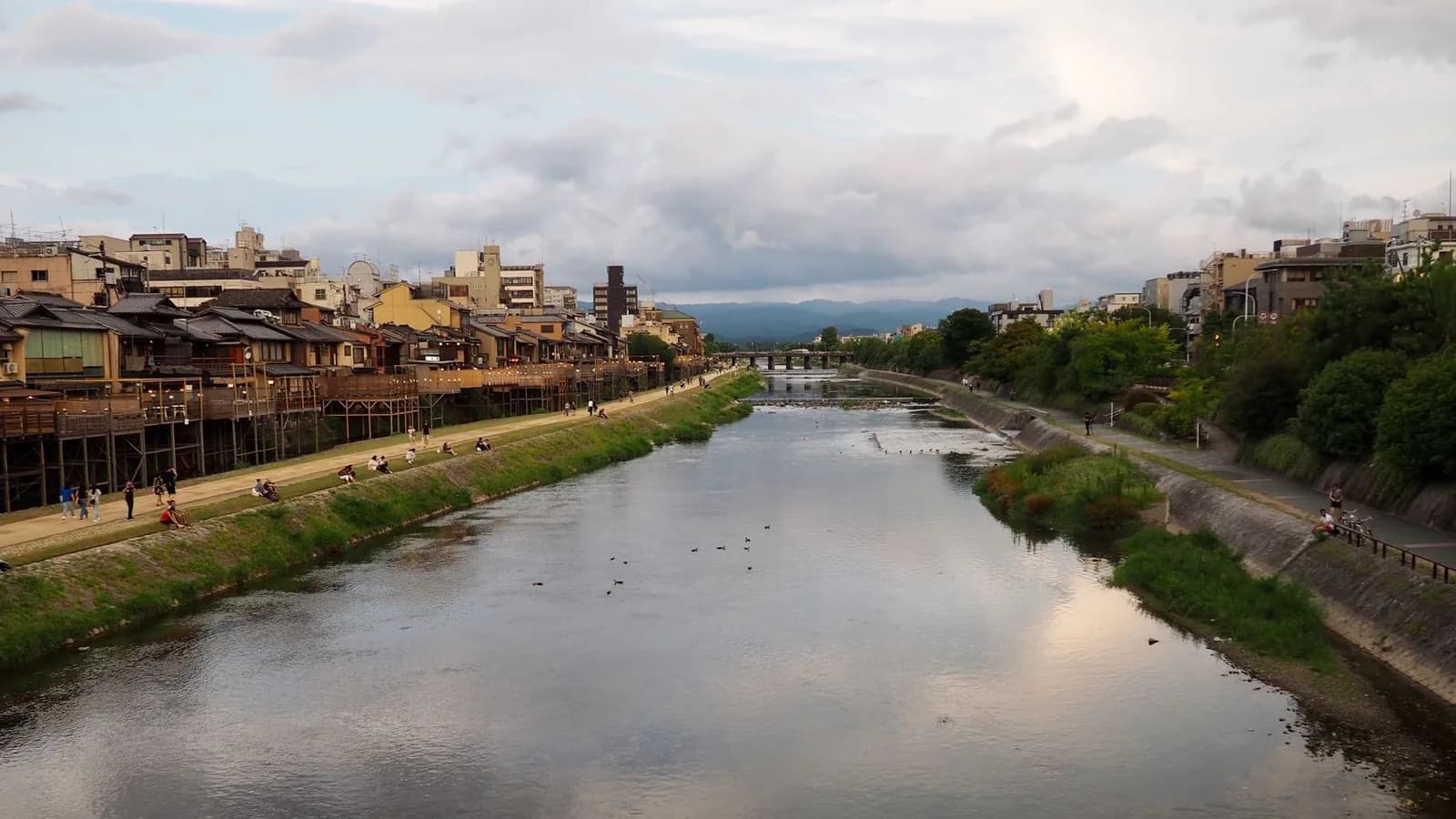
Transport is good without being direct to Kyoto Station. The Hankyu line starts at Kyoto-kawaramachi and runs to Arashiyama (via Katsura) and to Osaka-umeda in about 43 minutes. The Keihan line, across the river at Gion-Shijo and Sanjo, goes south to Fushimi Inari. Kyoto Station is about 15 minutes away by bus or taxi. Weak points: the arcades are crowded at weekends, and rooms facing Kiyamachi or Pontocho can be noisy until late.
Gion hotels: staying in Kyoto's geisha district
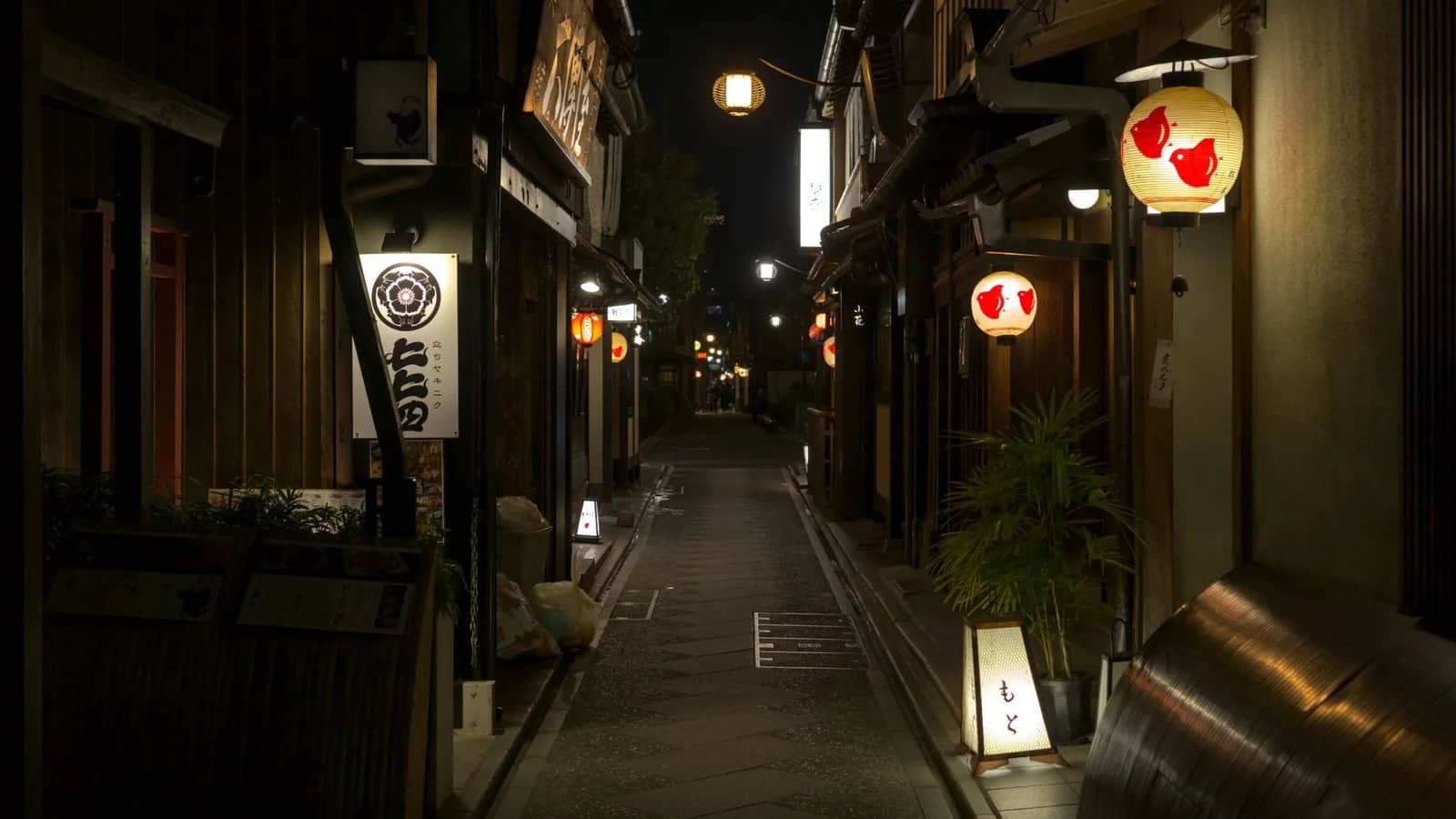
Gion, east of the Kamo River around Hanamikoji-dori and the Shirakawa canal, is where most visitors picture Kyoto: wooden teahouses, lanterns and Yasaka Shrine at the end of Shijo-dori. Staying here lets you walk the streets before 8 am, when they are almost empty, and come back for dinner without any transport.
Hotels here are mostly small and expensive, with some ryokan and machiya rentals in the side streets. Gion has no JR or subway station: the Keihan line at Gion-Shijo and the buses on Higashioji-dori are the only links, and those buses are among the most crowded in the city. Since 2024, the private lanes of southern Gion have been closed to tourists, with fines posted at the entrances. The rules are explained in our Kyoto guide.
Higashiyama: hotels near Kiyomizu-dera and the eastern temples
Southern Higashiyama is the hillside of Kiyomizu-dera, Ninenzaka, Sannenzaka and Kodai-ji, and further north the Philosopher's Path, Nanzen-ji and Ginkaku-ji. It is the best area for temples at opening time and for luxury: Park Hyatt Kyoto sits above Ninenzaka, Four Seasons Hotel Kyoto in a garden near Sanjusangendo, and ryokan line the approach to Nanzen-ji. The Okazaki district around Heian Shrine has more mid-range options and the Tozai subway at Higashiyama and Keage.
The weak point is getting around. South of Okazaki, buses are the only public transport, the streets are steep, and the slopes empty out after the temples close, so dinner usually means a walk down to Gion. On weekends and holidays, the EX100 express bus (¥500) links Kyoto Station to Gojozaka, Gion and Ginkaku-ji directly. On other days, take the subway to Kujo and a bus from there, or simply walk from Gion.
Arashiyama: ryokan and riverside hotels in western Kyoto
Arashiyama, around the Togetsukyo bridge and the Katsura River, is a district apart, 30 to 45 minutes from Gion. It suits a night in a ryokan or a second base on a long stay rather than a whole trip. You see the bamboo grove and Tenryu-ji in the empty early morning, and the area turns quiet once the day visitors leave around 5 pm.
The JR Sagano Line takes about 15 minutes from Saga-Arashiyama to Kyoto Station (¥240), the Hankyu line connects to downtown via Katsura, and the Randen tram runs to Shijo-Omiya. Restaurants close early, so plan dinner in your inn. For what to see there, read our page on the Arashiyama bamboo grove. Arashiyama Hanaikada, a ryokan with its own hot-spring water, is one of the four inns on our ryokan and onsen page.
North Kyoto: quiet stays near Demachiyanagi and the Imperial Palace
The north of the city, from the Imperial Palace to Demachiyanagi and Shimogamo Shrine, is residential, green and calm. It suits return visitors and anyone heading to Kurama, Kibune or Ohara: the Eizan Railway to Kurama starts at Demachiyanagi, where the Keihan line also ends, and the Karasuma subway runs north past the palace to Kitaoji and Kokusaikaikan. The Kamo River path is a pleasant walk downtown, about 30 minutes.
The choice of hotels is small, most of them guesthouses and a few business hotels, and the evening options are limited. North-west Kyoto, near Kinkaku-ji, has even fewer, and it is a bus-only area about 40 minutes from Kyoto Station.
Getting around Kyoto from your hotel: buses, subway and trains
Kyoto has only two subway lines, and the city buses carry most visitors to the sights. At peak times they are saturated: the lines towards Kiyomizu-dera and Gion are often too full to board, and residents complain they cannot get on. This is why staying near a rail line matters more than staying near a temple.
| Ticket | Adult fare | Useful for |
|---|---|---|
| City bus, single ride | ¥230 ($1.40) | Flat fare in the central zone |
| EX100 express bus | ¥500 ($3) | Kyoto Station to Gojozaka, Gion and Ginkaku-ji, weekends and holidays |
| Subway, single ride | ¥220 to ¥360 | Karasuma and Tozai lines |
| Subway and bus one-day pass | ¥1,100 ($7) | Worth it from about five rides in a day |
The old bus-only day pass is no longer sold, so guides that still quote it are out of date. The city has also announced a higher bus fare for non-residents, expected around April 2027, with the amount not fixed when we checked on 14 November 2026. Suica and other IC cards work on buses, subway and trains, as explained on our Suica card page.
Kyoto hotel prices in 2026: what a night costs by area and season
The Kyoto City Tourism Association publishes the average daily rate of a sample of about 110 major hotels each month, before tax. It gives a better picture than the prices quoted in blogs.
| Period | Average room rate | Occupancy |
|---|---|---|
| Year 2025 | ¥21,286 (about $133) | 80.6% |
| March 2026 | ¥26,017 (about $163) | 81.6% |
| April 2026, cherry blossom | ¥31,296 (about $196) | 85.1% |
| September 2026 | ¥19,333 (about $121) | 79.7% |
So the same room costs about 60% more in April than in September. For November, the busiest month after April, an analysis of rates advertised on booking sites in July 2026 put the average around ¥28,400, with Higashiyama near ¥37,000 and the central wards near ¥26,000. As a rough guide for 2026, a business hotel near the station or on Karasuma-dori runs about ¥11,000 to ¥19,000 ($70 to $120) a night outside peak weeks, a mid-range hotel downtown ¥21,000 to ¥37,000 ($130 to $230), and luxury hotels in Gion or Higashiyama from about ¥64,000 ($400). These ranges come from booking sites, not official figures.
Machiya and ryokan in Kyoto: staying in a traditional house
A machiya is a wooden townhouse, narrow at the front and deep inside, often with a small garden. Many have been restored as whole-house rentals with a kitchen, futons or beds and a deep wooden bath, mostly in Nakagyo, Shimogyo and around Gion. They suit families and groups who want space and a traditional setting, but they come with steep stairs, thin walls and no front desk: you get a door code and a phone number.
A ryokan is priced per person with dinner and breakfast, about ¥15,000 to ¥40,000 per person per night for a good mid-range inn in 2026. Kyoto's are mostly in Gion, Higashiyama, around Nanzen-ji and in Arashiyama, and few have real hot-spring water. Book dinner times, allergies and late arrivals with the inn in advance, since many expect you before 7 pm. Our guide to ryokan and onsen explains how a stay works.
Airbnb in Kyoto: the minpaku rules for vacation rentals
Kyoto has some of the strictest private rental rules in Japan. Under the city's ordinance, a minpaku (a home rented under the national private lodging law) in an exclusively residential zone can only take guests from noon on 15 January to noon on 16 March. Elsewhere the national cap of 180 nights a year applies. When the host does not live there, a manager must be on site or within 10 minutes on foot, about 800 metres, according to the city page updated on 17 December 2025.
The rules may tighten again. At a city committee meeting on 2 November 2026, Kyoto presented proposals reported by Nikkei, including no new minpaku in residential zones and a manager in the building or next door, with an ordinance planned for the February 2027 council. These are proposals, not law yet. In practice, book a rental that shows its minpaku registration number or a hotel licence, and avoid listings without one: Kyoto runs inspections, and an unlicensed rental can be closed on you.
Kyoto accommodation tax: the 2026 rates you pay at the hotel
On 1 March 2026, Kyoto replaced its three-band accommodation tax with five bands, and the top rate rose tenfold. The tax is charged per person and per night on the room price per person, and the hotel, ryokan or rental adds it to your bill.
| Room price per person per night | Tax before 1 March 2026 | Tax since 1 March 2026 |
|---|---|---|
| Under ¥6,000 | ¥200 | ¥200 |
| ¥6,000 to ¥19,999 | ¥200 | ¥400 |
| ¥20,000 to ¥49,999 | ¥500 | ¥1,000 |
| ¥50,000 to ¥99,999 | ¥1,000 | ¥4,000 |
| ¥100,000 and above | ¥1,000 | ¥10,000 |
A couple in a ¥12,000 room (¥6,000 each) pays ¥400 each per night, so ¥2,400 ($15) for three nights. A luxury ryokan at ¥60,000 per person costs ¥4,000 per person per night in tax. Rates are from the Kyoto City Tourism Association, published on 26 February 2026. Booking sites often show it as a separate line paid at the hotel.
When to book a hotel in Kyoto: cherry blossom and autumn leaves
Kyoto has far fewer rooms than Tokyo, and two seasons fill them. The cherry blossom reaches full bloom around 4 April on average, and the maples peak in the second half of November into early December. In those weeks, rooms cost the most and the cheapest ones go first, so book three to four months ahead and pick a refundable rate. Saturdays and the Golden Week holidays in early May are also expensive.
The cheapest months are January and February outside the Lunar New Year week, then June and the hot weeks of July and August, outside the Gion Matsuri and Obon. Our guide to the cherry blossom season in Japan has the bloom dates and forecasts, and the Japan itinerary page shows how many nights to plan in Kyoto.
Staying in Osaka and visiting Kyoto as a day trip
When Kyoto is full or too expensive, Osaka is a real alternative: the tourism association noted in April 2026 that some Kyoto hotels were losing guests to Osaka on price. The JR Special Rapid takes 28 minutes from Osaka Station to Kyoto Station for ¥580 (about $3.60), the Shinkansen about 15 minutes from Shin-Osaka, and the Hankyu line about 43 minutes from Osaka-umeda to Kyoto-kawaramachi for ¥410, straight into downtown. The Keihan line runs from Yodoyabashi to Gion-Shijo in about 50 minutes.
The trade-off is time: an hour or more of travel each day, and an evening ride back. It works well for one or two days in Kyoto, less for a temple-heavy week. Our page on where to stay in Osaka compares the city's districts, and if you start in the capital, where to stay in Tokyo does the same for its districts.